🇵🇼 Jellyfish Lake (Ongeim'l Tketau), Eil Malk, Palau
Ongeim'l Tketau · 팔라우 록아일랜드
Location
Overview
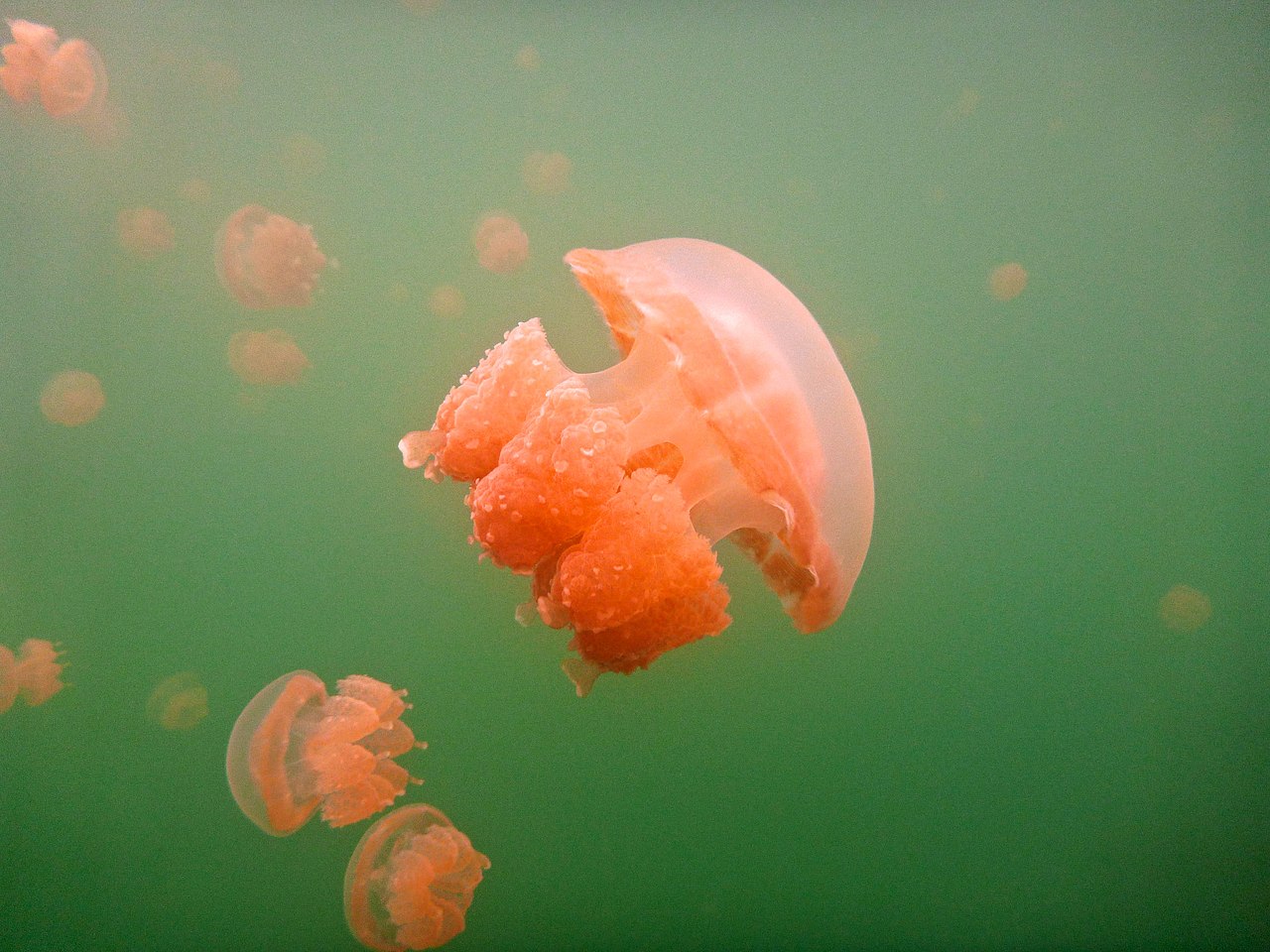
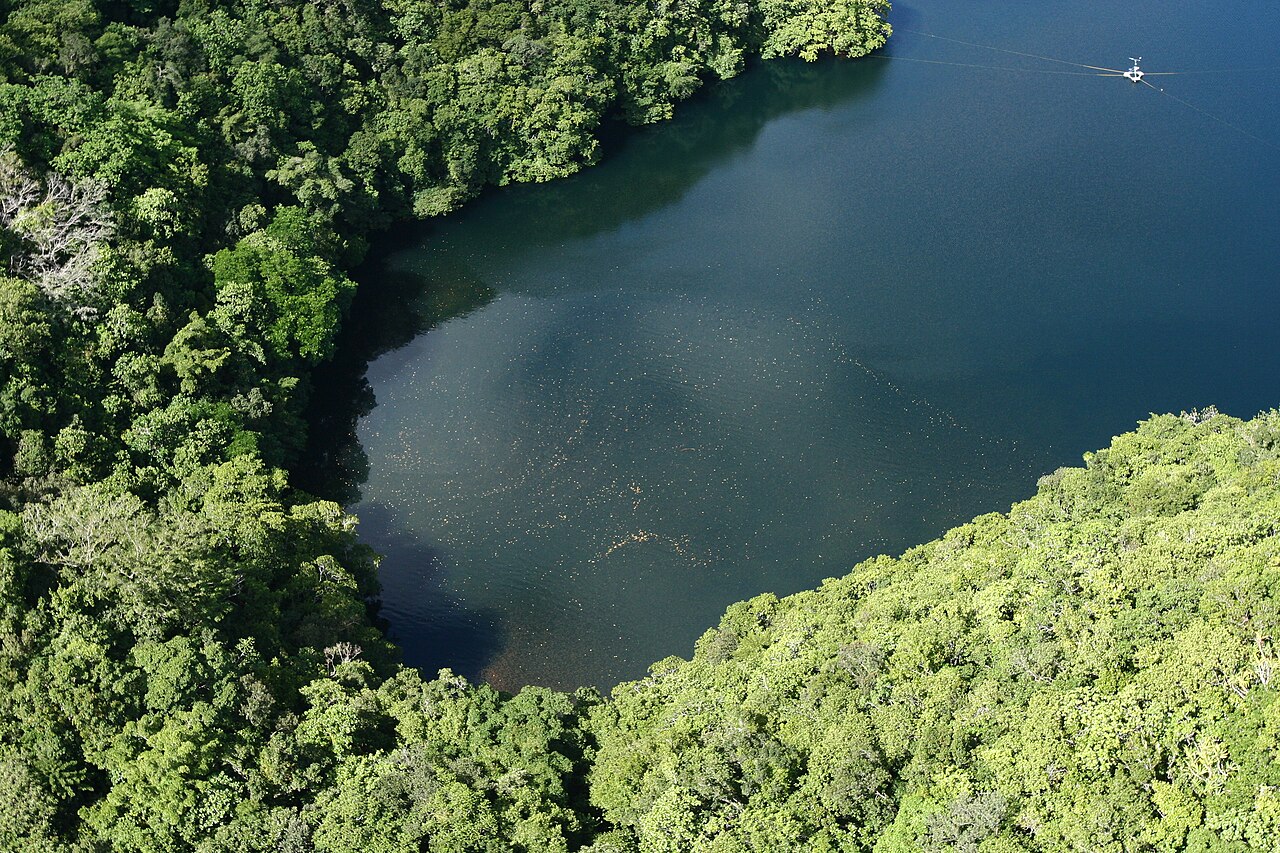
Tucked inside Eil Malk (Mecherchar) Island in Palau's Rock Islands Southern Lagoon, this marine lake holds a population of harmless golden jellyfish that drifts across the basin each day, chasing the sun. Scuba is banned by law, so the only way in is on a single breath — which makes it a rare and special piece of water for freedivers, though emphatically not a depth-training site. The surface layer sits around 31°C, visibility is a milky 3–8 m where fresh and salt water mix, and oxygenated water extends only to roughly 12–15 m; below that lies an anoxic layer saturated with hydrogen sulfide. After a full closure in 2016–2018 and another sharp crash in 2025, the Coral Reef Research Foundation counted over 100,000 golden jellyfish in April 2026 with numbers rising and a favorable three-month outlook.
The daily migration — the whole swarm tracks the sun, moving west to east through the morning and back again in the afternoon. Densities are usually best between roughly 9 and 11 a.m.
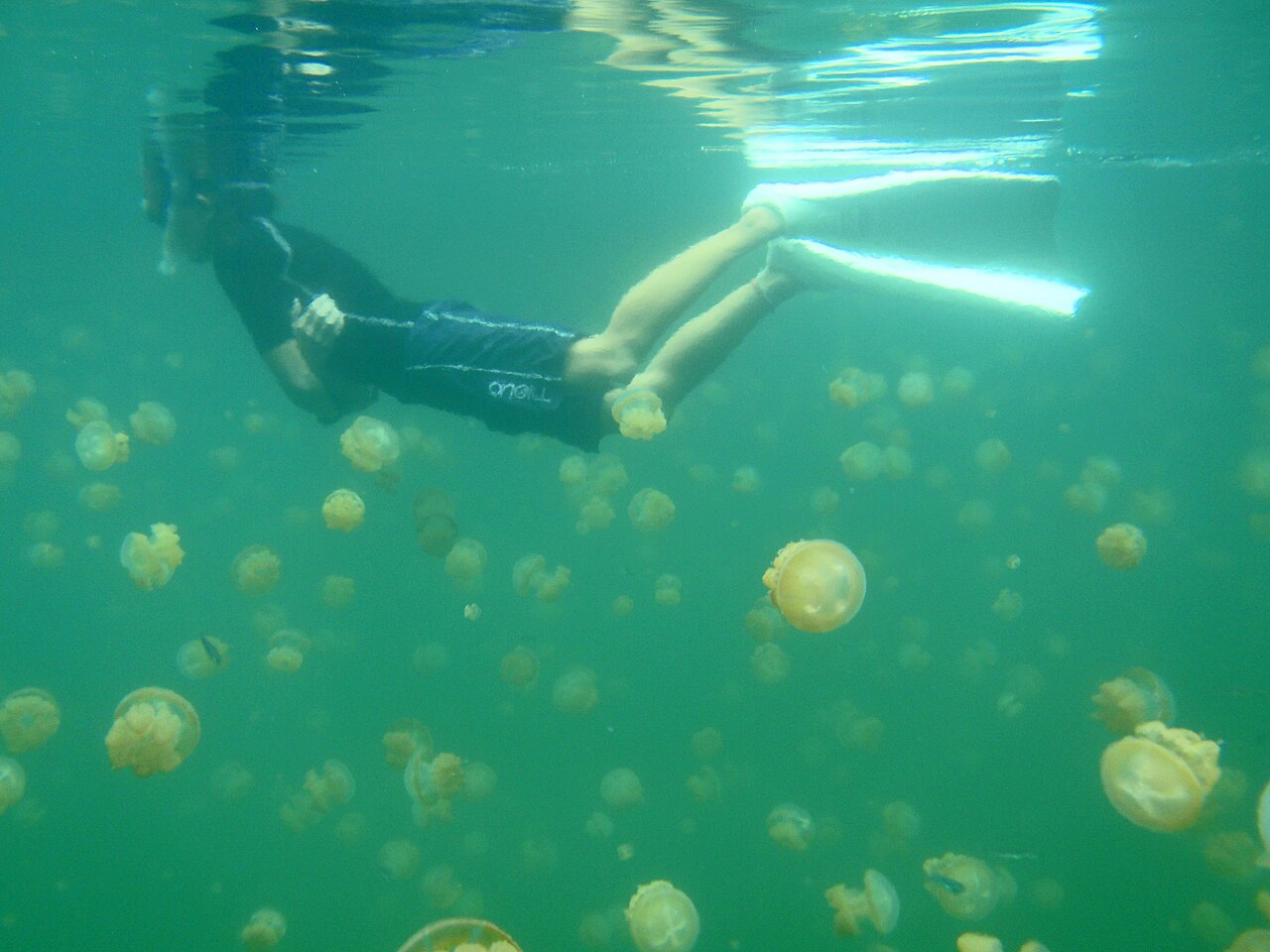
Hanging motionless in the middle of the swarm on one breath, with no bubbles and no regulator noise. That silence exists precisely because scuba is prohibited here.
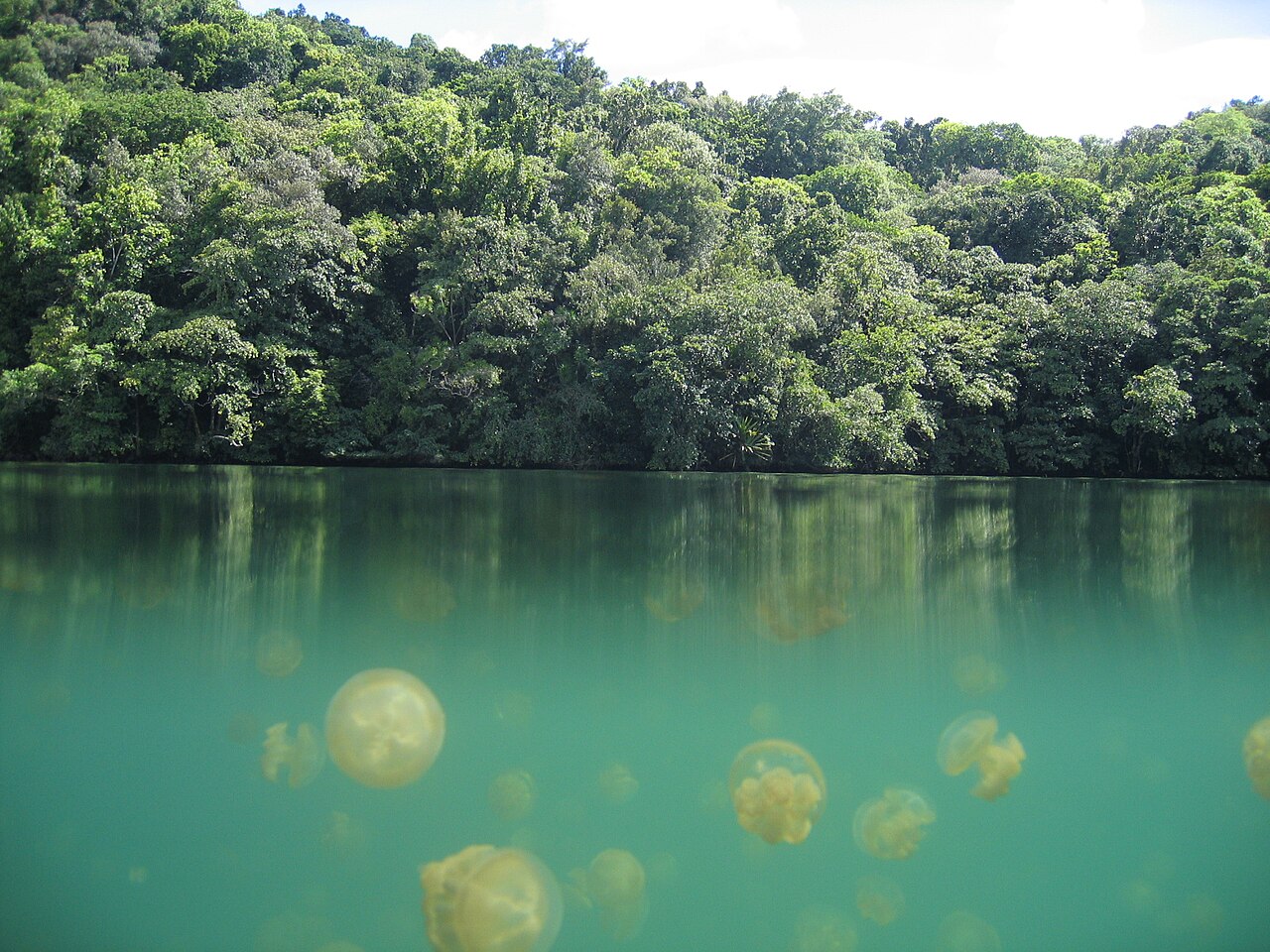
The visible stratification — from the surface you can pick out the chemocline around 15 m as a hazy color boundary. Look at it; the rule of this lake is that you never swim down through it.
Moon jellyfish share the lake with the golden ones. They don't migrate horizontally, so they're scattered throughout and remain visible even when golden numbers are low.
The approach itself — a boat run across the UNESCO-listed Rock Islands Southern Lagoon from Koror, then a short jungle trail over a limestone ridge before the lake finally opens up.
Good to know
SafetyBelow roughly 12–15 m the water is anoxic, with hydrogen sulfide exceeding 80 mg/L near the bottom. It can be absorbed through the skin and kill you even though you aren't breathing it, so never descend past the chemocline for any reason. Poor visibility and no visible bottom make 'just a little deeper' unusually easy to do here.
SafetyThis is not a training venue. Deep dives, line work and personal-best attempts are off-limits, and none of the freediving safety infrastructure exists — no lanyard setup, no counterballast, no dedicated safety diver. Assume your tour guide is a guide, not a trained freediving safety. If you want to work on depth, do it at a proper training site instead.
SafetyShallow does not mean safe. Shallow water blackout and LMC happen at 5–10 m, and warm water plus a long, relaxed session quietly encourages too many repeat breath-holds. Never hyperventilate, never breath-hold alone, always have a buddy watching from the surface, and don't turn a 30–45 minute viewing window into a performance session.
RulesScuba is completely prohibited, independent visits are not allowed, and entry is only through a licensed tour operator. Rangers frequently require life vests, which in practice limits any meaningful breath-hold descent. Rules can change at the managers' discretion, so confirm the current conditions when you book.
RulesYou need a Rock Islands permit that includes Jellyfish Lake — commonly quoted at around US$100 per person and valid for about five days, though price, validity and age thresholds all change. Arrival in Palau also involves signing the Palau Pledge in your passport. Verify current fees and terms before you travel.
MannersFins are generally not permitted — a fin blade will slice straight through a jellyfish. Don't grab or lift the animals, and use only reef-safe sunscreen, applied at least 30 minutes before you get in. Palau legally bans sunscreens containing reef-toxic ingredients.
SeasonPopulations here swing hard. An El Niño event wiped out the golden jellyfish in 1998–99 before they recovered in 2000; the lake was closed outright from 2016 to 2018; and numbers crashed to a few thousand again in 2025. As of April 2026 they were back above 100,000 and climbing, but check the CRRF lake conditions and forecast page yourself shortly before you go. For sea conditions, the November–May dry season (especially December–April) is the easier window.
Practical info
Fly into Palau International Airport (ROR), base yourself in Koror, then take a 45–60 minute boat ride followed by a steep, slippery 10-minute jungle trail over the ridge to the lake. Booking through a licensed operator is mandatory, and permit fees, validity, jellyfish counts and the rules on fins and life vests all shift over time — confirm the latest with your operator and the CRRF updates immediately before departure.
On-site reviews📍 Verified on-site
No reviews yet. If you are here, be the first to leave one.