Blue Holes / German Channel, Belau · 팔라우 느게멜리스(코로르 남서)
Location
Overview
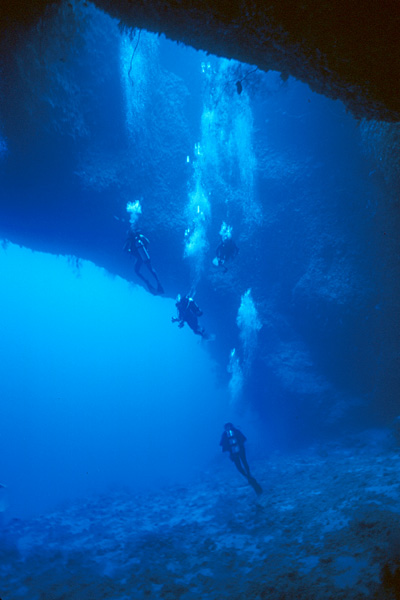
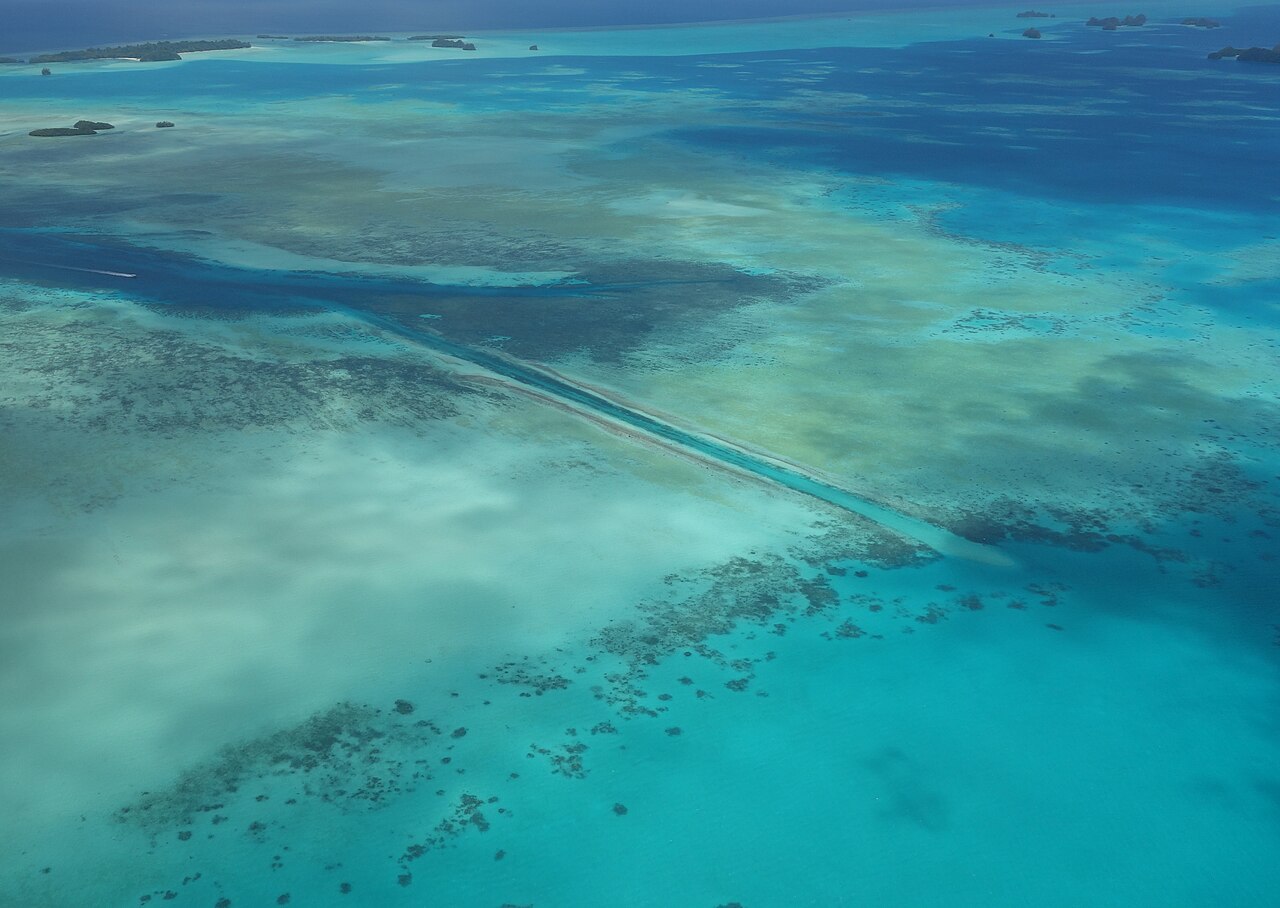
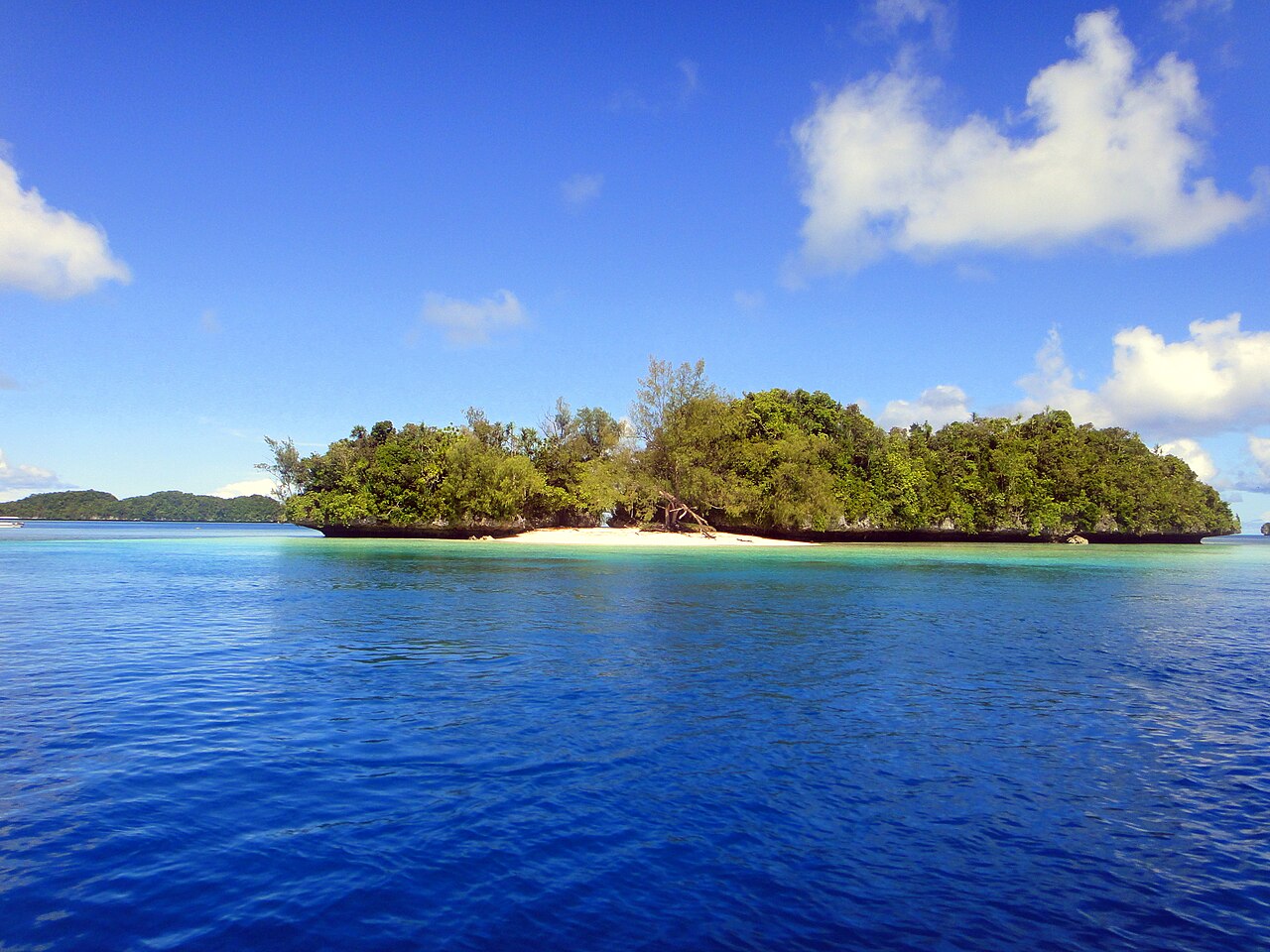
Blue Holes sits on the Ngemelis reef southwest of Koror, where four openings punched through a reef top just 1-2 m deep converge below into one enormous cavern. Because those entrances are so shallow, a breath-hold diver can drop straight into the chamber and meet the light beams head-on, while the outer wall keeps falling to 40 m and beyond. Water sits at 28-30°C year-round with visibility routinely 20-30 m or better, and the adjacent German Channel puts a manta cleaning station within reach of a shallow dive. As of 2026 the area is still run largely as scuba day-boat territory, so freedivers normally reach it through a dedicated centre or a charter, with a guide.
Four openings in a reef top only 1-2 m deep, merging below into a single cathedral-sized cavern — the light beams are sharpest during late-morning sun
The main outer opening spans roughly 26-42 m, with a smaller window around 17 m above it; that window is the realistic depth target for most freedivers
The vertical wall beyond the openings, seamed with canyons and crevices, running north toward Blue Corner about 300 m away
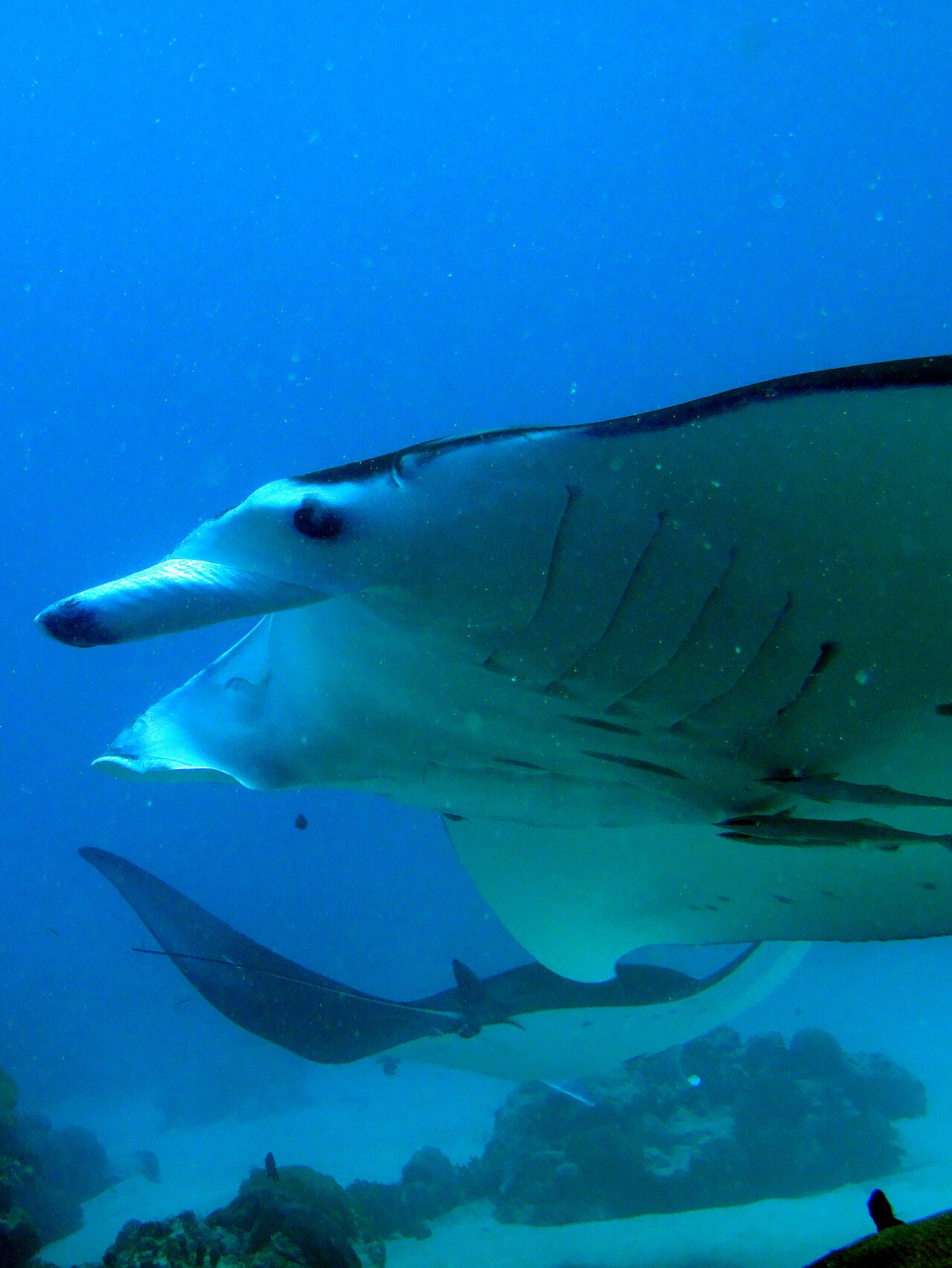
German Channel's manta cleaning station — the station itself sits on a sand plateau near 20 m, but in peak season feeding mantas rise to within 3-5 m of the surface
Near-guaranteed shark encounters, mostly grey reef sharks — Palau declared the world's first national shark sanctuary in 2009
Good to know
SafetyShallow water blackout and LMC arrive without warning. Dive one-up-one-down with a dedicated buddy, never alone, never after hyperventilating, and keep eyes on your partner for at least 30 seconds after every surfacing. 'Just one more' is the most common opening line of a freediving fatality.
SafetyThe cavern is a genuine overhead environment. The 'Temple of Doom', reached through a narrow entrance near 24 m, has killed multiple divers and is reserved for cave-certified divers with proper gear — freedivers must not enter it under any circumstances. Keep your sightseeing to the zone directly beneath the openings where open sky stays visible above you. If you are doing line-based depth work, do it in an open-water setup with lanyard, counterballast and a safety diver; inside an overhead a lanyard becomes an entanglement hazard rather than a safeguard.
SafetyCurrent reverses with the tide roughly every six hours and is least predictable around the half moon. The run toward Blue Corner can hit three knots, so freedive only during slack. Scuba day boats work this reef constantly — floating on the surface without a buoy or SMB here is genuinely dangerous.
SafetyThis is a remote location and medical evacuation is slow. Belau National Hospital in Koror has a recompression chamber, but confirm its operating status and response time in advance, and carry dive insurance (DAN or equivalent) that explicitly covers freediving incidents — blackout, lung squeeze, ear and sinus barotrauma. Many policies treat freediving as a separate rider.
RulesThe Rock Islands Southern Lagoon requires a permit, and the Rock Island use permit and the combined Jellyfish Lake permit are priced and dated differently; both have been revised over time, so verify current amounts and validity when you book. Arriving visitors also pay the Pristine Paradise Environmental Fee bundled into the airfare and sign the Palau Pledge stamped into the passport, and all visits must go through a licensed operator. Separately, since January 2020 sunscreens containing reef-toxic ingredients such as oxybenzone are banned from import and sale and subject to confiscation and fines, so bring reef-safe products or a rash guard — and remember all of Palau is a shark sanctuary and marine protected area, meaning no fishing, no spearfishing and no feeding of any kind.
MannersDo not approach or chase mantas and sharks; hold your position above a cleaning station and leave the space below it clear. Freediving naturally brings you close to that 1-2 m reef top, so never stand on the coral or push off it with a hand. The openings are shared with other groups — take turns rather than crowding the entrance.
SeasonNovember through May is the dry season with the best sea state and visibility, and mantas peak from December to March. From June to October squalls and swell mean more cancelled boats and more days of reduced visibility.
Practical info
Roman Tmetuchl International Airport (ROR) in Koror is the gateway; direct service from Seoul comes and goes with the season and charter schedules, so keep Guam, Manila or Taipei connections on the table. The site is a 40-60 minute boat ride from Koror and freediving is normally arranged through a dedicated centre such as Palau Infinity Dive or a private charter with a guide, so confirm current pricing, boat schedules, permit fees and whether an operator accepts freedivers directly with them before booking.
On-site reviews📍 Verified on-site
No reviews yet. If you are here, be the first to leave one.