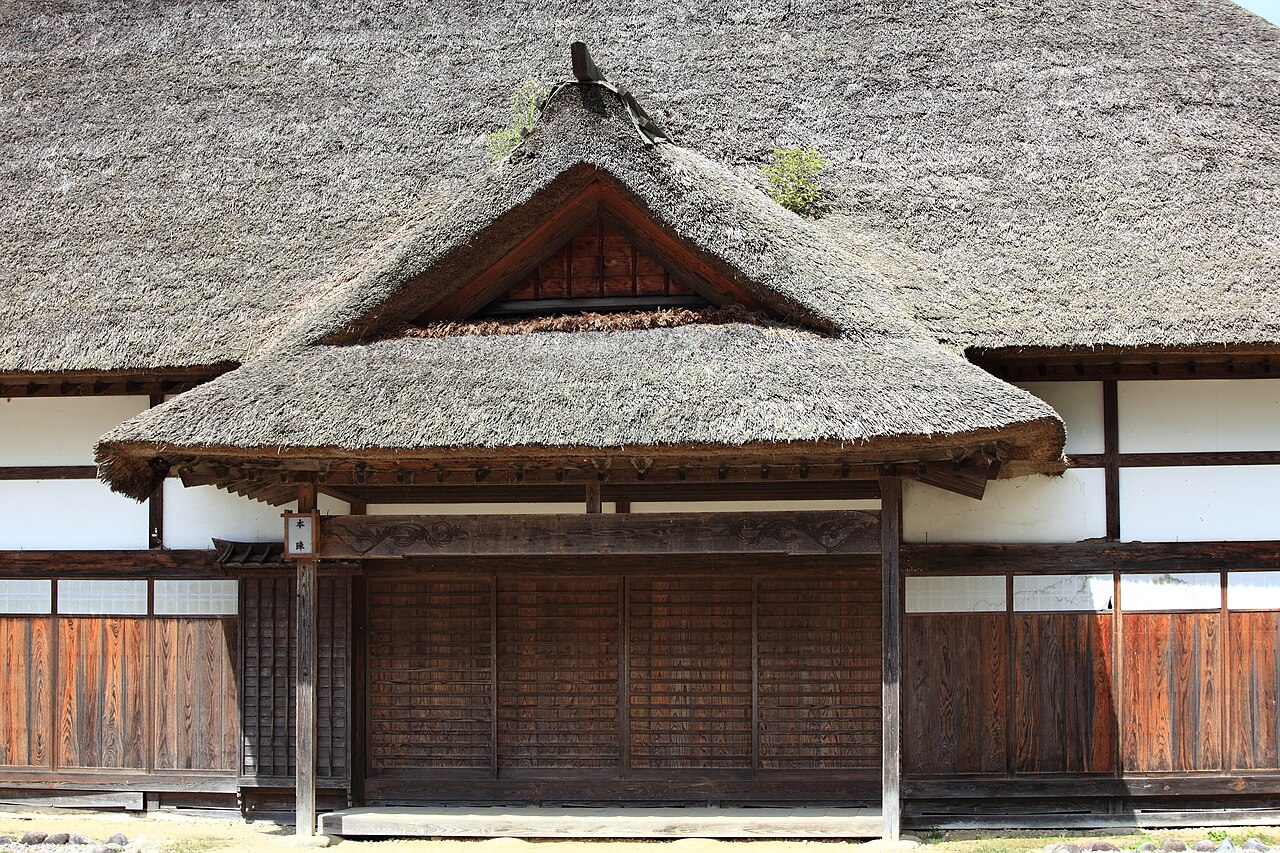
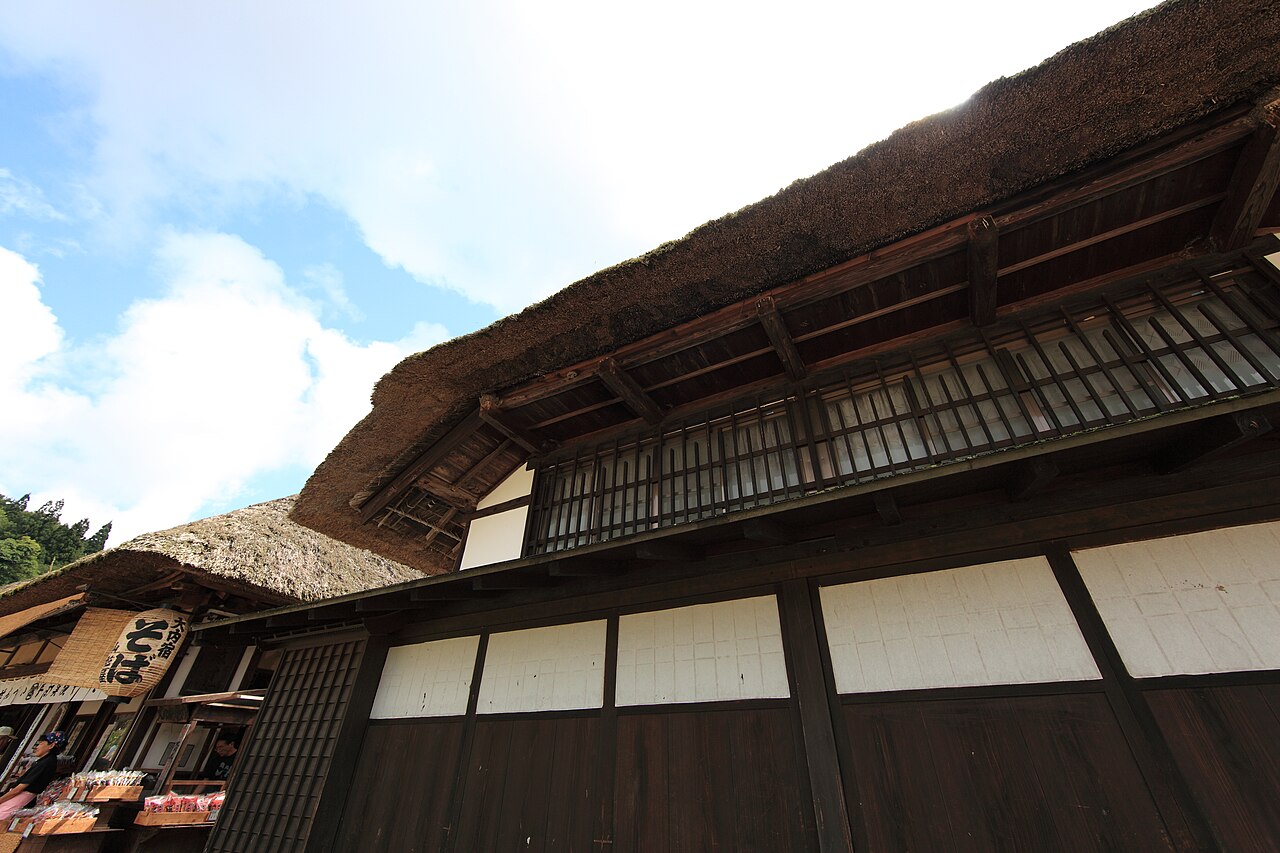
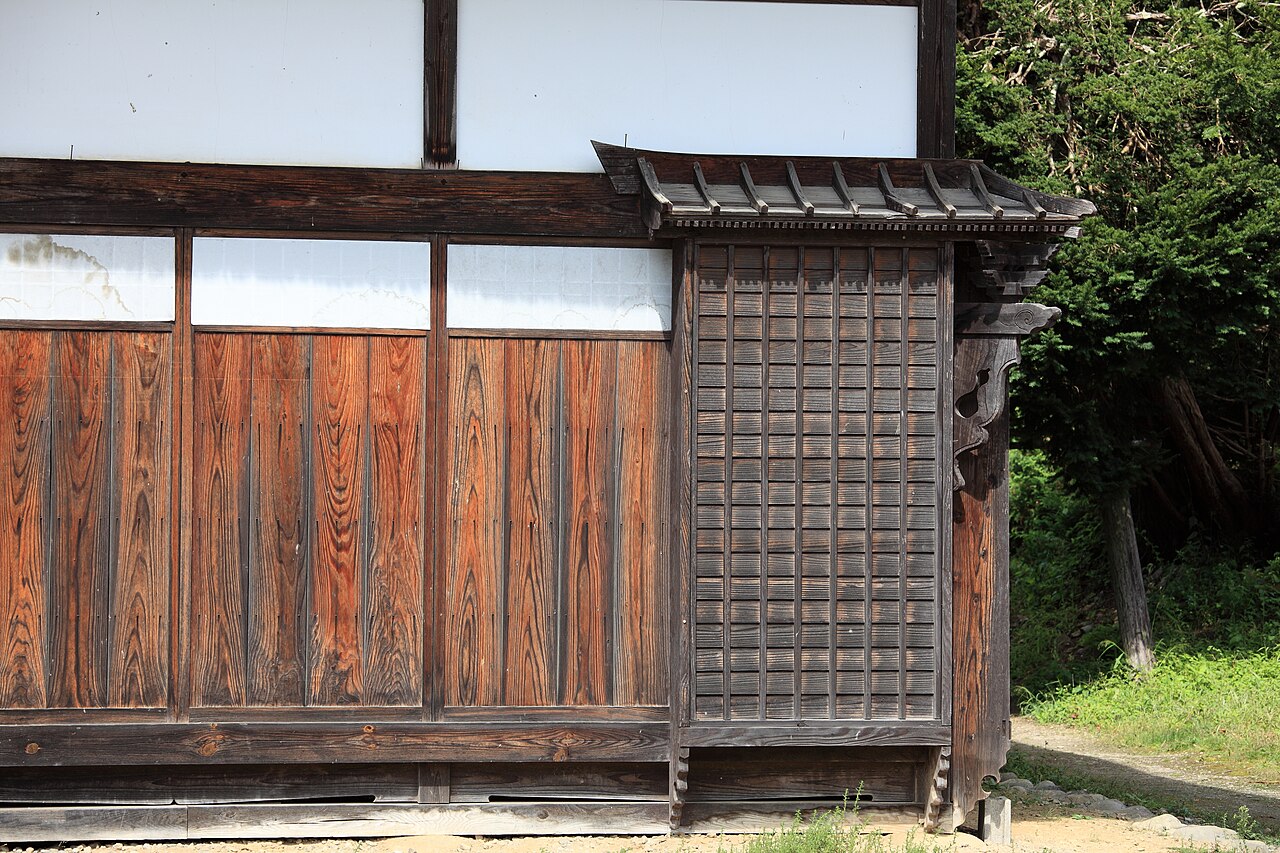
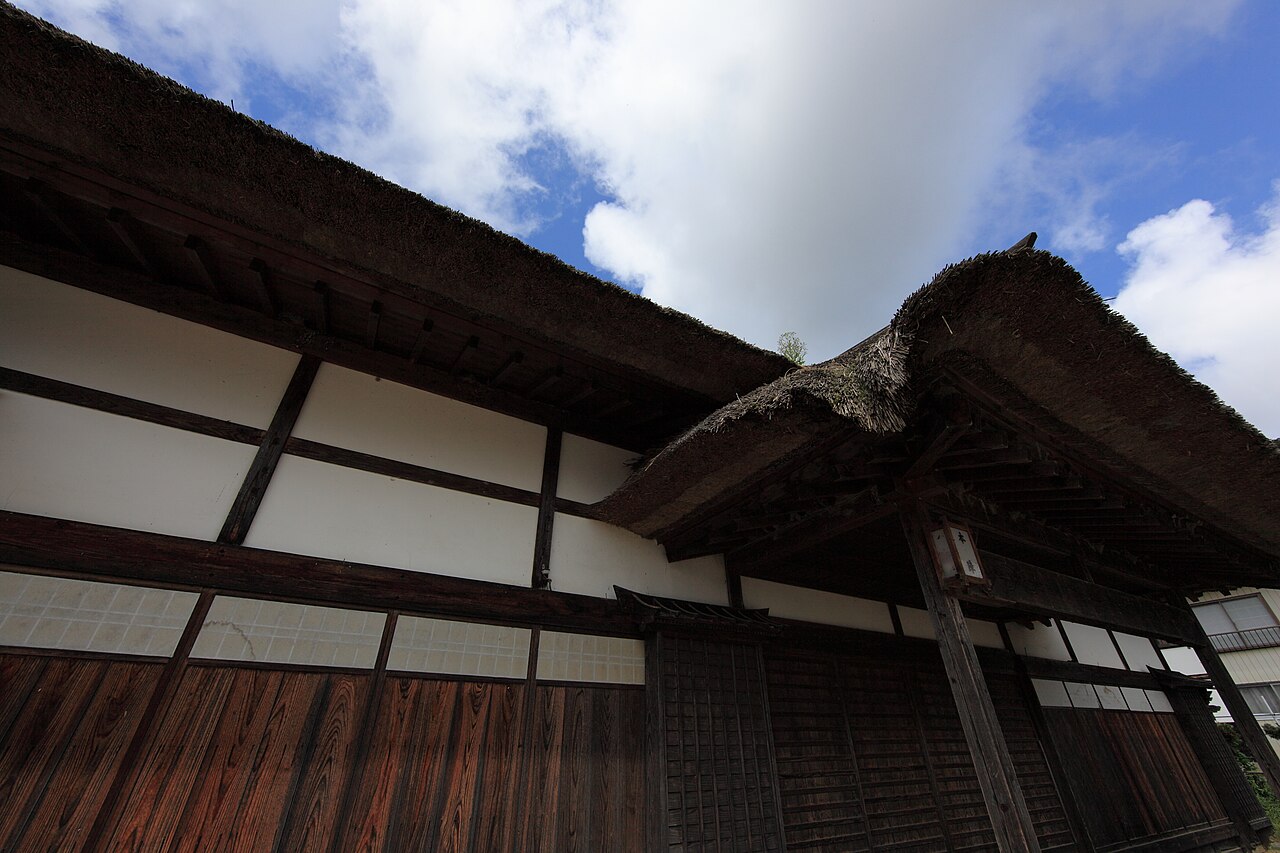
Ouchi-juku is an Edo-period post town in Shimogo, Fukushima Prefecture, where more than 30 thatched-roof houses line a single street along the old Aizu-Nishi Kaido (developed around 1643). With power lines buried underground, the historic streetscape is remarkably intact, and it was designated a national Important Preservation District for Groups of Traditional Buildings in 1981. It is especially famous for its snow-covered winters and vivid autumn foliage.
Climb the stairs to Takakura Shrine at the end of the main street to reach the observation deck (Miharashidai), which offers a sweeping view over the rows of thatched roofs.
Try the town's signature 'negi soba' - buckwheat noodles eaten using a whole green onion as chopsticks.
Sample southern Aizu local foods such as 'shingoro' (skewered rice cakes glazed with a miso-soy-egoma sauce) and 'Takato soba' served with grated daikon.
Visit the Ouchi-juku Machinami Exhibition Hall, a reconstruction of the honjin (lord's rest station), displaying old household tools and thatching materials.
Seasonal events include the Snow Festival on the second Saturday and Sunday of February and the Hange Matsuri on July 2.
Good to know
MannersMost thatched houses are private homes where residents still live and run businesses. The village is preserved under the principle 'do not sell, do not rent, do not destroy,' so do not enter homes or gardens uninvited and respect residents' daily life.
SeasonIn winter the village is under deep snow and the paths and observation-deck stairs become very slippery. Wear non-slip footwear, dress warmly, and keep your hands free.
RulesCars cannot enter the village itself. Park in the designated lots (roughly 500 yen for a regular car - confirm latest) and walk in. Stopping on the roadside along the national route is a traffic violation and a cause of congestion, so avoid it.
SafetyDuring Golden Week, autumn foliage season, and the Snow Festival, the parking lots and access road get very crowded. Allow extra time and arrive early in the morning.
MannersAsk permission before photographing people, residents, or shop interiors. Drone photography may be restricted near private property and crowds, so follow local signage and rules.
Practical info
Opening hours are generally 8:00-17:00, with most shops open 9:00-16:00. Entry to the village is free. By public transport, take a bus or taxi (about 15 minutes) from Yunokami Onsen Station on the Aizu Railway; by rental car it is about 60 minutes from Aizu-Wakamatsu. Confirm fees, hours, and transport schedules before your visit.
On-site reviews📍 Verified on-site
No reviews yet. If you are here, be the first to leave one.