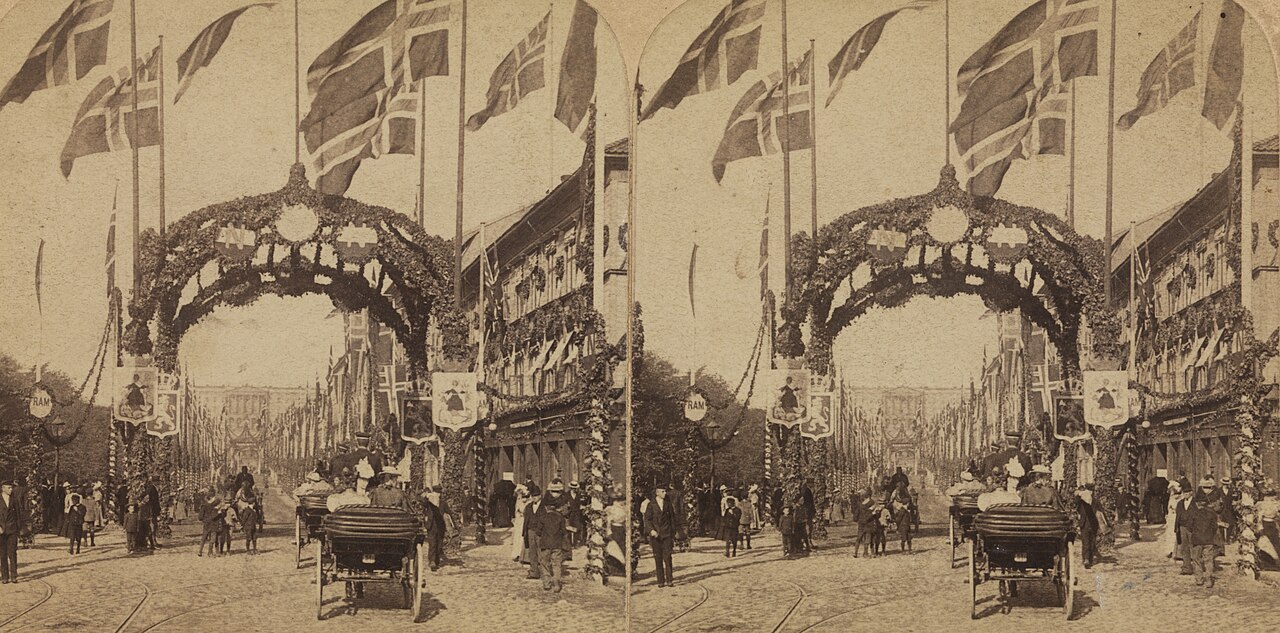
Karl Johans gate is Oslo's main boulevard, running roughly 1.4 km (about 1,415 m) in a straight line from Oslo Central Station up to the Royal Palace (Slottet). Named in 1852 after King Karl III Johan, the street strings together the capital's landmark institutions - the Parliament (Stortinget), Oslo Cathedral, the National Theatre, the old University buildings and the Grand Hotel - so a single walk takes in Oslo's political, cultural and commercial heart. The stretch from the station to the Parliament is a pedestrian zone ideal for strolling and shopping, and as of 2026 it stays lively year-round with summer street performers and the free winter ice rink at Spikersuppa. Approach it less as a single sight and more as a promenade to walk slowly and 'read' the city.
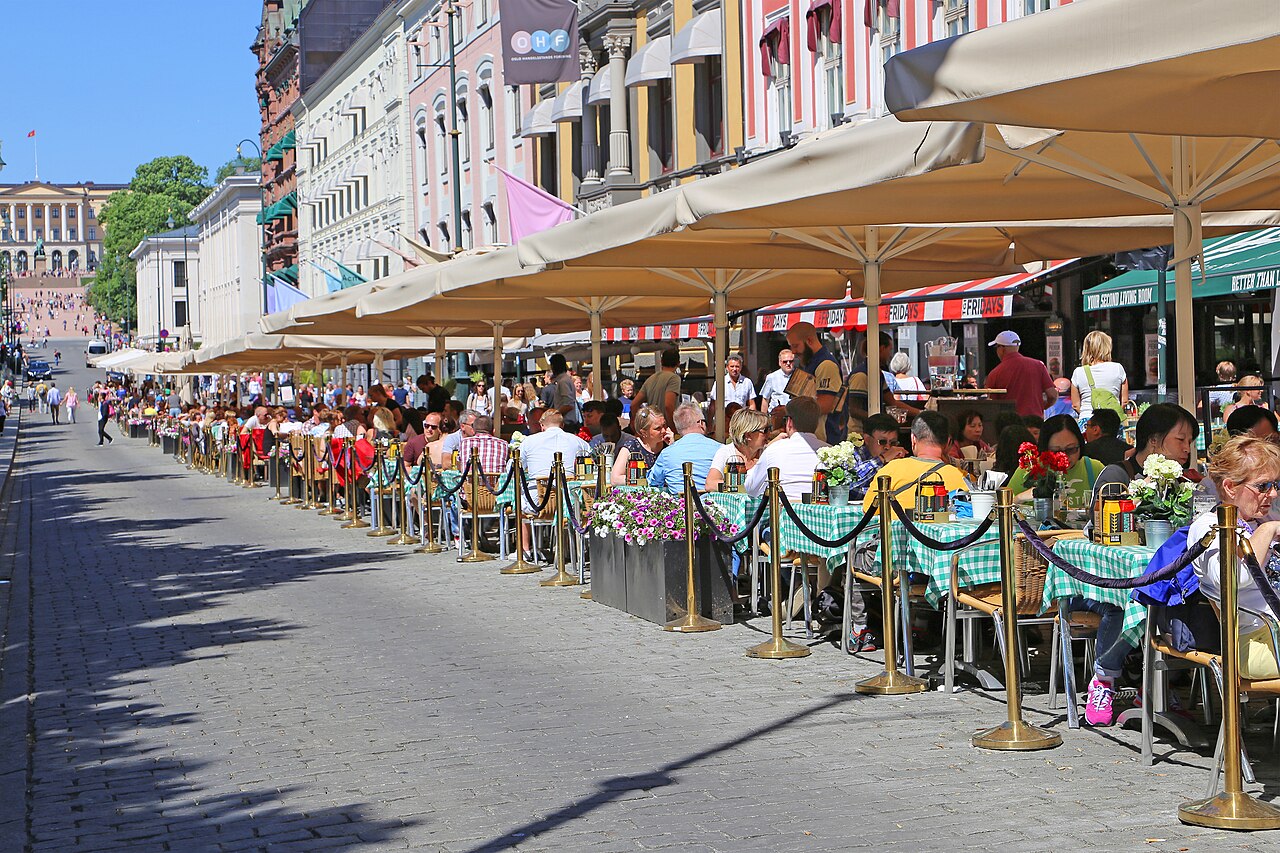
The full gently rising axis from Central Station to the Palace - Egertorget marks its high point, where the eastern commercial half gives way to the western civic quarter.
The Royal Palace (Slottet) and Palace Park crowning the street - watch the changing of the guard, and note the balcony where the royal family greets the children's parade each May 17.
Parliament (Stortinget, 1866) with Oslo Cathedral and the Basarhallene bazaar halls with the old Fire Watch - the historic spine of the pedestrian section.
The Grand Hotel and Grand Café - where Nobel Peace Prize laureates traditionally wave from the balcony, in a café long associated with Ibsen and Munch.
The National Theatre (1899) with Studenterlunden and the Spikersuppa fountain plaza - fountains and open-air life in summer, a free ice-skating rink in winter.
Good to know
SafetyOslo is among Europe's safest capitals, but pickpocketing does occur along the Karl Johans gate tourist strip and around Central Station in the summer peak. Keep your phone in a zipped pocket, wear bags in front, and never leave belongings unattended on a café table.
SeasonOslo lies too far south for the Northern Lights - for aurora you must travel north (e.g. Tromso). Instead, expect near-white summer nights around June and short, dark days from November to March, so calibrate your plans to the season you visit.
RulesNorway is effectively cashless: nearly all shops and cafes take contactless card or mobile payment, and some no longer accept cash at all. Bring a contactless card enabled for international use.
MannersTipping is not obligatory in Norway - service is included and there is no pressure to tip; rounding up for good service is plenty. Note that prices are high (alcohol especially), so budget generously.
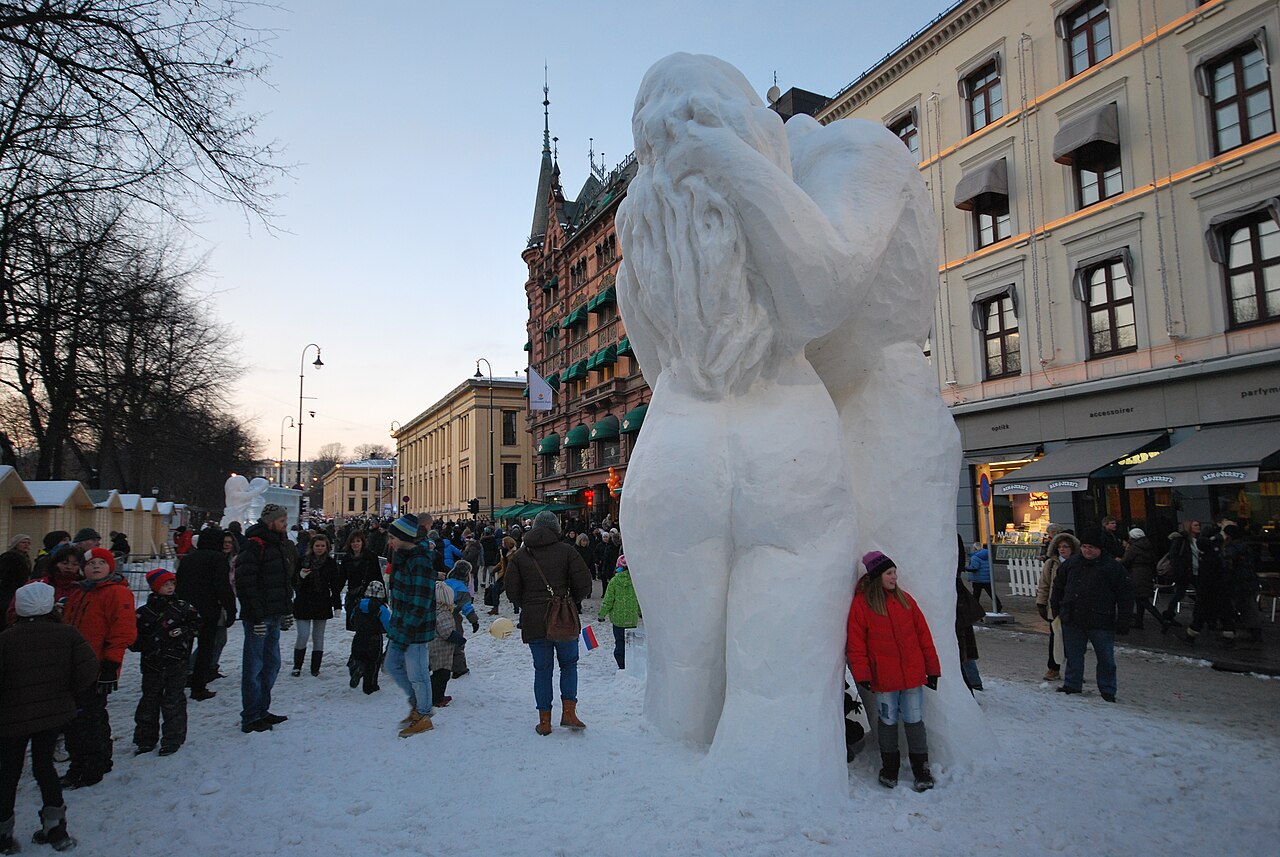
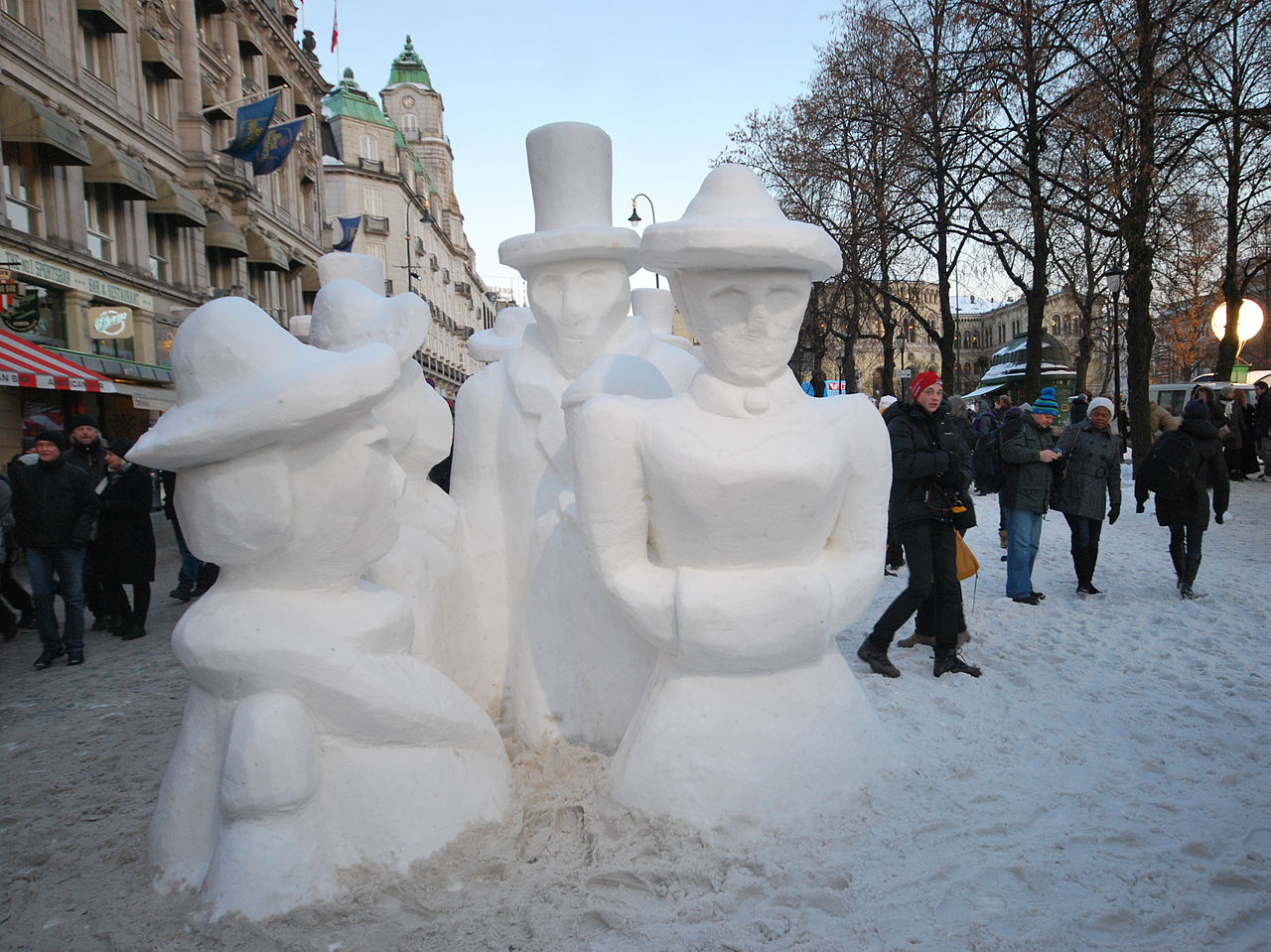
SeasonWinter pavements get icy and slippery, so bring grippy footwear and warm layers. The Spikersuppa rink usually runs free from late November to March, and in the run-up to Christmas the nearby 'Jul i Vinterland' market appears (confirm dates and operation for the latest).
CautionSerious crime is rare, but distraction tactics - petition or charity clipboards, street games - occasionally target the tourist stretch. If a stranger pushes paper or a survey at you, decline politely and keep your valuables secure.
Practical info
The metro (T-bane) stations Stortinget and Nationaltheatret sit directly beneath or beside the street, Oslo Central Station anchors the eastern end, and trams 11, 12, 13, 17, 18 and 19 also serve it. The street itself is a public thoroughfare, open free around the clock, while individual shops, museums and the ice rink each keep their own hours and prices - always check the latest before you go.
On-site reviews📍 Verified on-site
No reviews yet. If you are here, be the first to leave one.