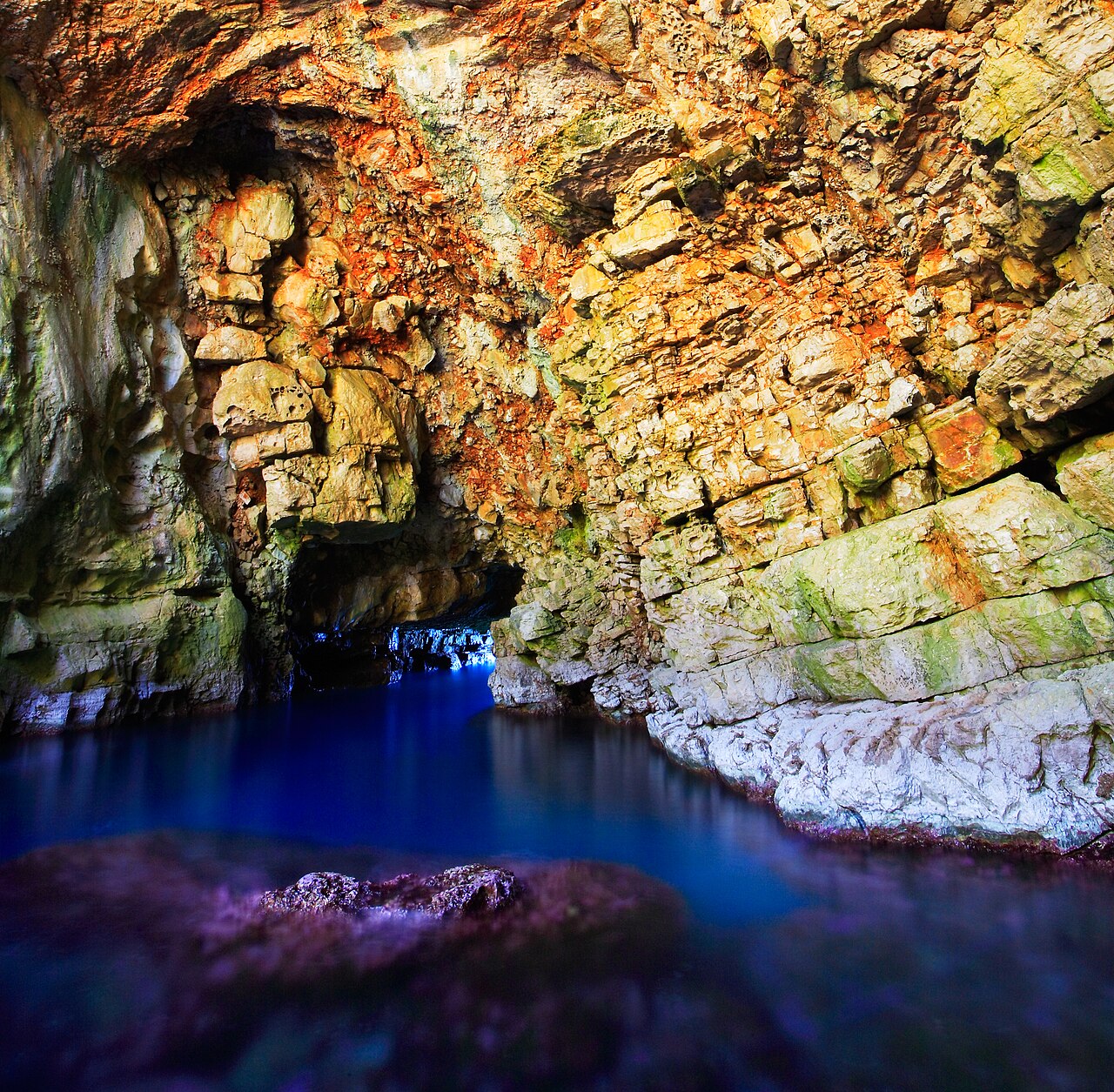
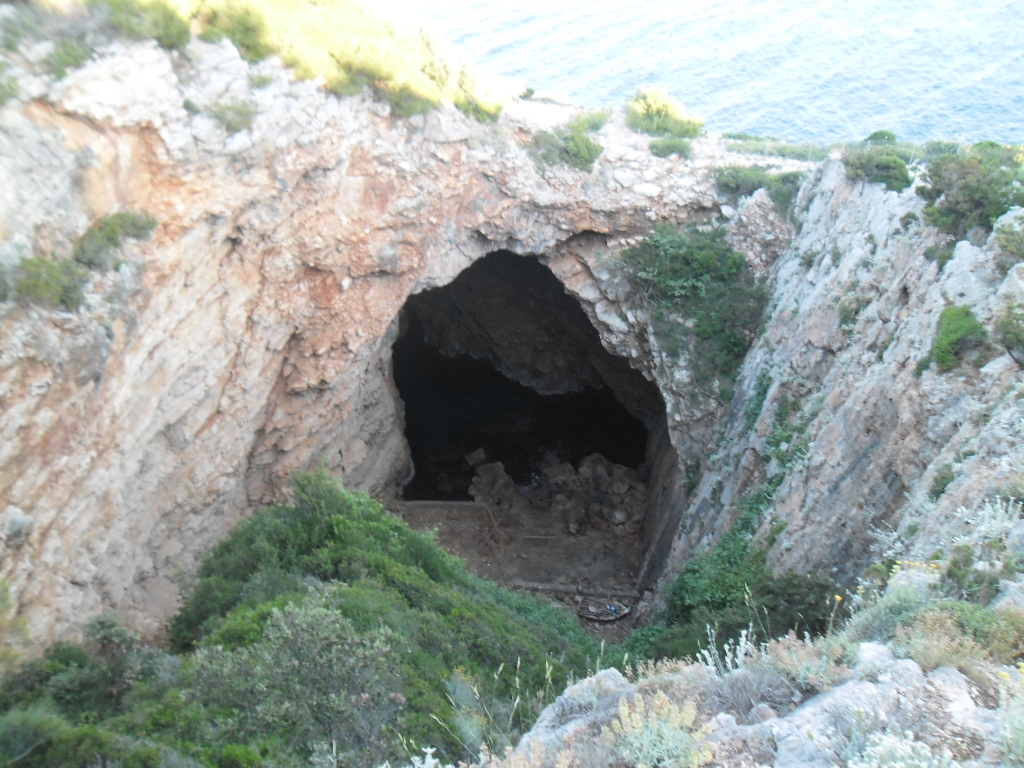
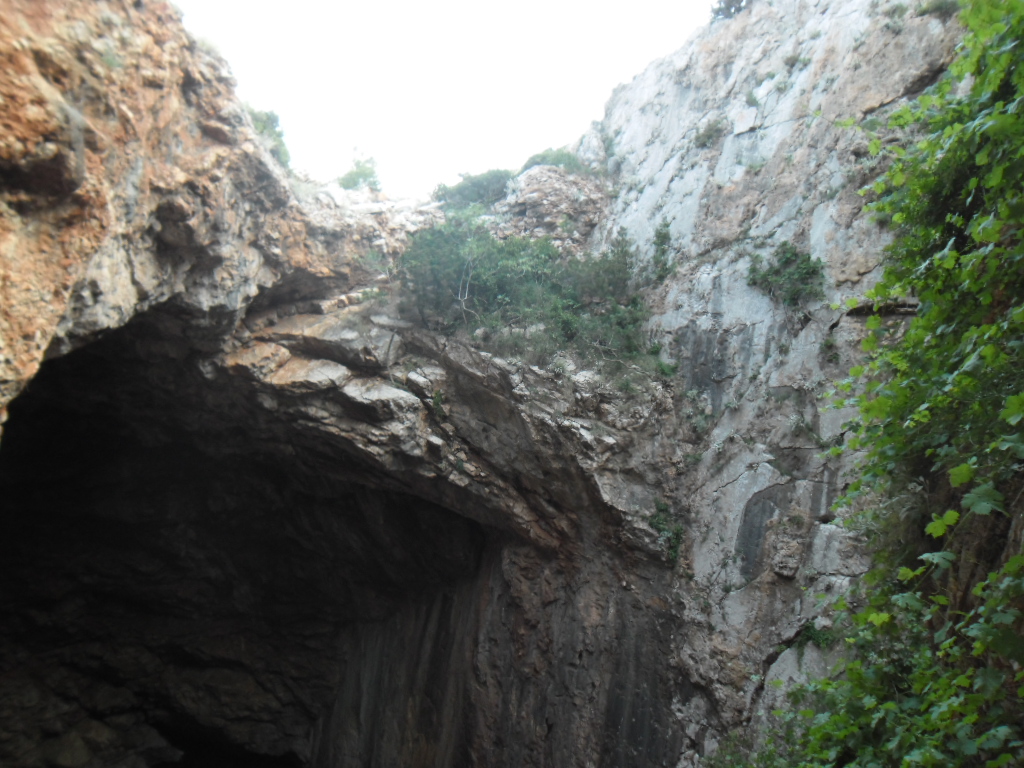
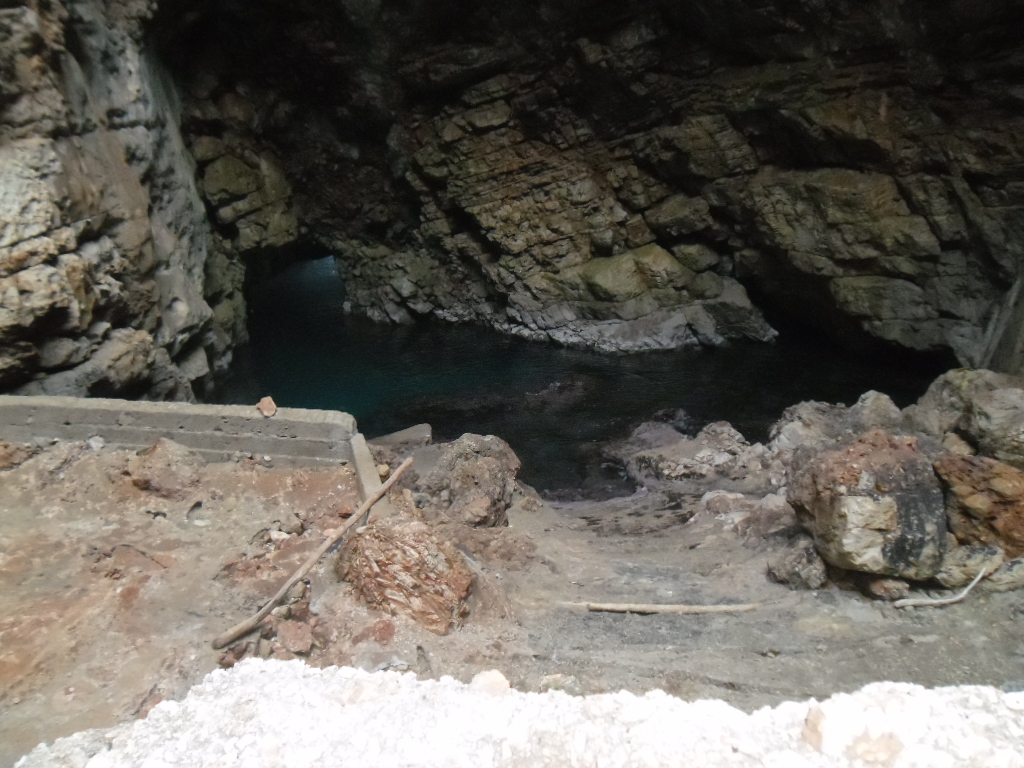
On the south coast of Mljet island in southern Dalmatia, Croatia, below Babino Polje village, Odysseus' Cave (Odisejeva špilja) is a collapsed sea cave named for the legend of the shipwrecked Odysseus. Its roof caved in long ago, so around midday sunlight pours through the opening and turns the seawater a glowing blue, while a short tunnel about 4–5 m wide and roughly 20 m long links the pool to the open Adriatic — you swim or take a small boat in. Unlike the national park's salt lakes, where snorkeling is restricted, this is clear open sea famous for swimming and snorkeling, with visibility of about 10–20 m. Depths run from 1–8 m along the rocky edges to around 10 m mid-tunnel, so it suits everyone from beginners up, though the narrow entrance can get swelly. As of 2026 there are no facilities or ticket booth on site.
The signature glowing-blue 'blue water' as light drops through the collapsed roof — peak effect around midday (roughly 11:00–14:00)
Swimming through the sea-carved tunnel (about 4–5 m wide, ~20 m long) that connects the cave to the open sea
Clear water with 10–20 m visibility; Adriatic fish to spot among the rocks
Surrounding limestone cliffs used as cliff-jumping spots (marked 10/20/30/40 m — experienced jumpers only)
The Mediterranean pine-forest trail and rocky shoreline reached from Babino Polje village
Good to know
SafetyCliff jumping is the biggest injury risk here. People leap from marked 10/20/30/40 m points, but jumping without knowing the depth and rock layout can be fatal. Beginners should not attempt it, and even experienced jumpers should check the water depth at the entry point first.
SafetyThe land approach is a steep goat path and improvised rock steps through stone and olive groves. It is slippery — wear water shoes or trail shoes that cover your feet and descend carefully.
SafetyThe narrow 4–5 m entrance channels swell, which can push you onto the rock. Don't enter alone, carry a float/buoy, and stay alert for boats and tour vessels moving through the tunnel.
SafetySea urchins cling to the rocks — a step can drive spines into your foot. There is no lifeguard, shade, or drinking water on site, so watch for chilling after long spells in the water and bring water, a hat, and sun protection.
SeasonThe season runs May–October (peak June–September), with summer water around 22–25°C. When the south wind (jugo) blows hard or at high tide, the Ogiran reef in front of the cave submerges and the sea gets rough — check conditions before setting out. The colour is best at midday.
MannersDon't touch or step on marine life and don't stand on the rocks underwater; carry your rubbish out and use reef-safe sunscreen.
RulesThe nearby Mljet National Park (the salt lakes in the northwest) has its own entry ticket and swimming rules, separate from the cave. If you combine the two, check the park's rules separately — the cave itself lies outside the park and is free.
Practical info
Reach the cave by driving or taking a minibus to Babino Polje on Mljet, then walking down a marked trail (about 20 minutes), or by joining a private/guided boat tour from Saplunara, Pomena or nearby to enter from the sea. Midday in high season (June–September) is best; boat prices, tour times and any national-park fees change, so confirm the latest details before you go.
On-site reviews📍 Verified on-site
No reviews yet. If you are here, be the first to leave one.