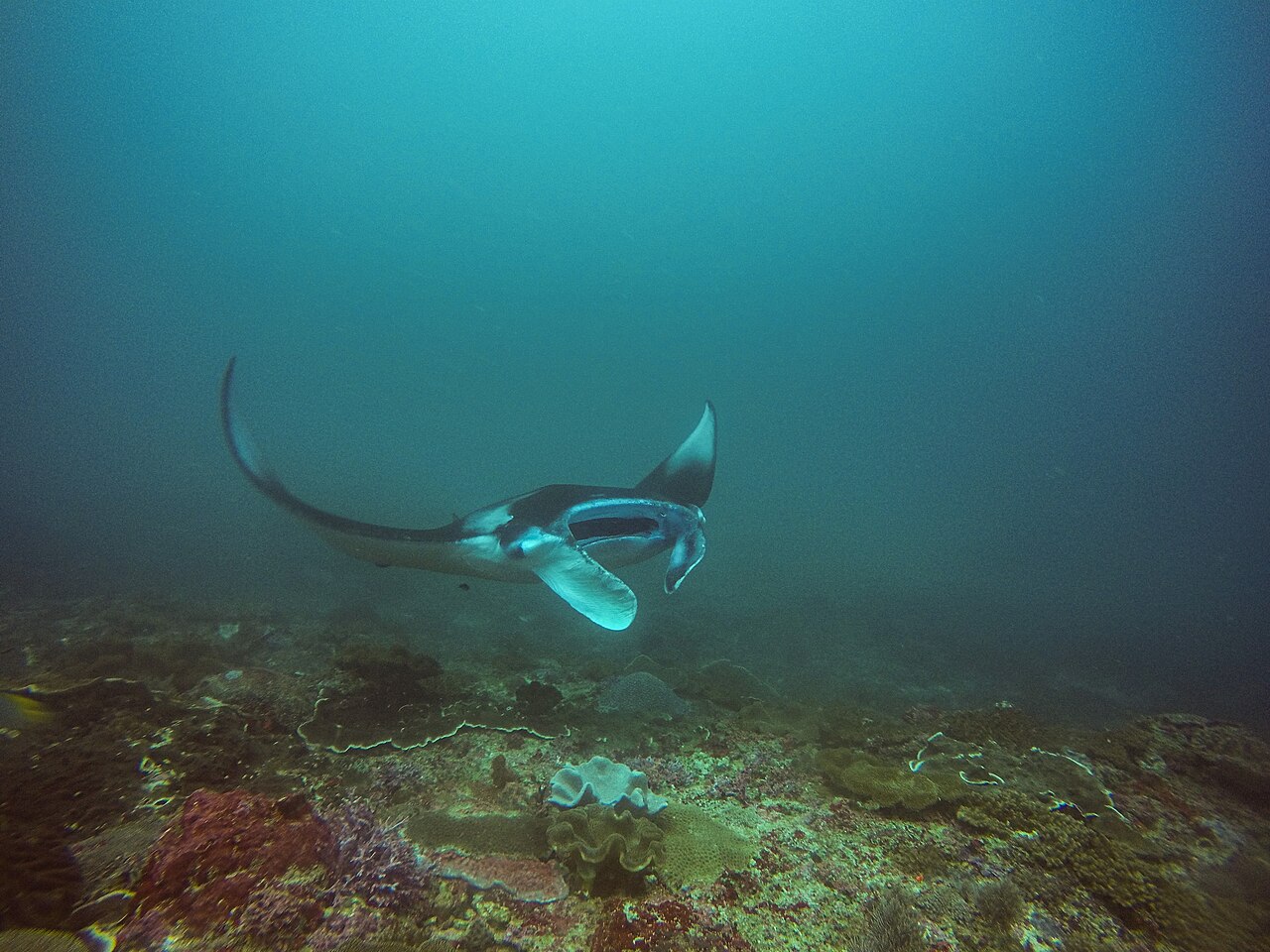
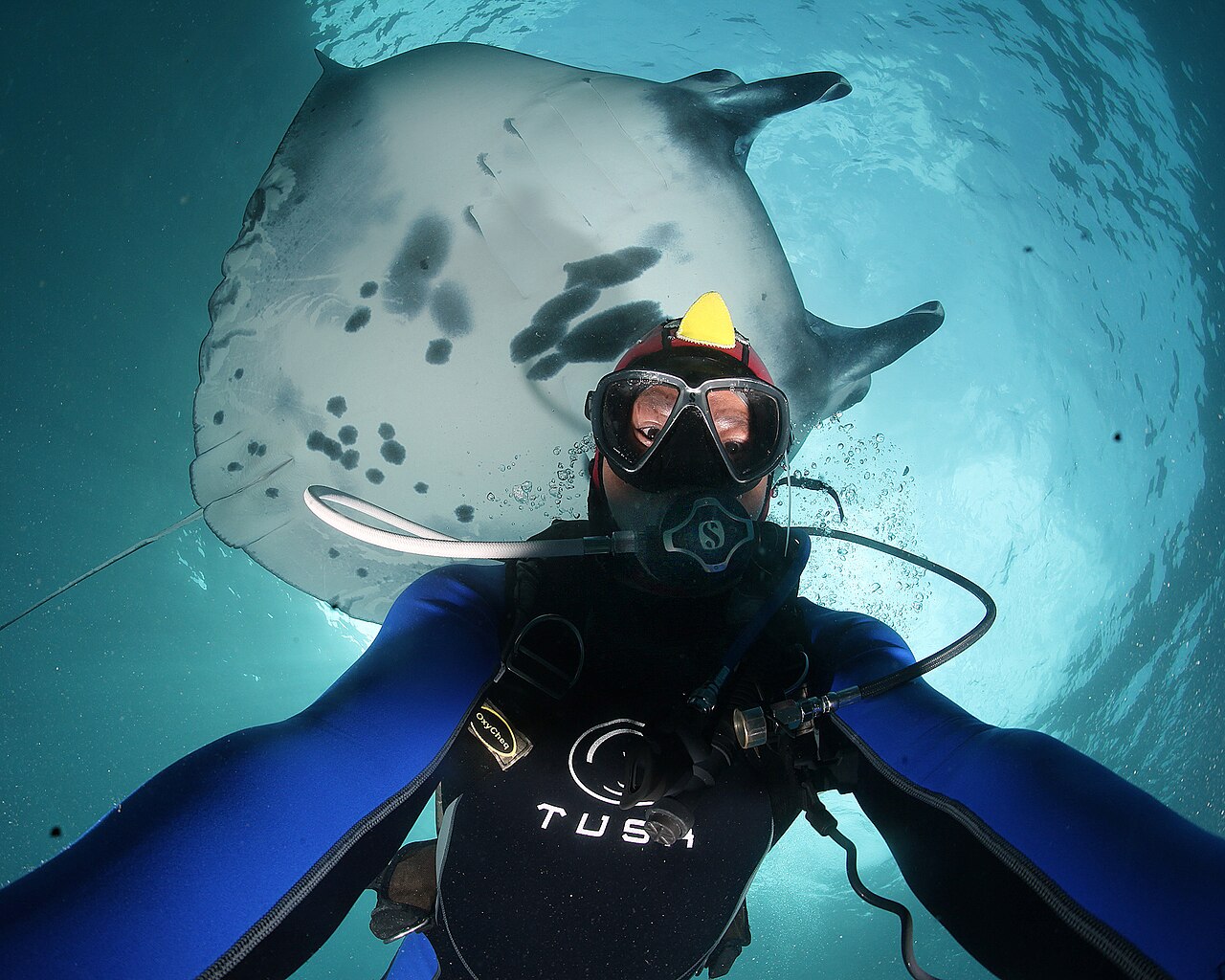
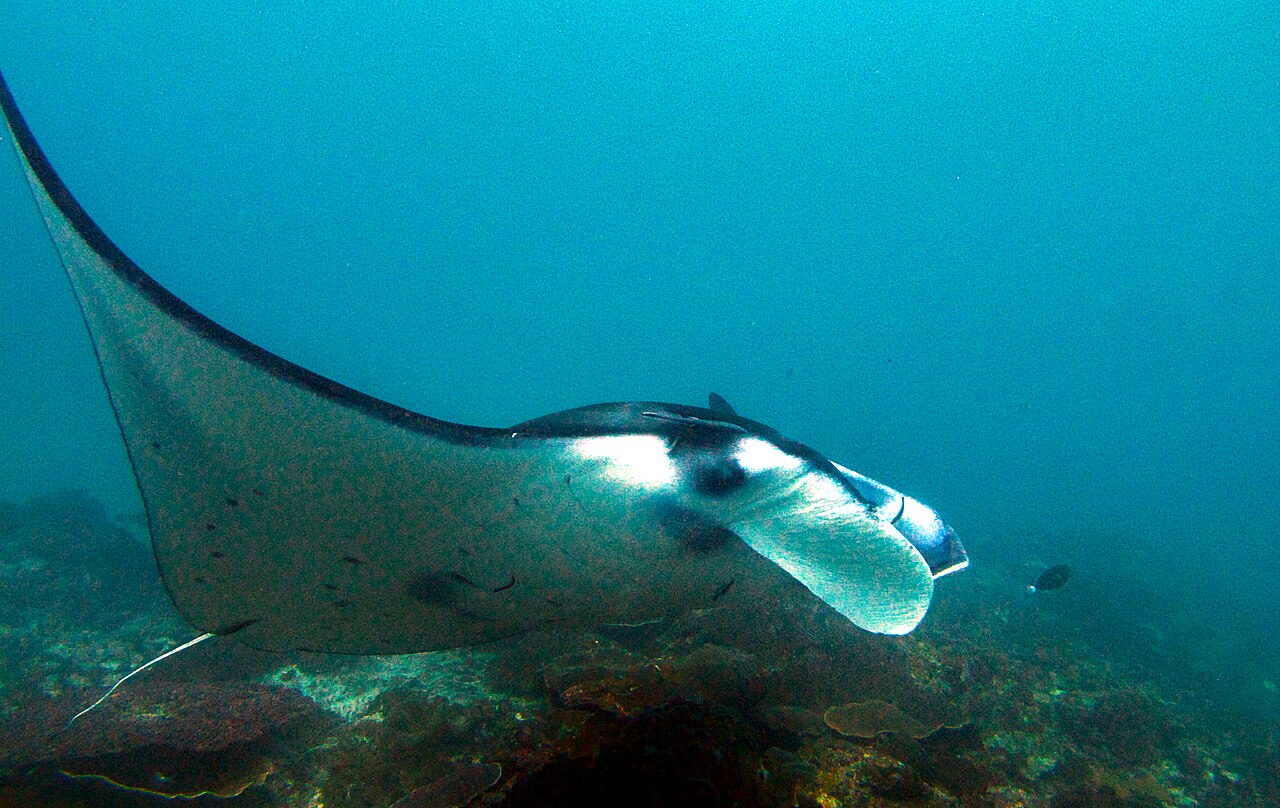
Manta Point sits off the southwest coast of Nusa Penida, an island southeast of mainland Bali, where reef mantas queue up over cleaning stations that sit only 5-15 m down. That shallow depth is exactly why freedivers come: on plankton-rich days the mantas rise almost to the surface, so a single breath-hold puts you at eye level with an animal that can span four metres. Twenty minutes away by boat, Crystal Bay drops from a 3-10 m coral slope to a 40 m wall, letting visitors combine a manta trip with depth training in the same day. Visibility usually runs 15-30 m and water sits around 26-28°C, but from July to October cold upwelling drives a thermocline that can push temperatures below 20°C, the same current that brings mola mola up from the deep. Local school logs through 2026 report frequent manta encounters, though nothing is guaranteed with wild animals, and an MPA permit plus island entry fees apply on top of trip costs.
The cleaning stations at Manta Point - bommies at 5-15 m that mantas circle back to again and again. Hold position off to the side and a single dive can put several of them in front of you
Surface feeding - when plankton is thick the mantas barrel-roll just under the surface, and there is no reason to go deep at all
Crystal Bay's 3-10 m coral garden and resident turtles - shallow and sheltered enough to serve as the warm-up and breathe-up spot before or after a manta trip
The Crystal Bay wall and arch - the wall falls to 40 m and is a good place to build depth feel, while a roughly 20 m long arch at 8-10 m is opened as a swim-through only for experienced groups
Mola mola season, July to October - the cold upwelling that brings sunfish shallow is the same one that makes the water its clearest and its coldest
Good to know
SafetyThis water sits in the Lombok Strait and takes its current full force. Downcurrents and upwellings appear without warning around the Crystal Bay headlands, and divers have been swept away and killed here. Freedivers are not exempt. Check the tidal charts and do not enter without a local guide who has read the water that day.
SafetyShallow water blackout and LMC (samba) happen at 10-15 m, not just on deep dives. Never dive alone, hold the one-up-one-down rule, and have your buddy stay eye-to-eye with you on the buoy through a full 30 seconds of recovery breathing. Anything past 20 m belongs on a school line with a lanyard and counterballast rigged, with surface intervals at least three times the length of the dive.
SafetyThe Crystal Bay arch and cave are overhead environments. Once there is rock above you, a problem cannot be solved by going straight up. Do not attempt the swim-through except with an experienced group under instructor supervision, and never solo or as a spur-of-the-moment 'just once' decision.
SafetyDive and snorkel boats crowd the site, and propeller strikes on ascent are a real risk. Always deploy a buoy or SMB, look up throughout your ascent, and surface with one arm extended above your head. Do not swim across the lanes between moored boats.
SeasonJuly to October brings the best visibility but also thermoclines that can drop the water below 20°C, causing rapid heat loss and making equalisation harder. Bring a 5 mm suit or thicker and re-balance your weighting for it. Manta Point is fully exposed, so a big swell routinely cancels the trip or shifts it to an alternative site.
RulesMarine protected area rules prohibit touching or chasing mantas, hovering directly over a cleaning station, standing on coral, and anchoring on reef. Skip the flash entirely when shooting at the surface. Violations can be reported through your operator or the MPA office. MPA permits, island entry fees and the Bali tourist levy are all charged separately and change often, so confirm current rates before you travel.
CautionThe Sanur-Nusa Penida fast boats have a history of accidents. Avoid informal tickets sold by touts at the harbour and any visibly overloaded departure, and locate the life jackets yourself when you board. Standard travel insurance often excludes freediving, so check whether you need a rider before you book.
Practical info
From Ngurah Rai International Airport it is roughly 30-60 minutes by car to Sanur harbour, then a 30-45 minute speedboat crossing to Nusa Penida, with cars and scooters for getting around the island. Mantas are present year-round, though April to November offers the steadiest sea state and July to October trades warmth for visibility and mola mola. Manta freediving trips must be booked with a local school in advance, and most operators will ask about certification and experience before running a depth session. Prices, departure times and MPA permit requirements change frequently, so confirm the current details directly with your operator when you book.
On-site reviews📍 Verified on-site
No reviews yet. If you are here, be the first to leave one.