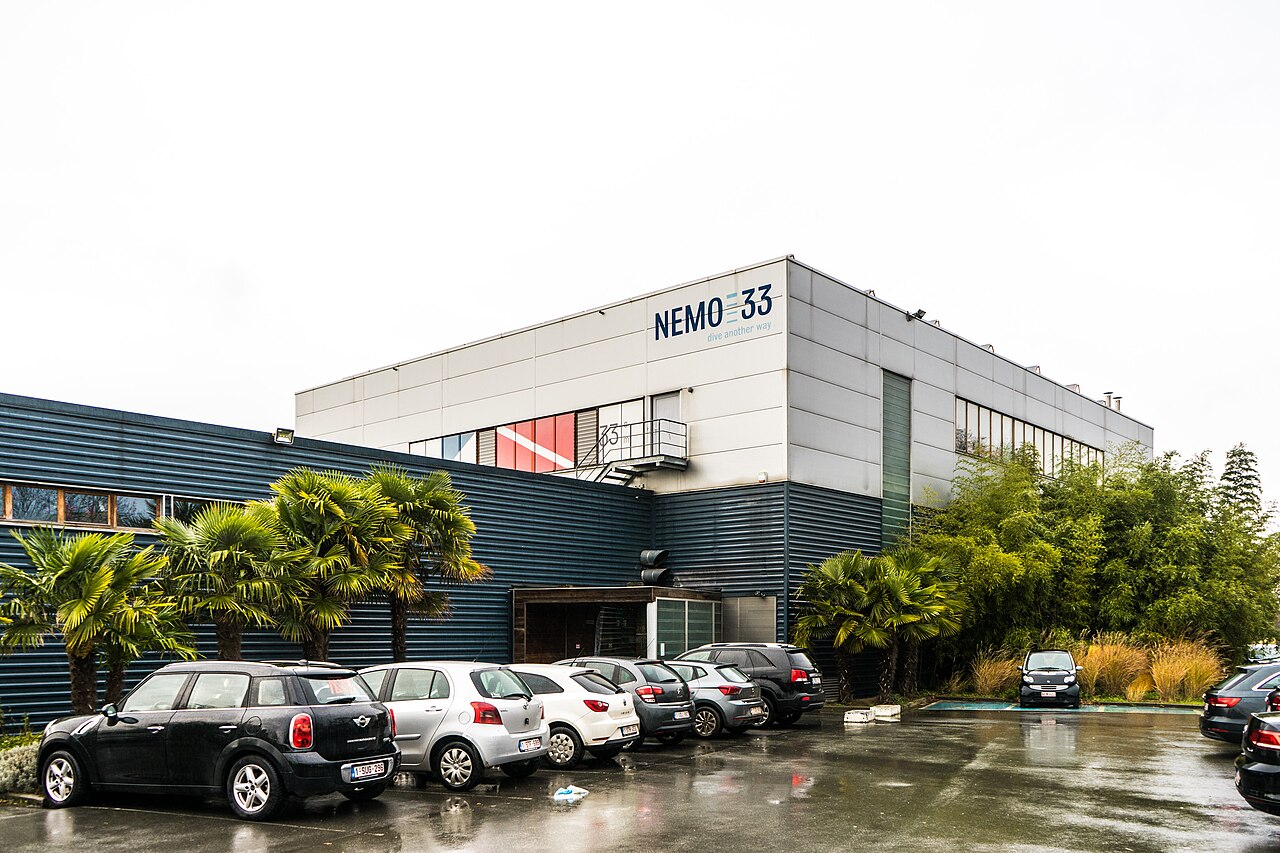
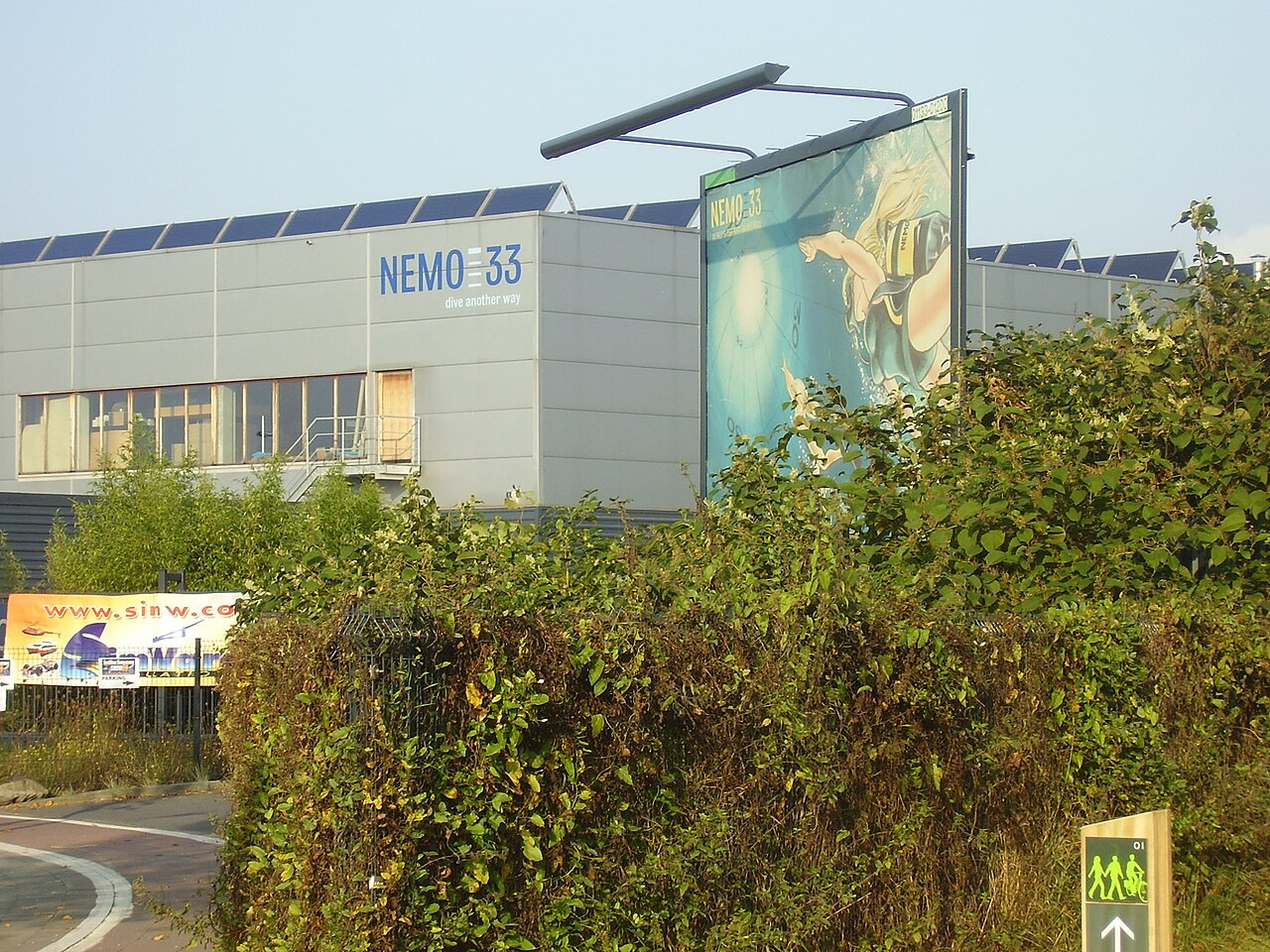
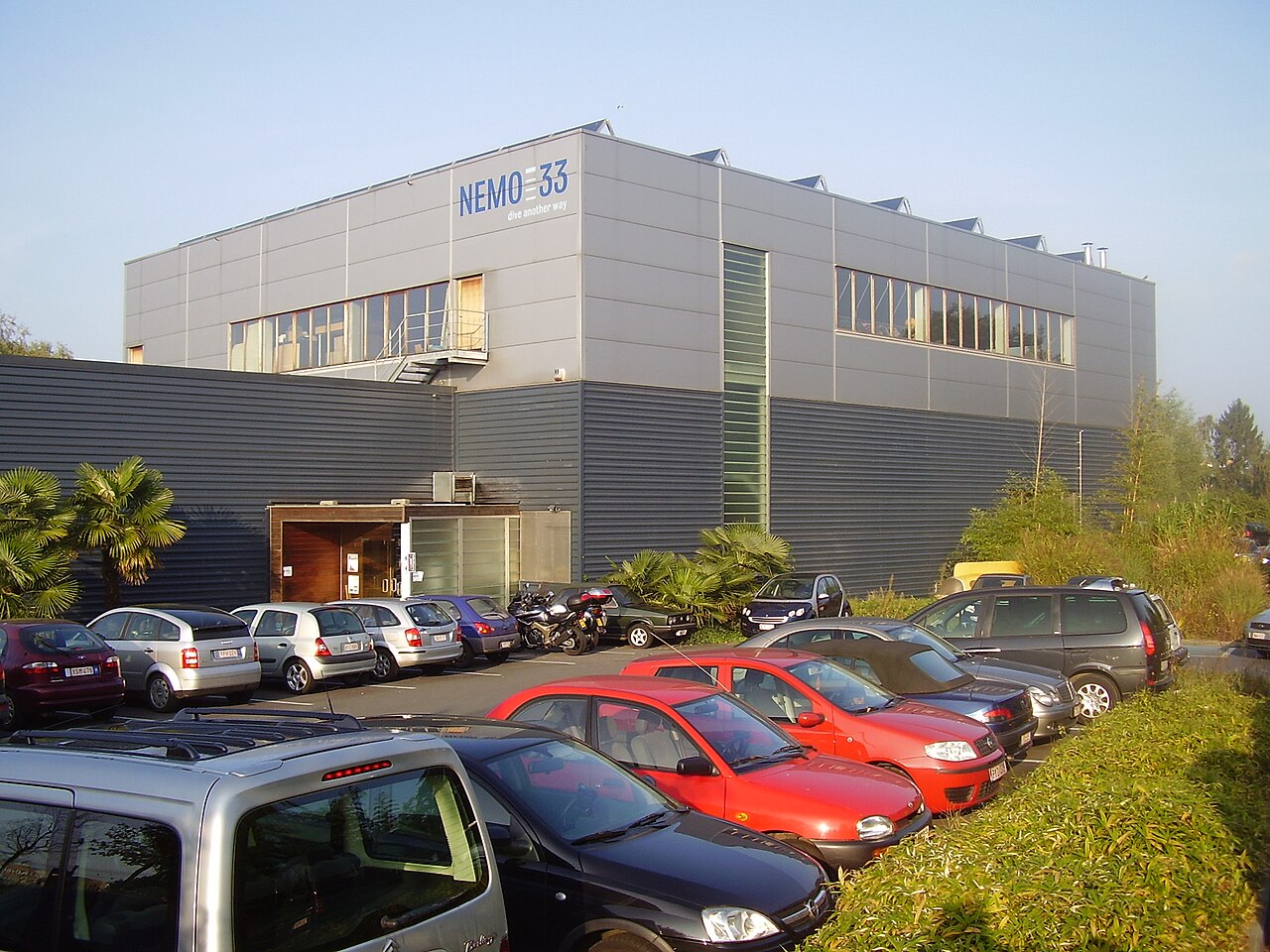
Nemo 33 is an indoor deep pool in Uccle, southern Brussels. It opened in May 2004 and held the record for the world's deepest indoor pool until Italy's Y-40 took the title in 2014. The layout steps down from shallow water to platforms at 5 m and 10 m before dropping into a vertical shaft that bottoms out at 34.5 m, so you can break a session into progressive equalisation targets. Its 2.5 million litres of filtered spring water are solar-heated to roughly 30 °C (the venue markets it as 33 °C), which means no wetsuit, minimal eye irritation and effectively unlimited visibility. As of 2026 the facility is still operating normally, sharing the tank between scuba sessions, freediving slots, swim classes and underwater filming, which is exactly why European freedivers treat it as a winter training base.
The tiered profile - shallow area, 5 m platform, 10 m platform, then the 33 m pit - lets you build depth in controlled steps and separate equalisation work from freefall work.
Simulated caves and an underwater house at the 10 m level, plus viewing windows on several floors. A landmark for scuba divers, but an overhead environment that freedivers are restricted from entering.
Around 30 °C filtered spring water with little to no chlorine sting, which makes long sessions and eyes-open or no-mask drills far more tolerable.
Being indoors, there is no swell, current or visibility variable, so conditions are near identical year-round and progress is easy to measure objectively.
Now fourth among the world's deepest pools behind Deep Dive Dubai (60 m), Deepspot (45 m) and Y-40 (42 m), but far easier to reach than any of them if you are already in Europe.
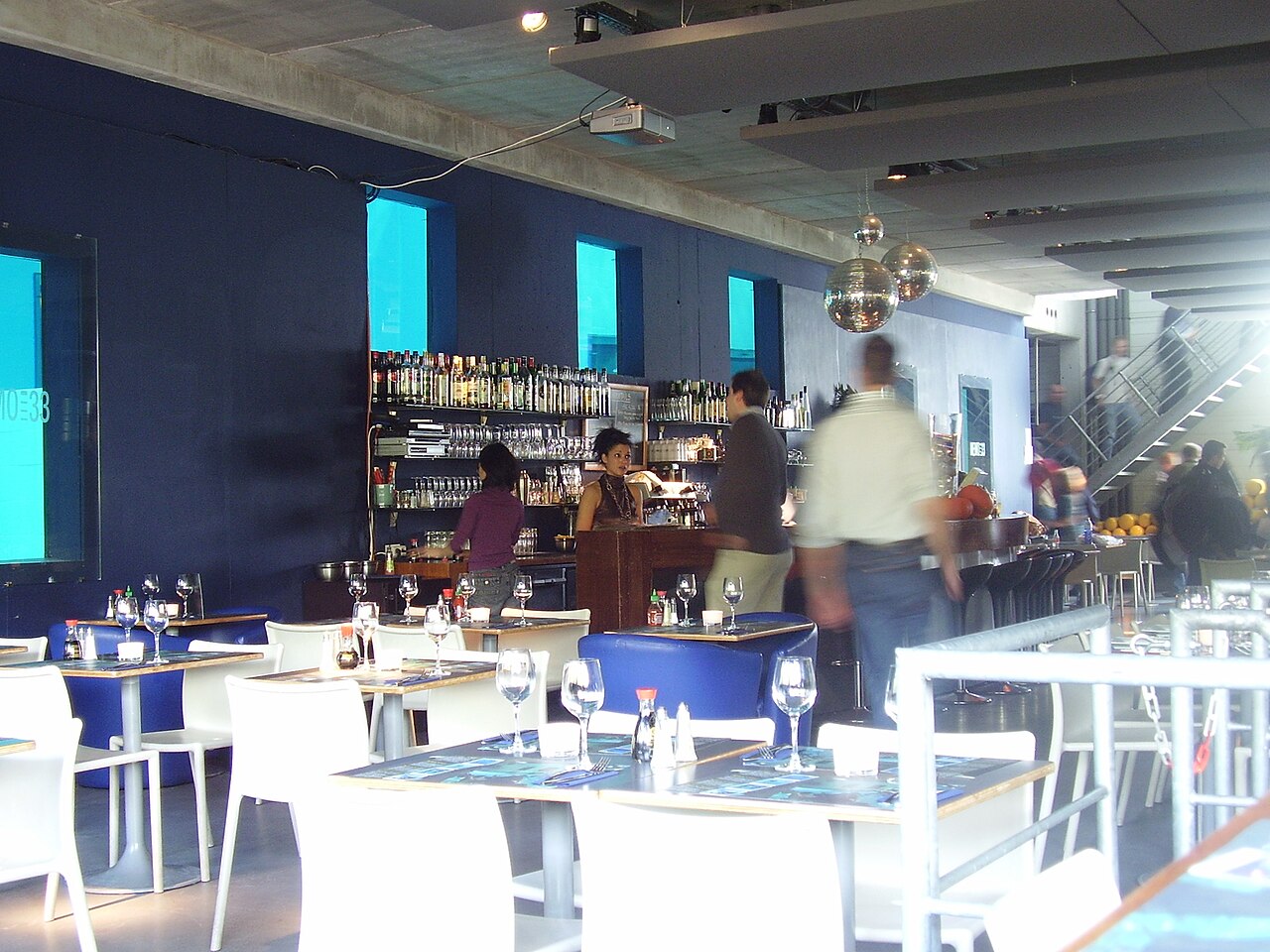
Viewing windows and an on-site restaurant mean non-diving companions can actually watch the session rather than wait in a car park.
Good to know
SafetyShallow water blackout and LMC arrive without warning, usually in the last metres of the ascent or seconds after surfacing. Buddy teams - one diver down, one watching from the surface - are a house rule, and you should stay within arm's reach with eyes on your partner for at least 30 seconds after they surface. A pool does not make hypoxia survivable on its own.
RulesStatic apnea is forbidden and solo entry is not allowed. There are also restrictions on swimming or freediving over the deep pit and on passing through the section where the caves are, so the depth and zones actually available to freedivers depend on the session type and your certification. Confirm the current rules before you book.
SafetyA fatal incident involving a diver training alone in a Brussels pool in 2011 is documented in the freediving community, and the venue's bans on solo entry and static apnea sit in that context. 'Just one quick dive on my own' is the single most common fatality pattern in this sport.
RulesAccess to maximum depth requires you to show a certification card or dive with an instructor. Clubs and groups are asked to send copies of the instructor's certification and insurance plus a signed engagement form roughly ten days before the visit. Apnea courses are advertised from age 15 (scuba from 12), but these conditions change - verify the latest requirements directly.
SafetyWarm, non-irritating water masks fatigue. Because it feels comfortable, people stack far more dives than they would in open water and accumulate hypoxic load. Keep generous surface intervals, never hyperventilate, and skip the session entirely if you have a cold, blocked ears or poor sleep.
SafetyScuba divers, training groups and film crews share the same tank. Keep the ascent line and the water above you clear, use the designated line or lane, and check nobody is overhead before you drop. If you plan to use a lanyard, ask in advance what lines are rigged and whether it is permitted.
SafetyMixing scuba and repeated freedives on the same day raises decompression risk. Leave a comfortable margin before flying after a deep session, and if you have been on scuba, respect the standard pre-flight surface interval.
Practical info
The pool is at Rue de Stalle 333 in Uccle, about 30 minutes south of central Brussels; there is no non-stop service from Seoul, so most travellers connect through a European hub such as Paris, Amsterdam or Frankfurt into Brussels Airport (BRU). It is usable year-round because it is indoors, but freediving and apnea slots run to a fixed timetable and advance booking is effectively mandatory - check prices, session times, age limits and paperwork requirements on the official site or by emailing dive@nemo33.com shortly before your visit, as these change often.
On-site reviews📍 Verified on-site
No reviews yet. If you are here, be the first to leave one.