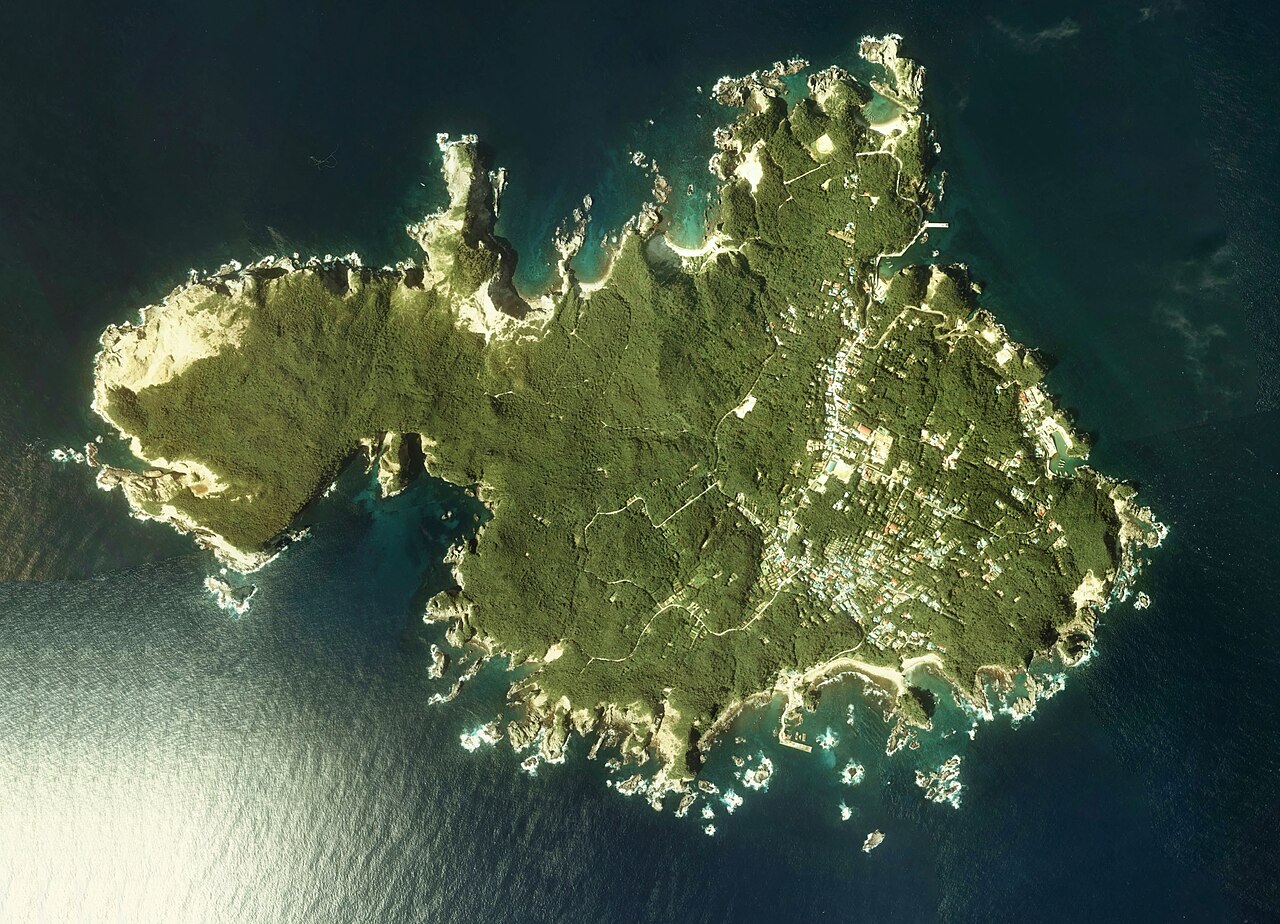
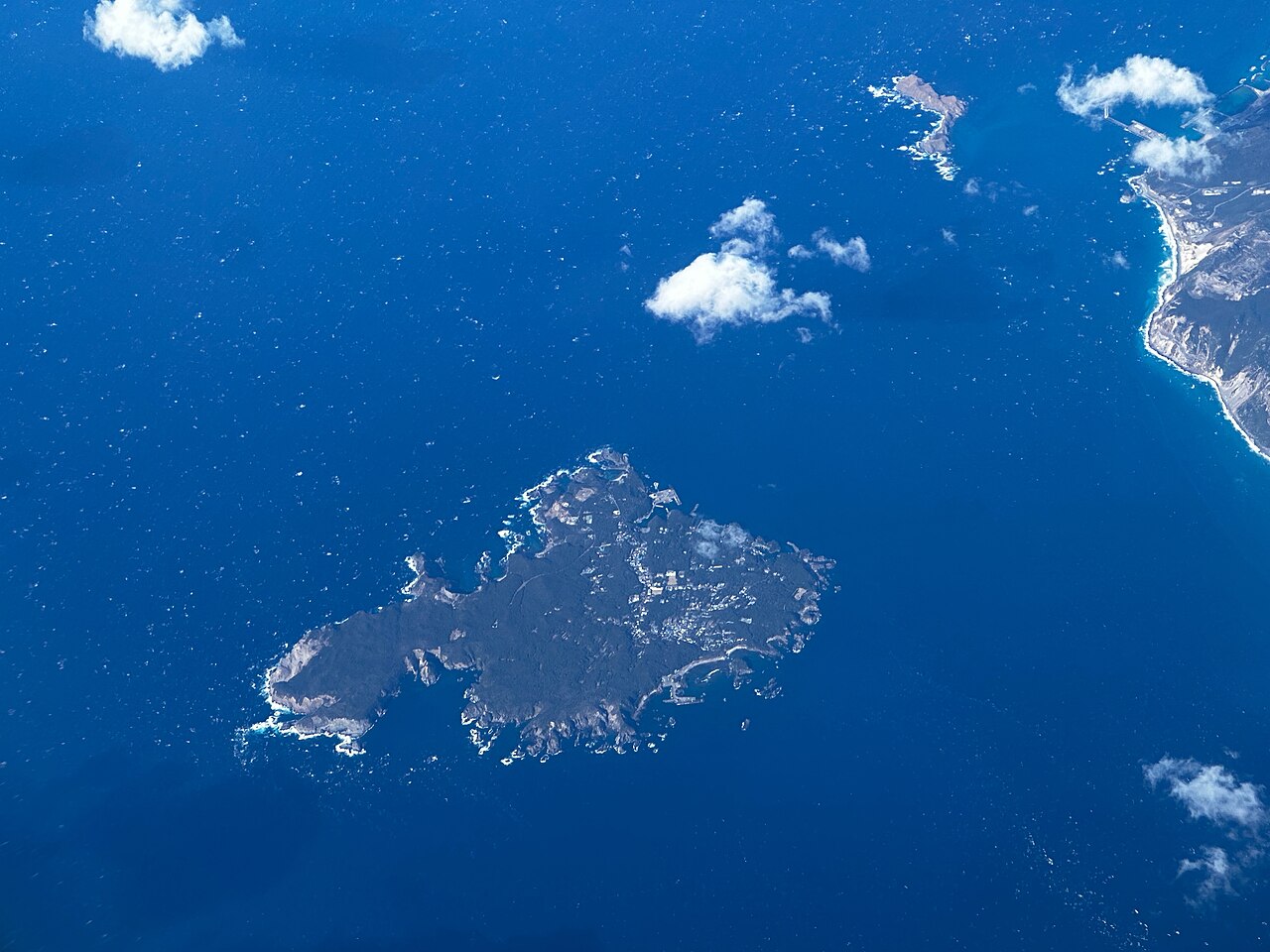
Nakanoura Beach on Shikinejima is a sheltered cove in the Izu Islands, about a 2h20m high-speed ferry ride from Tokyo's Takeshiba pier. Ringed by rock and reef, the inlet stays calm and remarkably clear, so even floating at the surface with just a mask you'll see schools of fish passing right below you. Small table corals grow along the rocky right-hand side, drawing neon damselfish, sergeant majors and butterflyfish carried in on the Kuroshio current — the local tourism association even suggests the cove may hold one of Japan's highest species counts for its size. As of 2026 it remains a beginner- and family-friendly spot, with a summer beach shop and lifeguards on duty.
A reef-sheltered cove with gentle waves and mild current — easy surface floating for beginners and kids.
High clarity (local sources cite roughly 10–20 m visibility) with neon damselfish, sergeant majors and butterflyfish.
Small table-coral colonies along the right-hand rocks, with fish gathering around them.
Gently shelving entry: shallow inshore, deepening to about 4–8 m toward the middle and mouth of the cove.
Summer shop, shower and changing rooms with lifeguards, plus nearby seaside hot springs and island-hopping to Niijima/Kozushima.
Good to know
SafetyThe swim-limit buoys sit fairly far out, so it's easy to drift beyond the cove. Outside the inlet the rocks and current pick up — stay inside the buoys, don't snorkel alone, and carry a float.
SafetyLeave the sheltered cove (for example toward adjacent Oura Beach) and waves, current and a rough rocky bottom all increase, making cuts easy. Wear reef shoes, a rashguard and gloves to avoid sea-urchin, barnacle and rock injuries.
SafetyA fogged mask or a leak can trigger panic, which is especially dangerous for beginners — fit your gear in the shallows first. Even in summer, long sessions can chill you, so wear a suit or rashguard to hold body heat.
SeasonWarm water (roughly 22–26°C) is summer-only, and managed swimming with lifeguards mainly runs at the height of summer. Jellyfish become more common from late August, so cover up.
RulesThe tourism association asks visitors not to stand on the table corals on the right-hand rocks except in an emergency. Don't step on or touch coral or wildlife, and use reef-safe sunscreen.
MannersDon't feed the fish or other marine life; keep a respectful distance and take nothing from the reef.
SafetyAccess depends on mainland ferries, which are often cancelled or delayed by weather — build slack into your plans and check the latest sailings.
Practical info
Reach Shikinejima's Nobushi Port from Tokyo's Takeshiba by Tokai Kisen high-speed jet ferry (about 2h20m) or the overnight Salvia Maru ferry (about 9h), then it's roughly a 30-minute walk from the port. The swim/snorkel season runs about July–October (managed swimming and lifeguards centre on midsummer); confirm fares, sailing times and the 2026 beach-opening dates with Tokai Kisen and the Shikinejima Tourism Association before you go.
On-site reviews📍 Verified on-site
No reviews yet. If you are here, be the first to leave one.