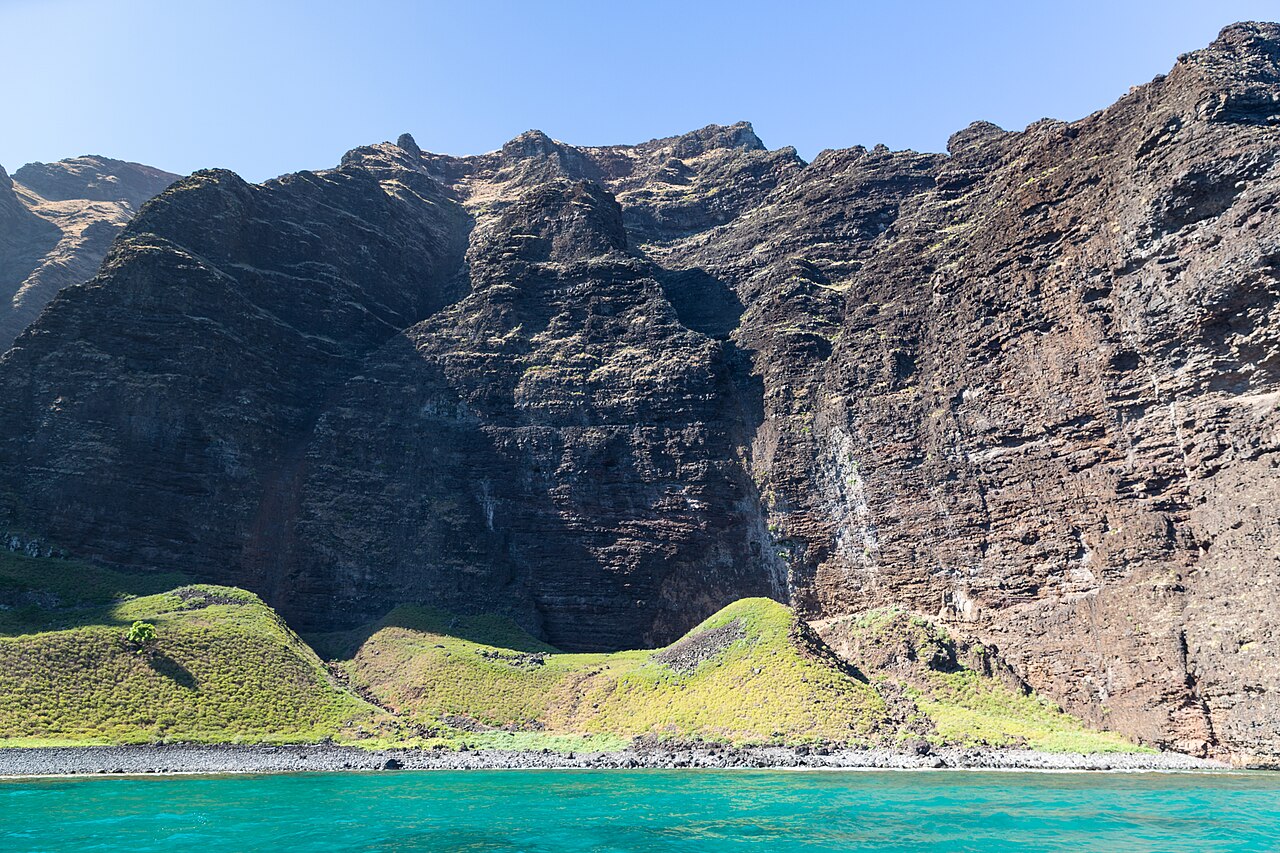
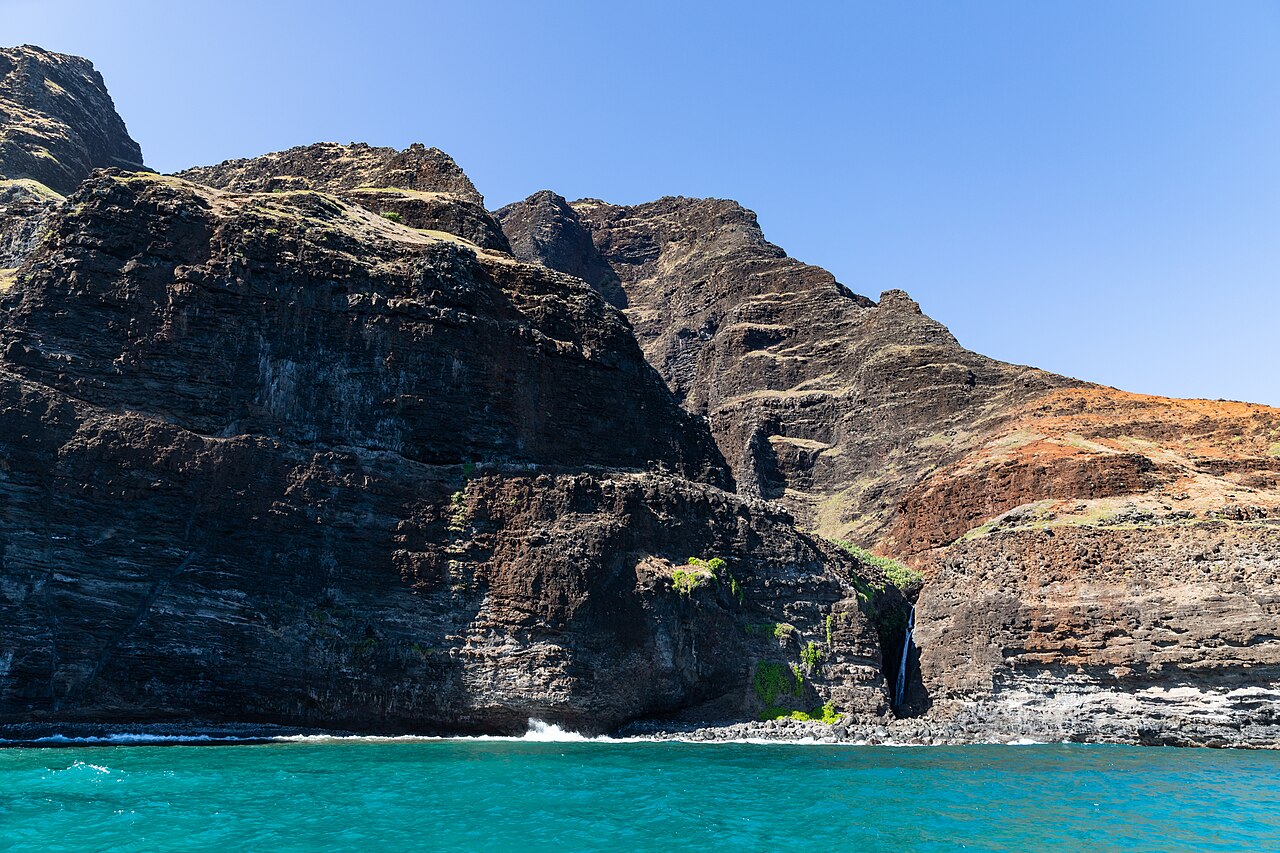
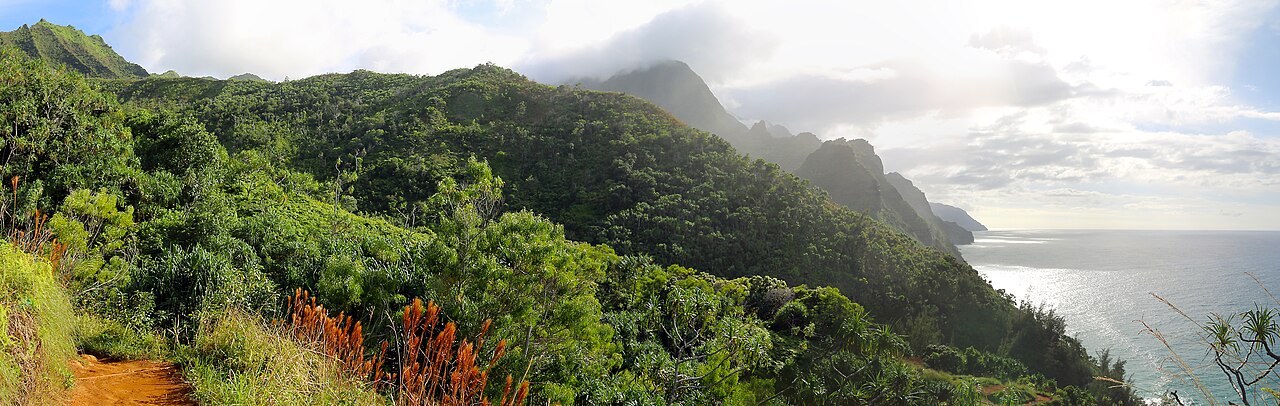
Nā Pali Coast State Wilderness Park is a 6,175-acre protected area along roughly 16 miles of Kauaʻi's rugged northwest shoreline, famous for sea cliffs that rise as high as about 4,000 feet above the Pacific and for the iconic 11-mile Kalalau Trail, which crosses five remote valleys. With no road reaching this stretch of coast, most visitors take it in by hiking, boat tour, kayak, or helicopter, and it remains one of Hawaiʻi's most photographed landscapes and a recurring Hollywood filming backdrop. As of mid-2026, access still runs through a reservation system at Hāʻena State Park, and hiking beyond the 2-mile Hanakapiai point requires a valid overnight camping permit even for day trips to Hanakapiai Falls. Plan a visit here as serious wilderness travel rather than a casual beach outing—weather, permits, and trail status can change quickly.
Kalalau Trail (11 miles one-way) — Hawaiʻi's signature backcountry hike, crossing five valleys to remote Kalalau Beach
Hanakapiai Falls — a waterfall reached via a spur trail from Hanakapiai Beach; currently accessible only to hikers holding a valid overnight camping permit
Sea cliffs rising to roughly 4,000 ft — best appreciated from the Kalalau Lookout in Kōkeʻe State Park, or from a boat or helicopter tour
Kalalau Valley — a historic site with visible remnants of ancient Hawaiian taro (kalo) terraces
Boat, catamaran, and kayak tours — during the calmer summer season (mid-May–September), see the cliffs and sea caves up close from the water
Good to know
SafetyHanakapiai Stream can turn into a dangerous flash flood within minutes during heavy rain. Never cross if the water looks muddy or the flow suddenly rises—wait until the level drops.
SafetyHanakapiai Beach has strong rip currents and surf, and drownings have repeatedly been reported there. There are no lifeguards on duty—heed the posted warning signs and avoid swimming.
SeasonThe Kalalau Trail beyond Hanakapiai is frequently, and sometimes suddenly, closed for winter high surf, storm-related rockfall or washouts, or wildlife control operations. Check the Hawaiʻi DLNR State Parks site for current trail status before you go.
RulesSince 2021, all entry to Hāʻena State Park (the trailhead)—by vehicle or on foot—requires an advance reservation for parking, shuttle, or a walk-in entry pass. Without one, even a day hike to Hanakapiai is not possible.
RulesHiking past Hanakapiai to Hanakapiai Falls or Kalalau requires a valid overnight camping permit, even for day-trippers. Permits open up to 90 days in advance through Hawaiʻi's state camping reservation system and can sell out within minutes for popular dates.
MannersKalalau Valley has long had unauthorized long-term campers. Stay on marked trails and designated camping areas, and pack out all trash—there are only composting toilets and no other services.
CautionBook boat tours, kayak trips, or gear-shuttle services only through operators listed as authorized by Hawaiʻi DLNR. Unofficial 'permit booking' services or resale sites charging a markup for camping permits are not recognized by the state and can result in denied entry.
Practical info
The nearest airport is Līhuʻe Airport (LIH); from there, rent a car to reach Hāʻena State Park at the end of Hawaiʻi Route 560 (the Kalalau trailhead), or book a boat tour departing from Port Allen or Hanalei Bay. Entry/parking reservation prices, camping permit fees, and booking windows change periodically, so verify the latest details on the official websites before you go.
On-site reviews📍 Verified on-site
No reviews yet. If you are here, be the first to leave one.