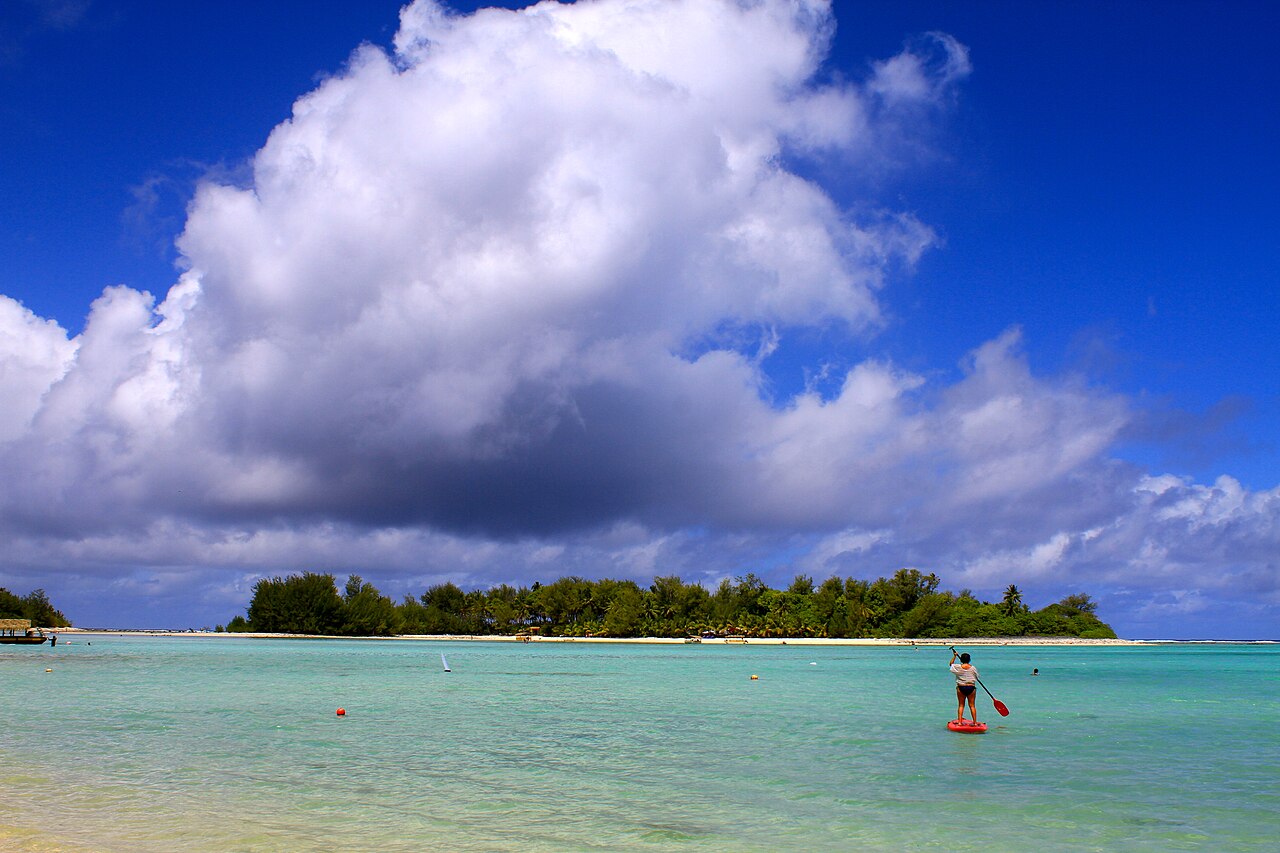
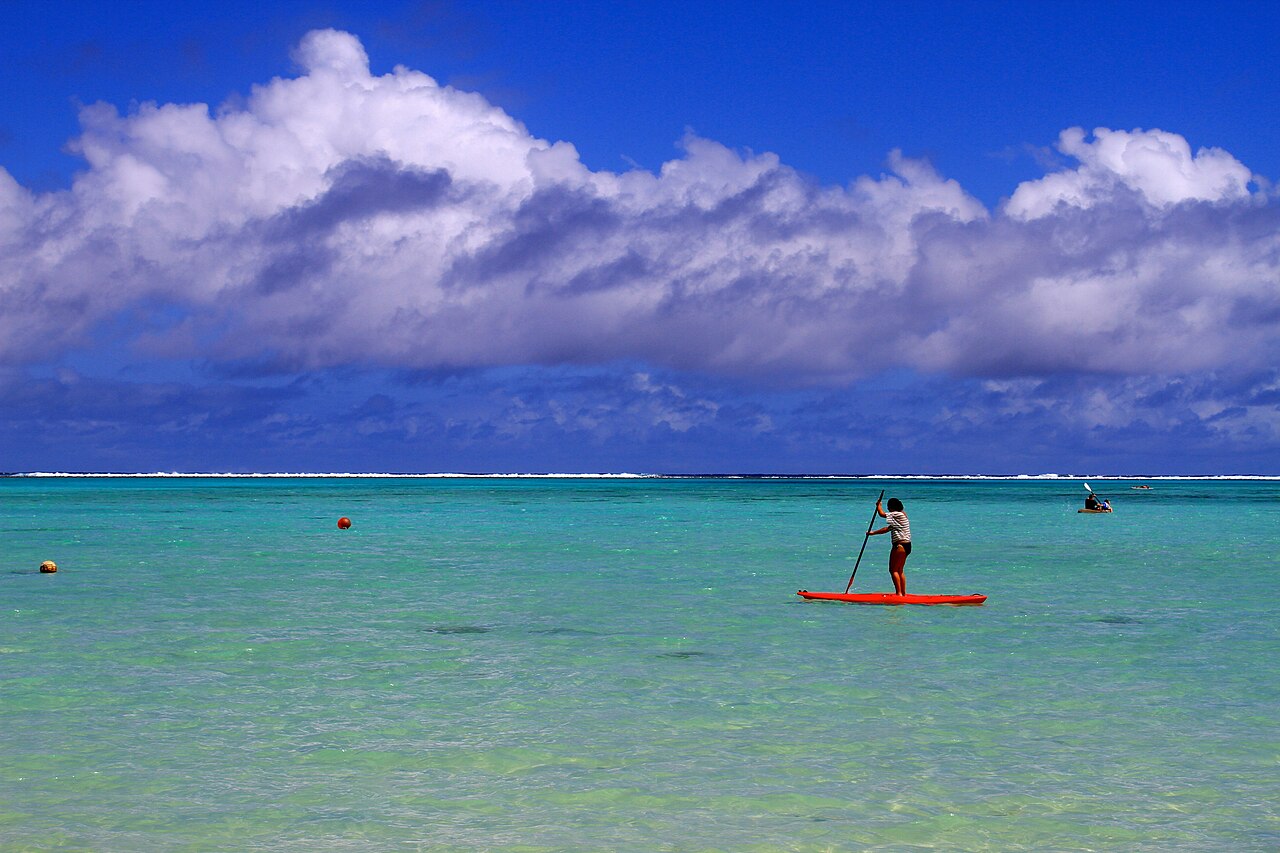
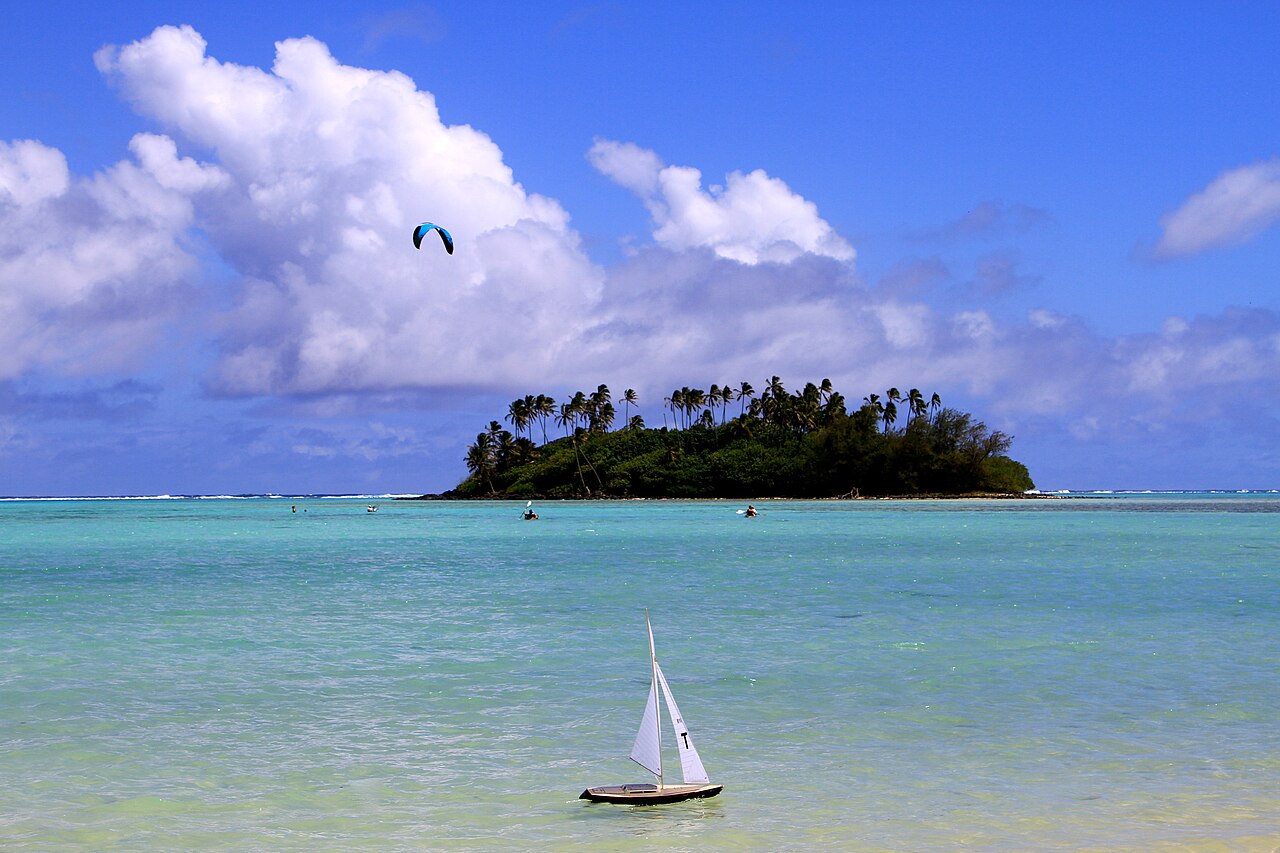
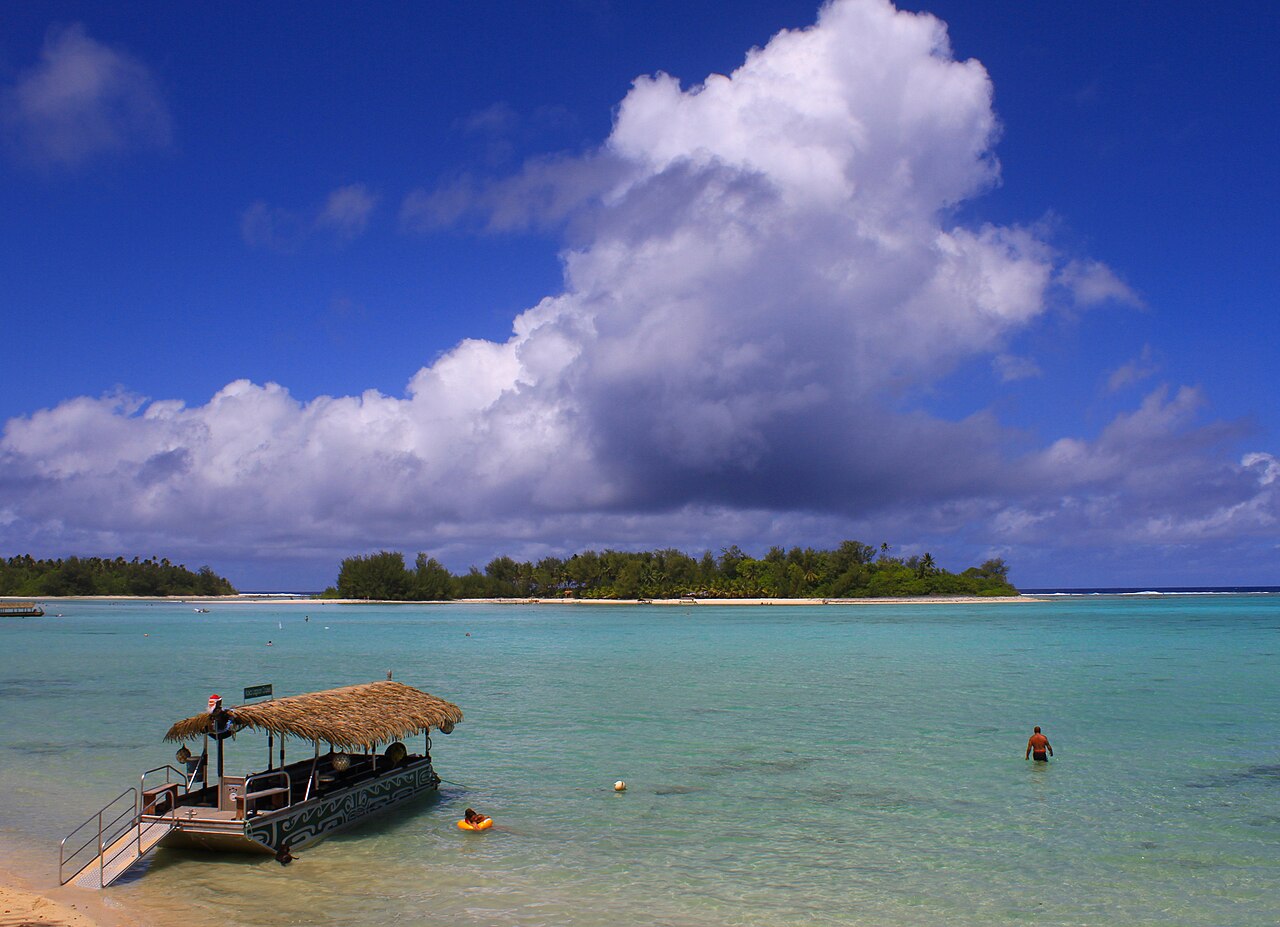
Muri Lagoon, on Rarotonga's south-east coast in the Ngatangiia district, is a shallow, calm sand-bottomed lagoon about 1 km wide, wrapped by four motu (Motutapu, Oneroa, Koromiri and Taakoka) that make it the island's most photographed stretch of water. The inner lagoon is often only waist-deep, but out around the motu and toward the reef you'll find coral bommies and pockets of 2-3 m holding tame tropical fish, giant clams, moray eels and the occasional turtle - ideal for beginners and families. Water sits around 24-27 C with visibility of roughly 10-20 m, though this varies a lot with season, tide and nearshore water quality. A crown-of-thorns starfish outbreak ongoing since 2020, plus past bleaching, has thinned live coral in places, so reef condition is patchy from spot to spot.
Coral bommies and dense fish life just east (left) of Muri Beach Club and around the small motu off Nautilus Resort
Giant clams, moray eels and, with luck, a green turtle among the colourful reef fish
Waist-deep, gentle water with easy free beach entry - forgiving for first-timers and kids
Lagoon cruises and glass-bottom boats (e.g. Captain Tama's) that pair snorkelling with a motu barbecue
Clear, settled water in the dry season (May-Oct) and healthy fish schools inside the Ra'ui reserve zones
Good to know
SafetyThe reef passes (ava, channels linking lagoon and open ocean) carry strong outgoing currents that can sweep a snorkeler out to sea. Stay well inside the lagoon and away from any pass, which are marked with warning signs. A lagoon that looks calm from the beach can still be dangerous near the passages.
SafetyAt low tide the water can drop to ankle or knee depth, making coral scrapes and standing on coral easy. Check the tide and swim on a rising or high tide; where it's shallow, glide over the coral rather than walking on it.
SafetyMuri is a busy watersports lagoon with kayaks, SUPs, kitesurfers and small boats. A snorkeler at the surface is hard to see, so use a brightly coloured buoy or float, and swim with a buddy rather than alone.
SafetyA crown-of-thorns starfish outbreak is active. Their spines are venomous and a puncture causes intense pain and swelling, so never touch them and never plant your hands or feet on the reef. The same 'look, don't touch' rule guards against stonefish, fire coral and sea urchins.
RulesAreas set aside as Ra'ui (traditional marine reserves) may prohibit taking or fishing. Don't touch or remove coral, clams or fish, and use reef-safe sunscreen free of oxybenzone and octinoxate.
MannersDon't stand on coral or kick it with your fins, and keep your distance from turtles and giant clams. Some tours still feed fish, but it harms the ecosystem and is best avoided.
SeasonThe dry season (May-Oct, the southern winter) is calmest and clearest for snorkelling, though the water runs cooler. November to April is the wet, cyclone-prone season with more rain, swell and turbidity. The equatorial sun is strong - a rash guard helps against both sunburn and, on long swims, chilling.
Practical info
Muri Beach is about a 20-30 minute drive from Rarotonga International Airport, with free walk-in beach access plus kayak and gear rental and lagoon-cruise tours (often with a motu barbecue). The May-October dry season is best; confirm current Ra'ui rules, tour prices and operating hours locally before you go.
On-site reviews📍 Verified on-site
No reviews yet. If you are here, be the first to leave one.