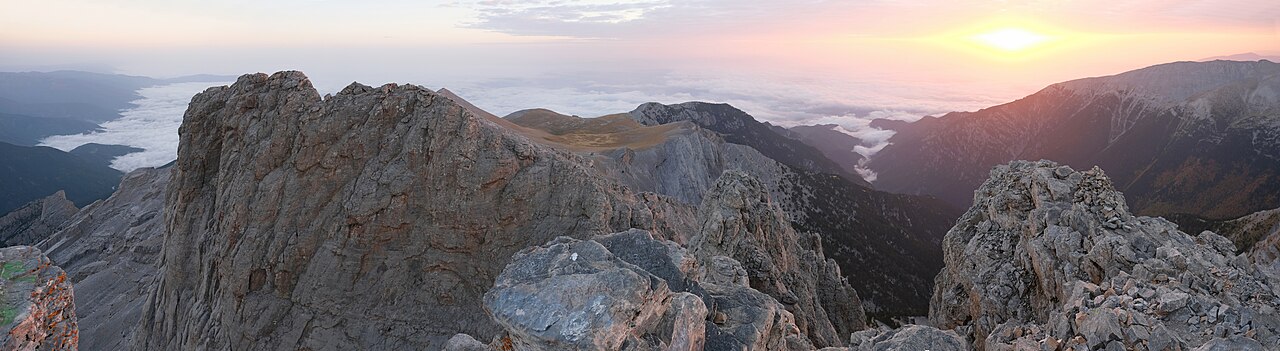
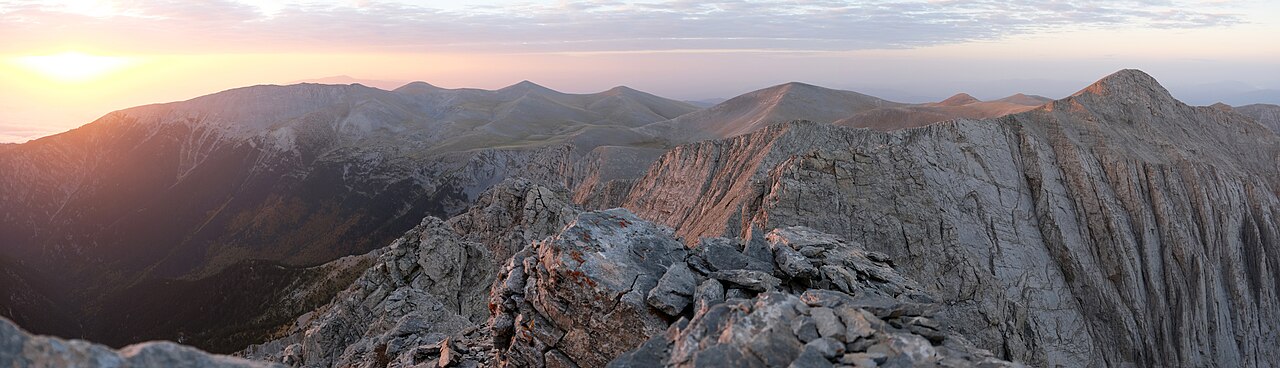
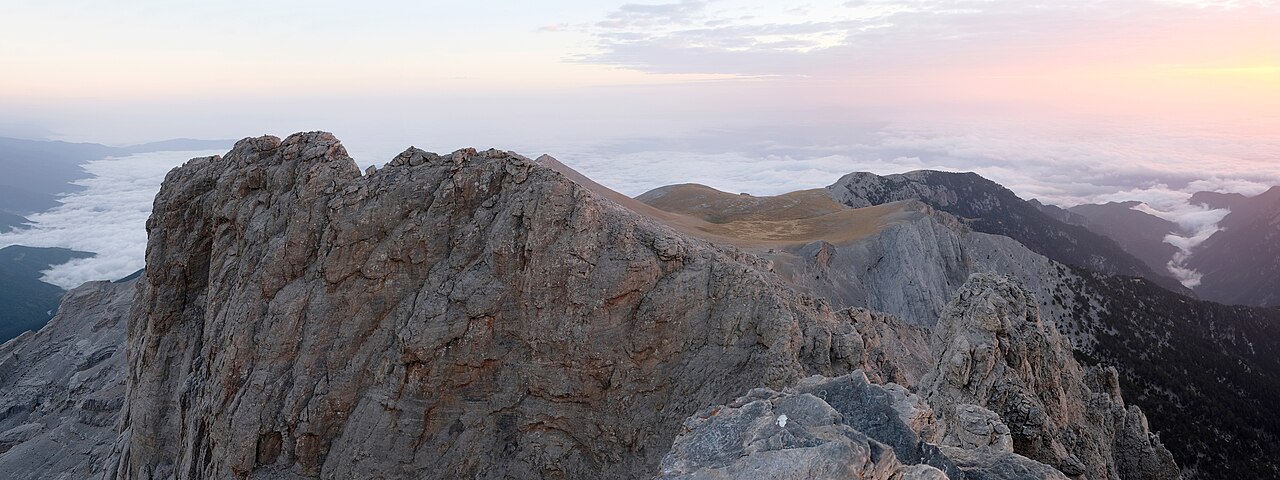
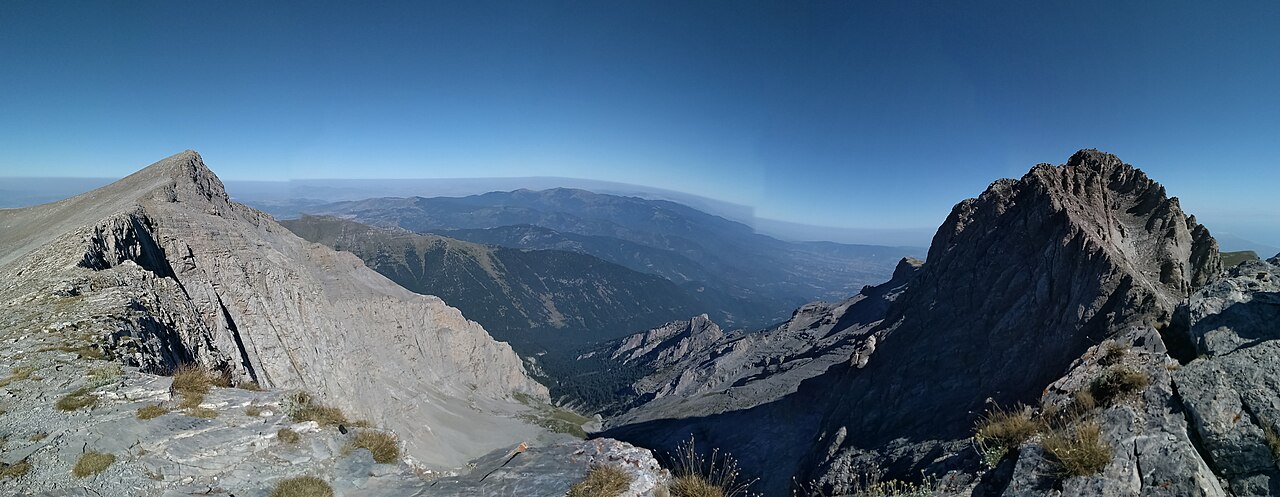
Mount Olympus is Greece's highest mountain, with Mytikas Peak reaching 2,918 m. It is world-famous as the mythological home of Zeus and the Twelve Olympian gods, and rises dramatically from near sea level behind the village of Litochoro. Designated Greece's first national park in 1938 and now a UNESCO Biosphere Reserve, it remains a magnet for hikers. As of 2026 the summit route is open, but the top section is not a tourist stroll — it involves exposed Class III scrambling and should be planned as a serious mountain climb.
Standing on Mytikas (2,918 m), the highest point in Greece, marked by a summit box and logbook
The adrenaline-charged 'Kakoskala' (bad steps) scramble on red-marked rock from Skala (2,866 m) to Mytikas
The Enipeas Gorge and deep forests on the drive/hike up from Litochoro to Prionia
Refuge A 'Spilios Agapitos' at 2,100 m, with sweeping peak-and-sea views from its 'balcony' perch
The sheer rock silhouette of neighboring Stefani (the 'Throne of Zeus')
Good to know
SafetyThe Skala-to-Mytikas Kakoskala section is a Class III scramble with rockfall, loose gravel, and a roughly 1,000 m drop on the right. Wear a helmet, and if you lack scrambling experience, go with a certified guide.
SafetyHigh-altitude weather changes fast. The summit can be ~20°C colder than the lowlands even on sunny days, with strong winds and frequent afternoon thunderstorms. Start early, aim to top out before noon, and turn back if conditions deteriorate.
SeasonThe hiking season is roughly June to October. Refuge A operates only mid-May to end of October, and the Litochoro-Prionia shuttle runs only June to September. Outside this window, snow and ice demand winter gear (crampons, ice axe) and experience.
RulesA reservation at Refuge A (Spilios Agapitos) is essentially mandatory and summer weekends fill up fast. Rather than a rushed single-day Litochoro-Mytikas round trip, plan a two-day itinerary with an overnight at the refuge.
MannersThis is a protected national park. Stay on the waymarked trails and pack out all trash. There are no water sources above the refuge, so carry enough water, and do not disturb the wildlife or vegetation.
CautionPickpocketing risk on the mountain is low, but agree on the fare before taking a taxi in Litochoro or Katerini and confirm whether it is metered or fixed. Avoid touts offering informal 'guiding'; use the mountaineering club (EOS) or certified guides.
Practical info
Litochoro is reached from Thessaloniki by train (the station sits 6.5 km east of the village by the sea) or by KTEL bus via Katerini. From the village to the Prionia trailhead (1,100 m) it is about 18 km on a paved road; a shuttle bus (roughly €2 one-way) runs only on Fri-Sun in June-September, otherwise use a taxi (around €25) or private car (free parking at Prionia). There is no national-park entrance fee, but always reconfirm refuge, shuttle, and guide fees and operating dates for the latest information.
On-site reviews📍 Verified on-site
No reviews yet. If you are here, be the first to leave one.