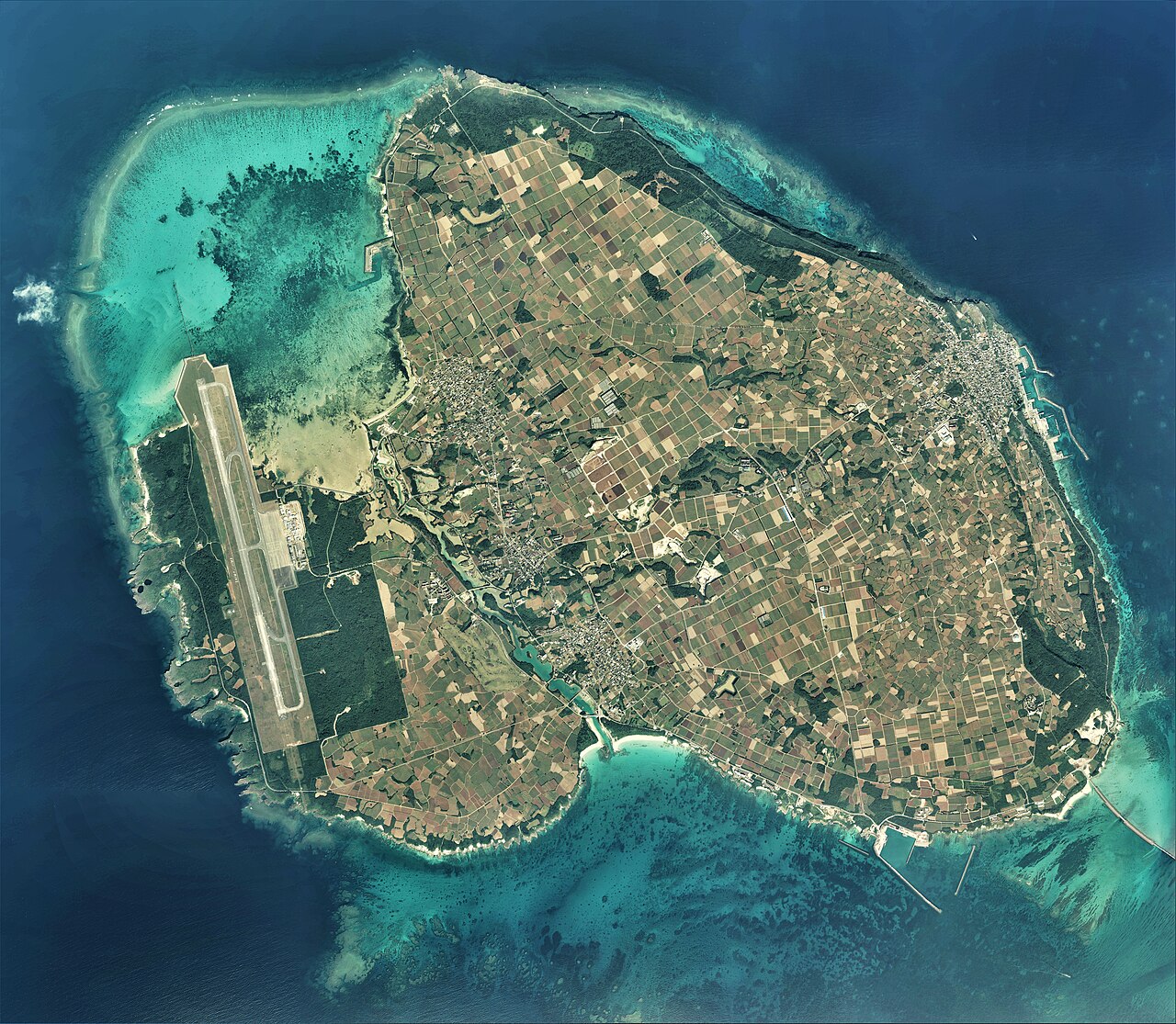
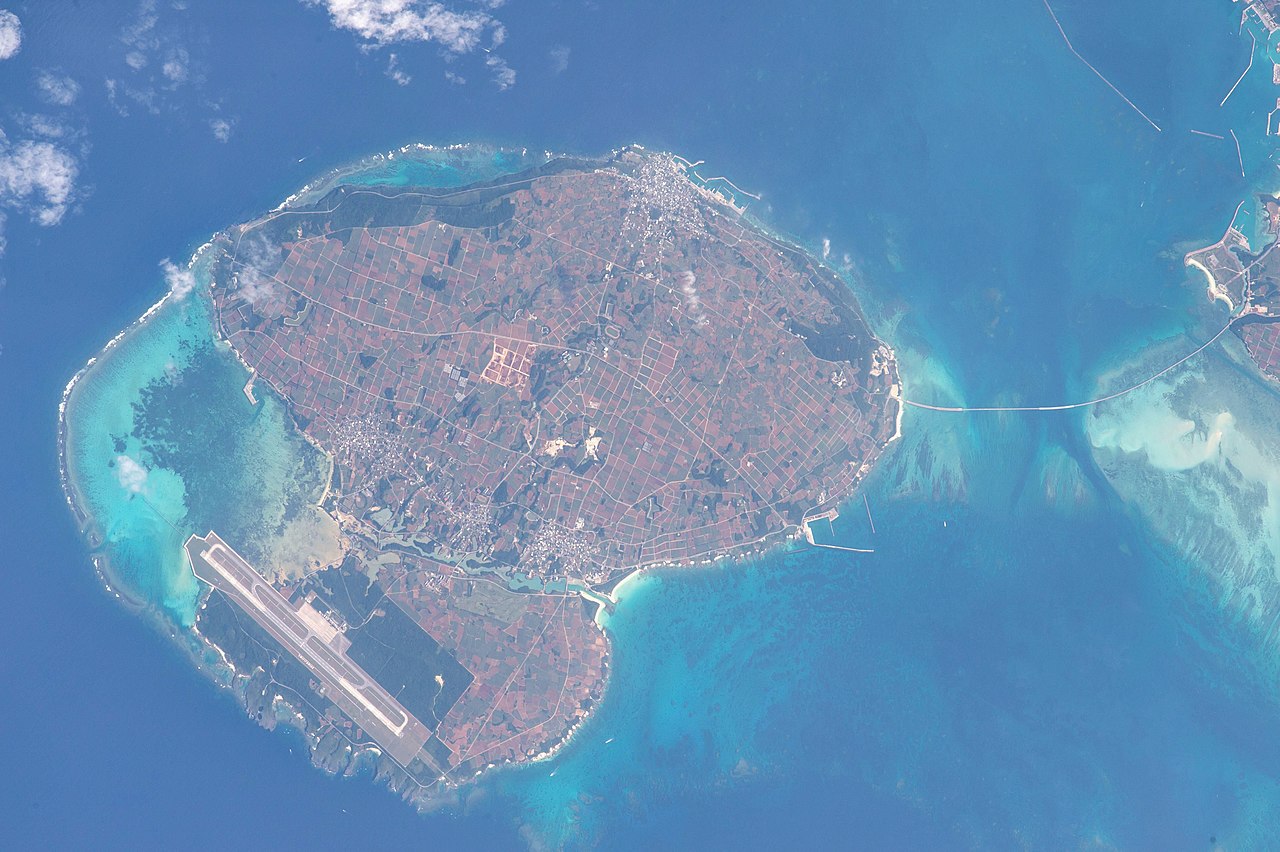
Irabu-jima and Shimoji-jima, linked to Miyakojima by bridge, have become Japan's de facto home base for freedive training. Eroded limestone means the reef edge drops straight past 30m, so shallow skill platforms and deep training lines sit within a few minutes of each other by boat. Visibility runs 20-40m on good days, and water temperature holds around 28-29°C in midsummer and 21-23°C even in the coldest months, making the islands a year-round option. As of 2026 several dedicated schools run AIDA and Molchanovs courses continuously, so dry, pool and depth sessions can all be strung together on one island.
The west-coast drop-off on Shimoji-jima, where depth falls past 30m just outside the reef edge and a short boat hop puts you on a working depth line
Shallow 6-20m sites sitting close to the deep lines, which makes it easy to run a skills session and a depth session back to back on the same day
Nakanoshima Channel, the sheltered shallow bay between Irabu and Shimoji that stays workable on days when wind shuts down the outer sites
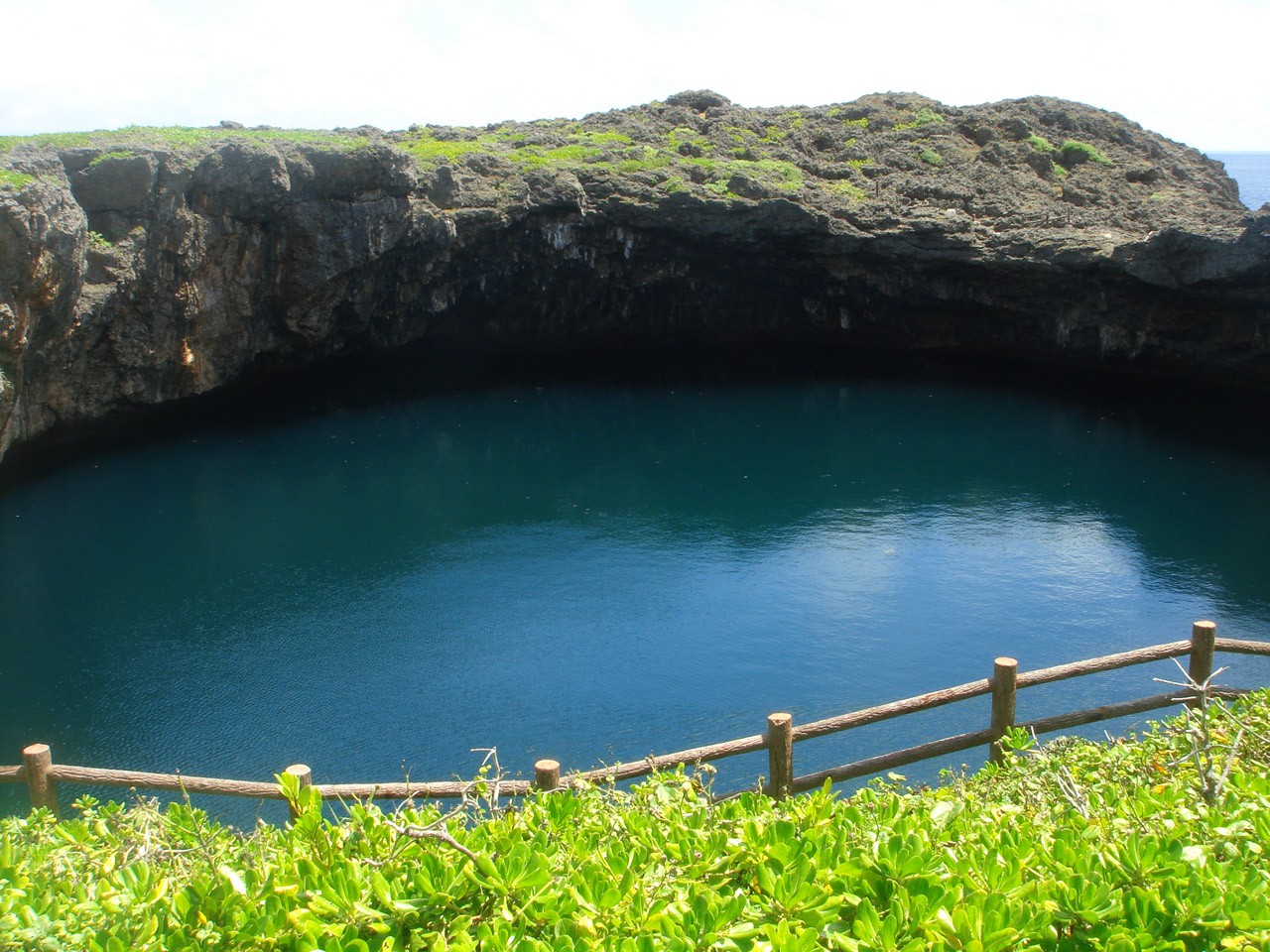
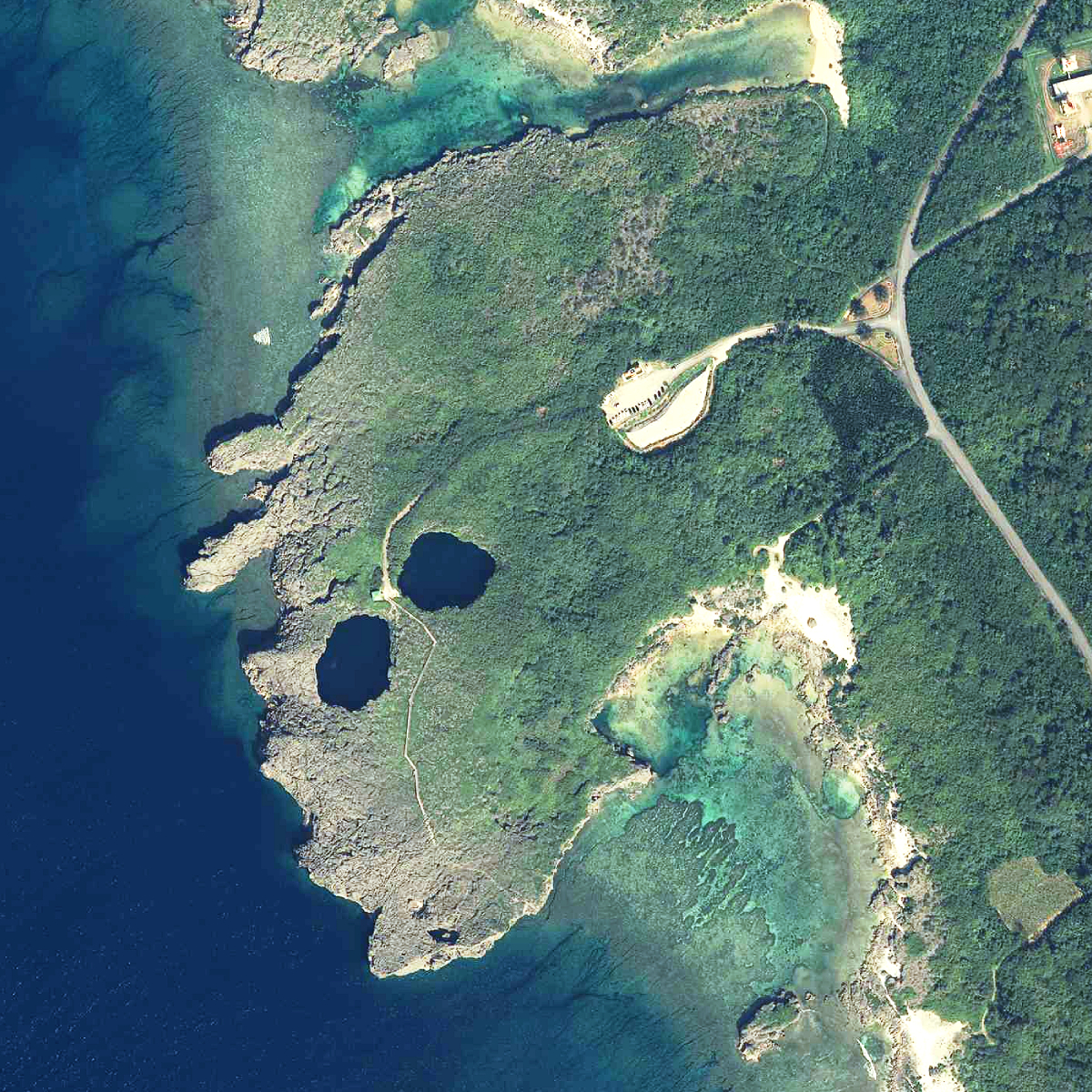
Toriike, the sea-side pool measuring 75m across with a maximum depth of 45m and a cave ceiling at roughly 20m, known for the thermocline and halocline where fresh water meets salt
The area where Molchanovs WAVE1 and WAVE2 were first taught in Japan, with AIDA 1-4 also running year-round
Winter (December-March), when water cools but visibility peaks for the year and the west coast can go glassy on days the north wind is blocked
Good to know
SafetyShallow water blackout and LMC do not happen at max depth. They happen in the last 10m of the ascent and in the seconds after surfacing. A dedicated one-to-one buddy or safety diver must meet you on the way up, and recovery breathing plus the OK-sign protocol has to be completed every single time. No solo diving, however benign the conditions look.
SafetySwimming through Toriike is a genuine overhead environment. In April 2025 a man in his sixties who himself held instructor certification died while diving near the seaward entrance to Toriike. It is a demanding site even for experienced divers, and scuba operators typically require advanced certification and around 100 logged dives. Entering the through-passage on breath-hold without a qualified guide is not advisable.
SafetyNever run a depth session without a line. Wear a lanyard, and agree the counterballast rigging, the release procedure and the emergency-recovery signals verbally with the whole team before anyone enters the water. Blue-water dives with no down line strip away your depth reference and are far riskier than they feel.
SafetyOuter sites see heavy dive-boat and tour-boat traffic, so a high-visibility float or buoy is mandatory. Current can also shift quickly around the channel mouths; follow the guide's current briefing for that specific day rather than what worked yesterday.
SeasonJuly to September is typhoon season, and cancelled flights plus swell can wipe out an entire trip. Build in at least one spare day. Winter brings strong north winds that push activity onto the Shimoji west coast. May-June and October are usually the best balance of wind, water temperature and crowds.
RulesMost shops require AIDA2 or SSI Level 1 and above plus dive insurance, and wetsuits are compulsory (swimwear alone is not accepted). Minors need guardian consent. Respect no-fly times after diving as well: at minimum 12 hours after breath-hold sessions, and 24 hours or more if you have also been on scuba.
MannersToriike is a designated scenic and natural monument site and is regarded locally as sacred ground. Do not stand on or touch coral and rock formations, and check local rules and your shop's guidance before flying a drone or shooting underwater.
Practical info
Shimoji-jima Airport (SHI) takes direct flights from Incheon on Jin Air roughly five times a week at about 2h30m, and the main sites are 10-20 minutes away by car, so a same-day session on arrival is realistic. A rental car is effectively essential on the island and the main season runs April to November. Flight schedules, course fees and certification or insurance requirements change often, so confirm the latest details directly with the airline and the dive school before booking.
On-site reviews📍 Verified on-site
No reviews yet. If you are here, be the first to leave one.