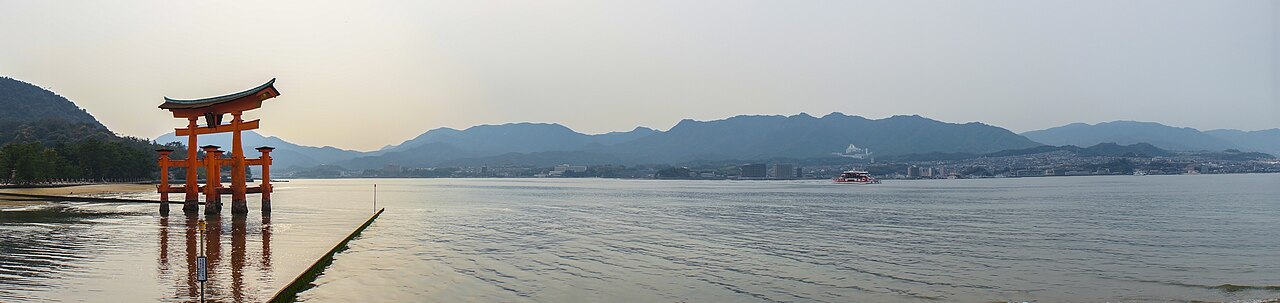
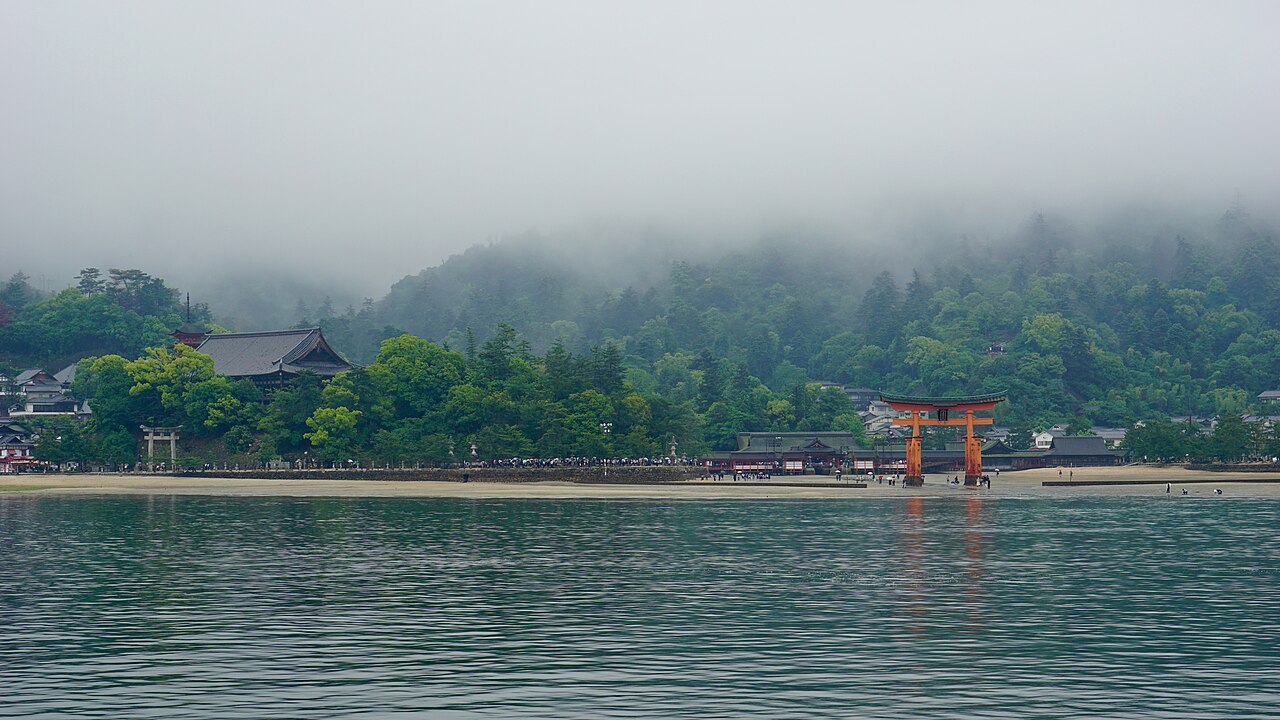
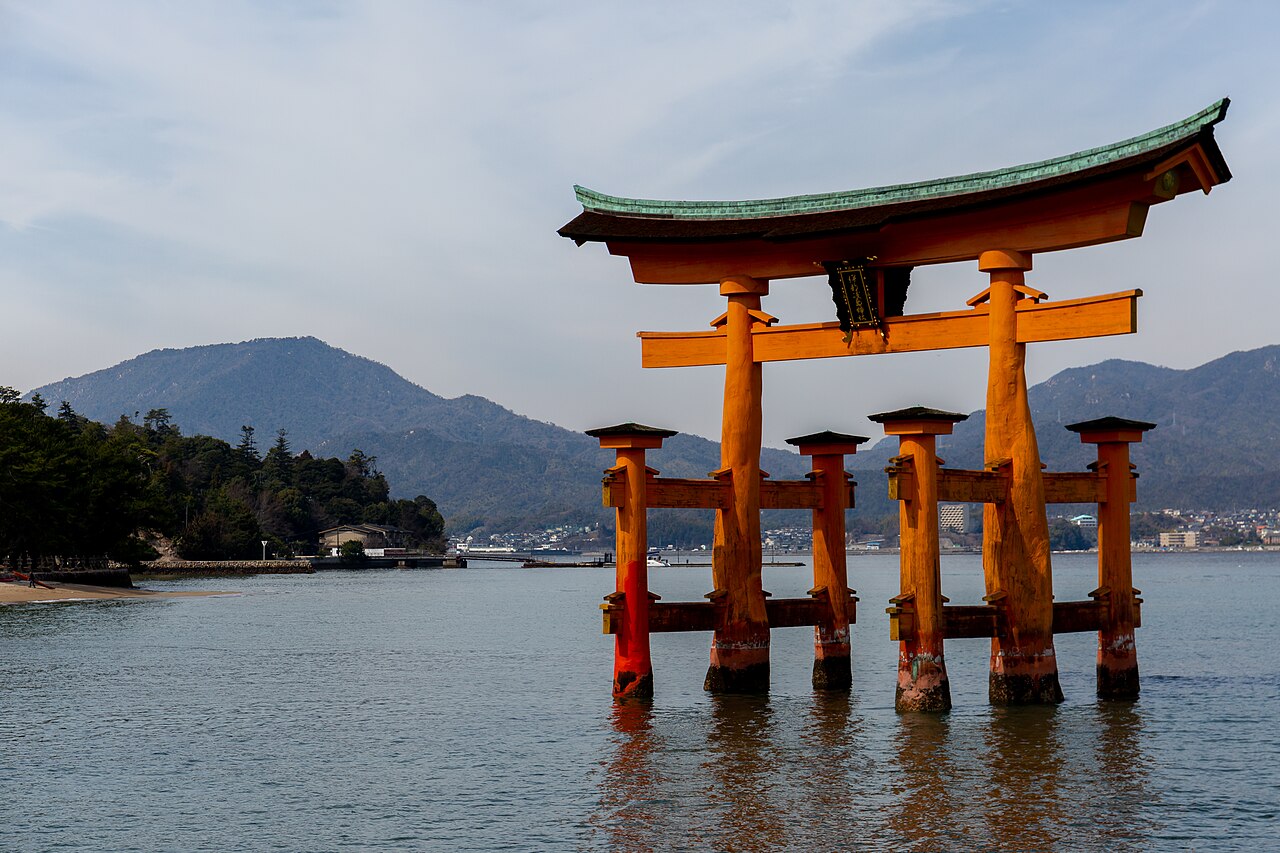
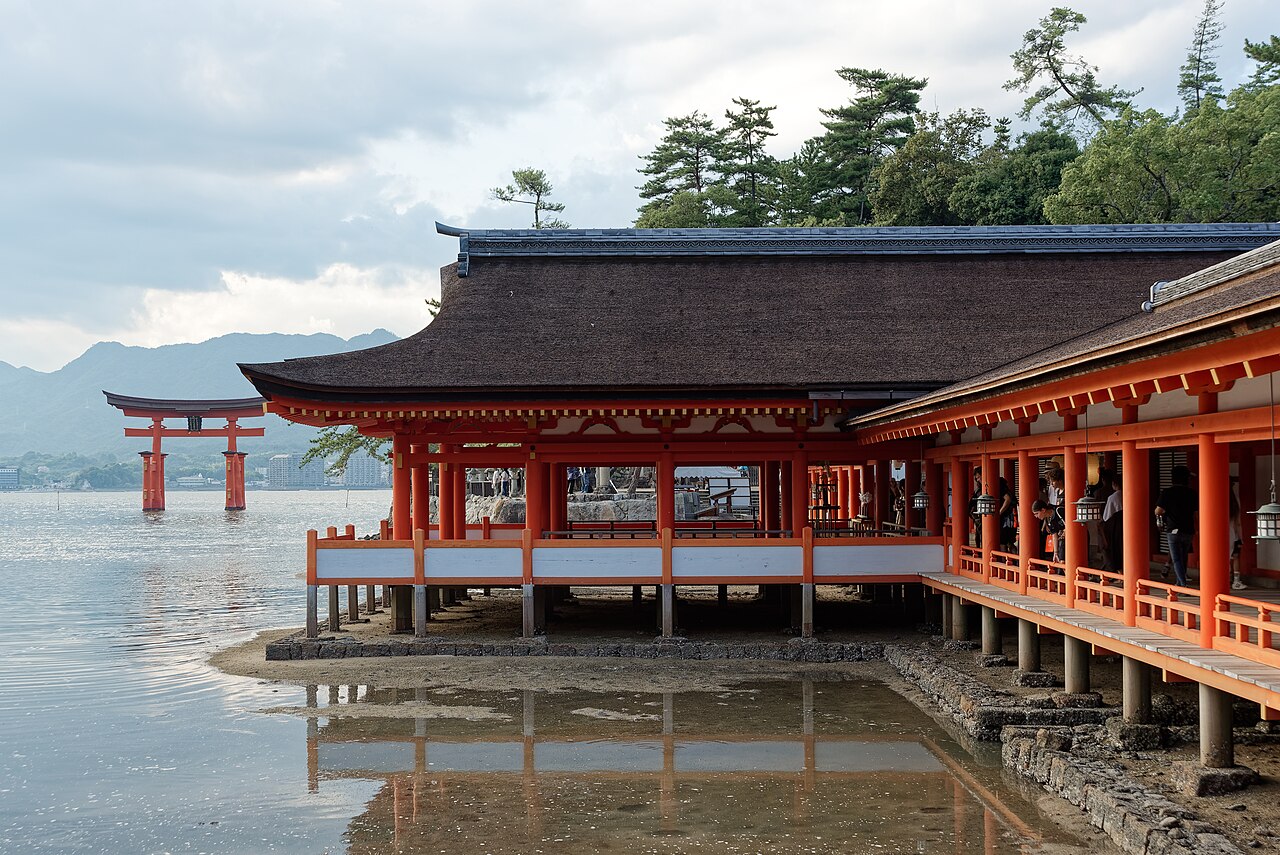
Itsukushima Shrine on Miyajima Island in Hiroshima Bay was rebuilt in its present form in 1168 by the warlord Taira no Kiyomori and inscribed as a UNESCO World Heritage Site in 1996. It is famous for its vermilion, sea-standing corridors and halls and for the great Otorii gate rising out of the water offshore. The scene changes completely with the tide: at high tide the shrine and gate appear to float on the sea, while at low tide you can walk across the exposed flats right up to the base of the gate.
The Otorii (great torii) standing in the sea: about 16 m tall, made of decay-resistant camphor wood, held up by its own weight rather than sunk into the ground. The current gate (the 9th) dates from 1875 and finished a major restoration in December 2022.
The over-water corridors and main hall in vermilion lacquer, with floorboards deliberately spaced to let tidal water pressure pass through.
The Takabutai and Noh stages built over the sea, ranked among Japan's most notable stages, where gagaku court music and dance are performed.
The wider precinct with the five-story pagoda and other wooden structures, plus the Treasure Hall housing National Treasures and important cultural properties.
The free-roaming sacred deer, the autumn colors of Momijidani (Maple Valley), and views from the Mt. Misen ropeway.
Good to know
SeasonCheck the tide schedule before you go. The 'floating' torii is usually best above about 250 cm tide level, while walking out to the gate's base needs a tide of roughly 100 cm or lower. Time your visit using the Miyajima tide tables.
RulesThe island deer are regarded as sacred messengers, and feeding them is banned by local ordinance. Do not feed or touch them.
SafetyDeer frequently snatch and swallow paper and plastic - maps, ferry tickets, snack wrappers. Keep paper items and food inside your bag, not exposed in your hand.
MannersThe corridor floors have gaps between the boards to relieve tidal pressure. High heels can get caught, so wear flat, comfortable shoes.
SafetyWhen walking on the tidal flats out to the torii, footing can be muddy and slippery and your feet may sink. Watch the tide so you are not caught by the incoming water.
MannersThis is an active shrine and World Heritage Site. Keep quiet around worshippers and ceremonies, and follow posted rules on photography and tripods.
Practical info
Hours (subject to change, confirm latest): roughly 6:30-18:00 (Mar 1-Oct 14), 6:30-17:30 (early Jan-end Feb and Oct 15-Nov 30), 6:30-17:00 (December), with special hours on Jan 1-3; Treasure Hall 8:00-17:00. Fees (confirm latest): shrine adults 300 yen, high school 200 yen, elementary/junior high 100 yen; combined shrine + Treasure Hall 500 yen for adults. Getting there: JR Hiroshima Station to Miyajimaguchi (~30 min), ferry (~10 min), then about a 10-minute walk.
On-site reviews📍 Verified on-site
No reviews yet. If you are here, be the first to leave one.
Sources · Itsukushima Shrine official site, Admission page (itsukushimajinja.jp/en/admission.html) · Japan National Tourism Organization (JNTO), World Heritage page (japan.travel/en/world-heritage/itsukushima-shinto-shrine/) · Wikipedia, 'Itsukushima Shrine' (Otorii, World Heritage, history) · Japan-guide.com, Miyajima / Itsukushima Shrine guide
Report content
Tell us what is wrong or could be improved.
Write an on-site review
You can post only while you are within this attraction. Location permission is required.