The Mevlâna Museum is built around the mausoleum of Mevlâna Celaleddin Rumi (Jalal ad-Din Rumi, 1207–1273), the 13th-century Persian Sufi poet and mystic whose followers founded the Mevlevi order famed for the whirling 'Sema' dance. Once the order's principal lodge, it is crowned by a turquoise conical 'Green Dome' that is the emblem of Konya, and it remains one of the most-visited museums in Türkiye, drawing pilgrims and travelers alike. As of 2026 it is open every day and, according to the official Ministry of Culture listing, admission is free (confirm the latest). Treat it as both a museum and a living shrine where people still come to pay their respects.
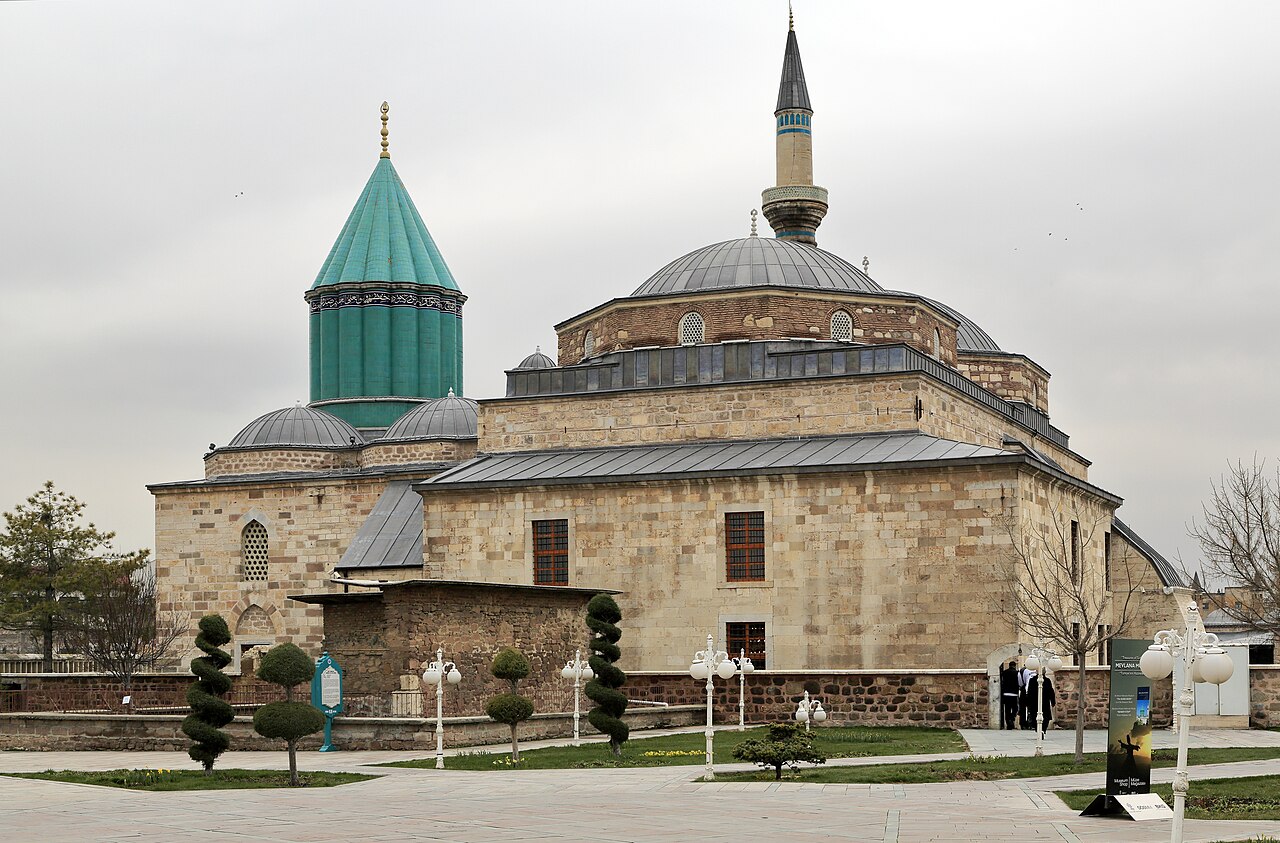
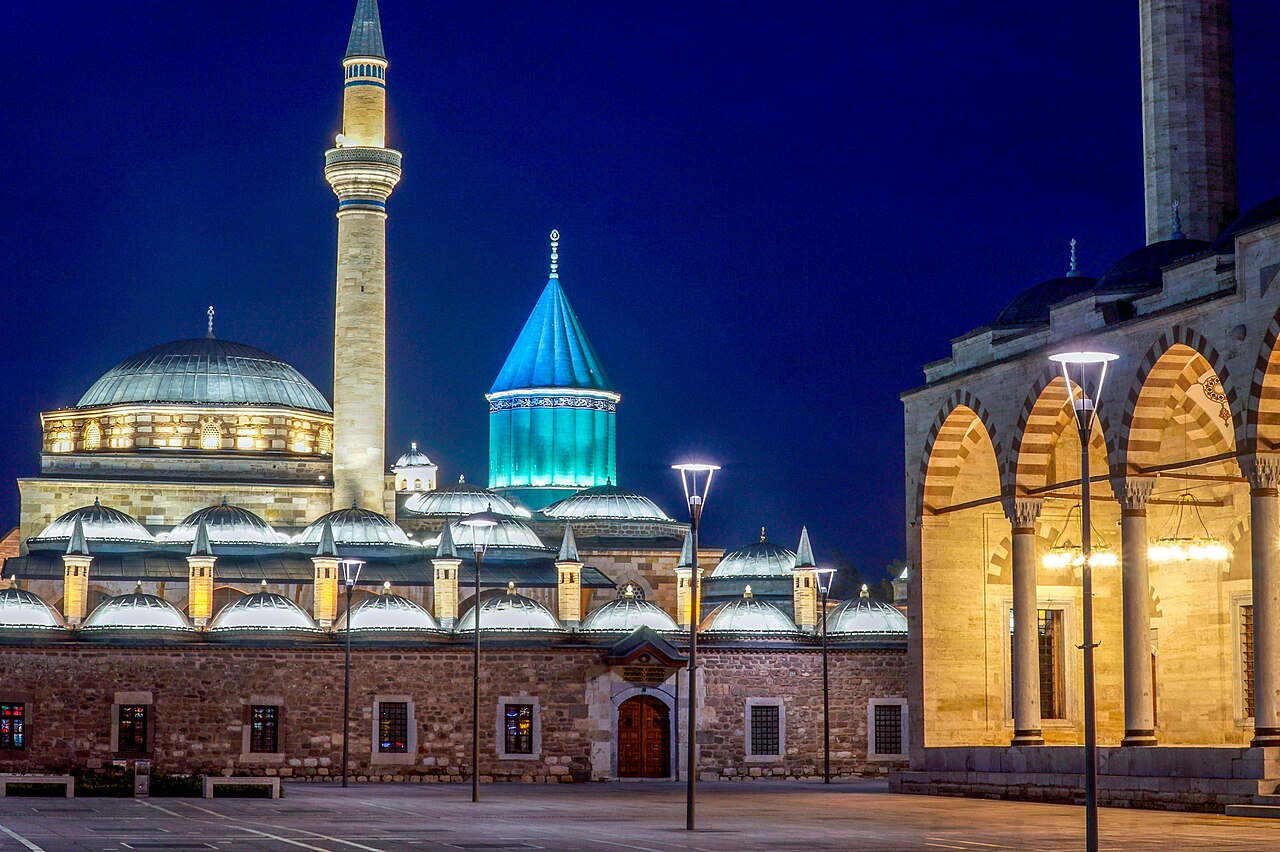
The turquoise Green Dome (Yeşil Kubbe), built over Rumi's tomb in 1274 and the defining landmark of Konya
Rumi's tomb chamber, with the richly draped sarcophagi of Rumi, his father Bahaeddin Veled, his son Sultan Veled and other Mevlevi elders
The Semahane (ritual hall) where the Sema was performed, displaying Mevlevi musical instruments such as the ney (reed flute) and ceremony artifacts
Illuminated manuscripts and relics — antique Qurans, a hand-written Mesnevi, prayer rugs, and a casket said to hold a hair from the Prophet's beard
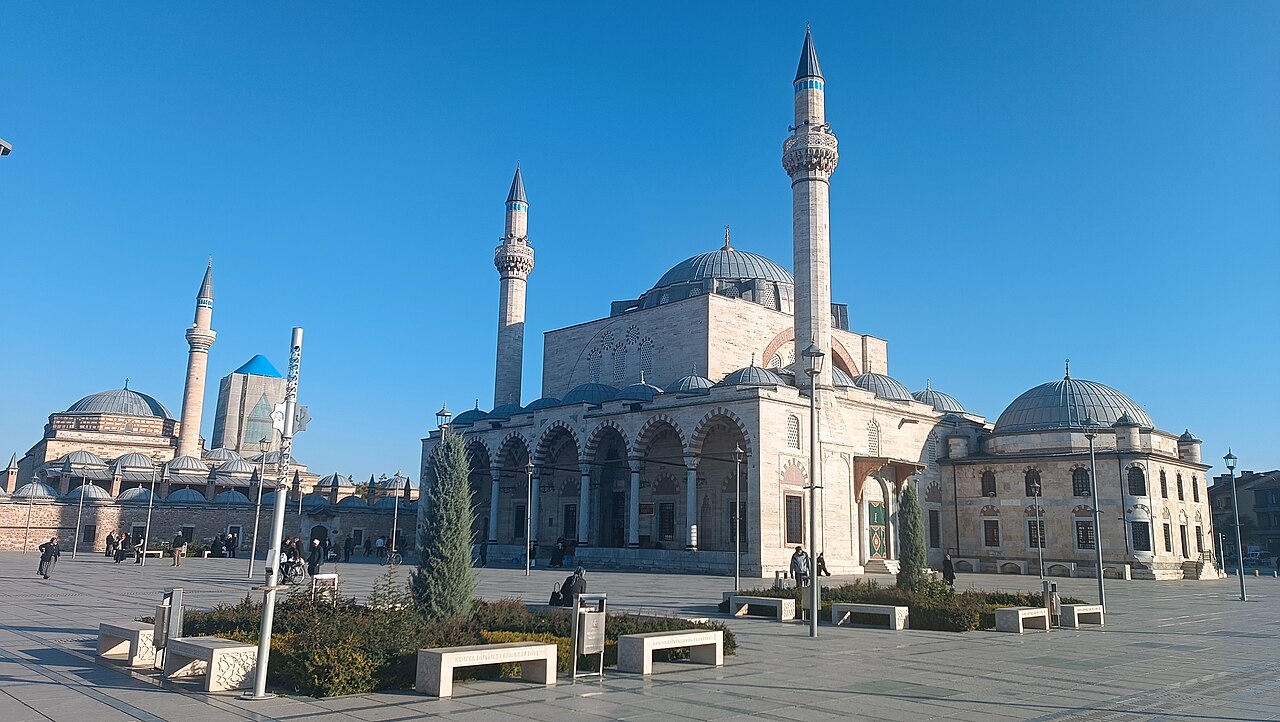
The restored dervish cells (Dedegân) with tableaux of lodge life, the courtyard fountain, and the adjoining Selimiye Mosque
Good to know
MannersThis is both a museum and an active shrine where people pray. Dress modestly (cover shoulders and knees), women should cover their head with a scarf, and everyone must wear the plastic shoe covers provided when entering the mausoleum. Keep your voice low, do not point the soles of your feet at or turn your back to the tombs, and be mindful of worshippers.
RulesAdmission is currently free and the site is open every day, but photography inside the tomb chamber may be restricted and flash/tripods are often prohibited. On Mondays the ticket/information desk opens at 10:00, so verify the current hours and fees before your visit.
SeasonCentral Anatolia is hot and dry in summer (July) and cold and snowy in winter. During Şeb-i Arus (Rumi's memorial week, 7–17 December; the 753rd anniversary in 2026), Sema tickets and Konya hotels sell out months in advance, so book early. Weekday mornings are the quietest.
SafetyThe museum and the surrounding bazaar get crowded, so mind your belongings and watch for pickpockets. Konya is a conservative city and generally safe, but dress and behave modestly; carrying a light scarf and socks is handy.
CautionBeware of unofficial 'guides' and overpriced whirling-dervish show tickets sold near the museum. Book genuine Sema ceremonies through official channels such as the Mevlana Cultural Center, and use the tram or metered taxis.
Practical info
Konya is reached by high-speed train (YHT) from Istanbul (via Pendik) and Ankara; in the city, take the tram to the Mevlâna stop and walk to the museum in the center, beside the Selimiye Mosque. It is open daily and admission is currently free per the official Ministry of Culture site (Monday desk from 10:00) — check the latest hours and fees before you go.
On-site reviews📍 Verified on-site
No reviews yet. If you are here, be the first to leave one.