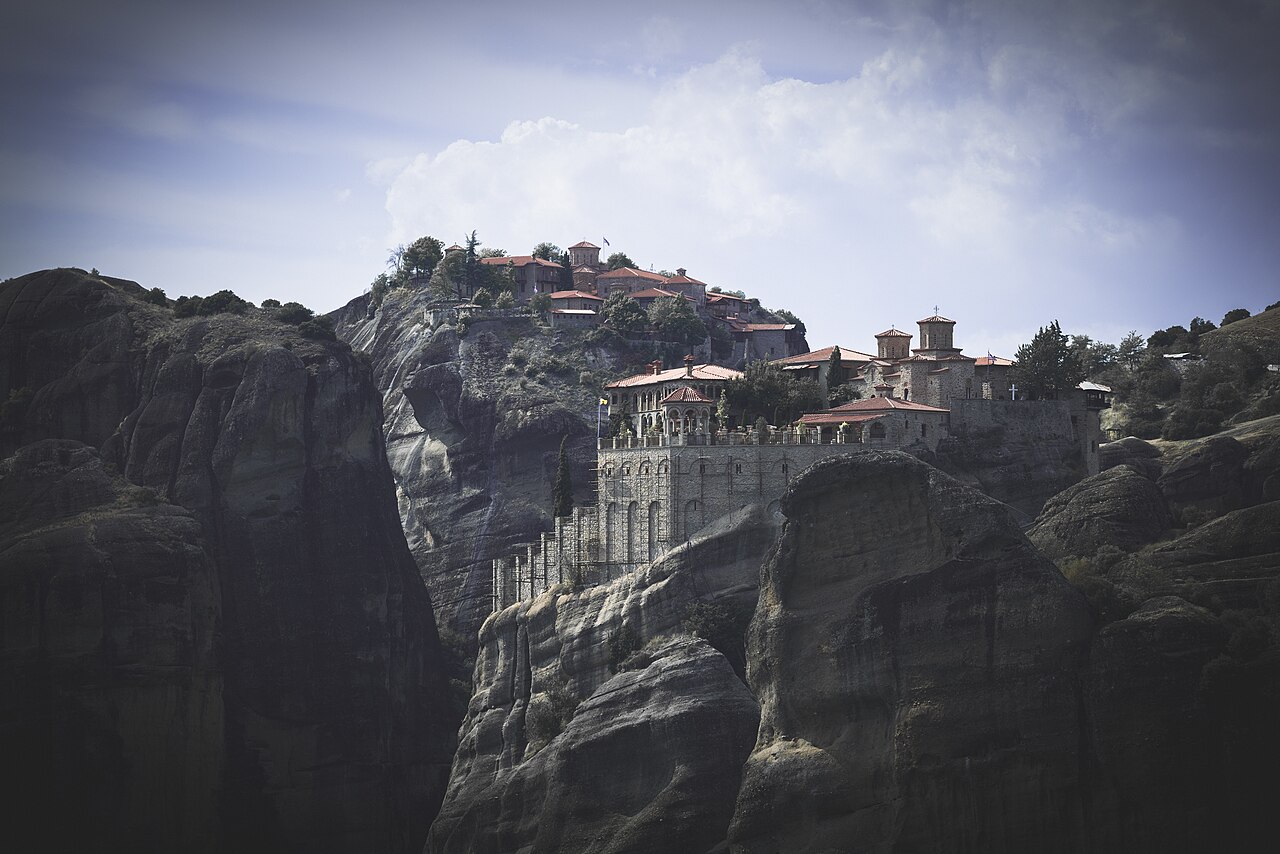
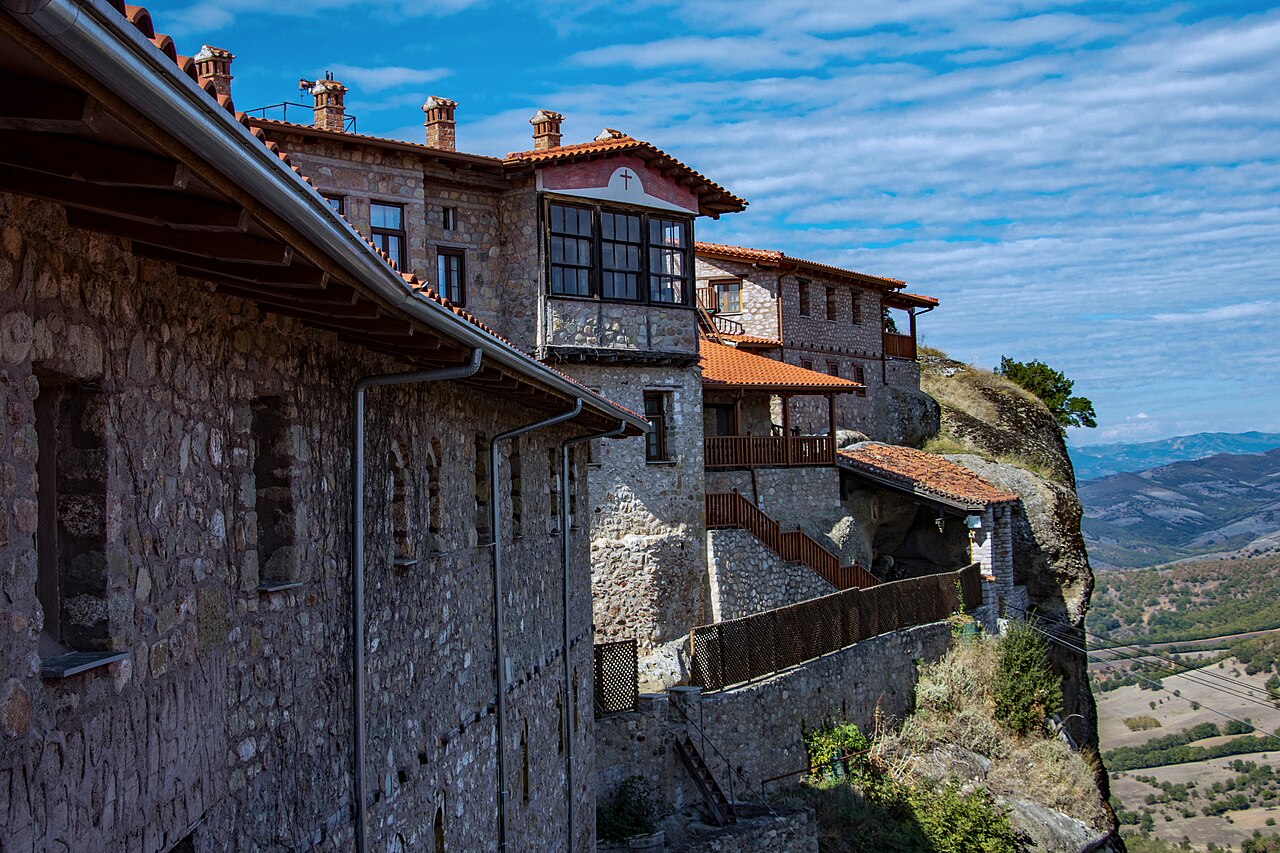
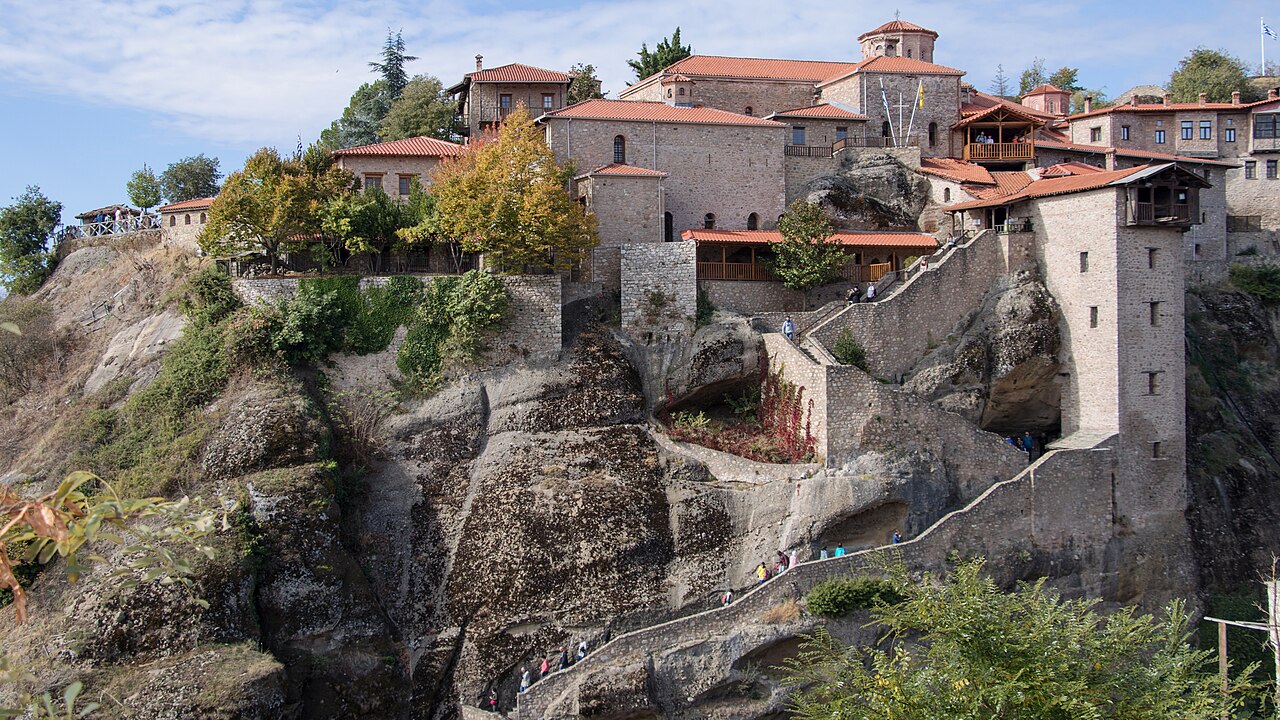
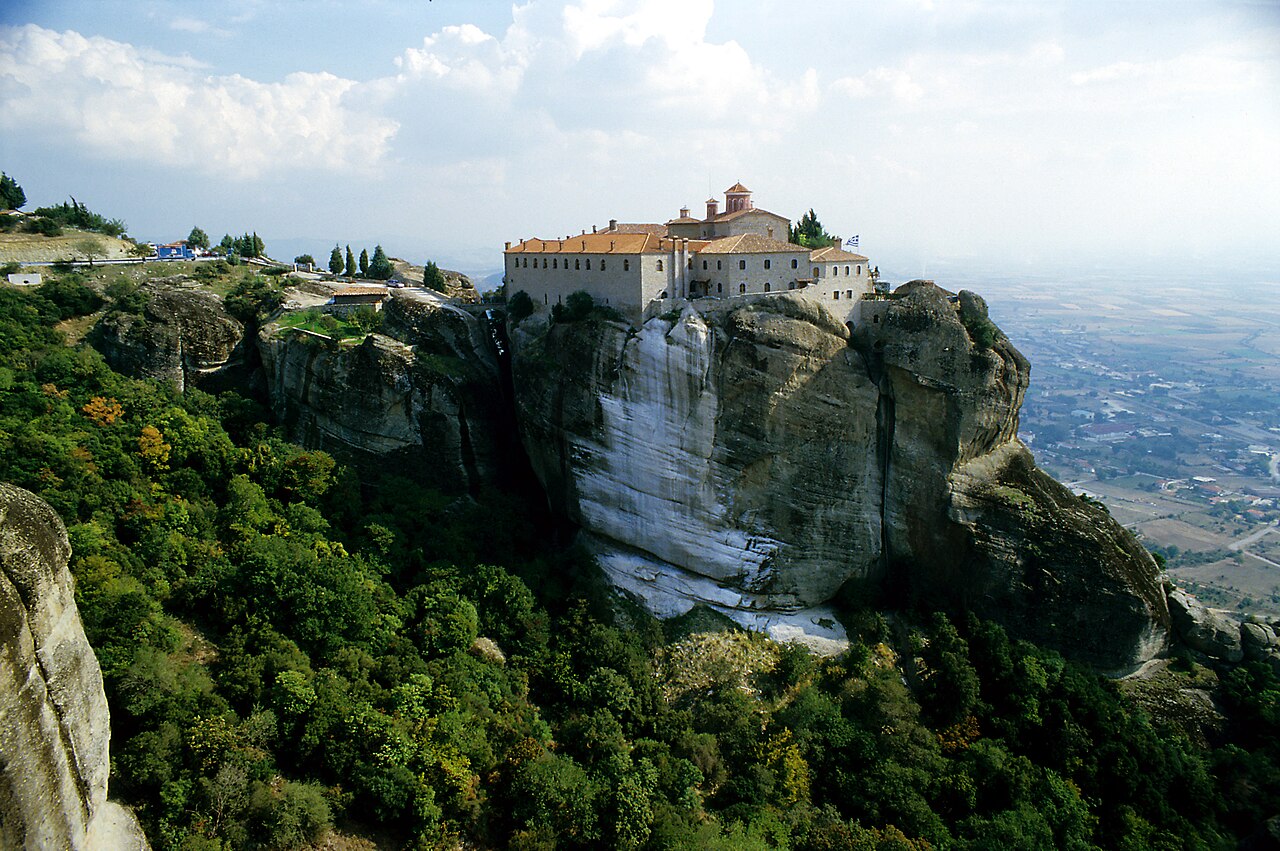
The Holy Monastery of Great Meteoron (the Monastery of the Transfiguration) is the oldest, largest and highest of the six active monasteries perched atop the giant sandstone pinnacles of Meteora in central Greece. Founded in the 14th century by Saint Athanasios the Meteorite, it became the heart of organised Orthodox monasticism here and is the emblem of the Meteora UNESCO World Heritage Site. In 2026 it remains a living, working monastery where monks still reside, so visitors are expected to treat it as an active place of worship. The clifftop terraces, the post-Byzantine frescoes and the sheer drama of its setting make it the highlight of any Meteora visit.
The katholikon (main church) dedicated to the Transfiguration, adorned with fine 16th-century post-Byzantine frescoes
The museum housed in the old kitchen and refectory (trapeza), displaying valuable manuscripts, icons and religious treasures
The ossuary lined with the skulls of departed monks — a stark reminder of the monastic view of death and humility
Panoramic terraces overlooking the rock towers and valleys of Meteora, among the finest views in Greece
Historic survival infrastructure such as the old rope-net and windlass hoist and the water cistern once used to supply the summit
Good to know
RulesThe dress code is strictly enforced. Men must wear long trousers and sleeved tops (no shorts or sleeveless shirts); women must wear a skirt below the knee with shoulders covered (no trousers or sleeveless tops). Wrap-skirts are sometimes lent at the entrance but may run out, so come prepared.
RulesEntry is paid separately at each monastery — roughly €5 per adult (2026; children under 12 free), usually cash only. There is no combined ticket, so bring small cash for each site you plan to visit, and confirm the current fee before you go.
RulesMind the closing days and short hours. It is closed on Tuesdays in summer (Apr–Oct) and on Tue–Thu in winter (Nov–Mar), and it shuts early (15:00 in summer, 14:00 in winter). Hours can change without notice for feast days, so keep your day's plan flexible.
SafetyReaching the monastery means climbing roughly 300 steep stone steps cut into the rock. Wear sturdy, non-slip shoes and pace yourself if you have knee or mobility issues; the steps become very slippery when wet or icy.
SeasonSummer brings strong sun and tour-bus crowds — arrive right at opening or in the late afternoon and bring a hat, water and sun protection. Winter has shorter hours and the steps and car park can ice over.
MannersAs a living monastery, quiet is the rule: silence your phone and avoid calls, and note that photography, flash and tripods are generally forbidden inside the churches. Be especially discreet at the ossuary — no photos of or noise around the skulls.
CautionIf you take a taxi up from Kalambaka, agree the fare in advance or confirm the meter is running, and watch for peak-season overcharging. The public bus runs only a few times a day, so check the return departures so you are not stranded at the top.
Practical info
Base yourself in the town of Kalambaka (Kalabaka) below the rocks, reached by train or bus from Athens and Thessaloniki via Trikala/Kalambaka. From there a KTEL local bus runs a handful of times daily up to the monasteries (about €1.60 one-way), or you can take a taxi or rental car, though parking near Great Meteoron is limited and fills early in peak season. From the car park you still climb roughly 300 steps; opening is about 09:30–15:00 in summer (closed Tue) and 09:30–14:00 in winter (closed Tue–Thu), with entry around €5 cash per adult (under 12 free) — but always confirm the latest hours, fees and closure days before your visit.
On-site reviews📍 Verified on-site
No reviews yet. If you are here, be the first to leave one.