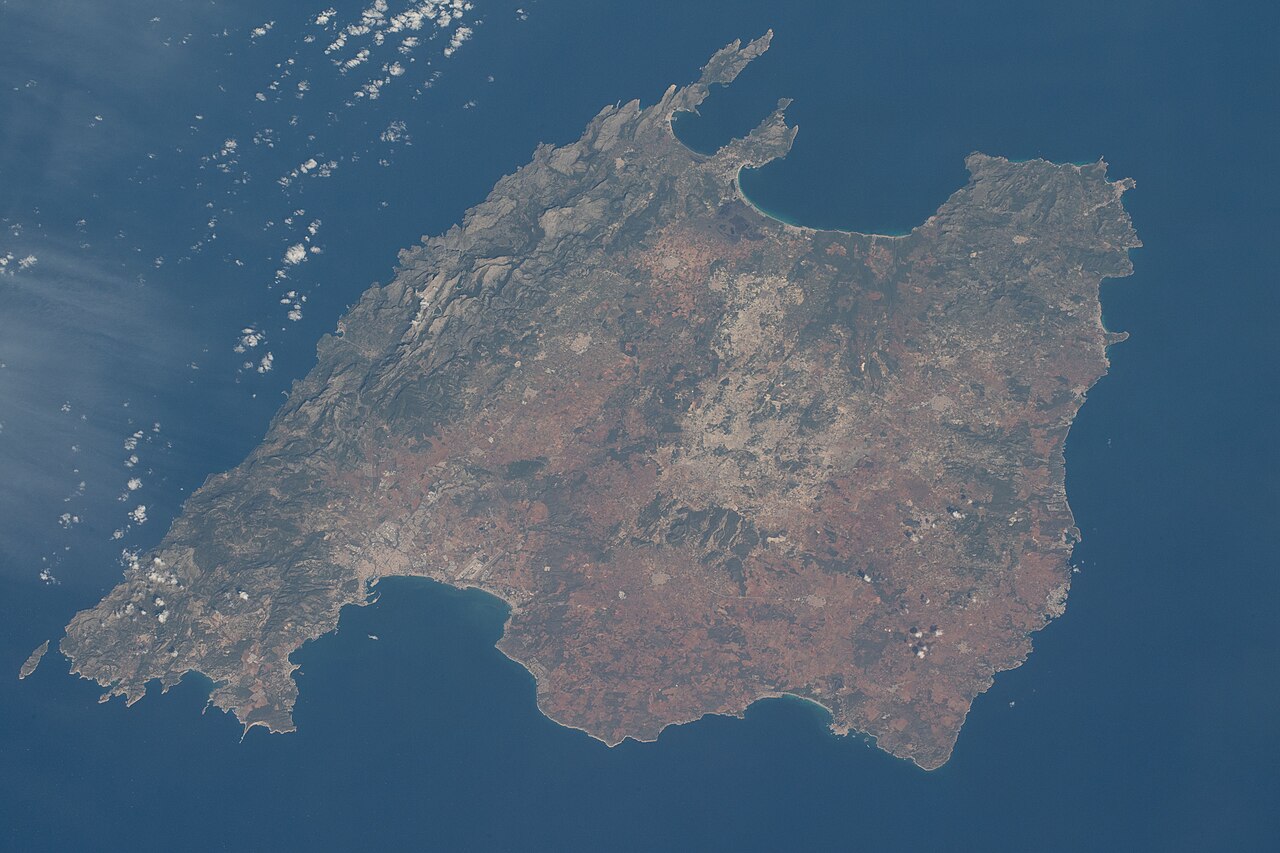
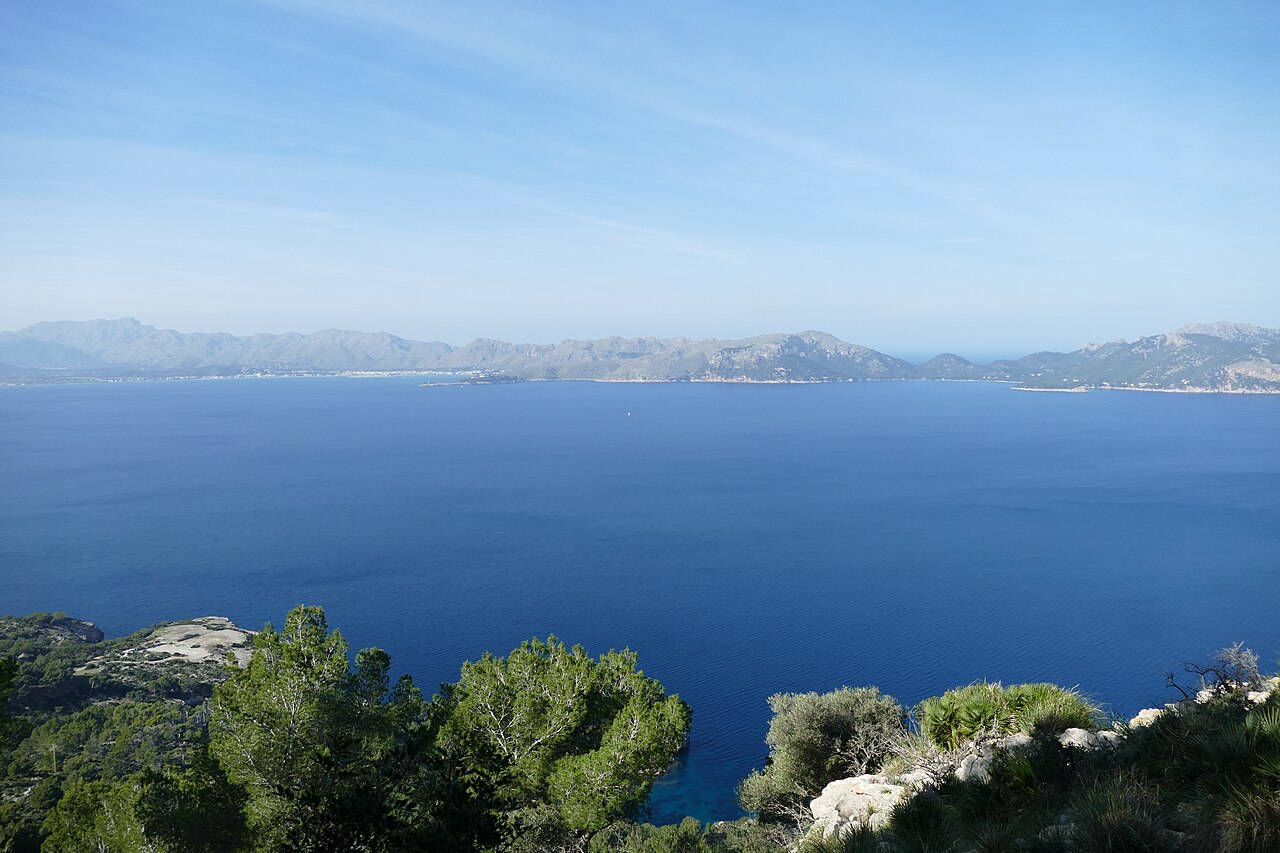
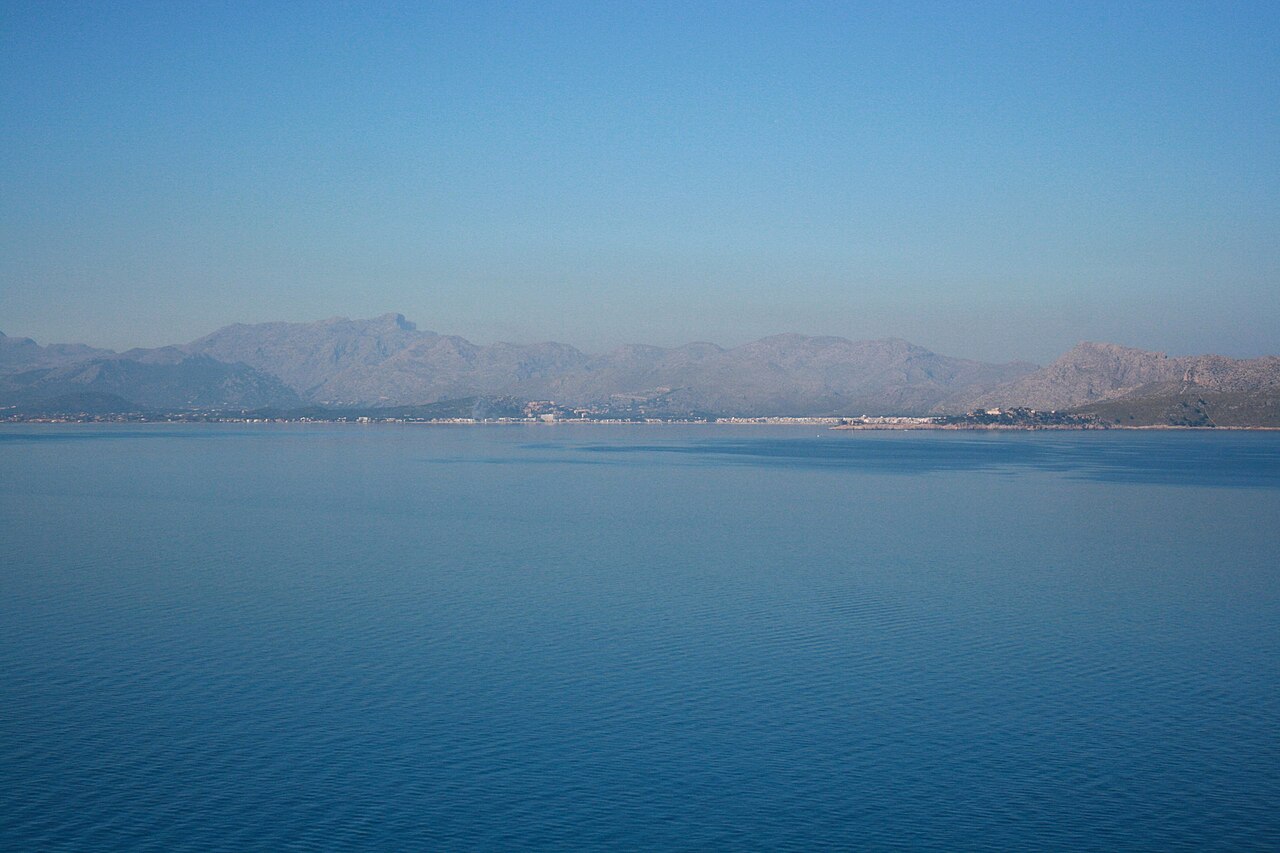
Cap de Formentor is the northern tip of Mallorca, where the Serra de Tramuntana drops straight into the sea. That topography continues underwater, so depths of around 40m open up not far off the cliffs, with summer visibility of 20-35m and water temperatures from 18°C up to about 29°C — a rare combination of warm water and real depth within Europe. The base is Port de Pollença, tucked inside the cape, where schools running Apnea Total and Molchanovs syllabi teach everything from a 12m discovery day through 20m Freediver and 35m Advanced up to a four- to five-week Master programme. One planning note for 2026: the peninsula road (Ma-2210) is closed to general traffic from 15 May to 18 October between 10:00 and 22:00.
The Formentor cliffs — the steep coastline carries on below the surface, so usable depth for line work is a short boat ride from the harbour
Progressive line training out of Port de Pollença: 12m discovery, 20m Freediver, 35m Advanced, and a 4-5 week Master course
The June-September warm window, when the water reaches the high 20s and visibility is at its most reliable — thin suits, repeat dives
Reading the wind and moving bays — when the Tramuntana blows, the local practice is to abandon the north coast and shift to south or east side sites
Mirador des Colomer, Cala Figuera and Cala Murta along the cape road, all served by bus route 334 — worth a look on a surface (no-dive) day
Room to extend across the Balearics, including Menorca and Apnea Balear (SSI) over in Port de Sóller
Good to know
SafetyNever dive without a buddy, not once. Shallow water blackout and LMC arrive without warning, at 40m or at 5m, regardless of how experienced you are, and an unconscious freediver drowns within minutes. Wear a lanyard on every line dive, run deep sessions only from a boat with counterballast rigged and a safety diver whose sole job is watching you, and never make the 'just a bit deeper' call on your own.
SafetyIn high summer, Pollença bay and the waters off the cape are thick with yachts, jet skis and tour boats. Do not surface without a buoy and a diver-down flag. Look up through the last stretch of every ascent, and if you hear engines, hold the line and wait.
SafetyWhen the Tramuntana sets in, the north coast builds fast and the cliffs leave you nowhere to land or shelter. Around the outer cape you can meet current and downcurrent, and below the thermocline the temperature drop is sharp enough to cost you both body heat and judgement. Defer to the local schools and harbour forecasts on whether to go out.
SeasonMauve stinger jellyfish (Pelagia noctiluca) are most common in July and August, and detached tentacles still sting. Cover up with a full suit or rash guard, and check same-day conditions through the Balearic government's Infomedusa app or MedusApp.
RulesIn 2026 the Ma-2210 road onto the Formentor peninsula is restricted to general traffic from 15 May to 18 October, 10:00 to 22:00. The Port de Pollença to Formentor beach section is open only if the beach car park has space; the beach to lighthouse section is authorised vehicles only. Fines run in the region of 100-200 euros, and the alternatives are bus route 334, bicycle or on foot. The scheme changes year to year, so confirm before you travel.
RulesCourse sign-up normally requires dive insurance, a medical questionnaire (with a doctor's sign-off depending on your history), basic swimming competence, and a minimum age — typically 15 to 18 depending on school and agency, with parental consent for minors. Requirements, prices and schedules vary by operator and season, so check directly before booking. Confirm the nearest chamber and the evacuation plan during your first briefing.
MannersThe Serra de Tramuntana is a UNESCO World Heritage site and the surrounding waters include protected Posidonia seagrass meadows. Keep anchoring to designated areas, leave marine life alone, and remember that spearfishing sits under a separate licensing regime — don't mix it into freediving training.
Practical info
Fly into Palma de Mallorca and it is roughly an hour by road to Port de Pollença; from East Asia the usual routing is via Madrid or Barcelona. The season runs May to October with June to September the most settled, and courses generally require advance booking plus insurance and a medical questionnaire. Road closure dates, the 334 bus timetable, course prices and operating schedules all shift from year to year, so verify the current details with your school and local transport notices before booking.
On-site reviews📍 Verified on-site
No reviews yet. If you are here, be the first to leave one.