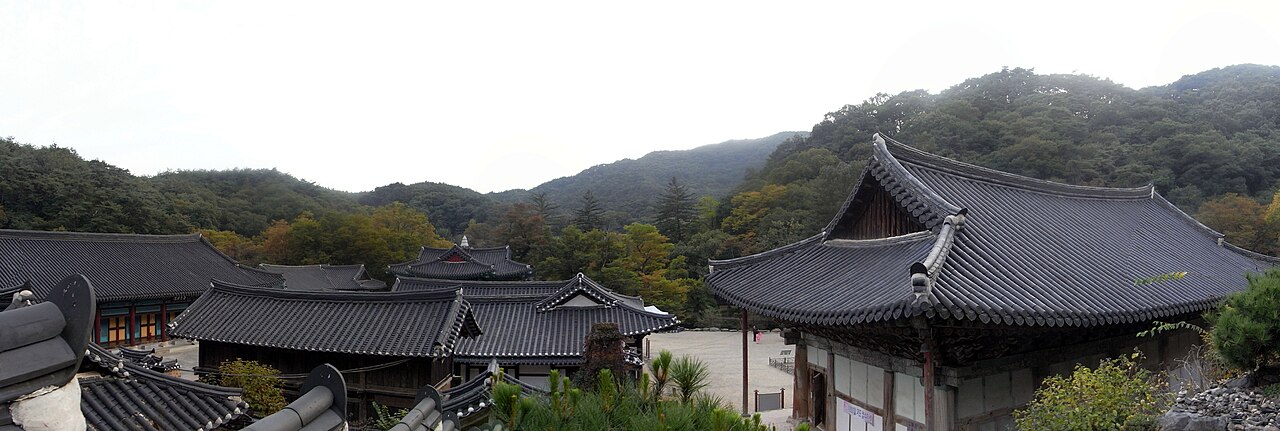
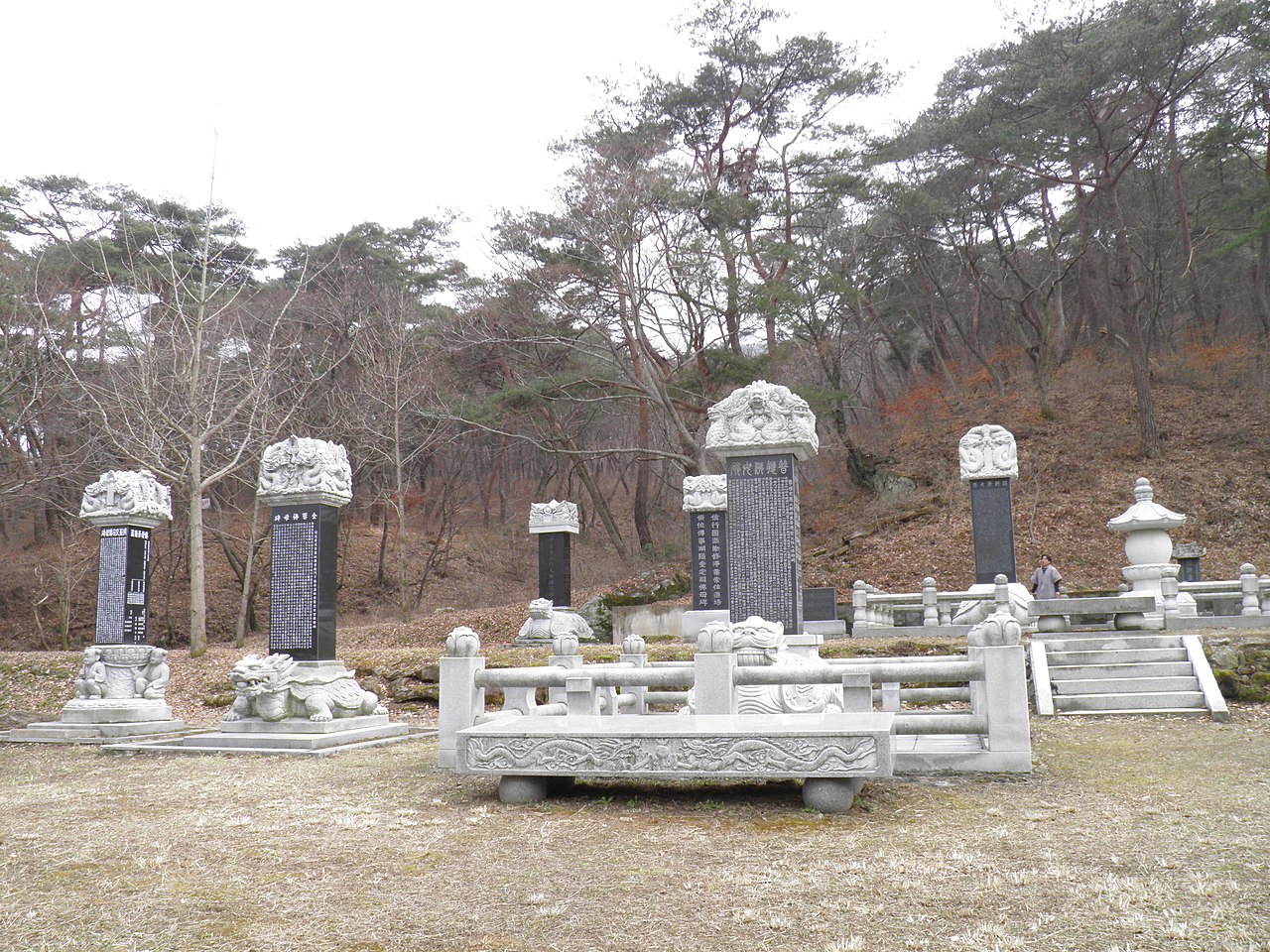
Magoksa is a thousand-year-old Buddhist temple nestled on Mount Taehwasan in Gongju, Chungcheongnam-do, said to have been founded in 640 CE by Vinaya Master Jajang and later restored by National Preceptor Jinul in the Goryeo period. It has an unusual layout split by a stream into a southern and a northern compound, and in 2018 it was inscribed on the UNESCO World Heritage List as one of the "Sansa, Buddhist Mountain Monasteries in Korea." As a head temple of the Jogye Order, it is especially celebrated for its spring scenery, captured in the old saying that pairs "Magoksa in spring" with autumn at Gapsa.
The five-story stone pagoda (a designated Treasure), whose bronze-adorned finial reflects rare Tibetan/Lamaist influence and is said to be one of only a few of its kind in the world
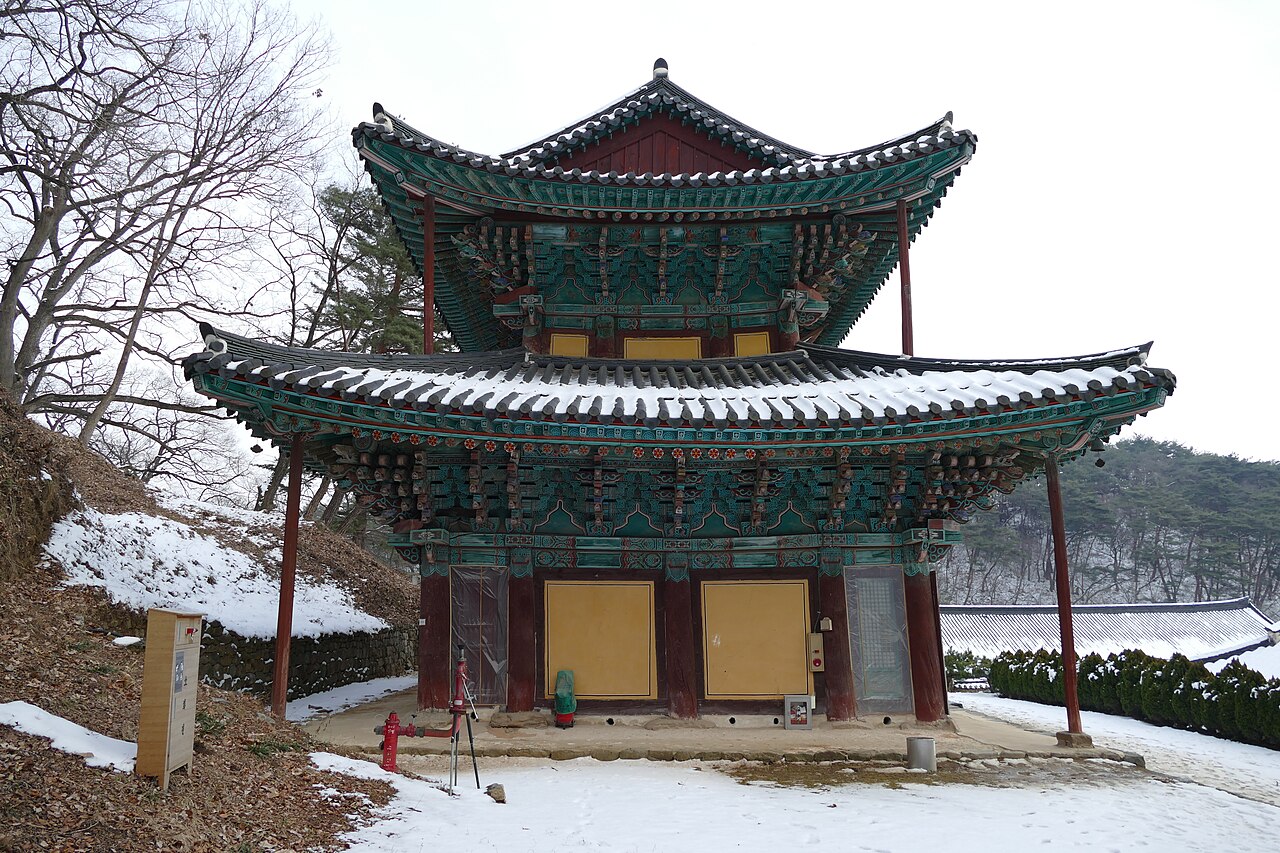
Daegwangbojeon and Daeungbojeon (both Treasures), the main halls enshrining Vairocana and Shakyamuni Buddha, fine examples of late-Joseon wooden architecture
The distinctive dual-compound plan bridged over the stream, with a scenic walk following the water through the temple grounds
Ties to independence leader Kim Gu (Baekbeom), who briefly took monastic vows here under the name Wonjong and stayed at Baengnyeongam Hermitage while in hiding
The Solbaram-gil pine forest trails and red-pine woods of Mount Taehwasan, lovely amid fresh spring greenery and autumn foliage
Good to know
MannersThis is an active temple where monks practice and worship. Stay quiet inside the halls during services and meditation, and avoid disturbing monks or worshippers.
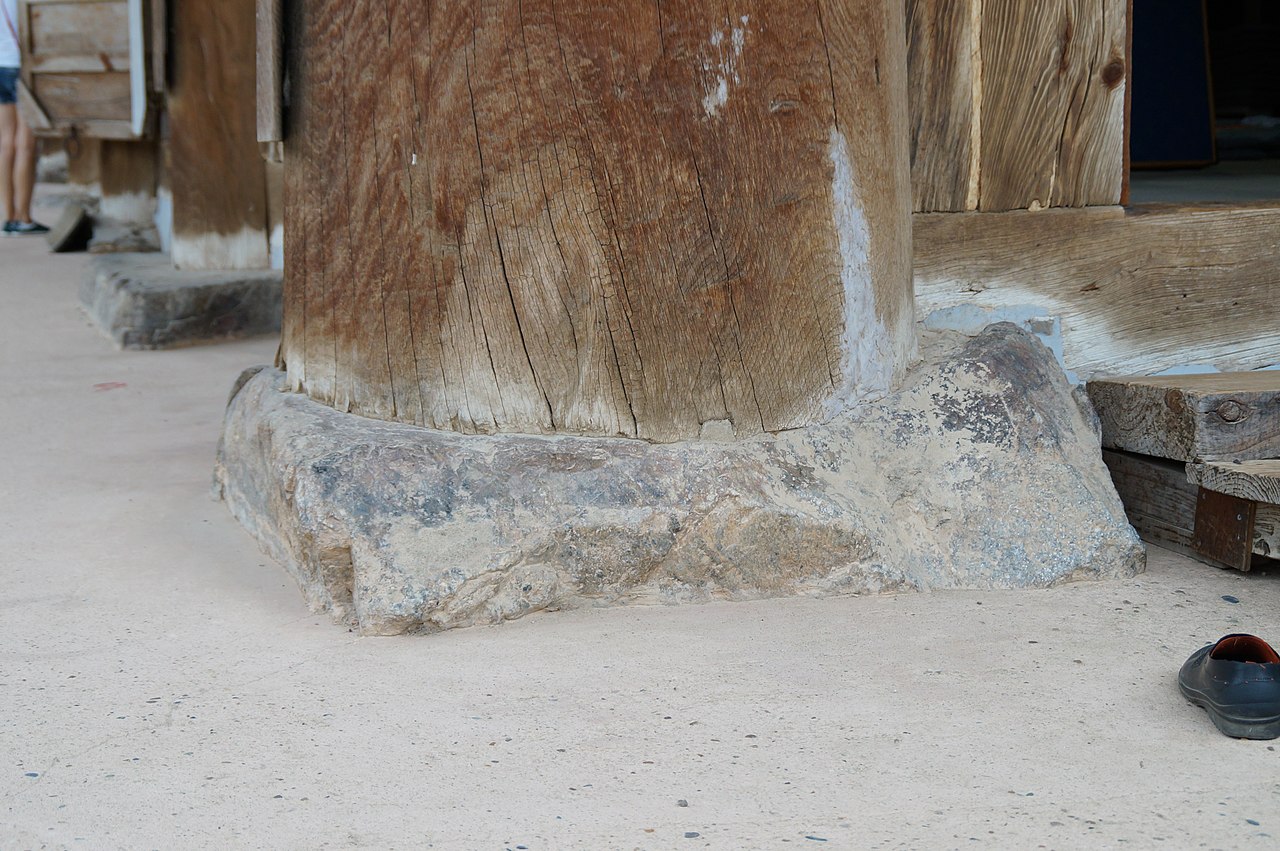
MannersRemove your shoes before entering the prayer halls, refrain from loud voices or disrespectful poses toward the Buddha images and altars, and handle candles or incense only in designated areas.
RulesPhotography may be restricted inside halls and around certain cultural properties. Check the posted signs, and confirm in advance whether tripods or drones are permitted.
SeasonSpring greenery and autumn foliage draw large crowds, congesting nearby roads and parking. In winter the streamside paths and stone steps can ice over, so non-slip footwear is advised.
SafetyThe Solbaram-gil and Taehwasan hiking trails include dirt paths, stone steps, and stream sections; wear comfortable hiking shoes. The stream can swell after rain, so avoid getting too close in wet weather.
Practical info
Since May 2023 the cultural-heritage-area admission fee has been abolished, so entry is reported to be free, though the on-site parking lot may still charge a fee. Opening hours, parking fees, and templestay schedules can change, so check Magoksa's official channels or Gongju City's tourism site for the latest details before visiting.
On-site reviews📍 Verified on-site
No reviews yet. If you are here, be the first to leave one.