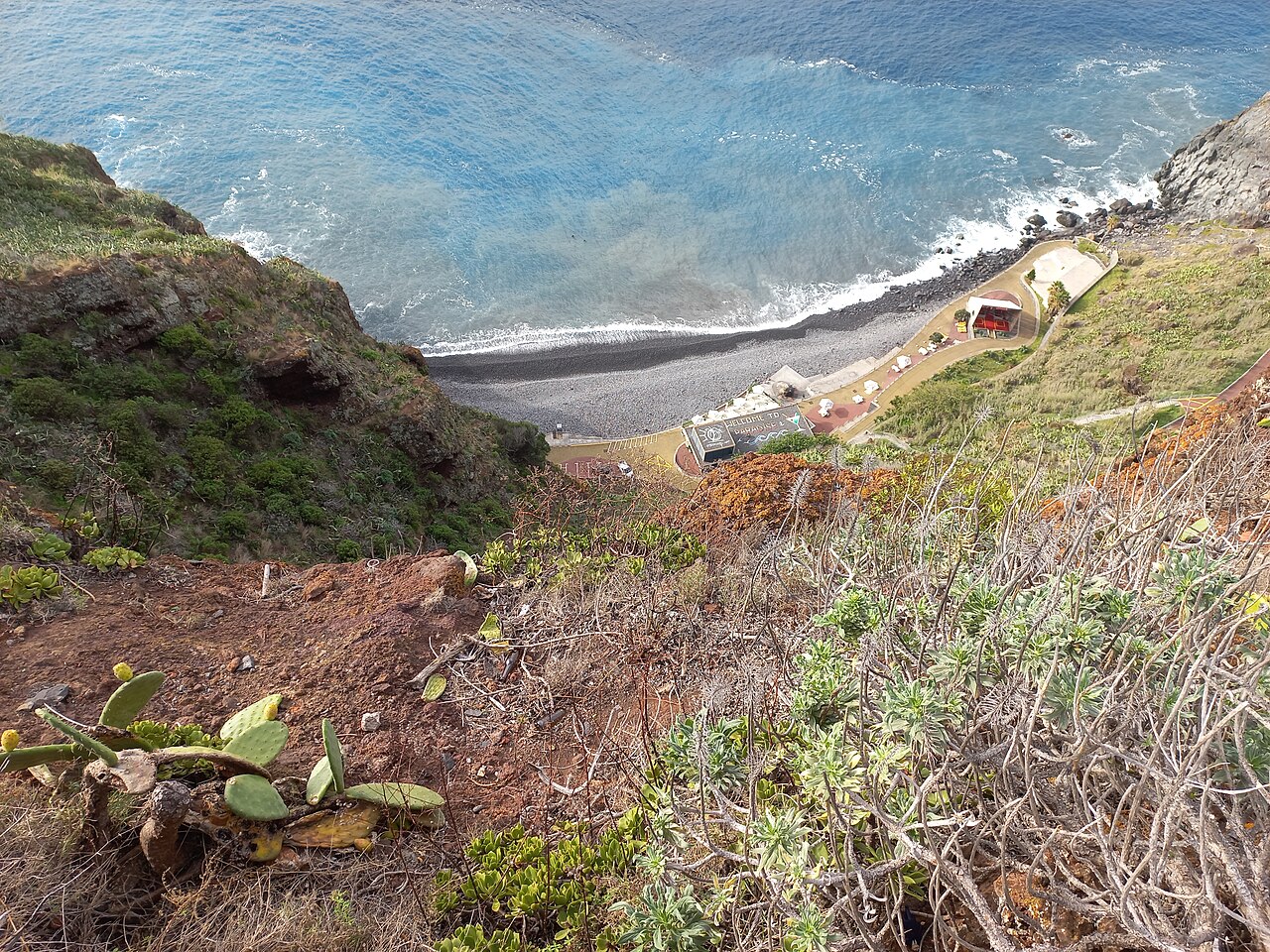
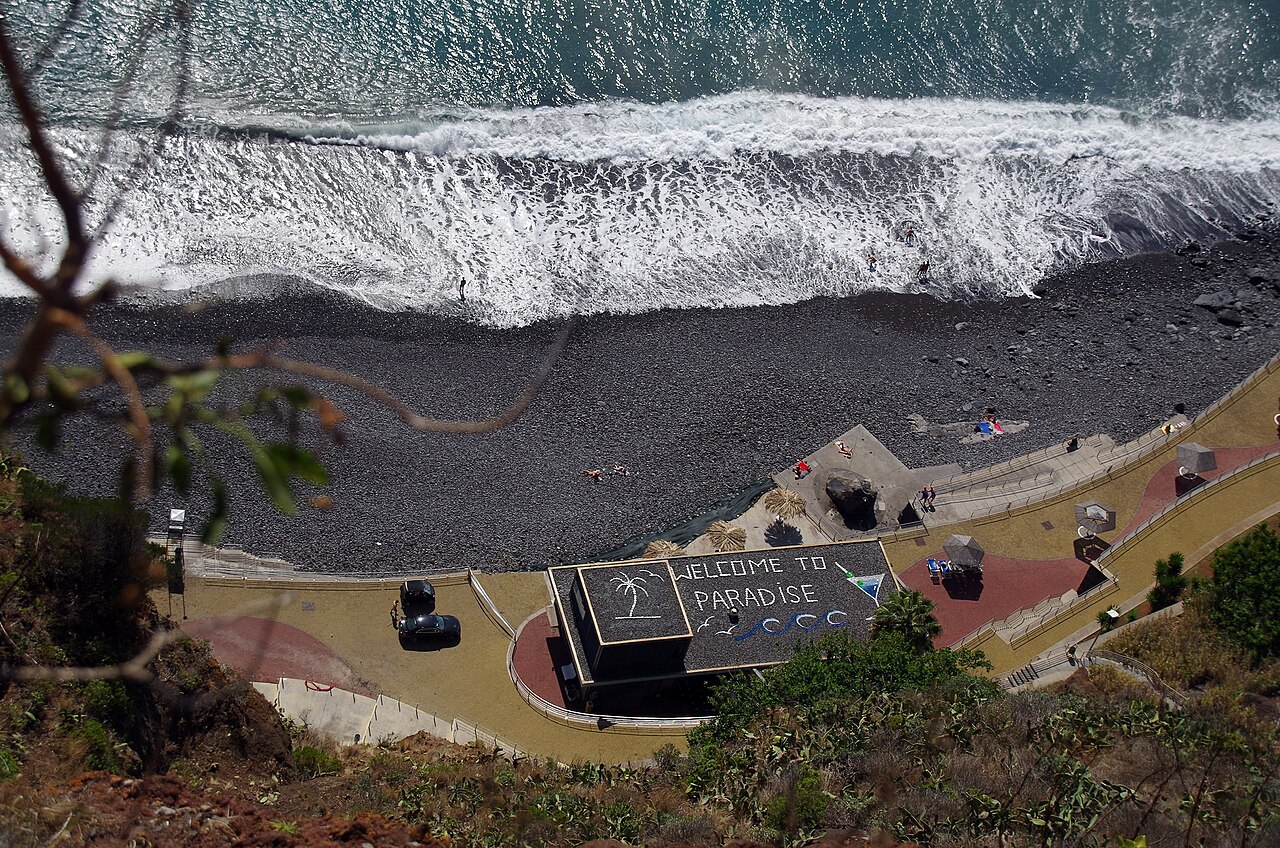
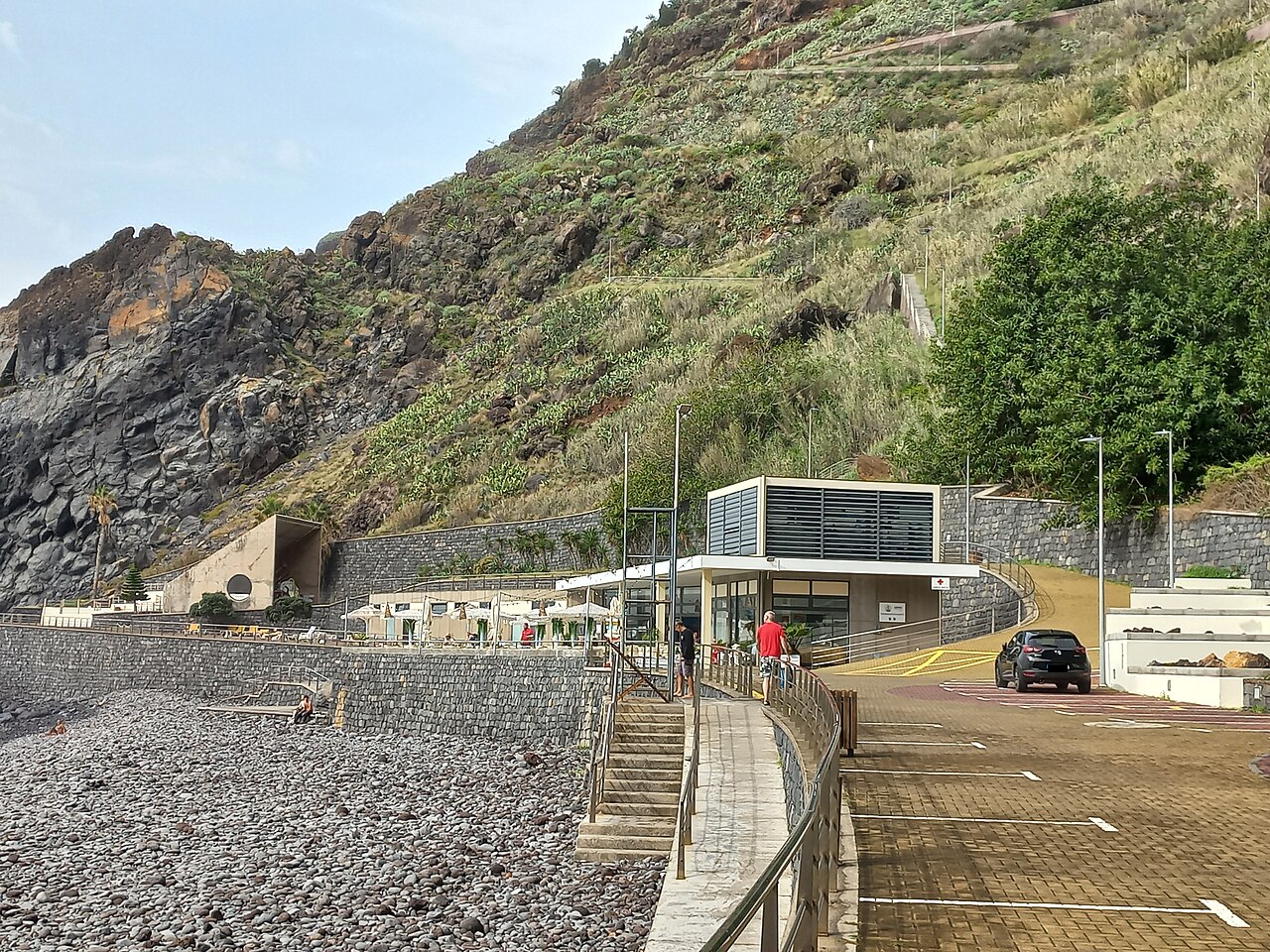
Caniço de Baixo sits on Madeira's sheltered south-east coast inside the Garajau Partial Nature Reserve, designated in 1986 as Portugal's first purely marine protected area and covering roughly 7 km of shoreline from Lazareto to Ponta da Oliveira. What makes it unusual for freedivers is the layout: you enter by ladder from the pebble shore, swim a short distance, and the house reef already carries permanent depth stations at 10 m, 20 m and 30 m — no boat, no transfer, so repeat sessions in a day are realistic. Water runs from around 18°C in late winter to 23–24°C in August and September, with visibility typically 15–25 m, and the south coast is largely shielded from the prevailing north-easterly Atlantic swell. As of 2026 the main centre here runs a roughly ten-month season from 1 March to 6 January, closed Sundays, and keeps indoor and outdoor pools for days when the sea is not an option.
Permanent 10 m / 20 m / 30 m depth lines on a house reef you swim to from shore — no boat fee and no transit time between sessions
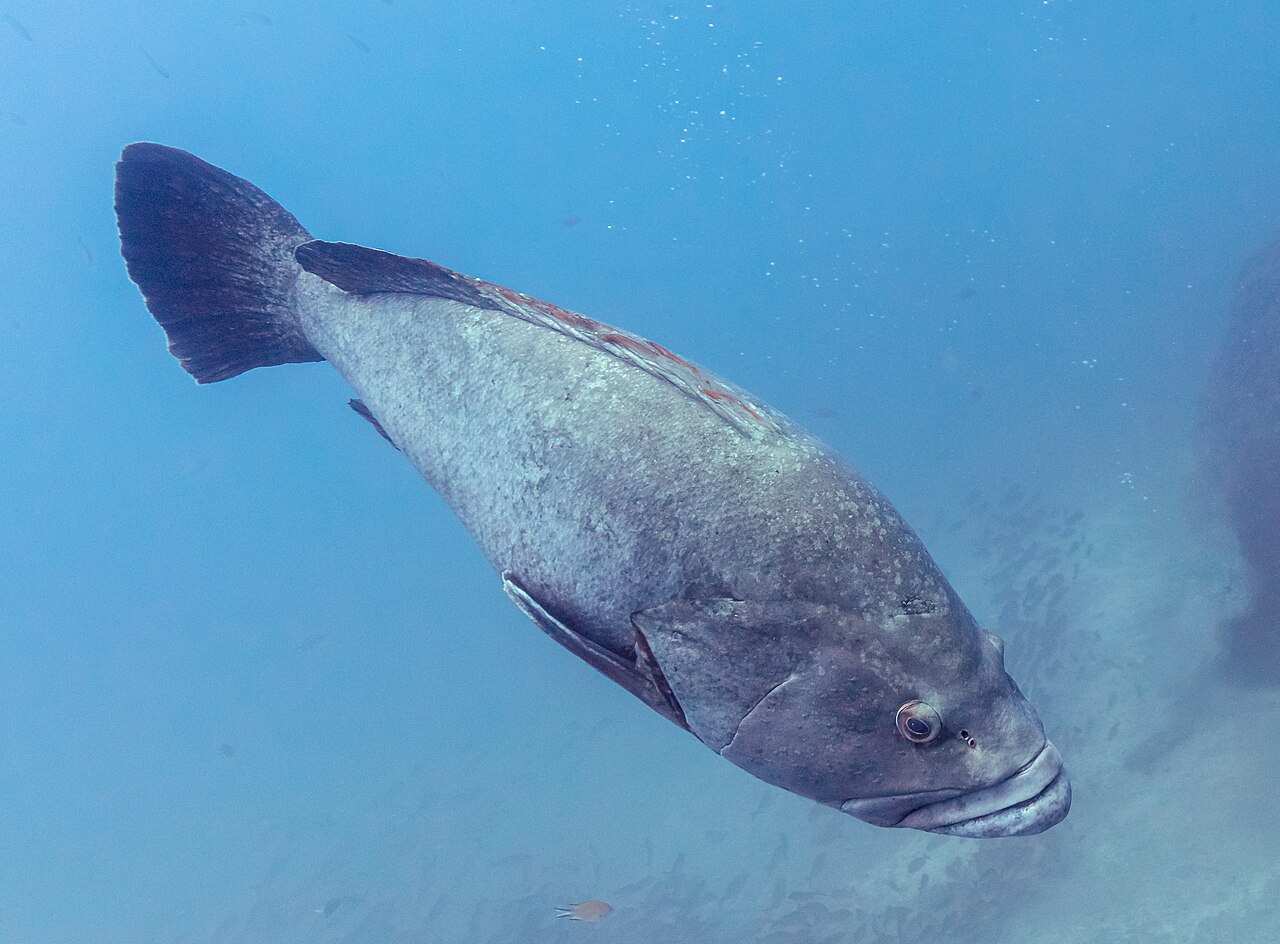
Large dusky groupers that approach within arm's reach, a direct result of the 1986 fishing ban; overall fish density here is noticeably higher than outside the reserve
Varied topography inside a small radius, from a 5 m shelf down to a 34 m wall, plus distinct sites such as the Arena with its big schooling fish and Baía dos Porcos
Indoor and outdoor pools alongside the sea, so a swell day converts into static and dynamic work instead of a lost training day
Regular equalisation and depth camps with visiting instructors through spring and early summer (May and June sessions were announced for 2026)
Good to know
SafetyShallow water blackout and LMC arrive without warning, and the overwhelming majority of blackouts happen at the surface or within about 5 m of it. Run strict one-up-one-down with a trained buddy on every dive, and keep eyes on your partner for at least 30 seconds after they surface and signal OK. Solo depth sessions are off the table no matter how good the conditions look.
SafetyLine dives call for a lanyard and a rigged counterballast as standard. The easy shore access here tempts people to skip setup and safety protocol — but easy to reach and low risk are not the same thing, and a 30 m station a hundred metres from a hotel is still a 30 m dive.
SafetyThe house reef and wider reserve contain caves and tunnels, at least one with an air pocket. These are scuba routes, not freediving penetrations. A blackout in an overhead environment means drowning with no path to the surface, so do not enter them on a breath-hold even when the exit is visible.
SafetyEntry and exit use a ladder off a pebble and rock shore, and that transition is the most dangerous part of the day once swell is running — if there is surf, call it off. The reserve also sees dive-boat traffic, so never set a line without a surface marker buoy and flag.
SeasonJune to October gives the most reliable combination of water temperature and sea state. From November to March, Atlantic swell makes conditions far more variable and water drops to roughly 18°C, so bring a thicker suit for winter and early spring and build slack into your schedule for days the sea shuts down.
RulesGarajau bans collecting, capturing and spearfishing outright, coastguard patrols are routine, and diving activity is regulated and supervised by the IFCN (Institute of Forests and Nature Conservation). A per-diver fee applies and activity is expected to run through authorised centres, so turning up with personal gear and rigging your own line is not how this site works. Depth line sessions also normally require a recognised certification (AIDA, SSI or equivalent) plus a signed medical declaration, and since standard travel insurance frequently excludes freediving, arrange cover that names it explicitly — DAN, for example — and confirm the exact requirements with the centre before booking.
MannersThe groupers approach because they have been habituated, not because handling them is acceptable. Touching, feeding and chasing marine life are prohibited, and damaging animals or habitat is a breach of reserve regulations.
Practical info
Fly into Funchal (FNC), usually via Lisbon or Porto, and Caniço is about a 20-minute drive from the airport; Schengen rules allow 90 days visa-free for many nationalities. The season runs March to November with June to October the most settled, and because opening dates, closing days, prices, required certifications and insurance conditions all change, verify the current details with the operator before booking.
On-site reviews📍 Verified on-site
No reviews yet. If you are here, be the first to leave one.