Lagoa Misteriosa, Jardim (MS) · 자르징(마투그로수두술) · 보니투 인근
Location
Overview
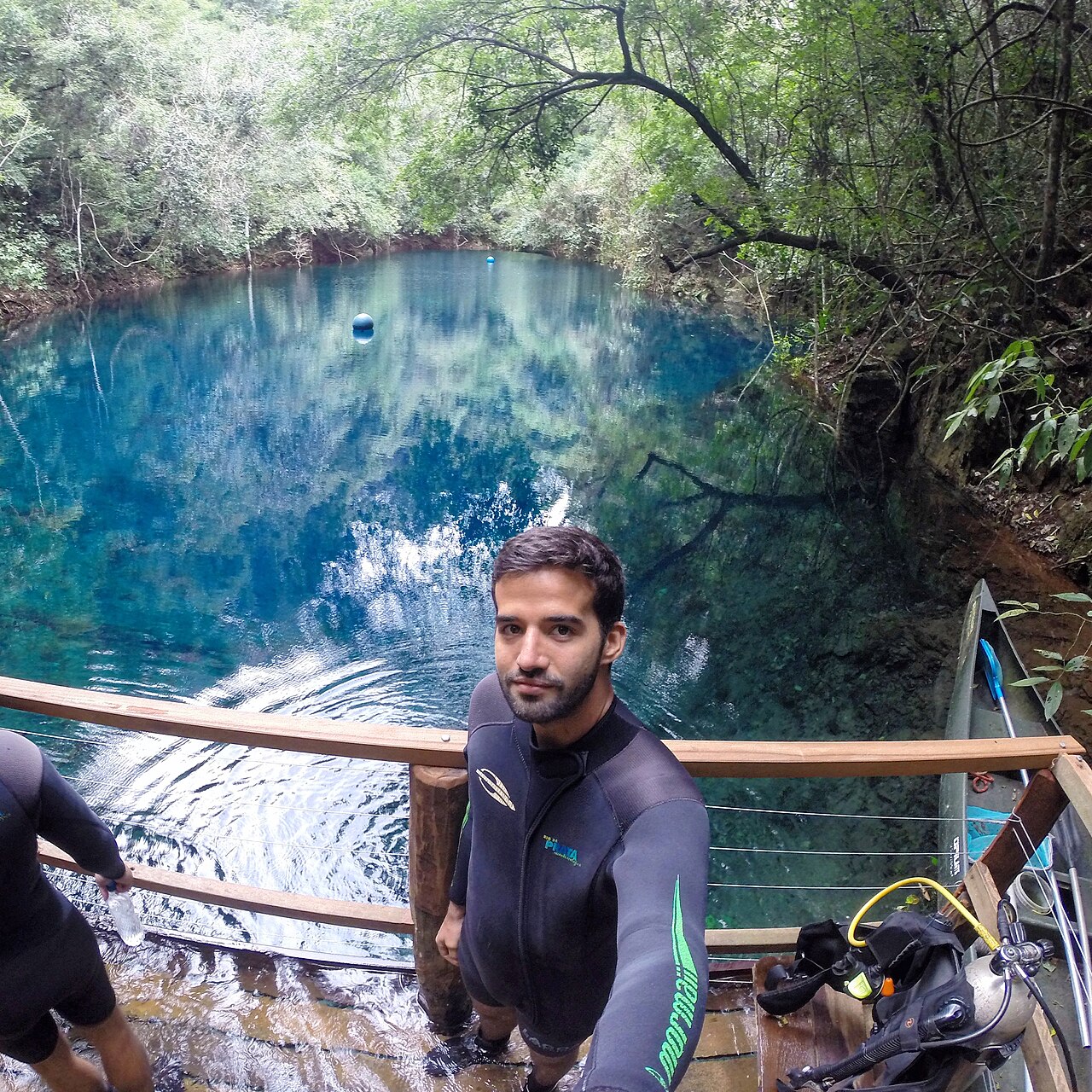
Lagoa Misteriosa is a flooded limestone sinkhole in Jardim, Mato Grosso do Sul, Brazil, roughly 40-53 km from Bonito. In 1998 technical diver Gilberto Menezes spent about eight hours descending to 220 m and still never touched bottom, and in the dry season visibility opens to 40-60 m, which is where the often-quoted feeling of hanging in air rather than floating in water comes from. Freedivers need one crucial caveat, though: as of 2026 the operator caps breath-hold diving (apneia) at 3 m and runs no deep freediving program. This is a site famous for depth, not a site where you are allowed to go deep on a single breath, and any listing advertising 60 m freediving here is simply wrong.
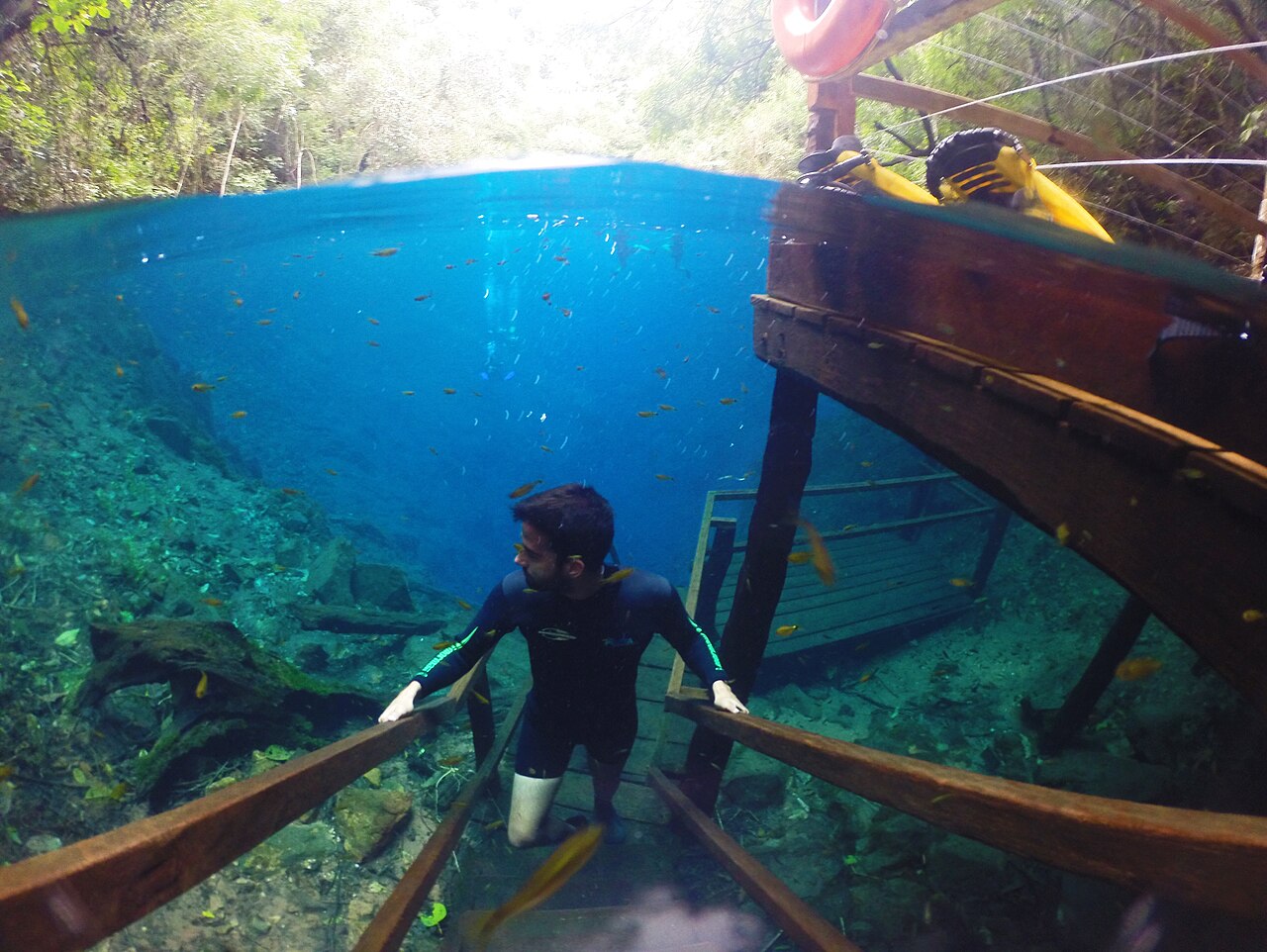
Two vertical shafts about 10 m across that open downward from the 8 m mark - even snorkelers can see the darkness falling away beneath their fins
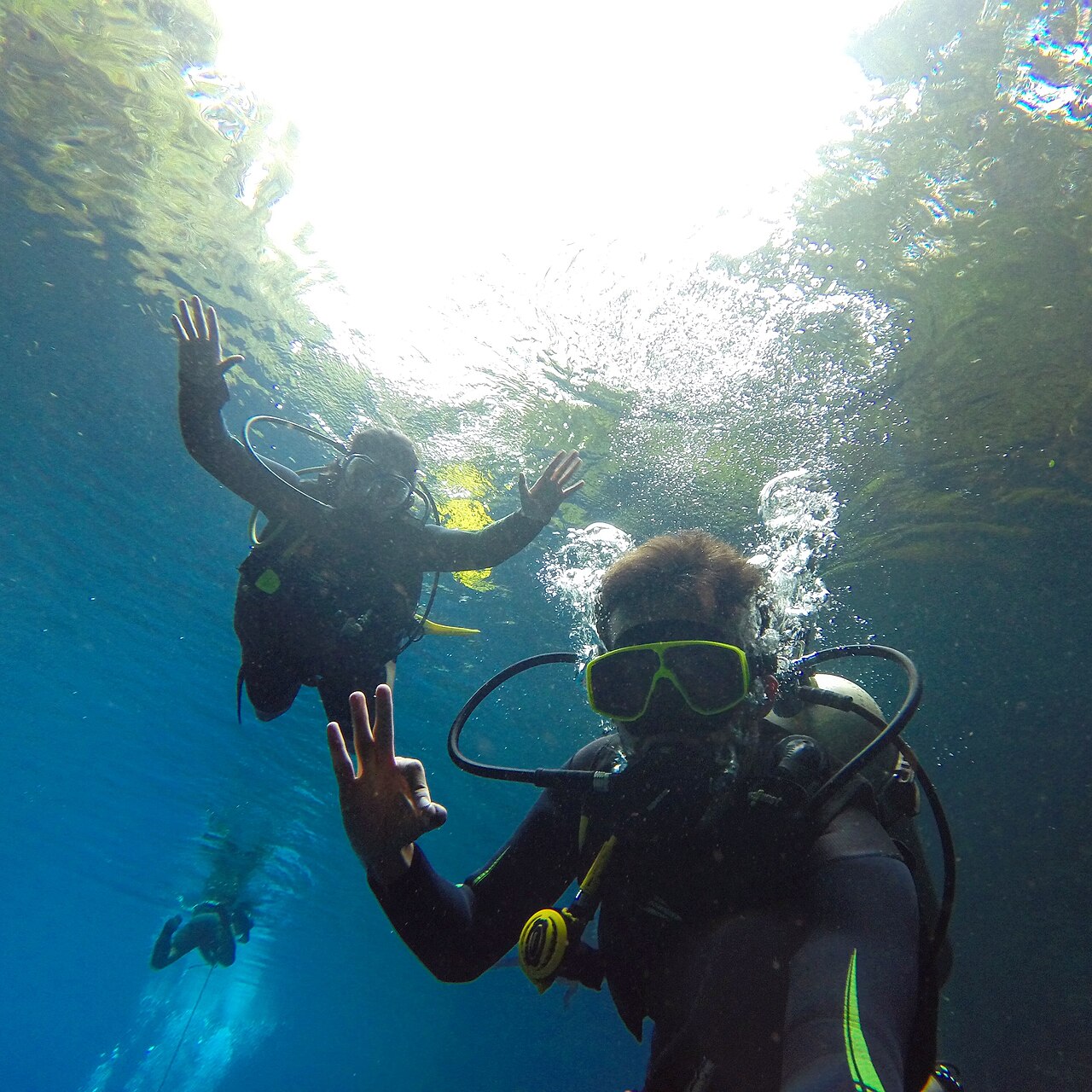
The blue cast of limestone-filtered water rich in dissolved calcium and magnesium, with dry-season visibility of 40-60 m that puts the whole line and every diver in one field of view
An abyss explored to 220 m without a bottom in sight; the 2008 survey done for the management plan only mapped down to about 70 m
The approach itself - a 550-600 m forest trail and a descent of 185-190 wooden steps through cerrado vegetation and birdlife
The contrast between lambaris and muçuns visible in the surface layer and the near-total absence of life below the shaft mouths
Good to know
RulesThe operator's published rule limits apnea to 3 m of depth, and there is no competition-style rope line, counterballast system, or dedicated safety-diver setup installed. Booking a trip here as a CWT/FIM training destination is a wasted flight. Exceeding the stated limit is grounds for removal and puts you outside the site's rescue framework.
SafetyBelow roughly 6-8 m the lagoon becomes a phreatic cave formed by groundwater - a true overhead environment. The exceptional clarity creates a powerful illusion that everything is shallower and closer than it is. Entering the shafts without line, lights, and a decompression plan is strictly the domain of trained cave and technical divers. Do not exceed the recreational caps (8 m intro, 25 m certified, 30 m advanced nitrox).
SafetyA 3 m limit does not make blackout impossible. Shallow water blackout and LMC kill people in under 10 m of water every year. Never breath-hold alone, keep a buddy watching from the surface, and hold eye contact for 30 seconds after every surfacing. The highest-risk moment here is exactly the popular one: dropping the life vest for repeated dives to get photos. Note too that fresh water gives less buoyancy than the sea, so your usual weighting will sink you faster than expected, and one to two hours at around 24°C adds up to real heat loss - wear the wetsuit and re-set your neutral buoyancy for fresh water.
SafetyThis is a remote inland site, and the distance to a hyperbaric chamber and serious emergency care is long - plan on roughly three hours toward Campo Grande. Build that evacuation time into your dive planning. The site has an accident history: a severe decompression incident after an 82 m dive in Poço B in November 1992, and a reported incident during the 2008 mapping expedition.
SeasonFrom mid-October to early April, algae blooms destroy the clarity and diving operations shut down. The site effectively runs April to early October, with the best visibility in the heart of the dry season around June to August. Visit in the wet season and even snorkeling can be cancelled.
RulesBonito and Jardim use a mandatory pre-booked voucher system. Nothing is sold at the gate, bookings go through licensed agencies only, a guide is compulsory, and in high season you should reserve a month or more ahead.
CautionTreat any unofficial tour advertising deep freediving here as a red flag - it contradicts the site's actual rules, and unlicensed operators sit outside the insurance and rescue system. Prices shift by season (2026 snorkeling has been quoted around R$270-298, subject to change), so confirm current rates with the official operator or a licensed agency.
Practical info
Fly into Campo Grande (CGR), typically via São Paulo, then drive three to four hours to Bonito or Jardim; the final approach uses a pau-de-arara truck and a walking trail. The season runs April to early October and access is by advance voucher only, arranged through a licensed agency. Rates, operating hours, depth limits, and certification requirements change season to season, so confirm the current details with the official operator before you book.
On-site reviews📍 Verified on-site
No reviews yet. If you are here, be the first to leave one.