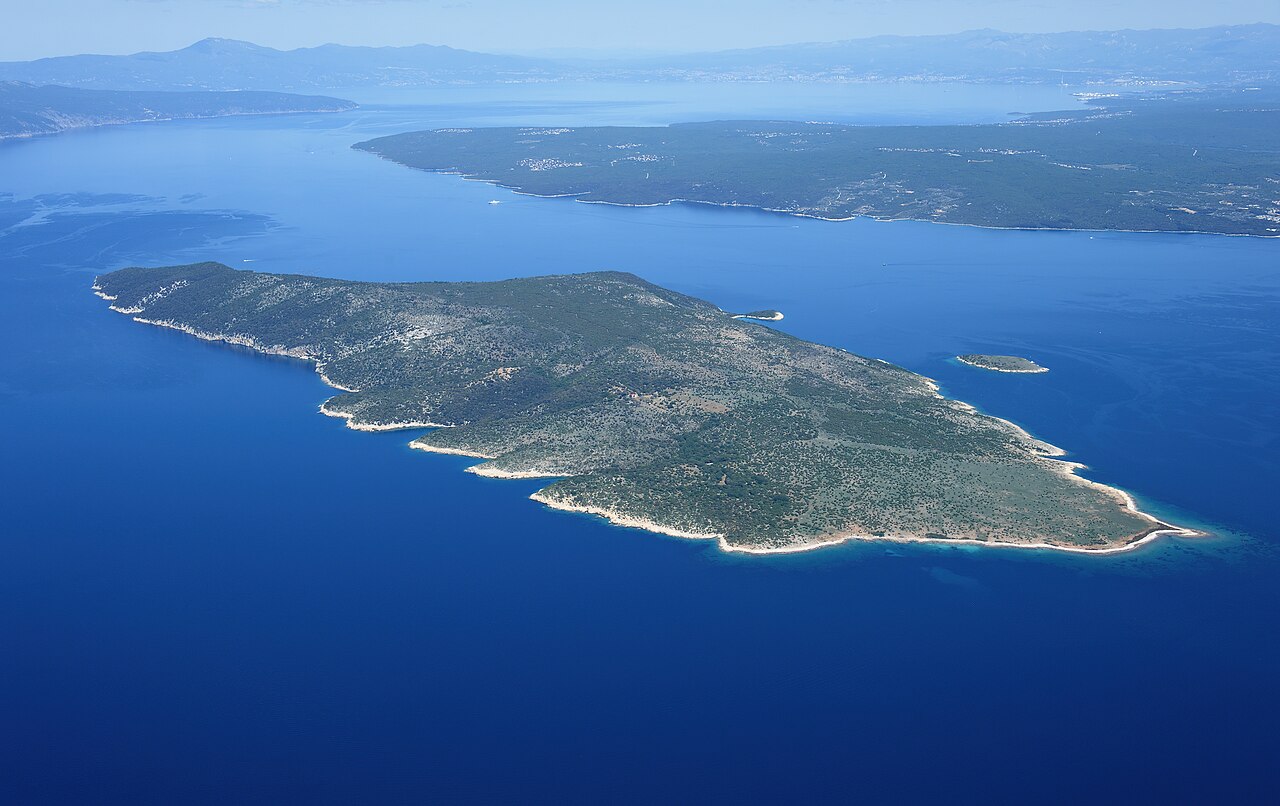
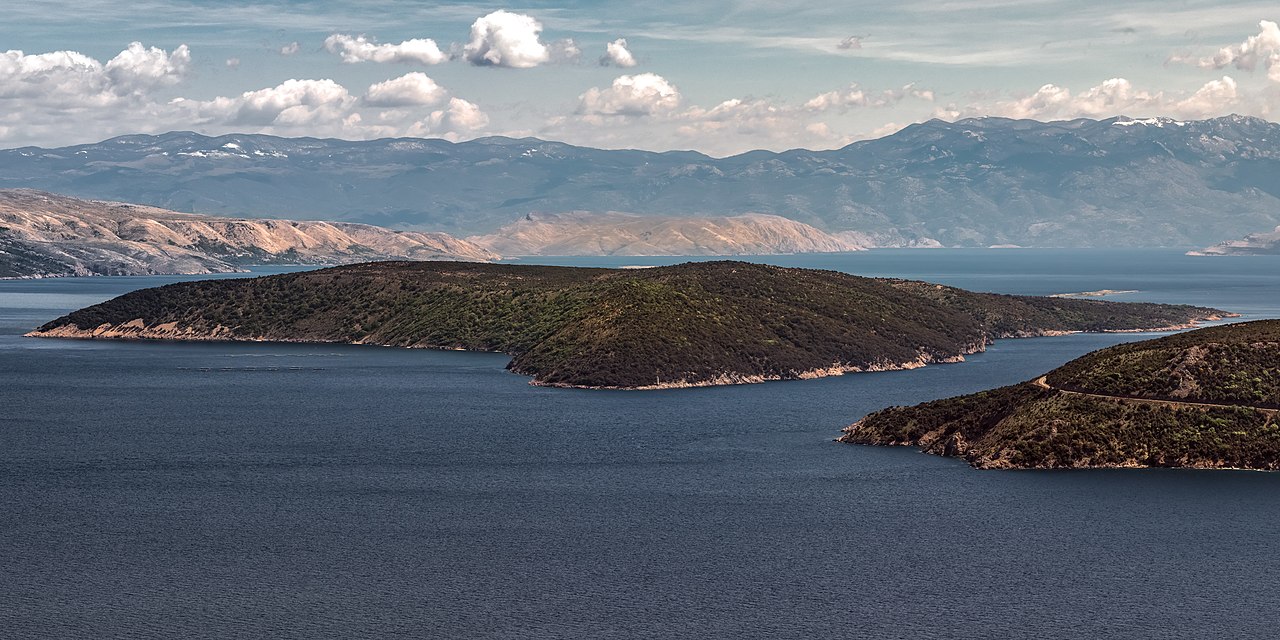
The Krušija channel, between the uninhabited islet of Plavnik off Krk and the island of Cres, sits over the deepest water in Kvarner Bay, where the bottom drops to roughly 110-120m. Depth like that is rare in the northern Adriatic, which is why AIDA Croatia hangs its competition line here for the Adriatic Depth Trophy - a single event that serves as the AIDA depth national championship of Croatia, Hungary, Serbia and Slovenia plus the Slovenian CMAS championship; the 2026 edition was held 16-20 June out of Krk, and the next dates should be checked on the AIDA calendar. Summer surface temperatures reach 22-25°C, but a thermocline around 20-25m knocks 5-10°C off that, and visibility typically runs 15-30m - darker and colder than the tropical spots most travelling freedivers train in.
The Krušija deep line - Kvarner Bay's deepest seabed (about 110-120m) gives northern-Adriatic freedivers depth they can rarely find this far north
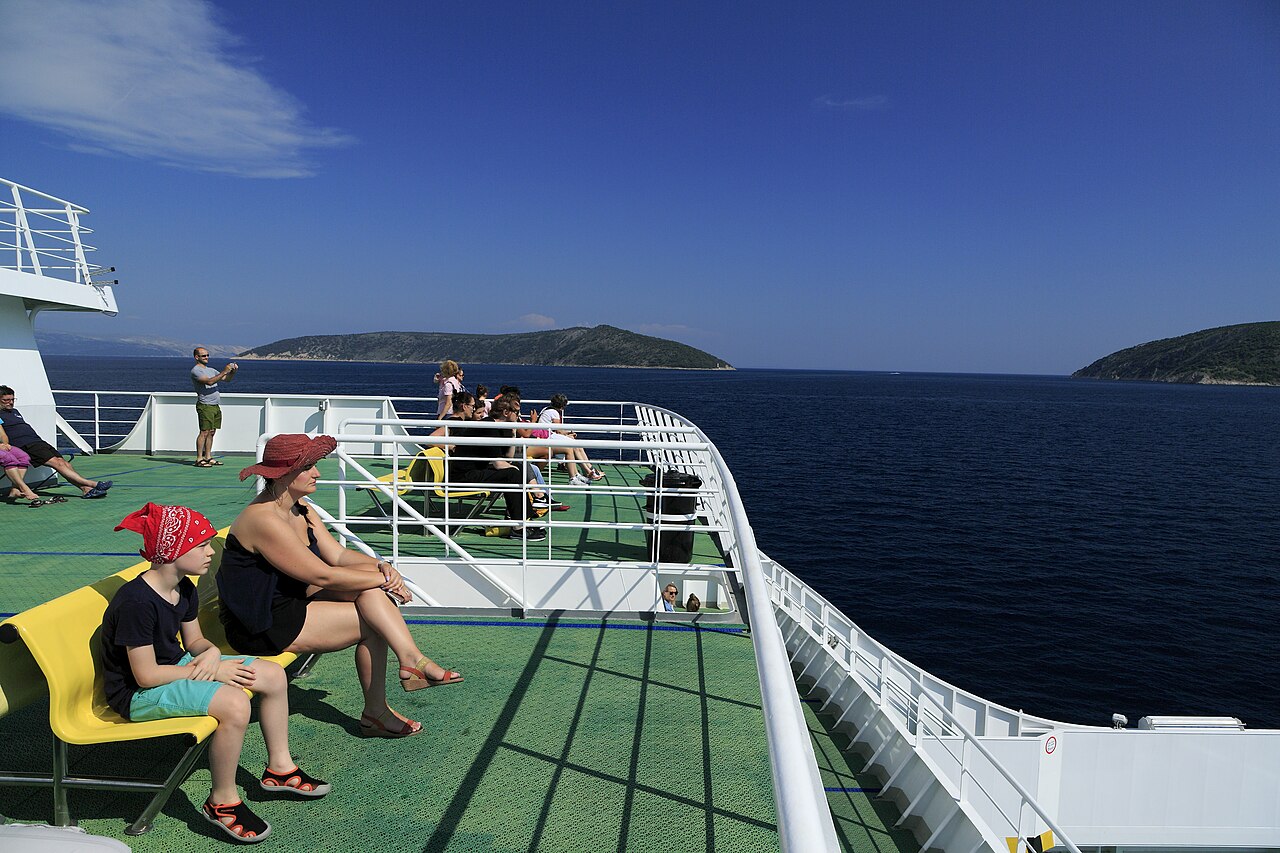
The Adriatic Depth Trophy competition zone, with buoys, counterballast, safety divers and a medical team rigged as a full depth setup; spectators watch from support boats during the event
A venue that has drawn Alexey Molchanov, Fatima Korok and Şahika Ercümen, organised and coached by Vitomir Maričić - head of AIDA Croatia and holder of the 29:03 oxygen-assisted static breath-hold world record
Plavnik's northern cliffs, karst walls falling straight into the sea, with a breeding population of griffon vultures riding the updrafts above them
The thermocline at 20-25m - the sharp step-change in temperature, clarity and light on the way down defines the character of diving here
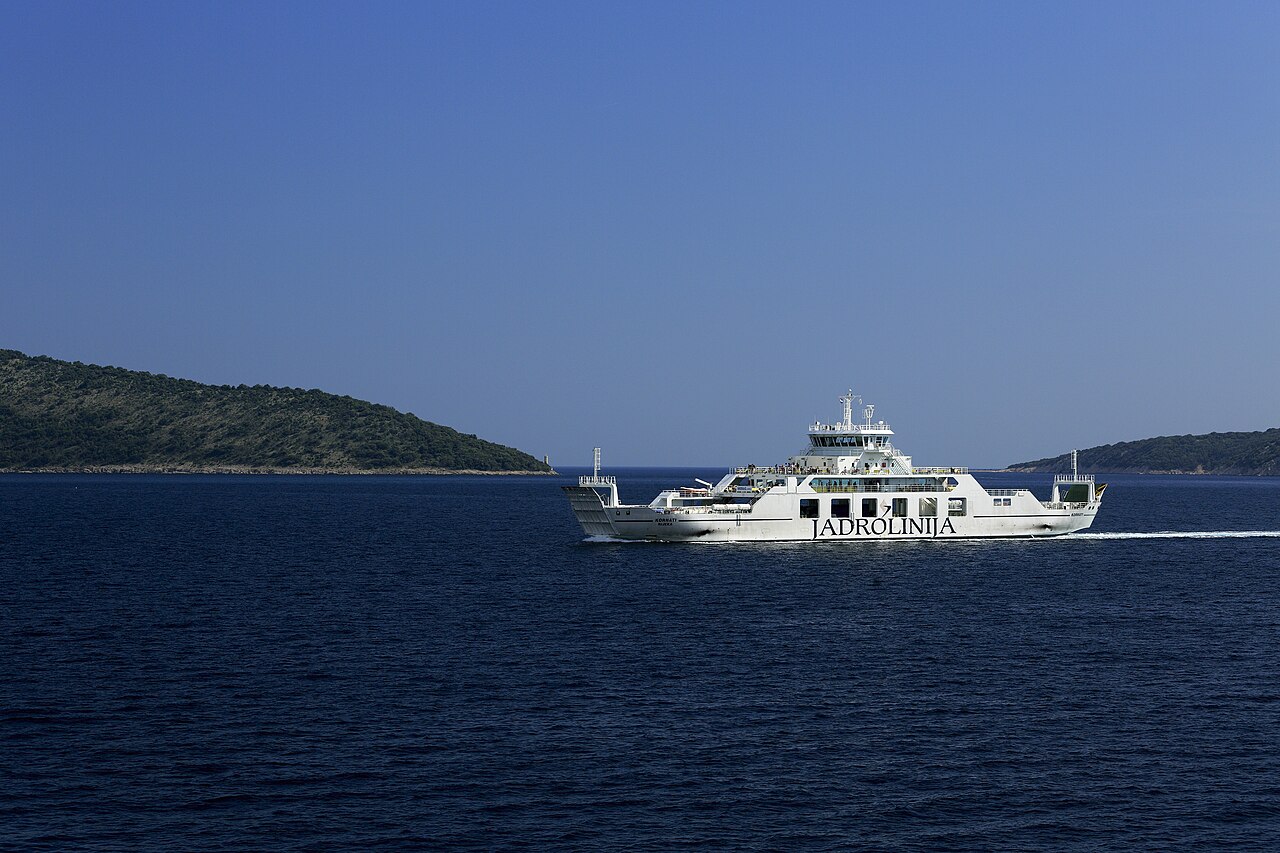
Neighbouring Cres as the training base, with shallower lines and large gatherings such as Deep Week Croatia outside the competition window
Good to know
SafetyMost freediving deaths come from shallow water blackout and LMC, and they happen in the last 10m and in the seconds after surfacing. Never dive alone, run strict one-up-one-down buddy pairs, meet the diver on the final part of the ascent, and keep eyes and hands on them for at least 30 seconds at the surface. This protocol, not personal-best ambition, is what separates a good day from a fatality.
SafetyThis is an open-water, boat-based deep line, not a swim-out site. Do not clip onto a deep line without a lanyard, a rigged counterballast system, trained safety divers, and oxygen and an AED on the boat. Plavnik is uninhabited, so there is no shore support and evacuation to definitive care takes time.
SafetyBelow the thermocline the water falls to 14-16°C even in midsummer. Cold degrades equalisation, judgement and blackout resistance all at once, so wear a thick wetsuit and hood - and cut your target depth without arguing about it the moment you feel yourself getting cold.
SafetyThe bura wind arrives in sudden gusts with little warning; Krk has recorded a gust of 248 km/h, and while summer bura is shorter and milder than the winter version it can raise short, steep 1-2.5m seas in the channel very fast. Because everything here is boat-based, check the forecast before departure and agree your abort criteria in advance.
SafetyIt is a channel, so expect current and boat traffic. Any training outside the organised competition zone needs a dive flag and surface buoy, and divers should stay on the line - visibility is lower and light drops off faster than in the southern Mediterranean, making a line easy to lose.
RulesAIDA competition entry requires a physician's 'fit for freediving' certificate less than a year old along with certification and registration, and events and camps run on advance sign-up. Standard travel insurance frequently excludes breath-hold diving or caps covered depth, so arrange a policy that names freediving explicitly.
MannersPlavnik is uninhabited and part of the Kvarner islands Natura 2000 special protection area, with griffon vultures nesting on the sea cliffs. Approaching the cliff base or making noise can flush fledglings into the water, where they drown, so keep your distance and follow local guidance on landing and approach restrictions.
Practical info
Rijeka Airport (RJK) is on Krk itself, near Omišalj, and the island is connected to the mainland by the Krk bridge; from Zagreb it is roughly a two-hour drive to Rijeka, with seasonal long-haul connections into Zagreb in summer. The season runs June to September with July and August the most settled, and the Krušija deep line is normally accessed through an organised competition or camp rather than independently - confirm dates, prices, prerequisites and flight schedules directly with the organisers, as these change year to year.
On-site reviews📍 Verified on-site
No reviews yet. If you are here, be the first to leave one.