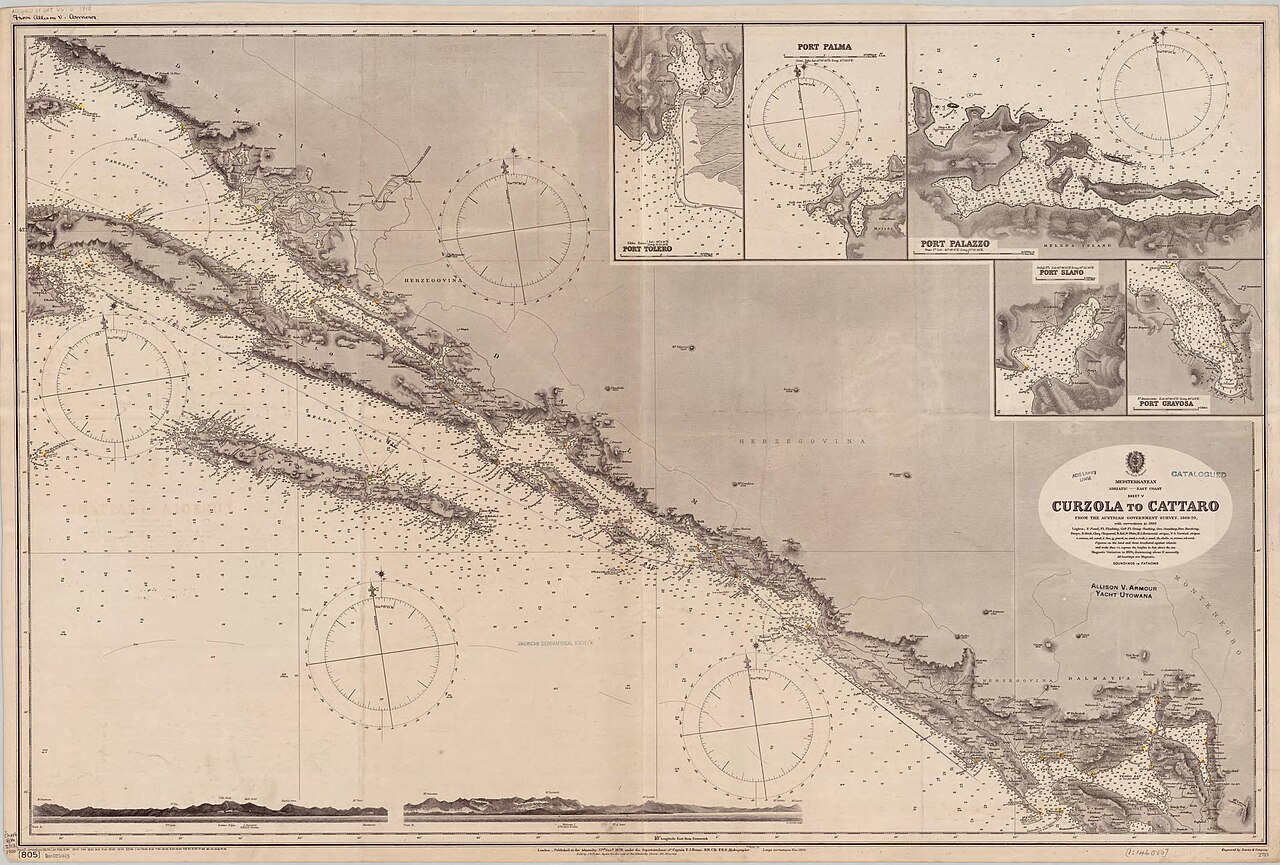
Korčula Old Town is a walled medieval fortress town on a small headland on the eastern coast of Korčula Island in southern Dalmatia, Croatia — one of the best-preserved fortified towns in the Mediterranean, often called 'Little Dubrovnik.' Its lanes fan out in a distinctive fishbone pattern engineered to block wind while circulating air, and it is famed for the Gothic-Renaissance Cathedral of St Mark and for the legend that the explorer Marco Polo was born here. As of 2026 the town is on UNESCO's tentative World Heritage list, and during the spring-to-autumn season the traditional Moreška sword dance is performed regularly. The historic core can be explored on foot in a half day, making it an easy day trip from Split or Dubrovnik or a relaxed overnight base.
Cathedral of St Mark - a Gothic-Renaissance masterpiece built by local stonemasons (14th-16th c.), with Marko Andrijić's ciborium, Bonino da Milano's main portal, a Tintoretto altarpiece, an Ivan Meštrović Pietà, and a climbable bell tower with town-and-sea views
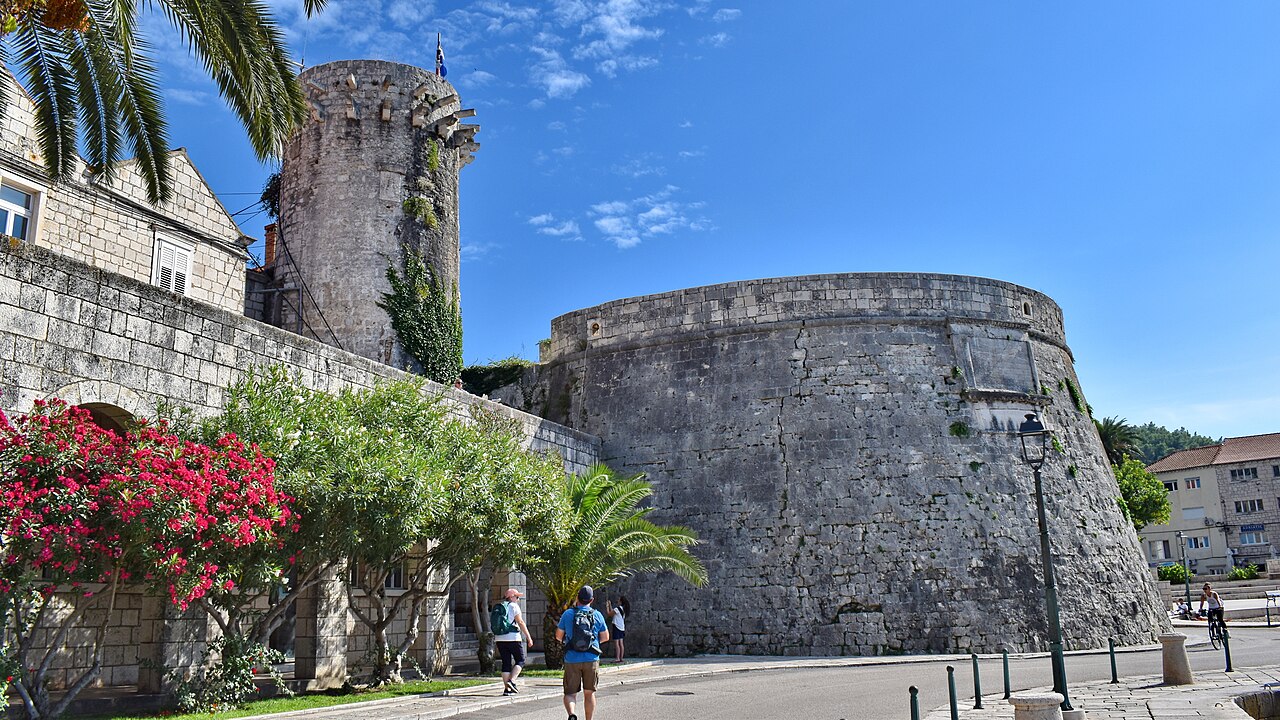
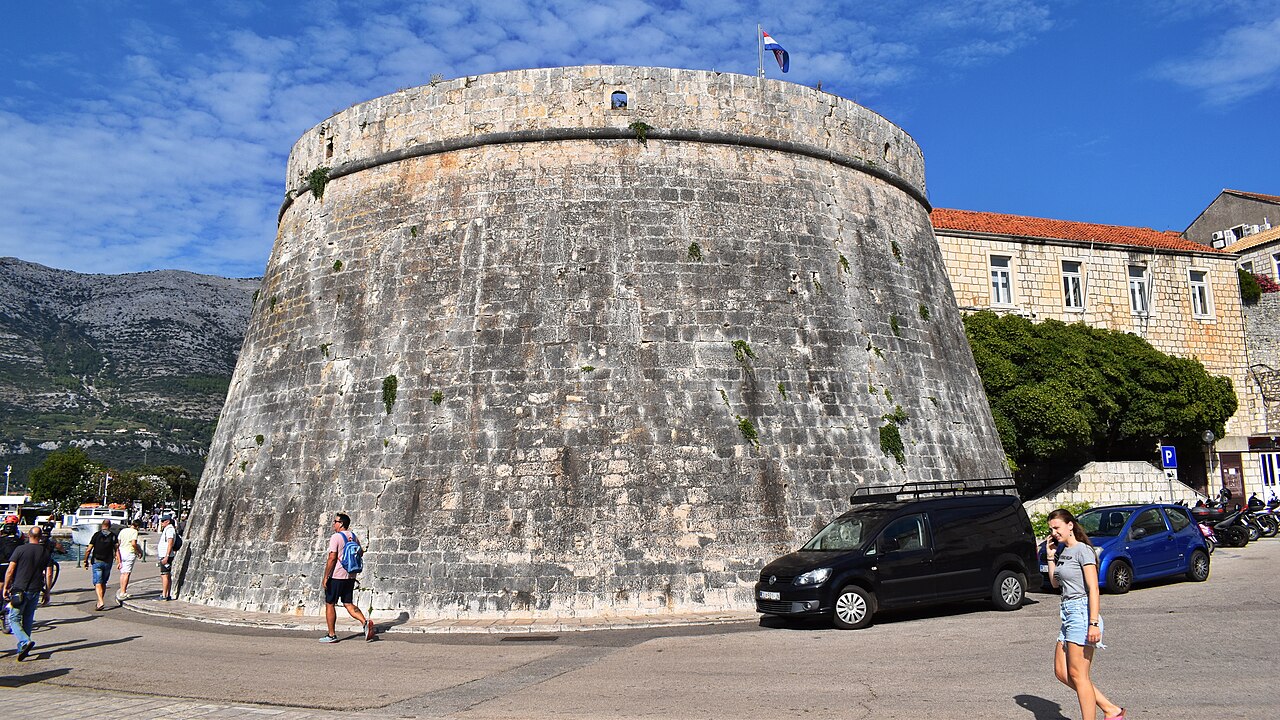
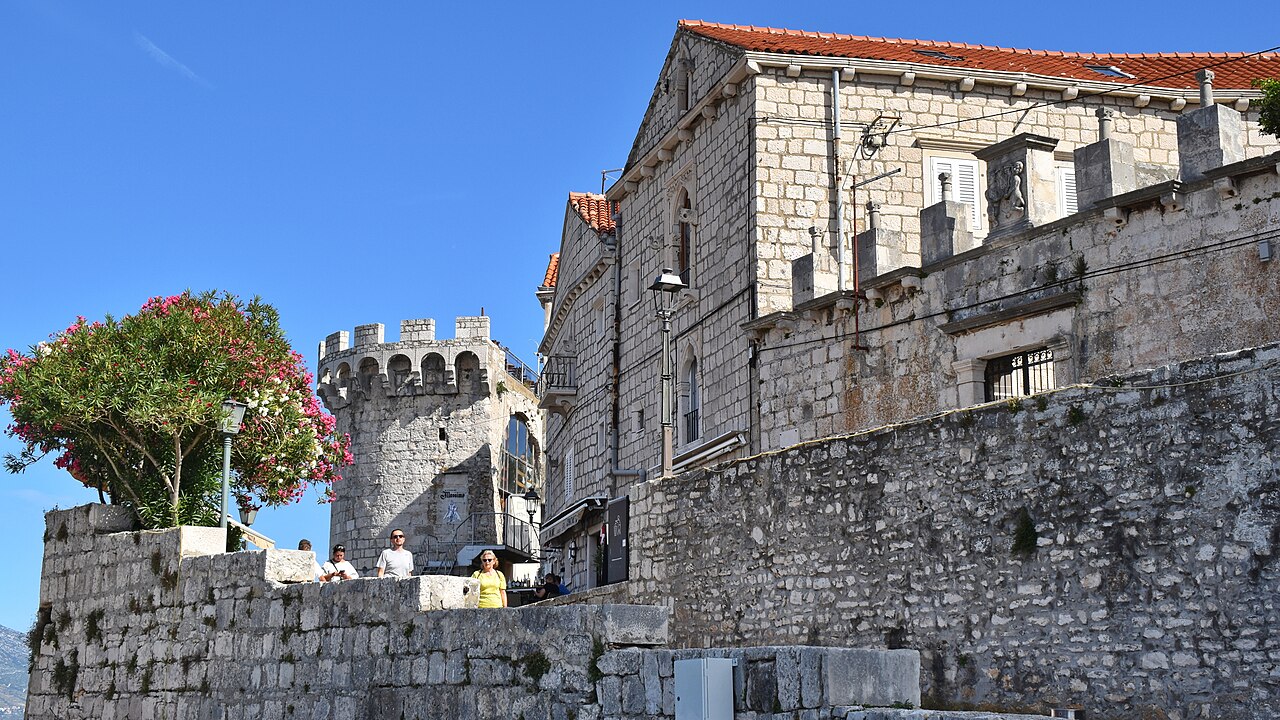
Fishbone street plan, town walls and towers - 7 of the original 12 defensive towers survive; a scenic walk along the ramparts
Veliki Revelin Tower (Land Gate, 1485) - the town's main gate, hosting a permanent Moreška exhibition in summer
Marco Polo House / viewpoint - the stone house billed as Marco Polo's 'birthplace,' with a rooftop lookout over the cathedral and rooftops
Moreška sword dance - Korčula's own traditional sword dance dating from the 16th century, staged at the open-air summer theatre in season
Church of All Saints with its collection of Cretan icons, plus Renaissance palaces and narrow stone alleys throughout the core
Good to know
SafetyBeaches are mostly pebble or rock and sea urchins live in the shallows, so water shoes are handy. The old town's polished stone paving and rampart steps get very slippery when wet — wear non-slip footwear.
SeasonJuly and August bring intense heat, strong UV and peak-season crowds. Carry water and seek shade at midday, and book catamarans/ferries from Split or Dubrovnik ahead, as seats often sell out.
RulesCroatia is in the EU, the euro (EUR) and the Schengen area (since 2023); most short-stay visitors enter visa-free. Stairs and railings on the walls and towers are narrow and steep, so take care with children and older travellers.
MannersCover shoulders and knees when entering the Cathedral of St Mark and other religious sites, and stay quiet and avoid flash photography during Mass or Moreška performances.
CautionThe Marco Polo 'birthplace' rests on a disputed 16th-century legend — set expectations accordingly and confirm current admission and hours on site. Agree fares in advance for unlicensed boat tours or metre-less taxis.
SeasonSummer afternoon gusts or the winter bura wind can make small-boat trips and swimming risky, and jellyfish appear occasionally — follow local advisories.
Practical info
Reach Korčula by high-speed catamaran (e.g. TP Line) from Split (about 2.5-3 hours) or Dubrovnik (about 2 hours), or via the Orebić-Dominče car ferry. The old town is walked on foot, while the cathedral bell tower, Moreška performances and museums charge separate admission — always verify current fares, ferry timetables and show dates on the official sites before you go.
On-site reviews📍 Verified on-site
No reviews yet. If you are here, be the first to leave one.