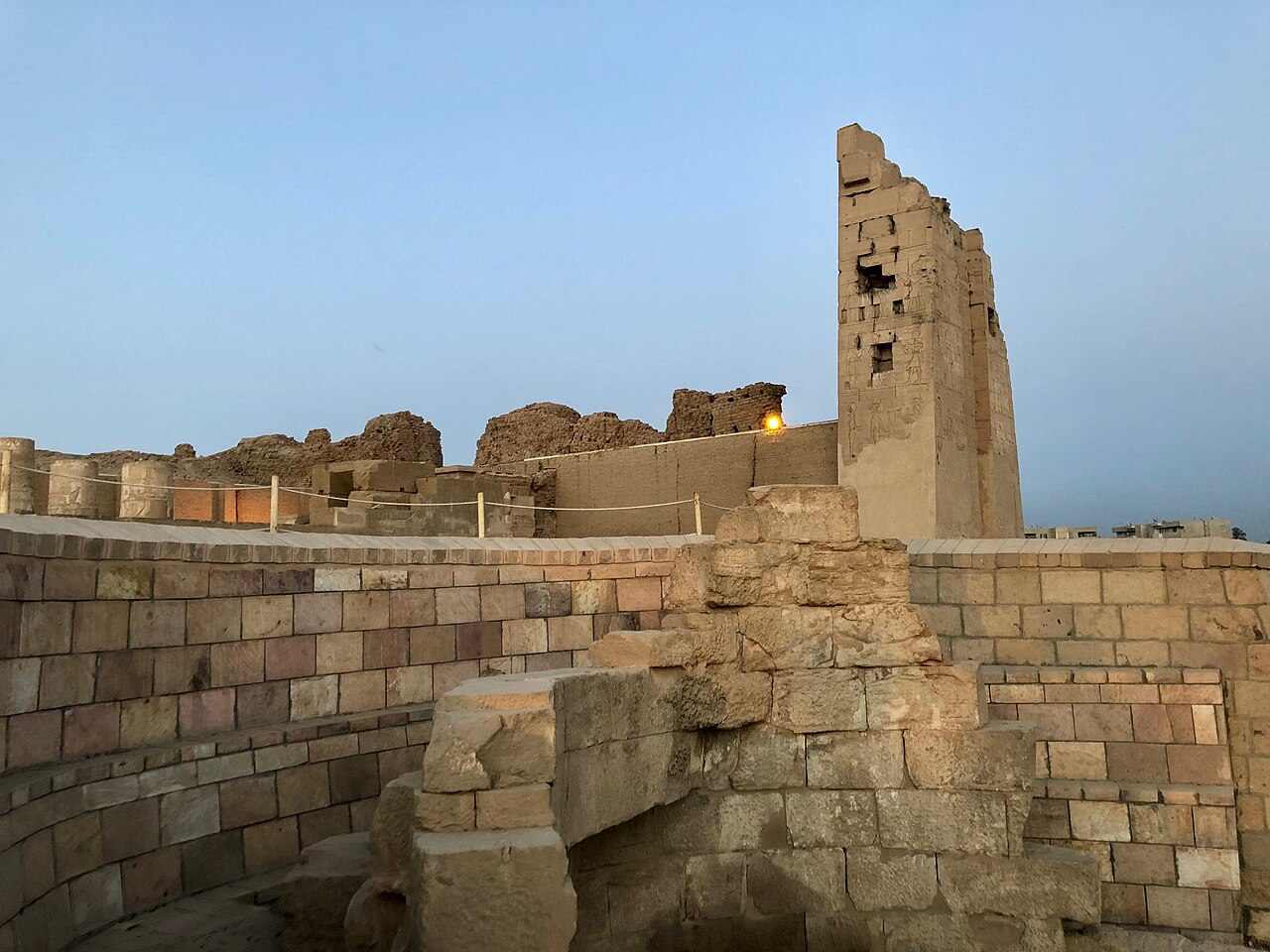
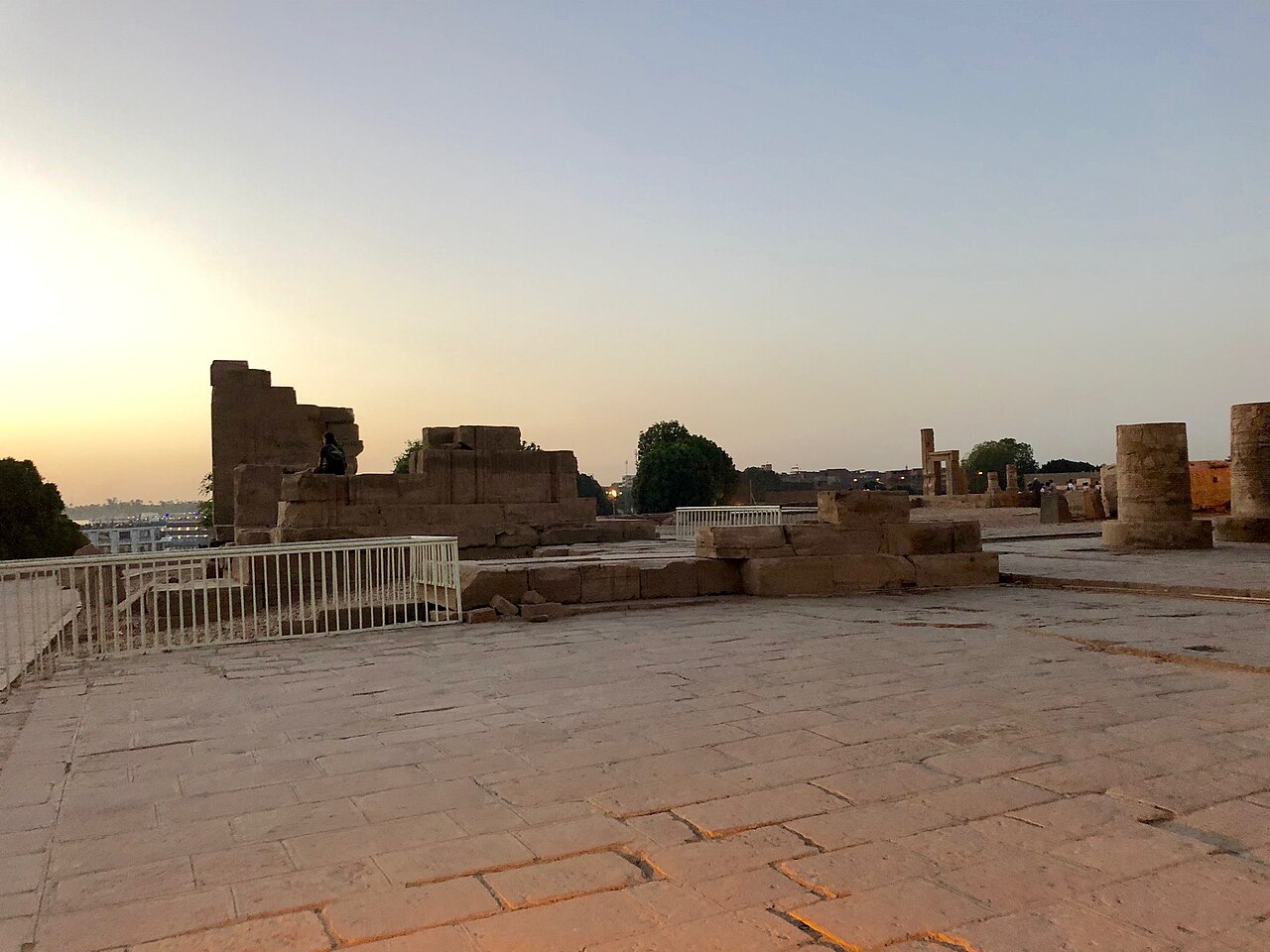
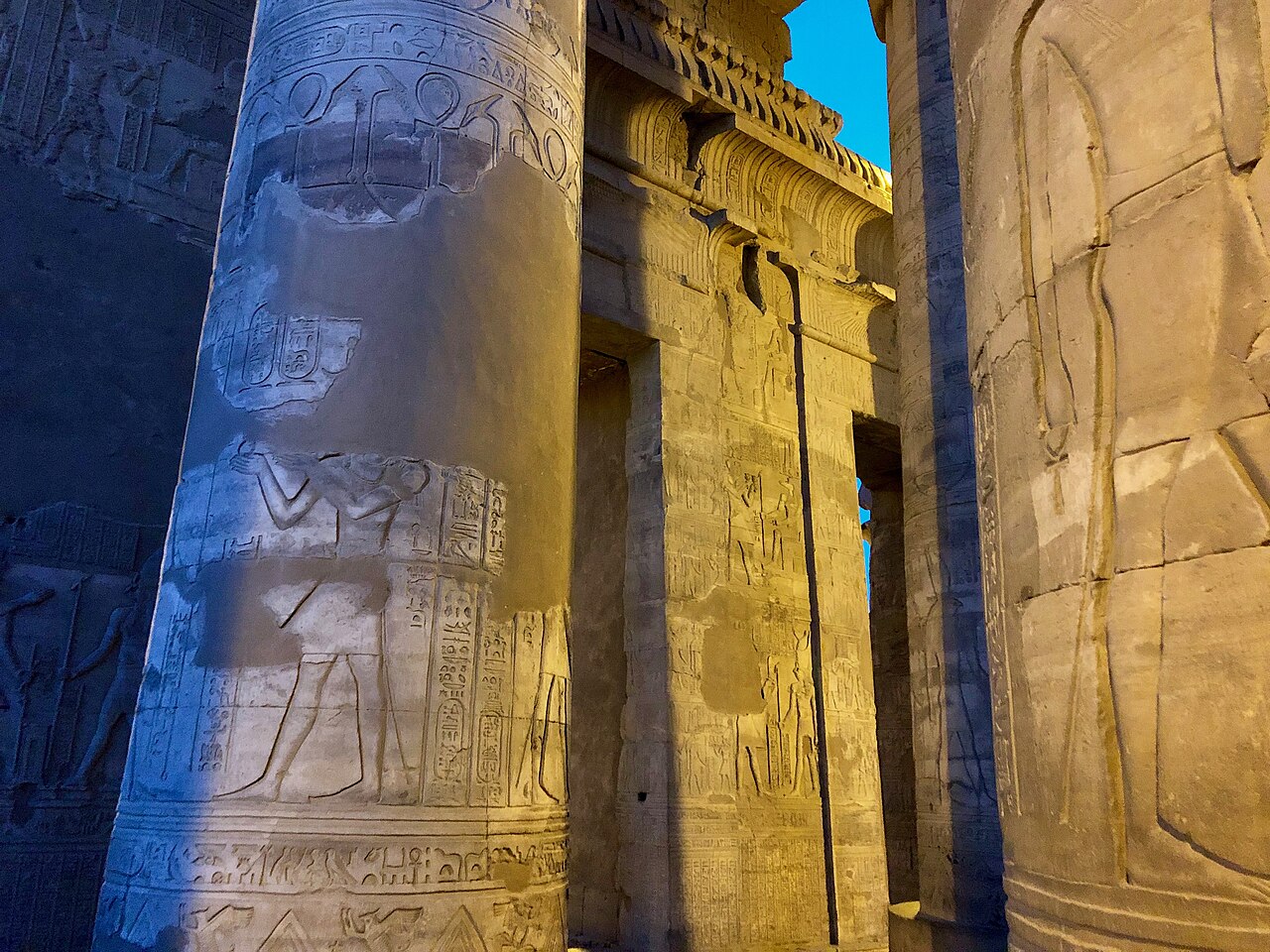
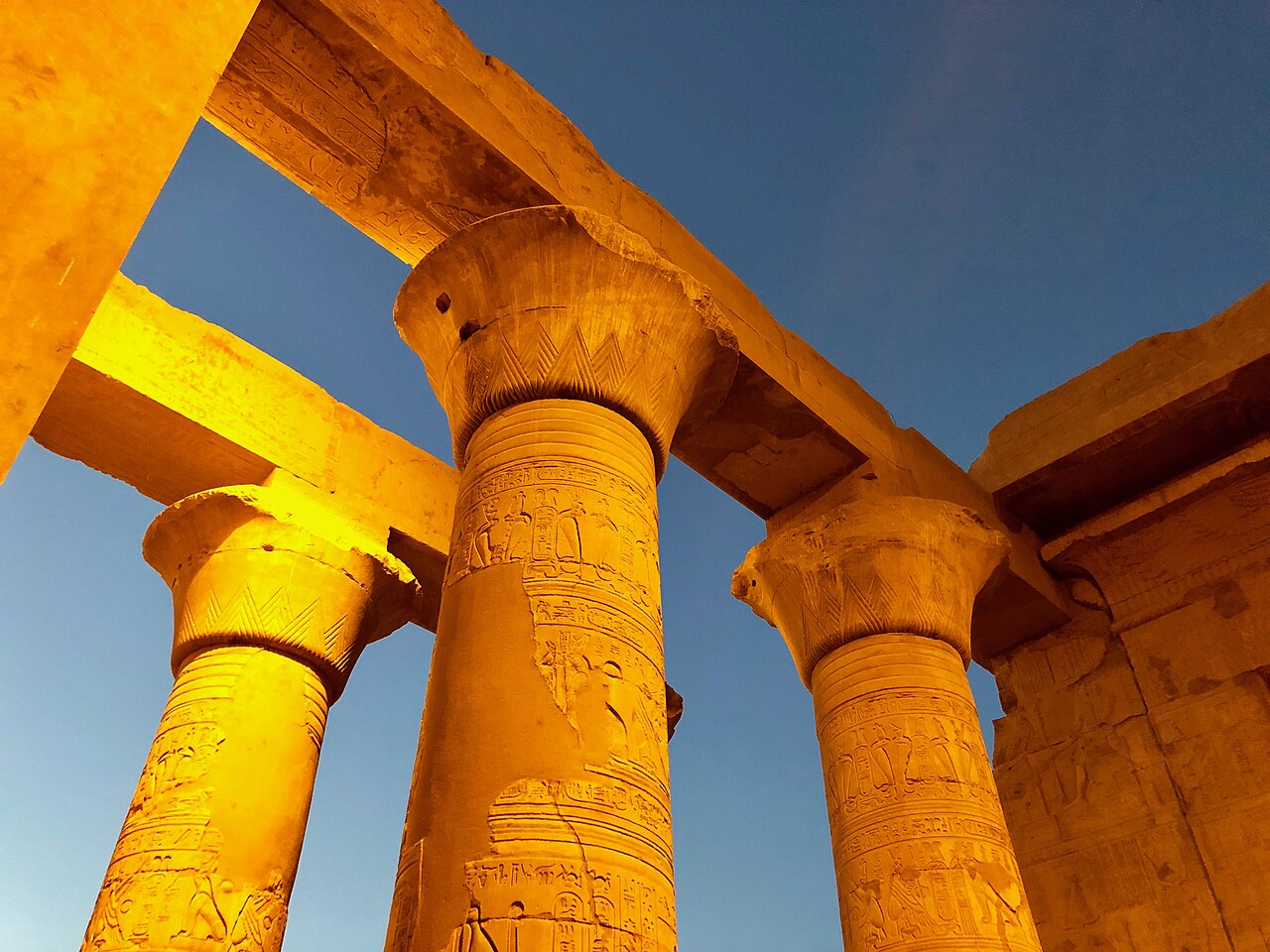
The Temple of Kom Ombo stands on the east bank of the Nile about 45–50 km north of Aswan and dates to the Ptolemaic and Roman periods. It is famous as a rare 'double temple': instead of a single axis, it has two parallel axes and two sanctuaries, the southern (right) half dedicated to the crocodile god Sobek together with Hathor and Khonsu, and the northern (left) half to the falcon god Haroeris (Horus the Elder). Its walls preserve a celebrated relief showing what are believed to be ancient surgical instruments, festival-calendar scenes, and a Nilometer, while an adjacent Crocodile Museum displays mummified Nile crocodiles unearthed nearby. In 2026 it remains a classic stop on Nile cruises between Aswan, Edfu and Luxor, with boats mooring right below the temple for an easy walk-in visit.
The perfectly mirrored double-temple plan — two entrances and two sanctuaries, one for Sobek (the crocodile god) and one for Haroeris (Horus), best appreciated by comparing the symmetrical halves side by side
The 'surgical instruments' relief on the rear outer wall, depicting scalpels, forceps and other tools that hint at the sophistication of ancient Egyptian medicine
Detailed festival-calendar reliefs and offering scenes with Ptolemaic kings before the gods
The Nilometer — a circular well structure once used to measure the Nile's flood levels
The adjacent Crocodile Museum, with mummified crocodiles and objects tied to the local cult of Sobek
Good to know
SeasonThe Aswan region is among the hottest in Egypt; summer highs (June–September) top 40°C. Visit early morning or late afternoon, and bring water, a hat and sunscreen. The best season is October–April.
SafetyThe ancient sandstone floors are uneven and open features like the Nilometer have few railings. Watch your footing and guard against dehydration and sunstroke, as shade is limited.
MannersAs a sacred site, modest clothing covering shoulders and knees is advisable. Do not touch, lean on or climb the reliefs.
CautionEgypt has a strong 'baksheesh' (tipping) culture. Guards may offer to show you a restricted spot or take your photo and then expect a tip; decline politely if unwanted, and keep small Egyptian-pound notes handy.
CautionStalls at the cruise landing and around the temple, as well as horse carriages (caleche) and taxis, tend to quote high. Always haggle and confirm the price before you commit.
RulesTripods, professional gear or flash may be restricted, and a separate photography permit is sometimes required. Confirm the current rules at the ticket office.
SafetyIf visiting independently, check your government's travel advice for Aswan/Upper Egypt beforehand and move with a licensed guide or a trusted cruise/vehicle.
Practical info
Most visitors arrive on a Nile cruise, which docks at a jetty directly below the temple for a short walk-in visit. Independent travelers can reach it by taxi from Aswan in about 45–60 minutes, or from the nearby town of Kom Ombo. Opening hours (broadly 7:00 to 17:00–21:00, varying by season) and the foreign-visitor ticket price (including the Crocodile Museum, in Egyptian pounds) change frequently, so verify the latest details on the official Egyptian antiquities website before you go.
On-site reviews📍 Verified on-site
No reviews yet. If you are here, be the first to leave one.