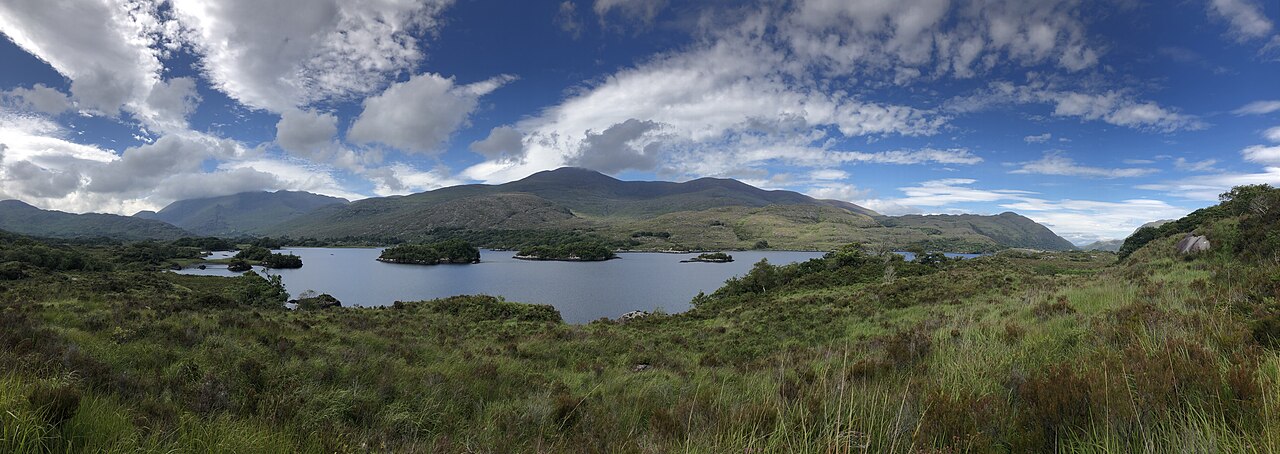
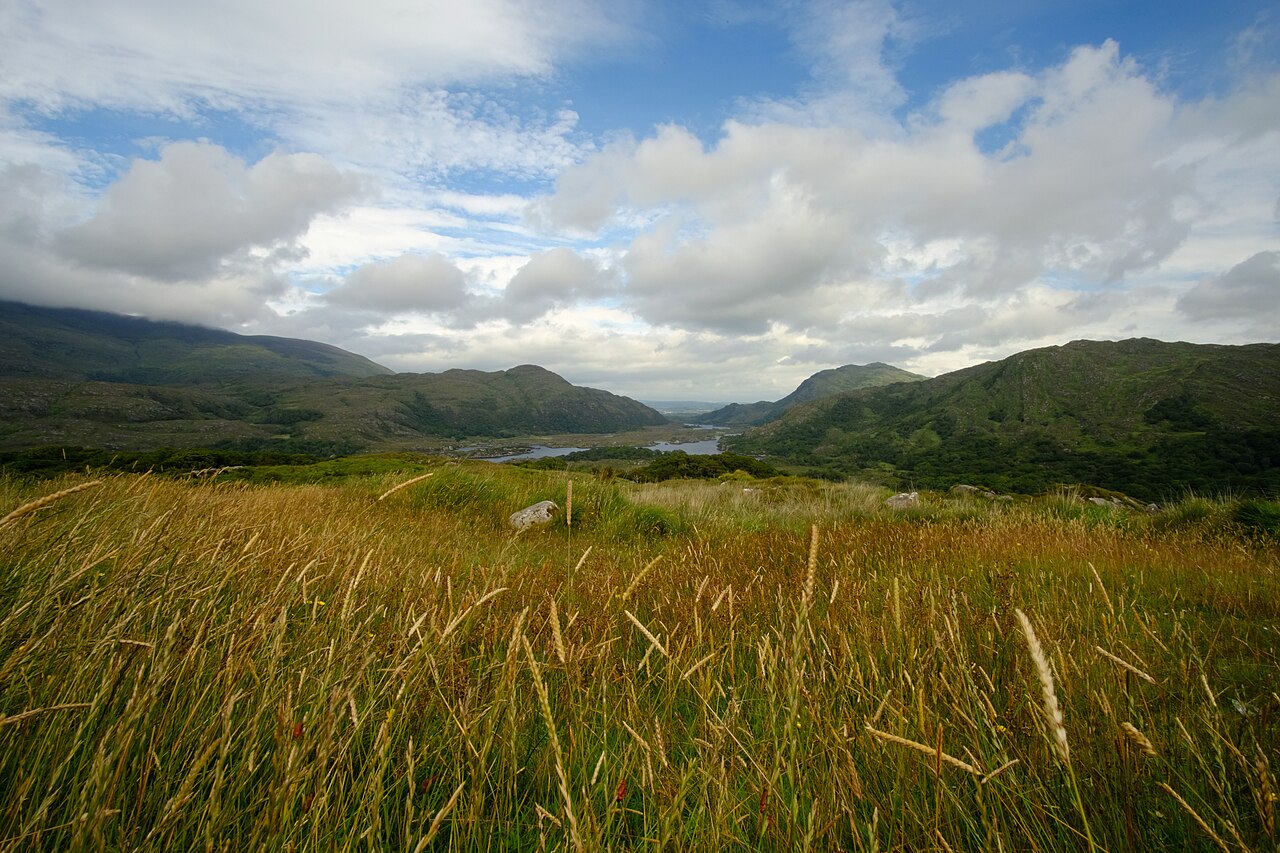
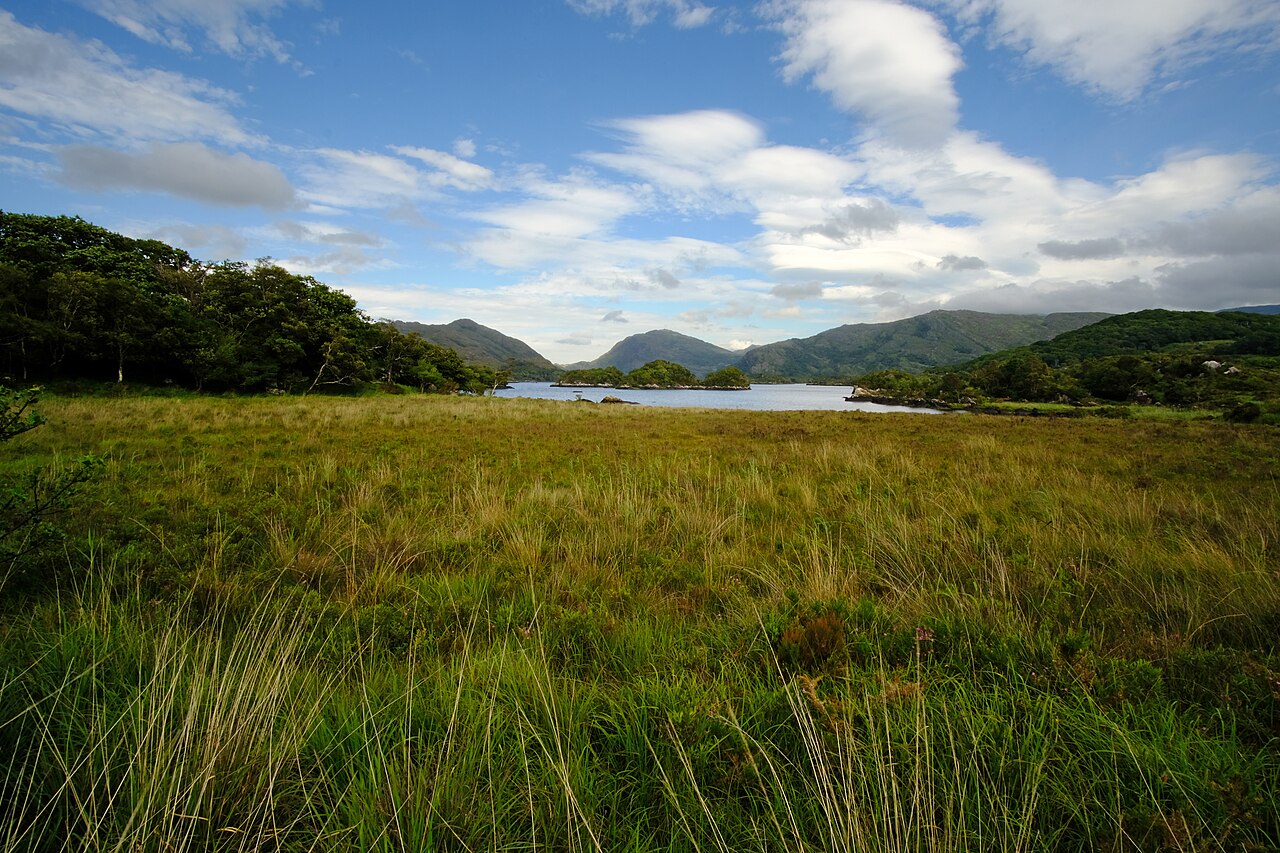
Killarney National Park (Páirc Náisiúnta Chill Airne) is Ireland's first national park, opened in 1932 after the Muckross Estate was gifted to the state, and today a UNESCO Biosphere Reserve spanning some 10,000 hectares (about 26,000 acres) of mountains, lakes, ancient woodland and waterfalls beside the town of Killarney in County Kerry. At the foot of the MacGillycuddy's Reeks, Ireland's highest mountains, it wraps around three lakes — Lough Leane, Muckross Lake and the Upper Lake — and shelters rare oak and yew woodland and Ireland's only herd of native wild red deer. As of 2026 the National Parks and Wildlife Service is running a large-scale programme to remove invasive rhododendron and manage deer numbers, so you may see fencing and regeneration works in places, but most of the park remains fully open. It is an easy nature escape best explored slowly on foot or by bike straight from town.
Muckross House & Gardens — a lakeside Victorian mansion (paid guided interior tour) with free gardens and a 1930s traditional farm; allow a half day here.
Torc Waterfall — a roughly 20 m cascade reached by a paved path from Muckross, at its most dramatic after rain.
Ross Castle & Innisfallen Island — a 15th-century tower house on Lough Leane, with boats from the pier to the 7th-century monastic ruins on Innisfallen.
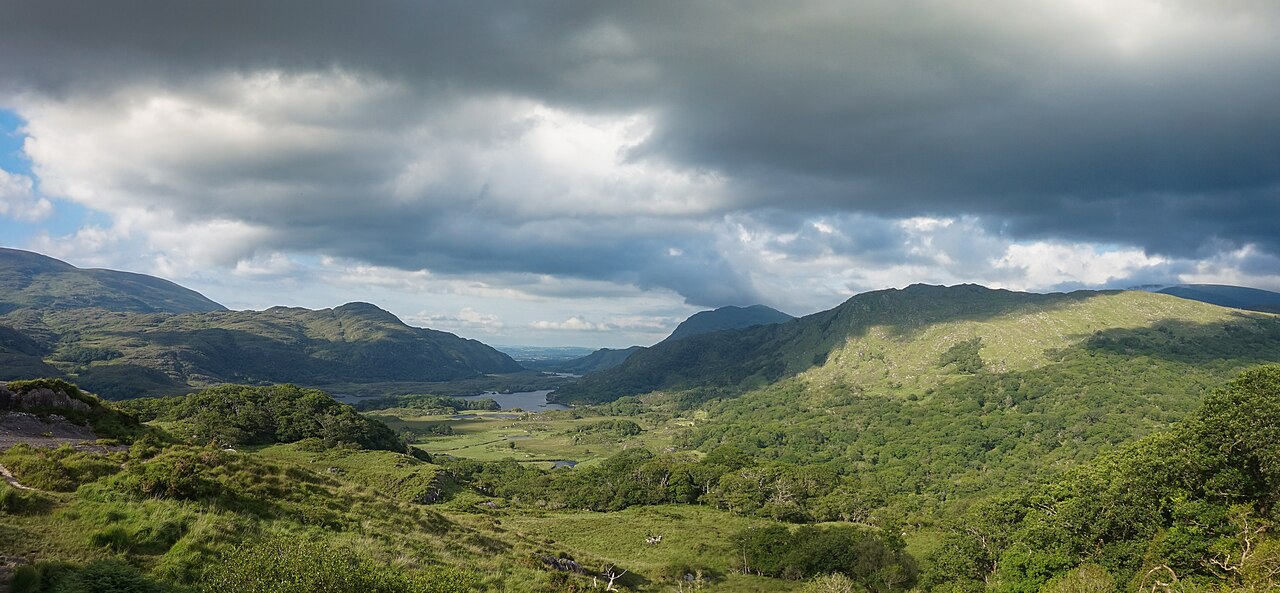
Ladies View & the Upper Lake — the classic panoramic viewpoint on the Ring of Kerry road.
Red deer and Atlantic oak & yew woods — Ireland's only native wild red deer, present since the last ice age, in some of western Europe's rarest woodland.
Muckross Abbey — the atmospheric ruins of a 15th-century Franciscan friary with an old graveyard.
Good to know
SafetyThis is one of the wettest corners of Ireland and weather can change hourly. A waterproof jacket and grippy footwear are essential; for hikes into the MacGillycuddy's Reeks prepare for mist and cold and allow plenty of time.
SafetyTicks that can carry Lyme disease live in long grass and off-track areas. Wear long trousers and covered shoes, and supervise children closely near the water.
SeasonIn the July–August peak, accommodation, tours and jaunting cars get very busy, so book ahead. During the autumn (Sept–Oct) red deer rut the animals are sensitive — never approach and keep your distance.
RulesDrones are banned, dogs must be kept on a lead, and BBQs, campfires and flower-picking are prohibited under a Leave No Trace policy. The park and gardens are free, but heritage sites such as Muckross House interior, Ross Castle and the Traditional Farms charge admission.
MannersTraditional jaunting cars come with a customary tip, so agree the route and price with the jarvey up front. Do not feed wildlife and photograph deer from a respectful distance.
CautionAlways fix the fare for jaunting cars and airport taxis before you set off to avoid overcharging. Killarney itself is very safe, but keep valuables close in crowded spots at peak season.
Practical info
Reach the park via Killarney train station (services from Dublin, Cork and Limerick) or Kerry Airport (about 17 km); from town you can walk or cycle to the main gate at Killarney House, and hop-on hop-off shuttles, jaunting cars and boats also operate. Entry to the park and gardens is free while heritage sites are ticketed, and the visitor centre is generally open about 09:15–17:15 — always confirm current fees, opening hours and boat/tour schedules before visiting.
On-site reviews📍 Verified on-site
No reviews yet. If you are here, be the first to leave one.