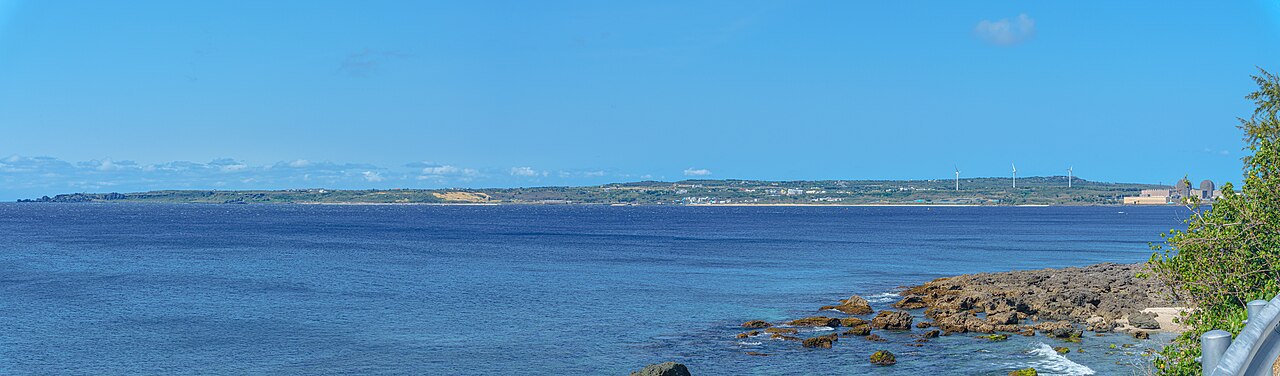
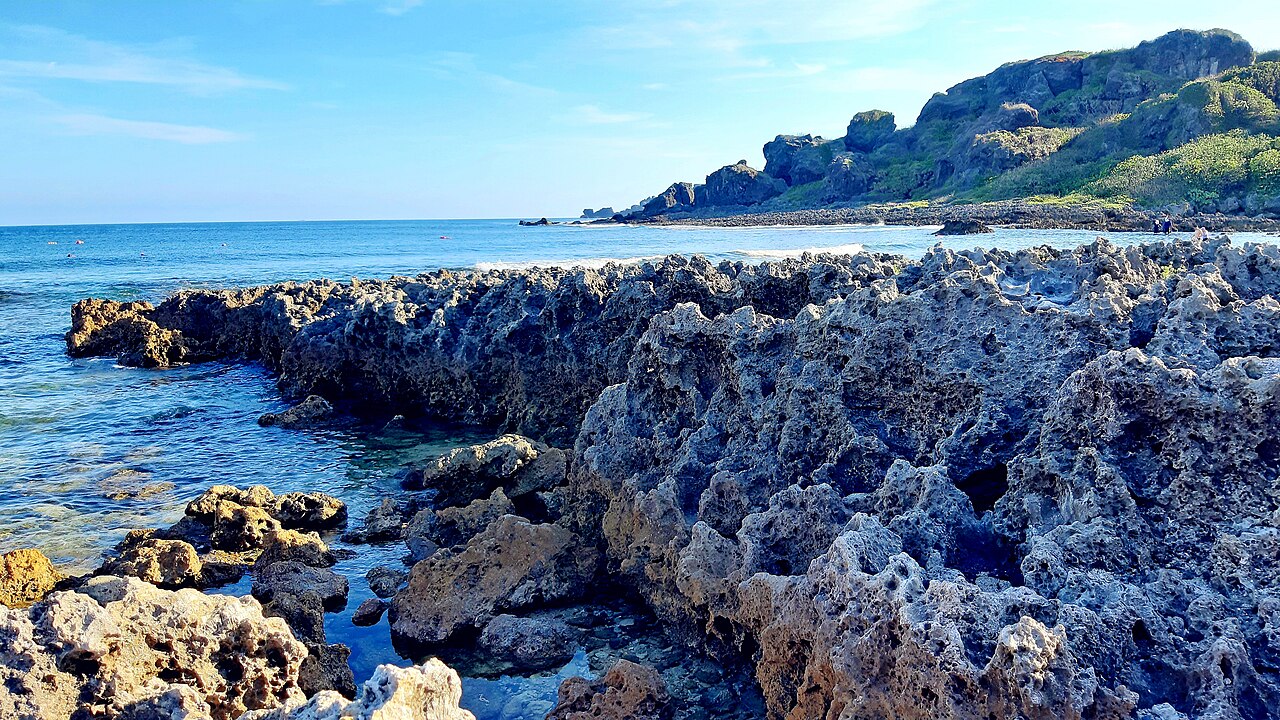
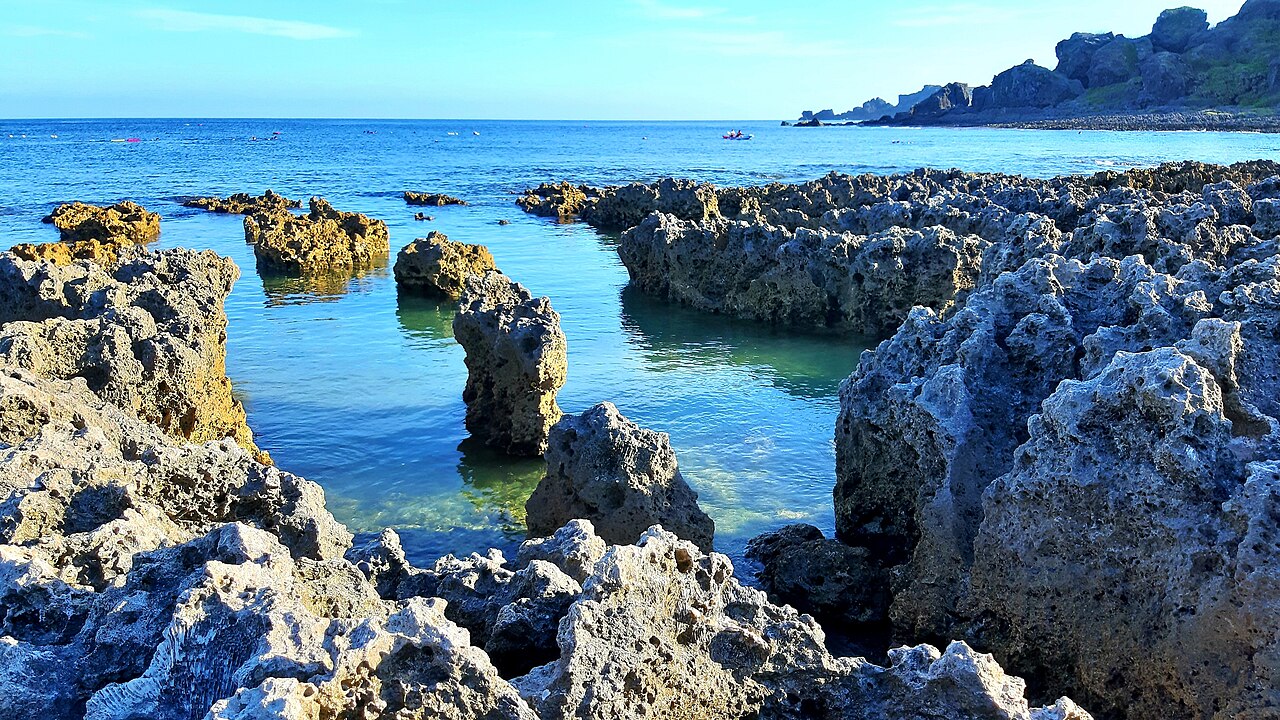
Houbihu and Wanlitong sit on the sheltered west coast of the Hengchun Peninsula inside Kenting National Park, and together they form the busiest freediving training ground on Taiwan's main island. The Houbihu "outlet" (出水口) site begins as a shallow 3–5 m coral shelf right off the shore entry, drops to 8–10 m a short swim out, and bottoms out around 13–16 m — depths that map almost perfectly onto entry-level AIDA and SSI line sessions. Water runs 22–24°C in winter and 27–29°C in summer with visibility typically 10–20 m, often at its clearest on cold, calm winter days. One 2026 caveat worth planning around: the warm cooling-water discharge from the Maanshan nuclear plant that once kept this site mild year-round effectively ended when Unit 2 shut down in May 2025, so older trip reports describing a warm winter site no longer apply.
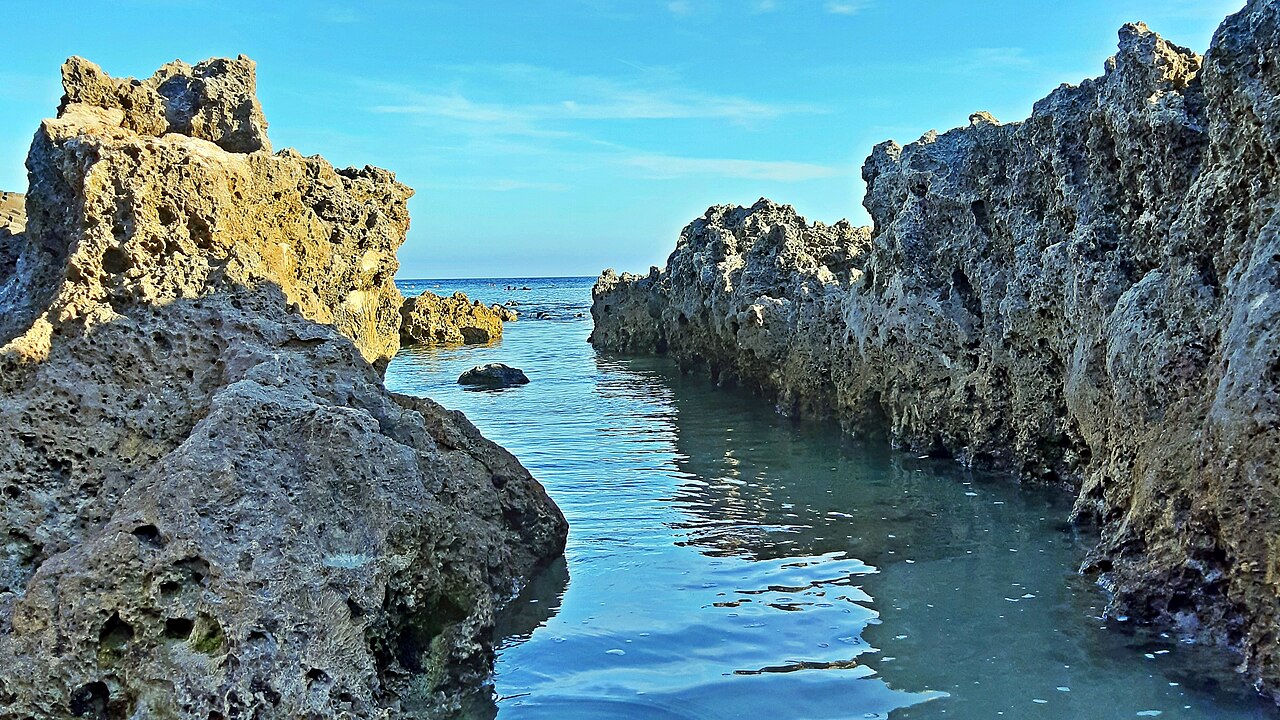
Houbihu outlet — a U-shaped coral inlet where the shallow shelf steps down to 8–10 m with a sand patch around 8 m, giving beginners a clean, readable profile for first line dives and buoyancy work.
The fish-feeding area on the left side of the outlet, where marine-reserve status has produced fish density that is hard to match anywhere else on the main island: trevally schools and clownfish colonies within easy shallow range.
Wanlitong — the leeward bay of the two, with the calmest water and the gentlest slope. It stays divable on many winter days when everything else is blown out, and it is the local favourite for freediving photography.
Coral cover — soft corals carpet the bottom like velvet and branching hard corals build sizeable reef mounds, all within snorkel-and-freedive depth rather than scuba-only territory.
Sha Island and the inner channels at Wanlitong — around 10 m with gorge and channel formations, useful as a fallback shoot location when the outlet is crowded or running current.
Shop density around Houbihu fishing harbour keeps rental and entry-level certification costs low, and makes it easy to bolt on boat dives or extend the trip to Green Island.
Good to know
SafetyShallow does not mean safe here. In August 2024 three divers got into trouble near the outlet, leaving one dead and two injured; in September 2022 two snorkellers died in Houbihu waters. Most freediving deaths come from shallow water blackout and LMC, which cluster in the final 10 m of ascent and the seconds after surfacing. Dive with a buddy on strict one-up-one-down, keep eyes on your partner for a full 30 seconds after they surface, never hyperventilate, and never train alone.
SafetyCurrent outside the outlet strengthens and slackens unpredictably. Divers have failed to grab the reef, been carried offshore and required coast guard rescue. Do not swim beyond the reef without a surface buoy, use a lanyard and counterballast setup for any line work, and check the current direction before you enter. Houbihu is a working fishing harbour with regular fishing and dive boat traffic, so a dive flag buoy is mandatory, not optional.
SafetyThe entry is a wave-washed shallow reef platform, and slips producing cuts and bruises are the most common injury in the area. Wear boots and gloves, time your entry with the swell sets, and flush and disinfect any coral cut immediately — they infect readily in warm water.
RulesKenting National Park manages marine recreation under a total-capacity control scheme, and freediving is expected to take place in designated zones through a licensed operator rather than as an unaffiliated individual entry. Houbihu is also a Class 1 fishing harbour, so recreational activity inside the harbour basin requires separate permission. Certification prerequisites, guide requirements and dive insurance vary by shop — confirm when booking, and check the park authority's current notices, as rules do change.
RulesWithin the Houbihu Marine Resource Protection Demonstration Area and the national park, collecting or catching fish, sea urchins, hermit crabs and shellfish is prohibited, as is taking or damaging coral and using a speargun. National Park Act violations can draw fines up to roughly NT$15,000, and water-recreation violations NT$10,000–50,000 (NT$30,000–150,000 for commercial activity). Amounts and scope are subject to revision, so verify the current rules.
SeasonFrom October through April the Luoshan wind (落山風) blows: the northeast monsoon spills over the mountains and pours down onto the Hengchun Peninsula, routinely producing force 7–8 gusts and occasionally far more. Boat trips and exposed entries get cancelled day to day in this window, though leeward Wanlitong holds up best and stays divable on many winter days. Best season is April to October; visibility, however, is often better in winter. Summer sits on typhoon tracks, so check forecasts right before you travel.
MannersDo not stand on or touch coral, and manage buoyancy and trim so your fins never strike the bottom. Chasing fish or feeding them disrupts the ecosystem, is discouraged and may be restricted. Use reef-safe sunscreen, and stay clear of working fishing boats around the harbour.
Practical info
Fly into Kaohsiung (KHH), then take a rental car or the Kenting intercity bus for roughly 2–2.5 hours to Hengchun and Houbihu; the high speed rail to Zuoying plus a Kenting shuttle also works. April to October is the prime window, and courses and accommodation book out early in the summer peak. Prices, opening hours, certification prerequisites and insurance terms shift by shop and season, so confirm the latest directly with your chosen operator and the Kenting National Park authority before booking.
On-site reviews📍 Verified on-site
No reviews yet. If you are here, be the first to leave one.