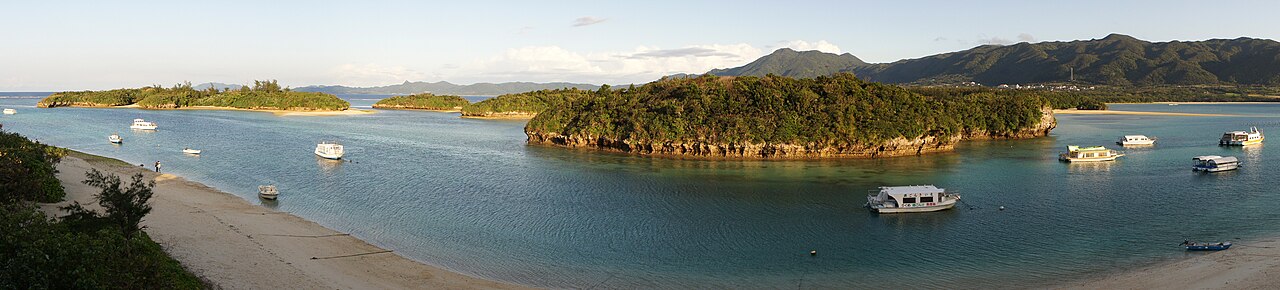
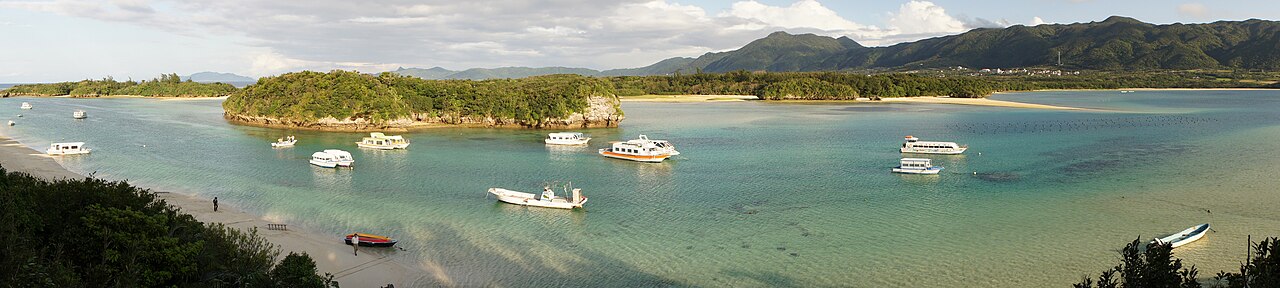
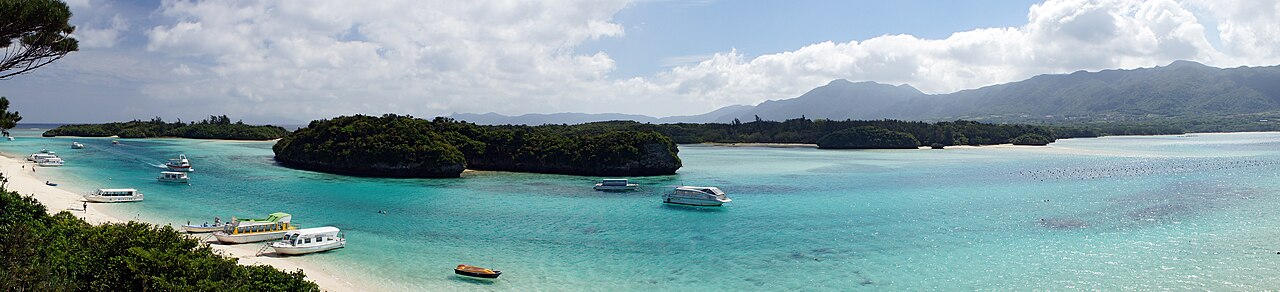
Off Kabira Bay on the northwest coast of Ishigaki Island (Okinawa, Japan), the 'Kabira Ishizaki Manta Scramble' is one of the world's most reliable reef manta gathering spots. Mantas congregate over cleaning stations on shallow coral heads, hovering to be groomed by cleaner wrasse; because those stations sit at just 7-9 m, snorkelers can watch the rays glide below them from the surface. The mantas typically cruise at 5-10 m, and on clear days (15-25 m visibility) they may rise almost within reach. As of 2026 it remains a premier point with roughly a 90% encounter rate whenever boats can run — but swimming inside Kabira Bay itself is banned, and the point is reached only by a licensed dive-shop boat tour.
Several manta cleaning stations on coral heads, where the rays hold position to be cleaned by wrasse — an unhurried spectacle viewed from the surface
Reef mantas with 3-4 m wingspans gliding at 5-10 m, sometimes rising close to the surface on calm, clear days
About a 90% encounter rate when boats operate, with 10:00-14:00 the highest-probability window
Clear water with 15-25 m visibility over coral reef, and a comfortable 28-29 degrees C in summer
Autumn breeding-season peak (Sep-Oct) when numbers surge and several mantas may be seen at once
A boat-access point just 5-10 minutes by boat from dive shops near Kabira Bay
Good to know
SafetyThis is a boat point on a channel: current is usually mild but can strengthen quickly with the tide and sweep you offshore, and tour and dive boats move through the area. Never drift off alone — stay beside your guide, wear the life jacket or float, and keep the boat and dive flag in sight at all times.
SafetyTours accept children and beginners, but this is open water off a channel, not a sheltered reef lagoon — the risks are real. Clear a fogged mask calmly and don't panic if you swallow water, tell the guide the moment you tire, and in the 23 degrees C winter water wear a wetsuit to guard against getting chilled on long sessions.
SeasonOkinawa's highly venomous box jellyfish (habu-kurage) grows to dangerous size from June, with stings peaking in July-August. Cover exposed skin with a rash guard or wetsuit, know the vinegar first-aid response, and alert your guide immediately if stung.
SeasonThe best season is June-October; encounter odds are especially high in July-August and numbers peak in the September-October breeding season. Kabira is exposed to winter north winds and tours are often cancelled then (the point shifts to the island's south in winter), and daily operation and prices depend on tides and sea conditions — confirm the latest before booking.
RulesTo protect the marine life, never touch, chase, or block a manta, and keep a generous distance above the cleaning station. Flash and strobe photography is prohibited — stressed mantas may stop returning to the point.
MannersNever stand on or kick the coral with your fins; stay horizontal in the water, and use reef-safe sunscreen as a matter of courtesy to the reef.
RulesKabira Bay itself is a protected scenic area where swimming is prohibited, and the manta point lies offshore, reachable only by a guided boat tour with a licensed dive shop. Unpermitted independent free-snorkeling here is unsafe and effectively not possible.
Practical info
Boats depart from Ishigaki Port or from dive shops in the Kabira area (roughly 5-10 minutes from Kabira, 45-60 minutes from town), and access is by guided tour only. The best season is June-October, with the highest odds between 10:00 and 14:00. Prices, duration, minimum age, and whether a tour runs at all vary with the season and sea state, so always confirm the latest details before booking.
On-site reviews📍 Verified on-site
No reviews yet. If you are here, be the first to leave one.