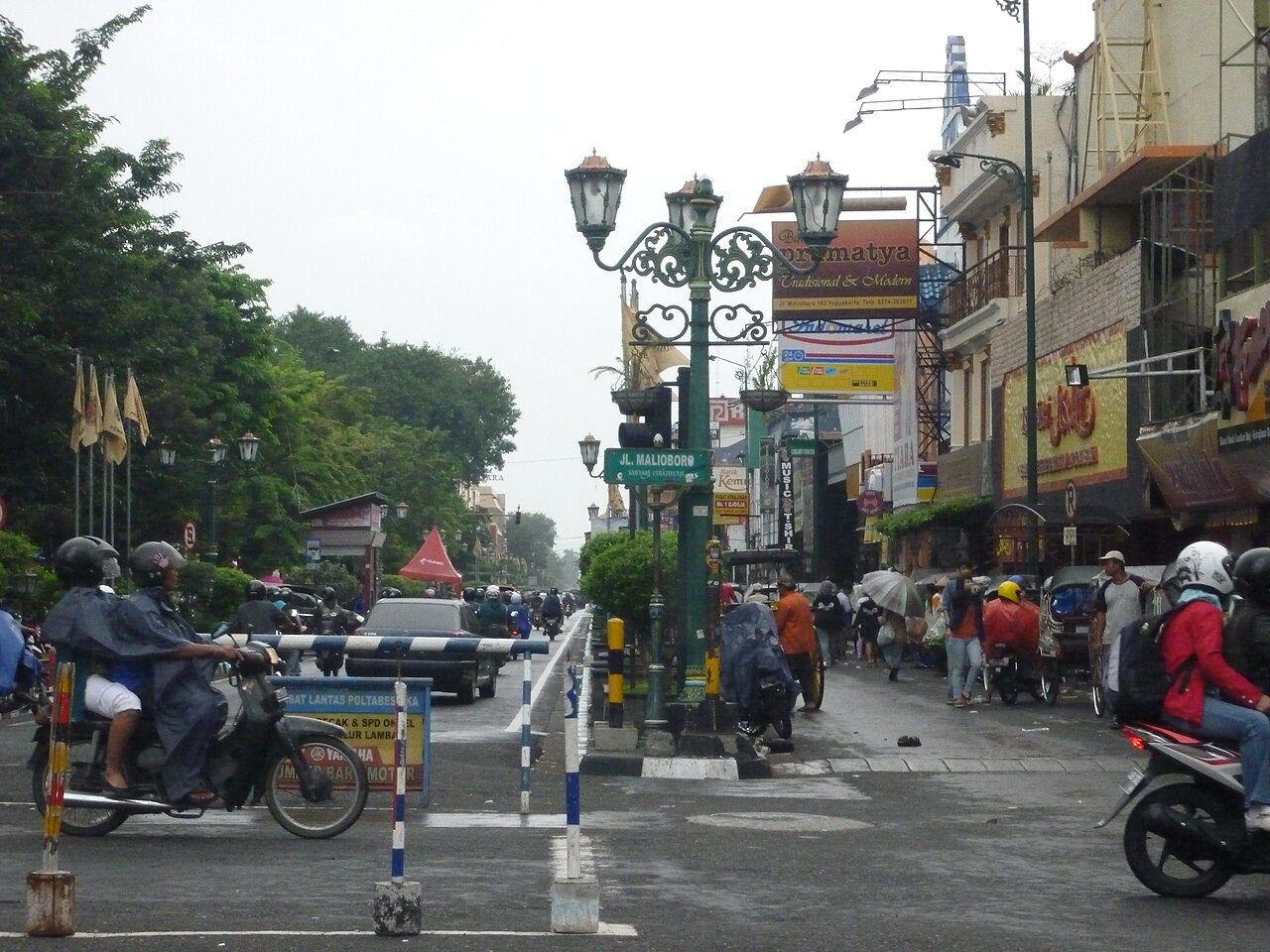
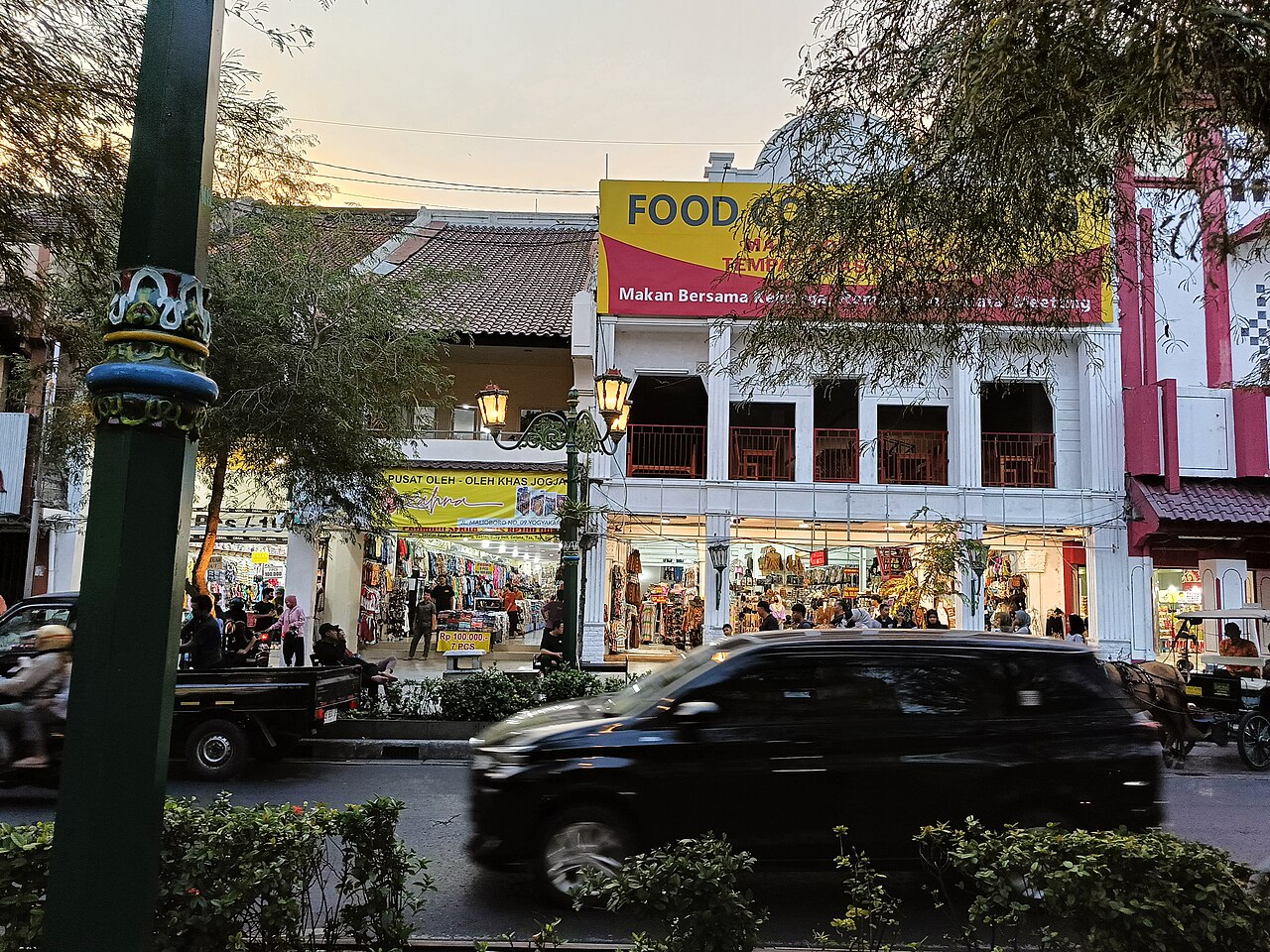
Jalan Malioboro is the iconic ~2.5 km thoroughfare running through the heart of Yogyakarta, Indonesia, linking the Tugu Monument in the north toward the Sultan's Palace (Kraton) in the south. It is a living slice of Javanese culture — batik and souvenir stalls, angkringan and lesehan street food, cycle rickshaws (becak) and horse carriages (andong) — and comes most alive from late afternoon into the night. The city is converting the street into a fully pedestrian zone by the end of 2026, so traffic and parking arrangements keep changing.
Beringharjo Market (Pasar Beringharjo) — Yogyakarta's oldest market and a maze of batik textiles, handicrafts and souvenirs
Walkable heritage — the Kraton (Sultan's Palace), Taman Sari water castle, and the Dutch-era Fort Vredeburg cluster at the street's southern end
Night eats — signature gudeg, charcoal-dipped Kopi Joss coffee, and sitting-on-the-ground angkringan and lesehan stalls
Ride a becak (rickshaw) or andong (horse carriage) — a charming way to cover short distances, but always fix the fare first
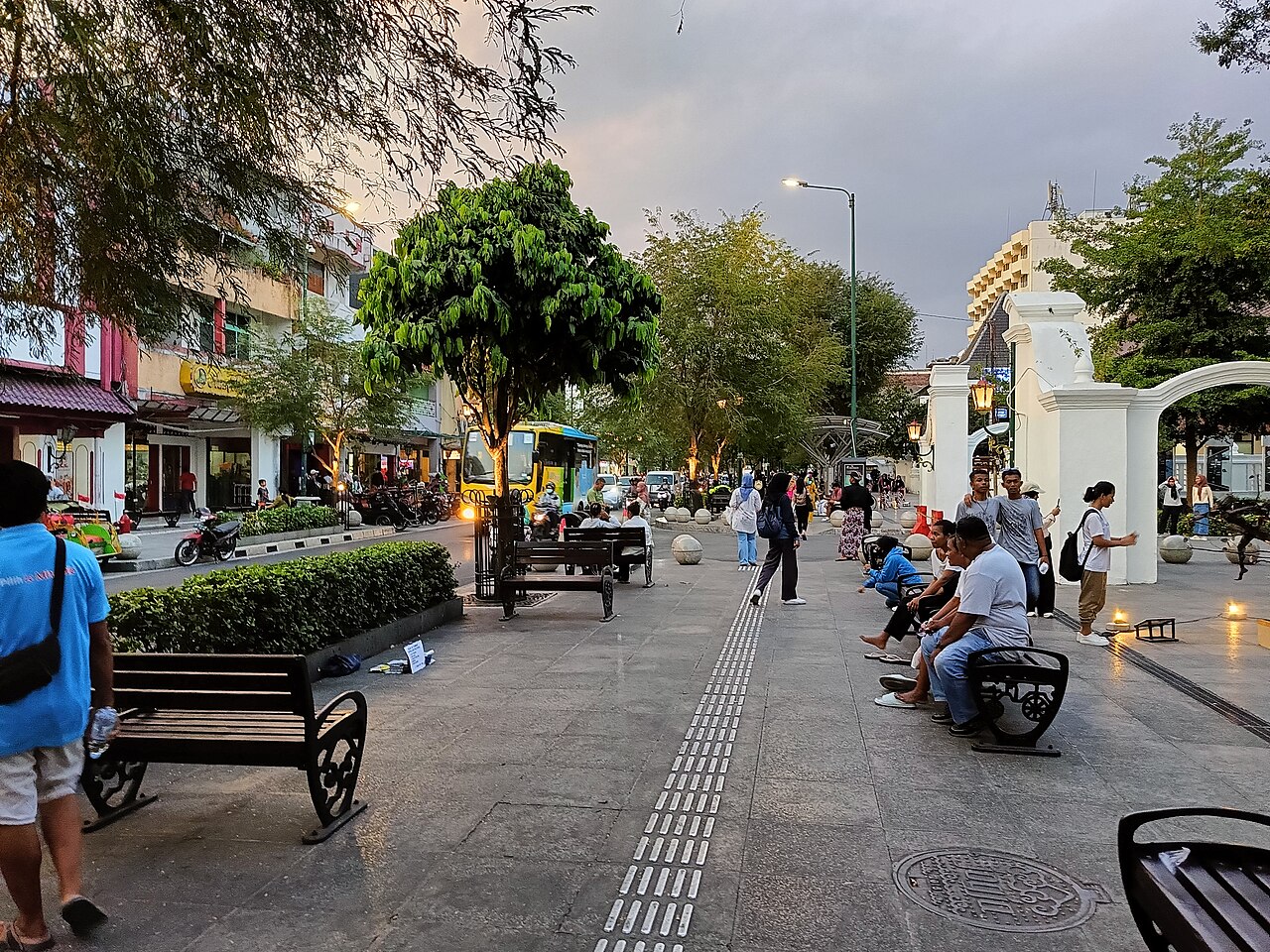
A tidied pedestrian promenade with decks and benches; from 6–9 pm only public transport, becak and andong are allowed, making it pleasant to stroll
Teras Malioboro — an indoor shopping hall where sidewalk vendors were relocated to clear the pavements
Good to know
CautionThe lesehan (floor-seating) 'nuthuk' overcharging scam is this street's signature hazard — one stall was forcibly shut after charging Rp490,000 for a single meal. Always check the posted price list before ordering, and ask whether sambal, raw vegetables and drinks (often billed as extras) cost anything.
CautionBeware touts pushing 'a batik exhibition ending today' or a becak ride 'for only Rp5,000 around town' — these are commission-driven setups that steer you to a gallery and pressure you with pity stories. Walk away, and never buy batik on day one; compare prices at several shops first.
CautionWatch for parking and taxi overcharging: inflated motorbike/car parking fees and unmetered rides are common. Use official parking lots, and book rides via apps like Gojek or Grab to avoid fare disputes.
MannersAgree the destination and price with becak and andong drivers BEFORE you get on — the quoted price is often changed on arrival. Bargaining is normal and friendly in Indonesia, so haggle politely with a smile, but haggling with no intention to buy and then walking off is considered rude.
SafetyCrowds are intense on weekend evenings and at night, raising the pickpocket risk. Wear your bag on the front, keep your phone and wallet close to your body, and stay especially alert in packed stall lanes and inside the market.
RulesThe Kraton (palace) at the street's southern end enforces a strict dress code: cover shoulders and knees; no shorts, singlets, hats or sunglasses; and do not touch sacred objects. Keep quiet and avoid overt displays of affection in sacred/royal areas.
Practical info
The street itself is free and open at all hours, but individual sites (Kraton, Taman Sari, museums) have their own entry fees and hours, and the pedestrianization and parking relocations are in flux — verify the latest before you go. Stalls run mostly on cash (rupiah), so carry small notes; late afternoon to night offers the best atmosphere.
On-site reviews📍 Verified on-site
No reviews yet. If you are here, be the first to leave one.