Manta Scramble sits off Kabira on the northwest shoulder of Ishigaki Island, and it is about as close to a sure thing as manta encounters get — local operators quote roughly 90% on any day the boats can run. The cleaning station tops out shallow, around 5–15 m, with mantas typically hovering at 5–10 m, so their full wingspan reads clearly from the surface; visibility runs 15–30 m and water temperature swings from about 23°C in winter to 30°C at the height of summer. Freedivers need to hear the catch up front, though: this is not a site you duck-dive. The Yaeyama Diving Association's local rules for the Kabira Ishizaki manta points explicitly ban skin diving, and as of 2026 snorkellers stay prone on the surface in a wetsuit or life jacket while descents are reserved for guided scuba.
The cleaning station bommie itself — mantas park and hover at 5–10 m, close enough that a surface snorkeller sees the whole animal rather than a silhouette
September to November brings the breeding-season 'manta train', several animals circling in file, though operators note encounter rates have softened somewhat in recent years
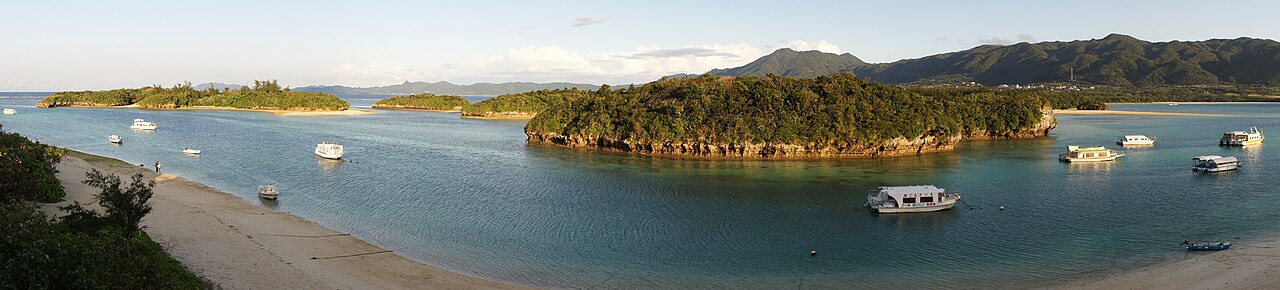
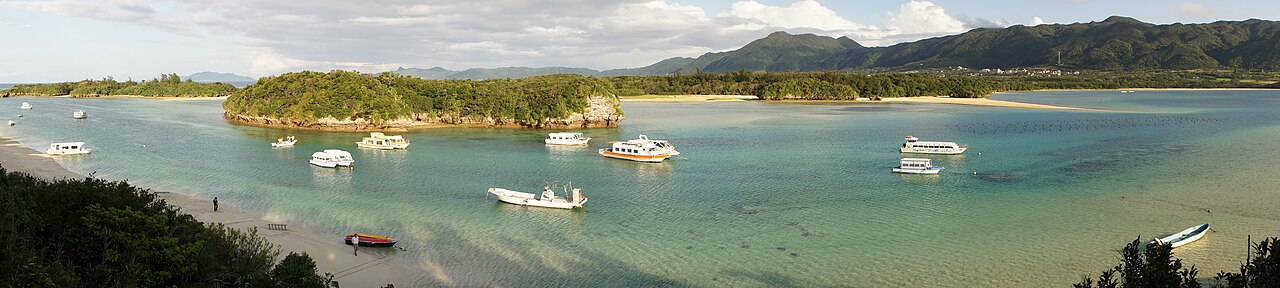
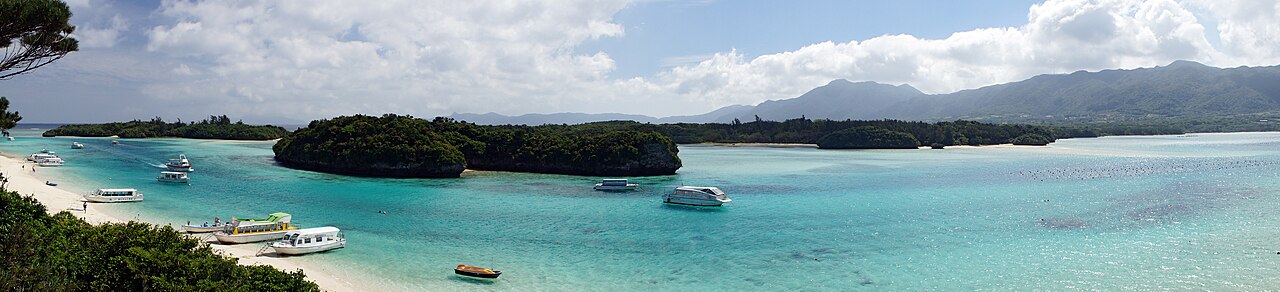
Kabira Bay is ringed by reef, so surface conditions are often glassy; boats from Kabira-area shops reach the site in 5–10 minutes, city-side shops in 45–60
An association cap of five boats on site at once keeps the water column less crowded than the site's reputation suggests
Yaeyama coral and schooling reef fish — with descents off the table, plan around wide-angle work shot from the surface
Do your actual depth work elsewhere on the island: AIDA1 (one day, 10 m ceiling) and AIDA2 (two to three days) courses run out of Hamasaki Marina
Good to know
RulesSkin diving — any breath-hold descent — is prohibited at the manta points. Yaeyama Diving Association rules require a wetsuit or life jacket for snorkelling, minimal treading water, and a prone position holding a float. Even the island's dedicated skin-diving tours state plainly that breath-hold diving stops once mantas are present, and that shedding the life jacket to dive voids your insurance cover.
RulesNo solo entry. A guide who knows the site must accompany you, a briefing and snorkel practice come first, and the group stays together throughout. Fun divers need a certification card; discover-scuba participants are only cleared after a buoyancy check.
MannersDo not touch or chase the mantas, do not position yourself in front of or above them, and do not hover over or swim across the cleaning bommie. Approach from below and down-current rather than from above, and never bang a tank or use acoustic signals to flag a sighting. Breaches can end the tour on the spot.
SafetyShallow water blackout and LMC arrive without warning. If you freedive elsewhere on Ishigaki, run strict one-up-one-down buddy pairs with direct surface supervision, hold the 30-second post-surfacing watch, and never hyperventilate. The genuinely dangerous pattern is a diver who follows the rules at the manta site and then goes off to test depth alone somewhere quieter.
SafetyPeople die in this water. On 3 August 2025, a woman in her fifties lost consciousness while on a snorkel tour off the north side of Kabira and died in hospital; she was not wearing a life jacket. The Ishigaki Coast Guard office repeatedly presses the same two points — wear flotation, and don't get in the water unwell. Calm, shallow-looking conditions are exactly what leads beginners to underrate the risk.
SafetyThe site draws heavy boat traffic and current picks up at certain states of tide. Keep a surface float or buoy and a designated surface watcher, and never surface alone away from your group. Propeller strike is one of the more realistic hazards for anyone spending their time on the surface.
SeasonThe window runs April to November, with manta numbers peaking September to November — but June to August offers the calmest seas and therefore the best odds the boat actually sails. Typhoons and swell cause frequent cancellations from summer into early autumn, and winter northerlies push trips to alternate sites. Build at least one spare day into the itinerary.
Practical info
Ishigaki Airport is 30–40 minutes by car from the Kabira area; from there it is a 5–10 minute boat ride to the site, or 45–60 minutes from town-side operators. Book well ahead for the September–November peak; fun dives require a certification card, while snorkelling needs no qualification but does require a wetsuit or life jacket. Prices, sailing schedules, age limits and the fine print of the local rules change from season to season, so confirm current details with your operator and the Yaeyama Diving Association before booking.
On-site reviews📍 Verified on-site
No reviews yet. If you are here, be the first to leave one.