The Mosque of Ibn Tulun, built between 876 and 879 CE (263-265 AH) by Ahmad ibn Tulun, founder of the Tulunid dynasty, is the oldest mosque in Egypt to survive in its original form. It is celebrated for its spiral minaret with an external staircase - inspired by the Malwiya minaret of Samarra in Iraq - and for its vast open courtyard (sahn), all built of red brick coated in carved stucco in a distinctive Abbasid style. Fully restored in 2002-2004, it remains an active place of worship and a free-to-enter monument, offering a calmer, less crowded window onto early Islamic architecture than Islamic Cairo's busier sights.
Egypt's first spiral minaret with an external winding staircase, modeled on Samarra's Malwiya; climbing it rewards you with sweeping views over Old Cairo and the Citadel.
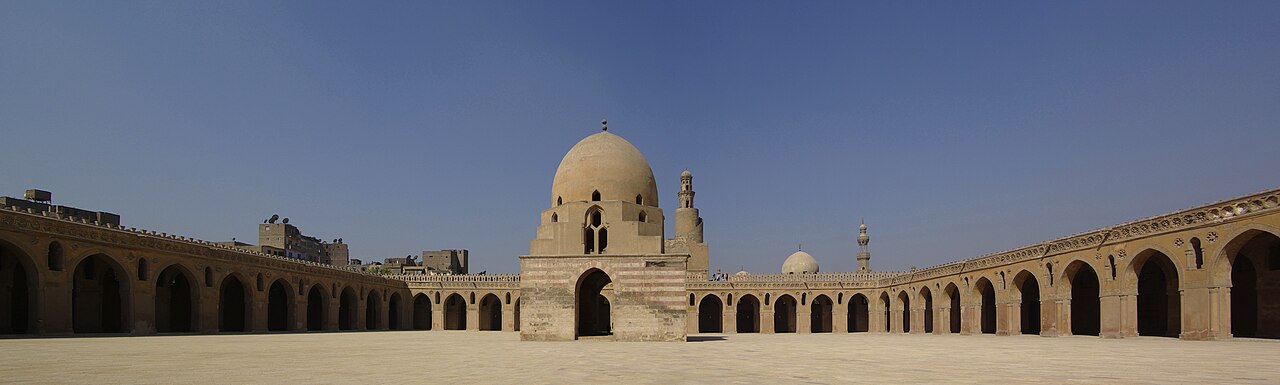
One of the largest mosque courtyards in the world (roughly 26,000 sq m), centered on a domed Mamluk-era ablution fountain.
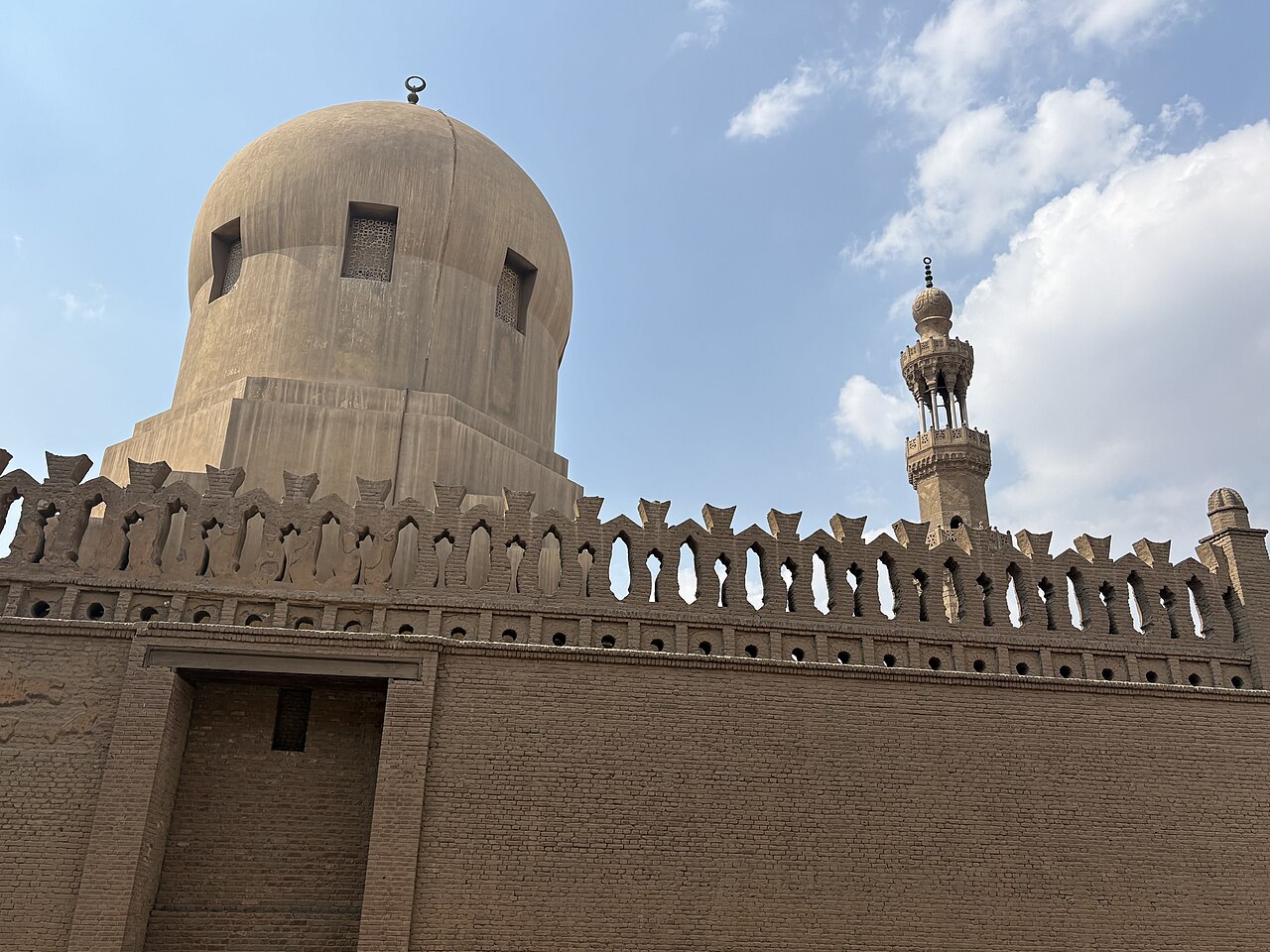
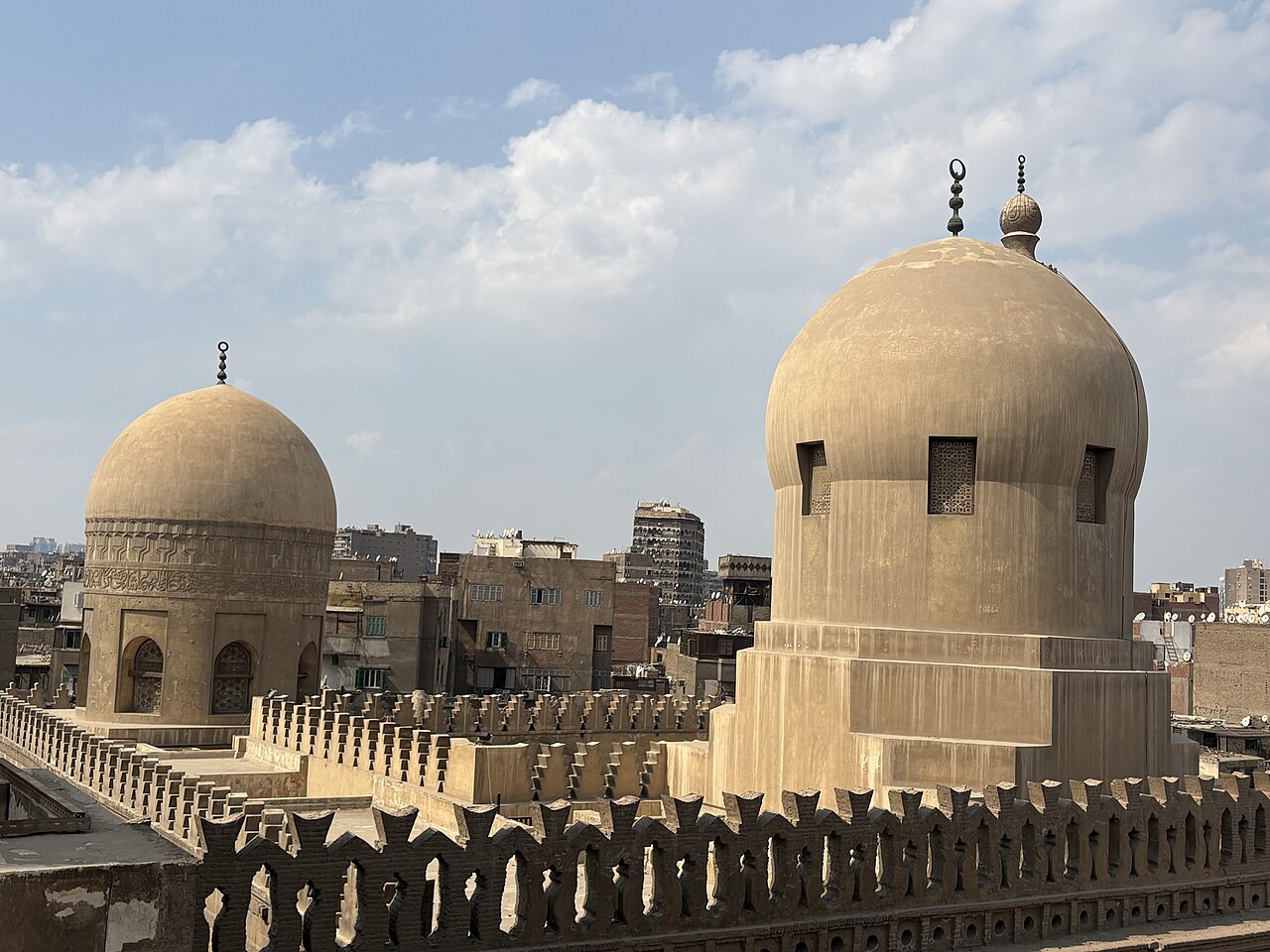
The distinctive crenellations along the walls, whose openwork merlons resemble rows of stylized paper cut-out figures.
The arcades of pointed brick arches on piers and the finely carved stucco geometric and floral ornament covering the walls.
The sycamore-wood frieze inscribed with Quranic verses running along the prayer hall, plus the adjacent Gayer-Anderson Museum (two restored Ottoman-era houses) right beside the mosque.
Good to know
MannersYou must remove your shoes before entering the prayer area. Leave them at the entrance or carry them in a plastic bag; if an attendant watches them, a small tip (about 20-50 EGP) is customary.
MannersAs a working mosque, modest dress covering shoulders, arms and legs is required. Women should cover their hair with a scarf; avoid shorts and sleeveless tops. Robes are sometimes lent at the entrance.
CautionPeople may approach posing as 'guides' or 'shoe-minders' and then demand an inflated tip. Even minor help such as pointing you up the minaret invites a tip, so carry small notes (10-20 EGP) and agree on any amount in advance.
SafetyThe mosque sits in the old, densely populated Sayyida Zeinab district, so watch for pickpockets - wear your bag in front and split up your valuables. The minaret's spiral steps are narrow with low railings, so take extra care with children.
CautionStreet taxis rarely use the meter and overcharging is common. Booking through the Uber or Careem apps, which fix the fare in advance, is safer and cheaper.
SeasonIn July, Cairo's midday temperatures reach 35-40°C and the huge open courtyard offers almost no shade. Visit early morning or late afternoon and bring a hat, sunscreen and water.
RulesSightseeing may be limited or intrusive during the five daily prayers and especially the Friday noon congregational prayer. Time your visit around prayers, and always ask permission before photographing worshippers.
Practical info
The nearest metro is Sayyida Zeinab station (Line 1), about a 10-15 minute walk away, though an Uber or Careem ride is the easiest option. Entry is free (a tipping and donation culture applies) and opening hours run roughly from 8-9 AM to 5 PM, but times shift for prayers, events and Ramadan - always check the latest information before you go.
On-site reviews📍 Verified on-site
No reviews yet. If you are here, be the first to leave one.