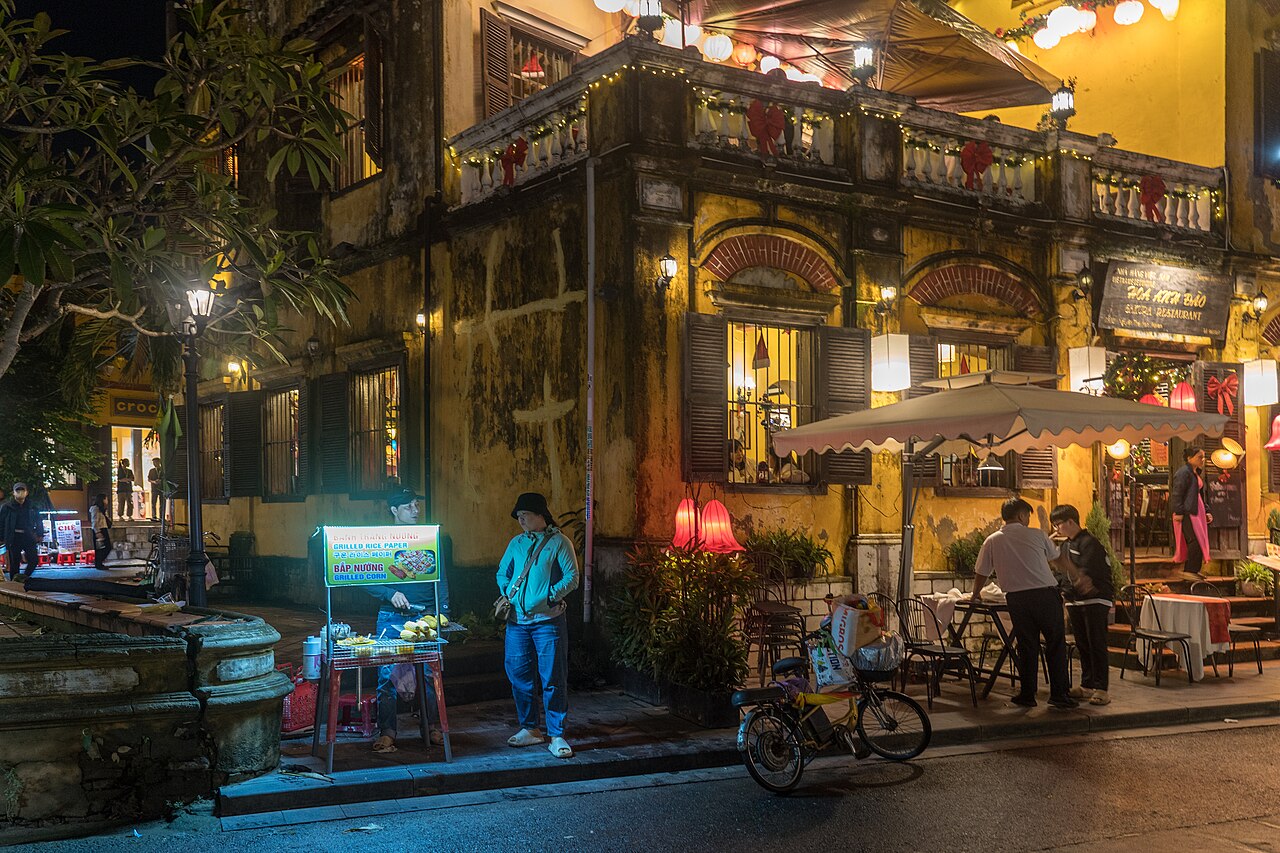
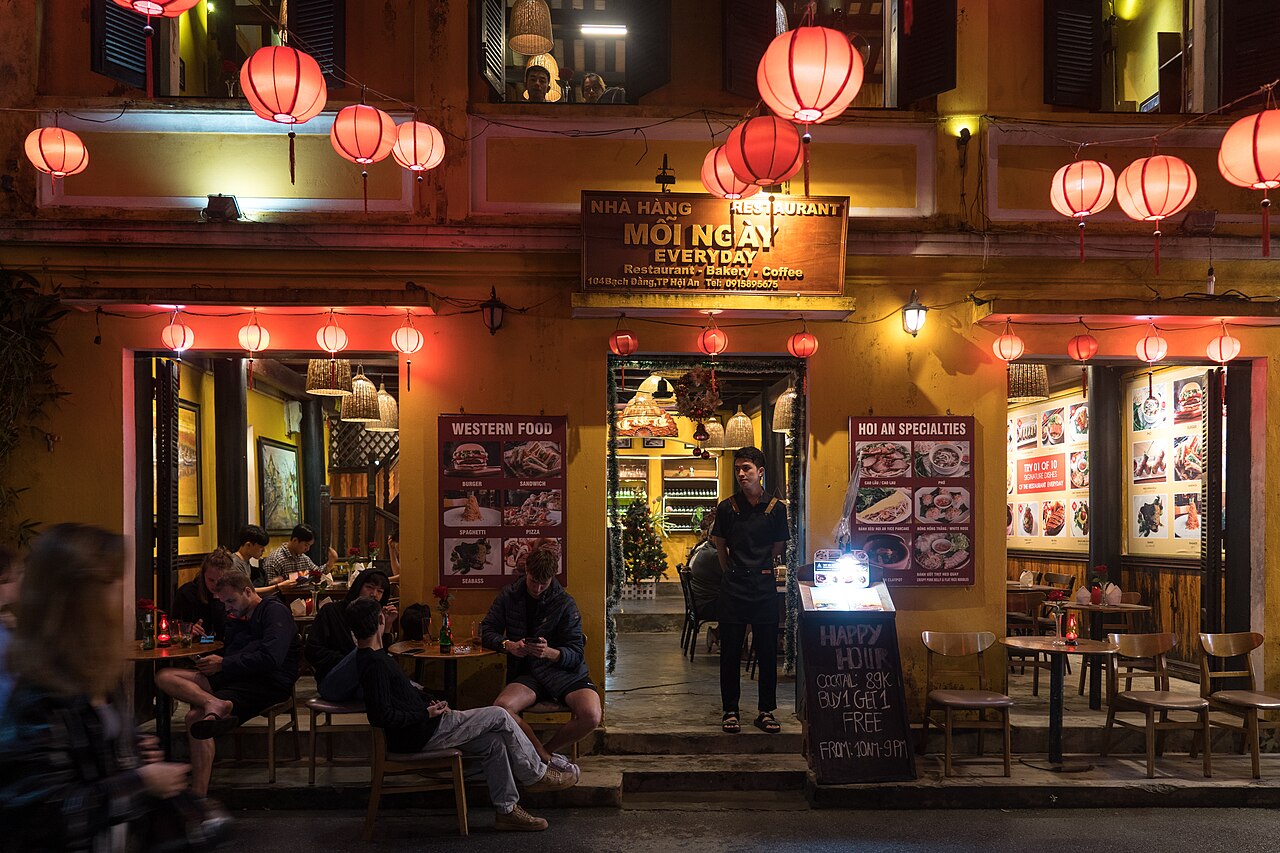
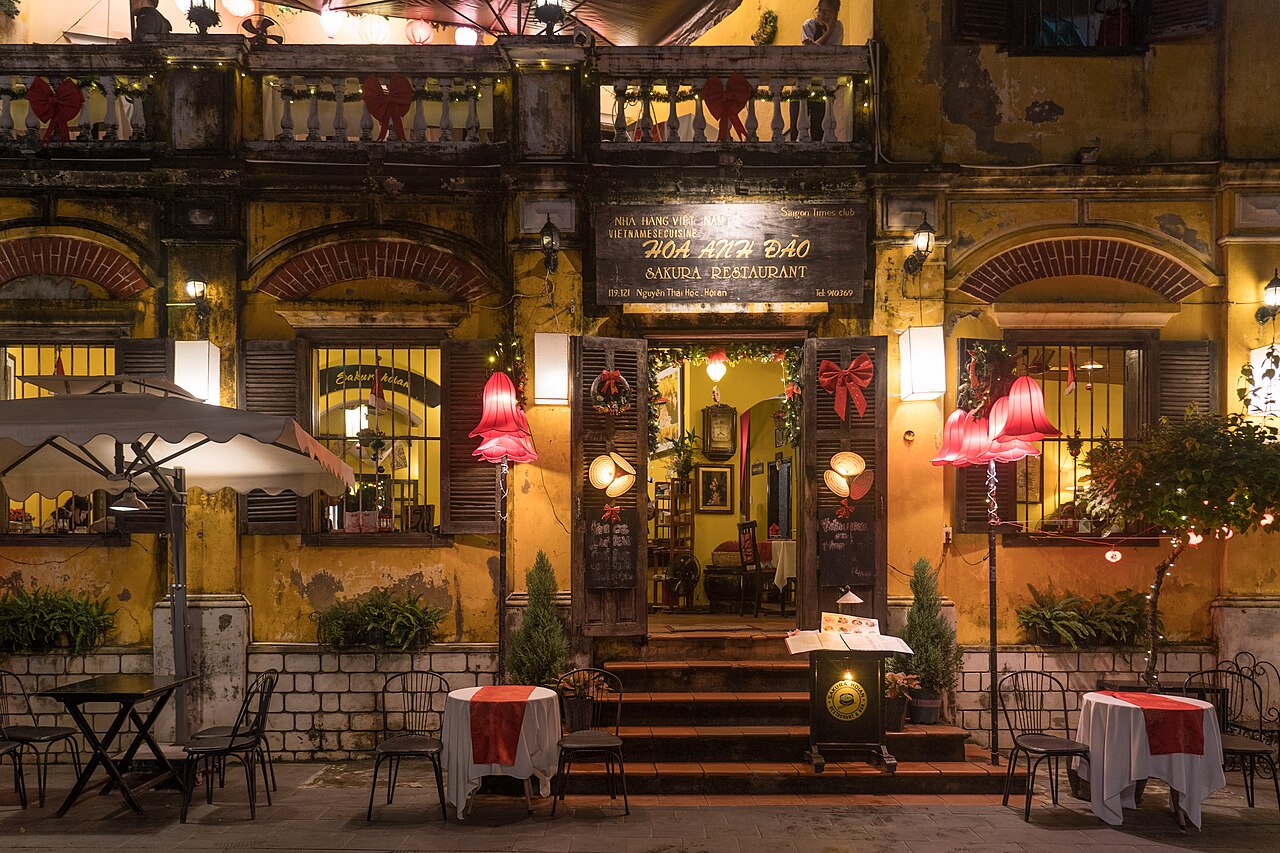
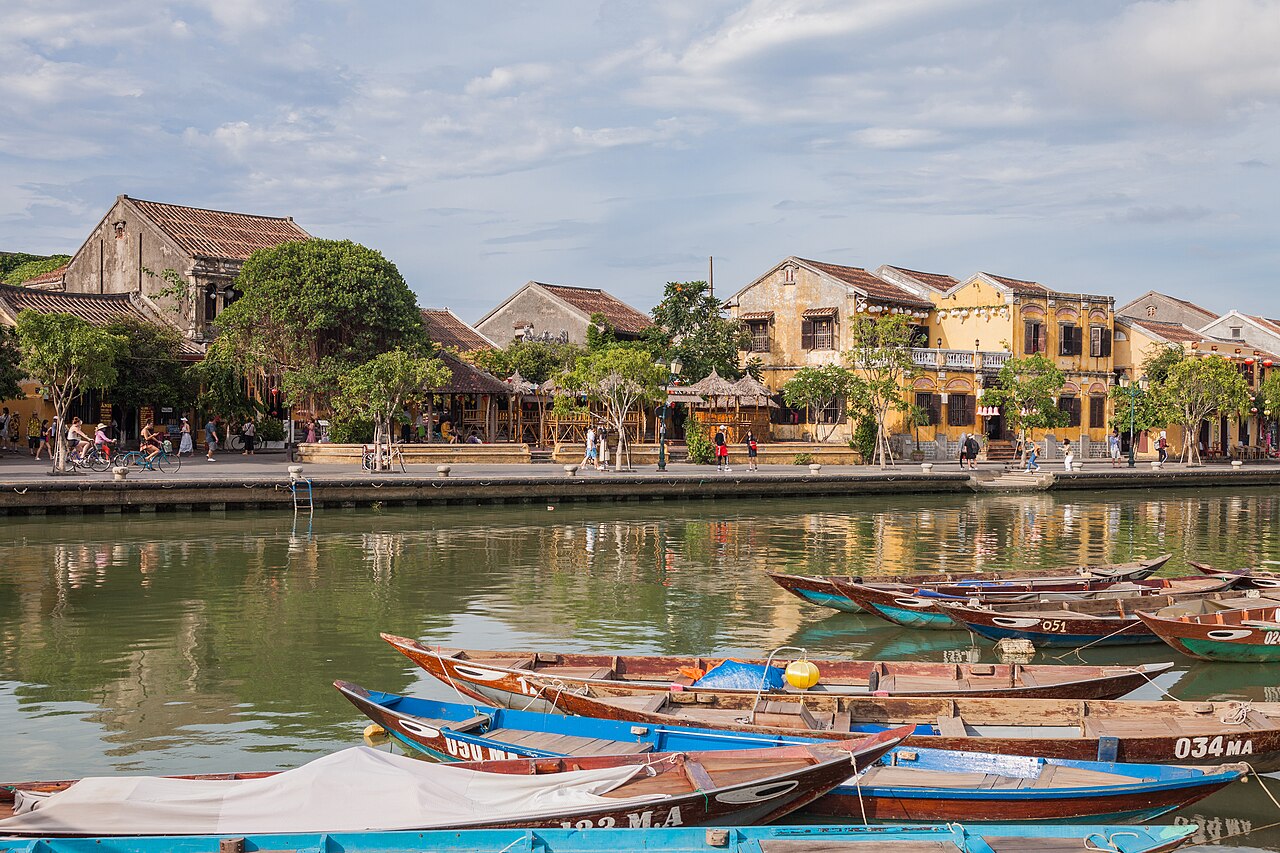
Hoi An Ancient Town is a remarkably preserved former trading port on the Thu Bon River in central Vietnam's Quang Nam Province, inscribed as a UNESCO World Heritage Site in 1999. Its yellow-walled merchant houses, Chinese assembly halls, and the iconic Japanese Covered Bridge blend Vietnamese, Chinese, Japanese, and European influences from the 15th to 19th centuries. After dusk the lanes glow with silk lanterns and floating wish-lights on the river, the scene the town is most famous for.
The Japanese Covered Bridge (Chua Cau) — a 17th-century wooden bridge that is the town's signature landmark
Lantern-lit streets at night — silk lanterns fill the lanes and riverside after sunset (best roughly 6:30–8:30pm)
Full Moon Lantern Festival on the 14th–15th of each lunar month — electric lights go dark and the town is lit by lanterns alone
Historic merchant houses and Chinese assembly halls — visit sites such as Tan Ky House and Fujian Hall using the combined heritage ticket
Hand-rowed lantern boat ride — a popular ~20-minute float to release a wish-lantern on the river (confirm price and hours in advance)
Good to know
RulesWalking the streets is free, but a combined heritage ticket (about 120,000 VND for foreign adults, roughly USD 5) is required to enter the 22 main heritage sites, including the Japanese Bridge. It admits you to 5 sites; verify current price, validity, and booth locations before your visit.
MannersDress codes are enforced at heritage houses, halls, and temples. Bare shoulders, above-the-knee clothing, or see-through fabrics can get you turned away, and it is polite to remove hats, sunglasses, and rain ponchos indoors.
CautionHoi An is famous for made-to-measure tailoring, but some shops lure you with bait prices then use poor fabric and finishing. Use a tailor with verified reviews and confirm fabric, price, and completion date in writing.
CautionTaxis, motorbike taxis (xe om), and river boats often overcharge if no fare is agreed first. Use ride-hailing apps like Grab or Be, and settle a per-person boat price before you board.
SafetyThe night market and riverfront get crowded, so pickpocketing can occur — wear bags in front and don't hang them on chair backs. Motorbikes and bicycles share the narrow lanes, so watch your step when walking at night.
SeasonOctober–November is typhoon and heavy-rain season, and the low-lying riverside Old Town genuinely floods in some years. If visiting then, check forecasts and pack non-slip shoes and rain gear; the most pleasant weather is generally February–April (dry season).
Practical info
About a 40–50 minute drive from Da Nang. The town center is largely vehicle-restricted, so it's best explored on foot or by bicycle. Use Grab/Be apps to get around, carry Vietnamese dong in small notes, and reconfirm ticket rules and opening hours just before you go.
On-site reviews📍 Verified on-site
No reviews yet. If you are here, be the first to leave one.