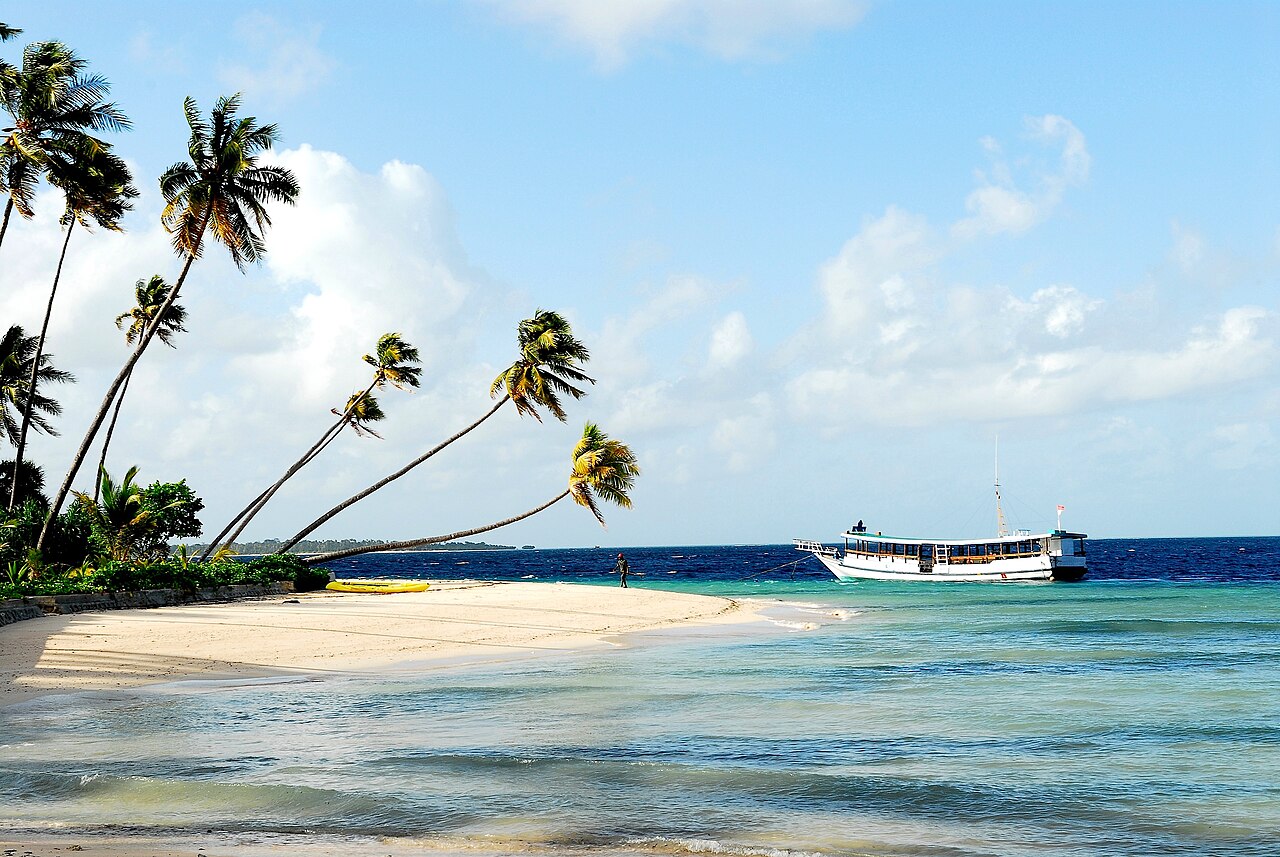
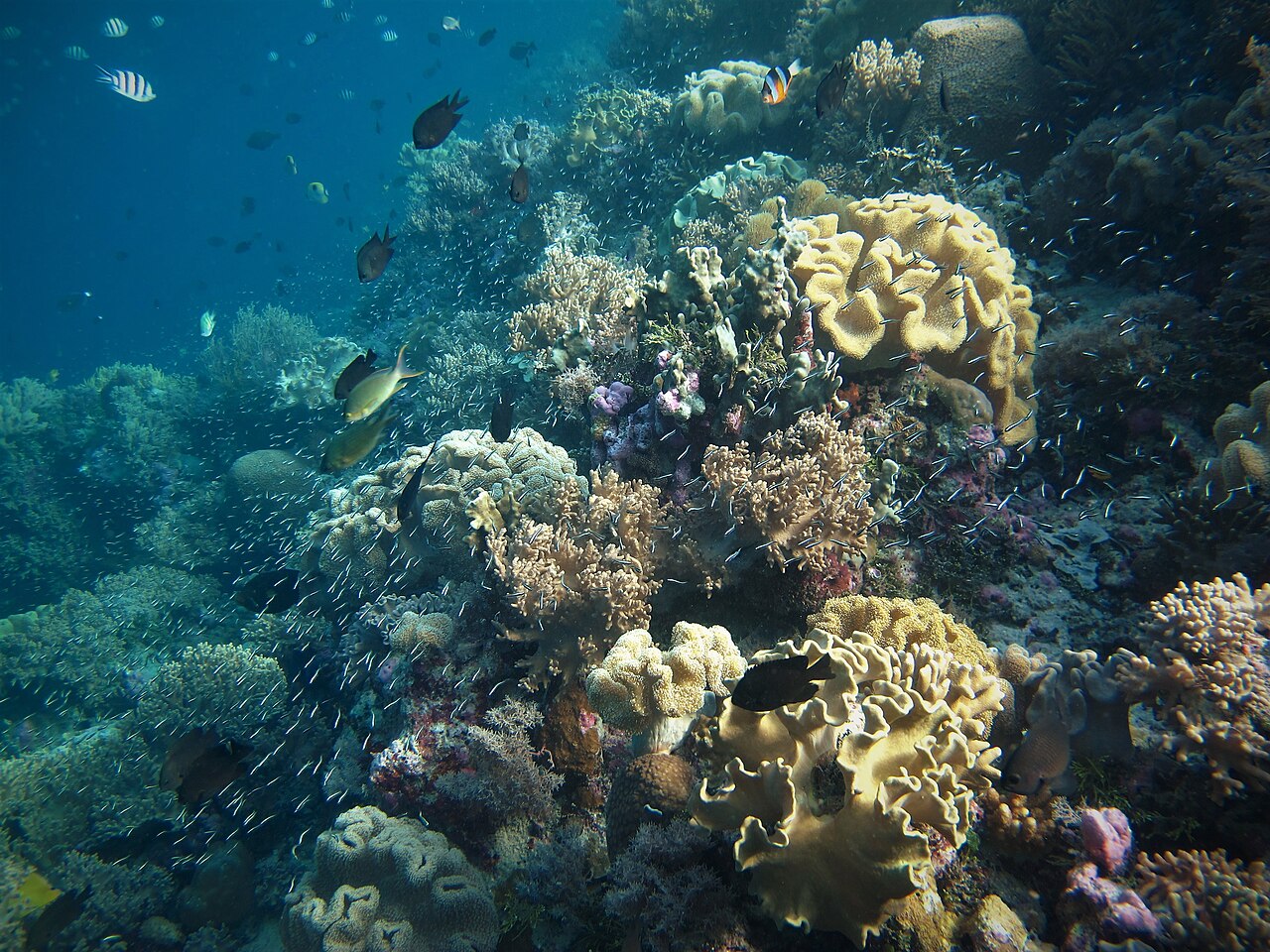
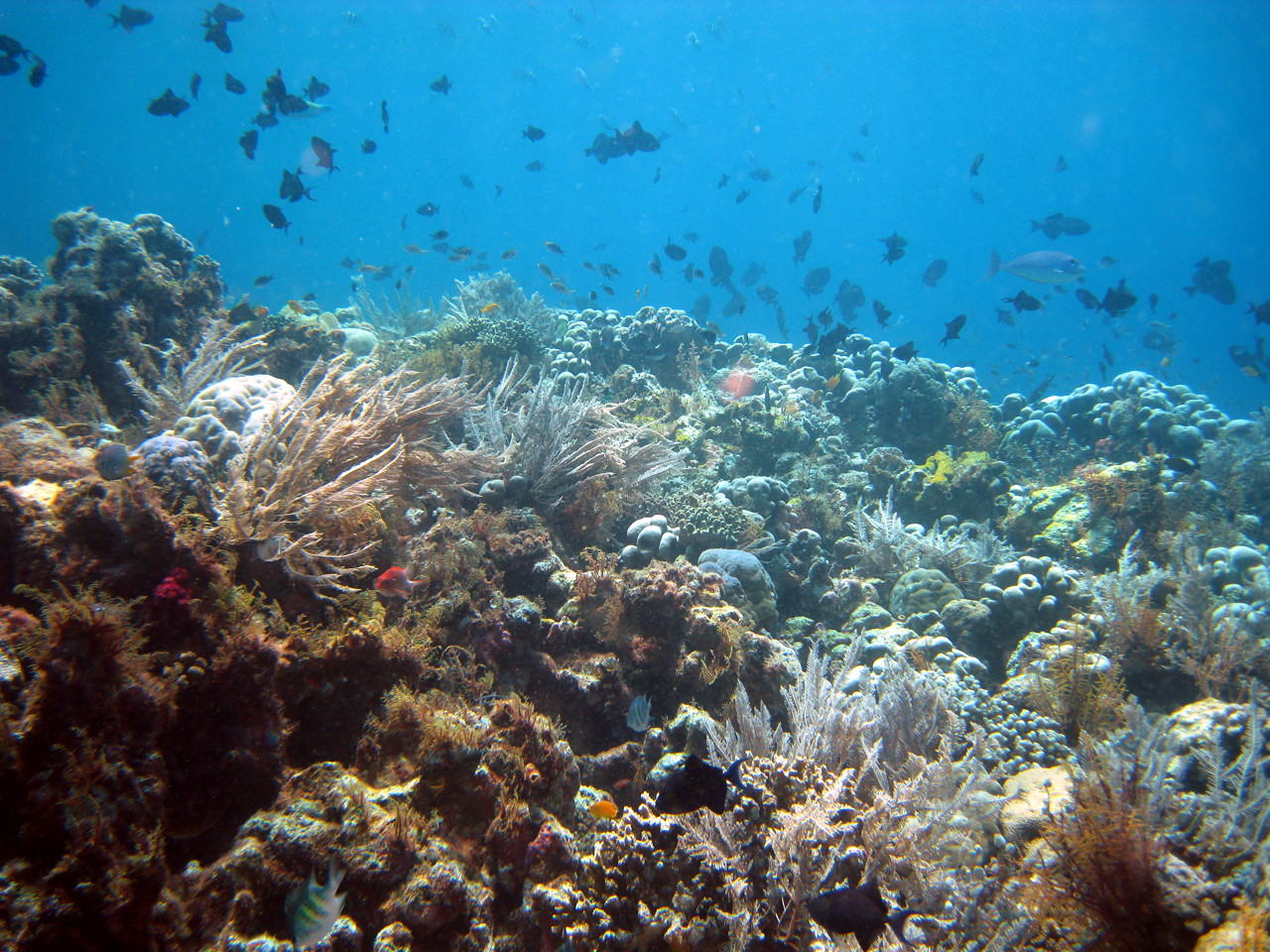
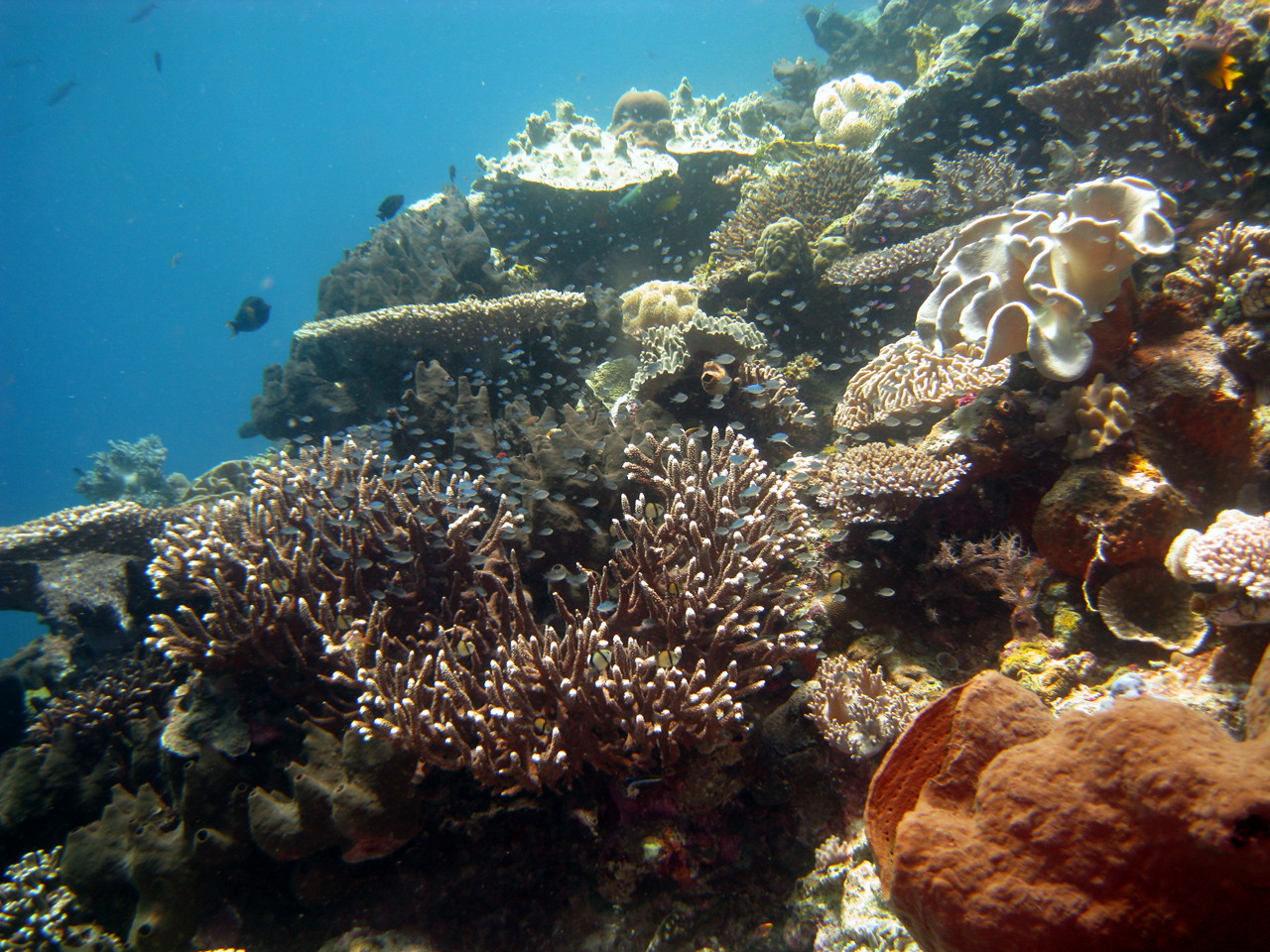
Hoga Island lies in Wakatobi National Park off southeast Sulawesi, Indonesia — a heart of the Coral Triangle where roughly 750 of the world's approximately 850 coral species live. A house reef runs straight off the white-sand beach and jetties, dropping abruptly from under 2 m to more than 40 m, so snorkelers can hover at the surface over coral walls and schooling fish without ever diving deep. The water is usually clear, with 20–30 m visibility and temperatures of 27–29°C, and green turtles, humphead (Napoleon) wrasse, barracuda and colorful nudibranchs are common sightings. It is a protected park, but fishing and marine litter mean reef condition varies from spot to spot, so as of 2026 most visitors come through a resort or a guided tour.
House-reef drop-off reachable straight from the beach and jetty (2 m to 40 m+)
About 750 of the world's ~850 coral species and more than 900 fish species
Big coral walls with soft corals, gorgonians and dense fields of crinoids
Green turtles, humphead (Napoleon) wrasse, barracuda and varied nudibranchs
Known as the base of the Operation Wallacea marine research station
Good to know
SafetyCurrents around Wakatobi shift often in both strength and direction with tide, wind and seabed shape. Being pushed off the drop-off can carry you toward open sea, so always snorkel with a guide and stay inside the buoy and float lines.
SafetyThe water in front of resorts and homestays is a boat lane. A snorkeler lying low at the surface is hard to spot, so tow a bright float and never snorkel alone.
SafetyA fogged or flooded mask can trigger panic. Beginners should get comfortable in the shallows before moving to the drop-off, and long spells in the water can chill you, so wear a rash guard.
SafetyStonefish, lionfish and sea urchins hide in crevices and rubble, some corals are stinging fire coral, and sea snakes live here. Touch nothing and keep your distance from all marine life.
RulesWakatobi is a marine national park. Do not touch or collect corals, shells or starfish, and use reef-safe sunscreen. A conservation contribution or entry requirement may apply.
MannersNever stand or step on coral, and mind your fin kicks so you don't strike the reef. Keep a respectful distance from turtles and other wildlife, and never touch or feed them.
SeasonThe April–December dry season is generally best, with spring and autumn offering calmer seas for snorkeling. The January–February west monsoon brings wind, rain and floating debris that cut visibility, and currents can strengthen with the tides.
Practical info
Getting there means a flight to Wangi-Wangi (Matahora Airport), a speedboat to Kaledupa (about 1.5 hours), then a traditional wooden boat to Hoga (about 15–20 minutes). The house reef is entered directly from the beach or jetty and gear rental is available; check the latest on the park's conservation contribution, tour requirements, fees and boat schedules before you go, as they change by season.
On-site reviews📍 Verified on-site
No reviews yet. If you are here, be the first to leave one.