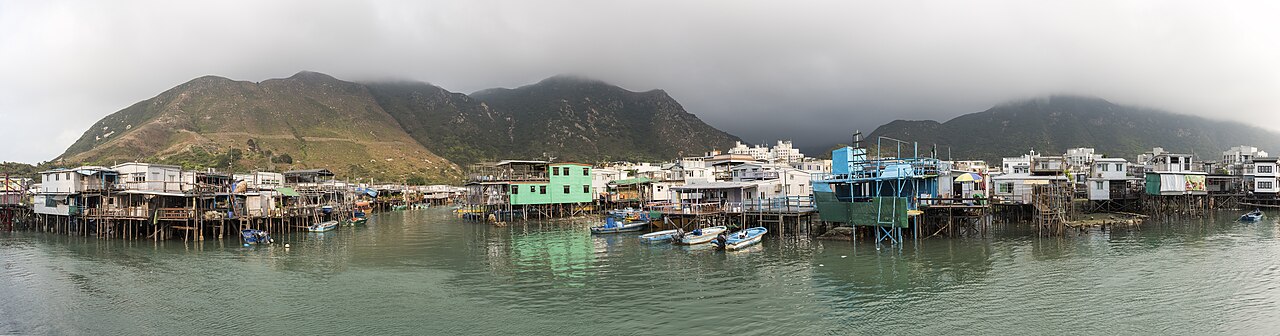
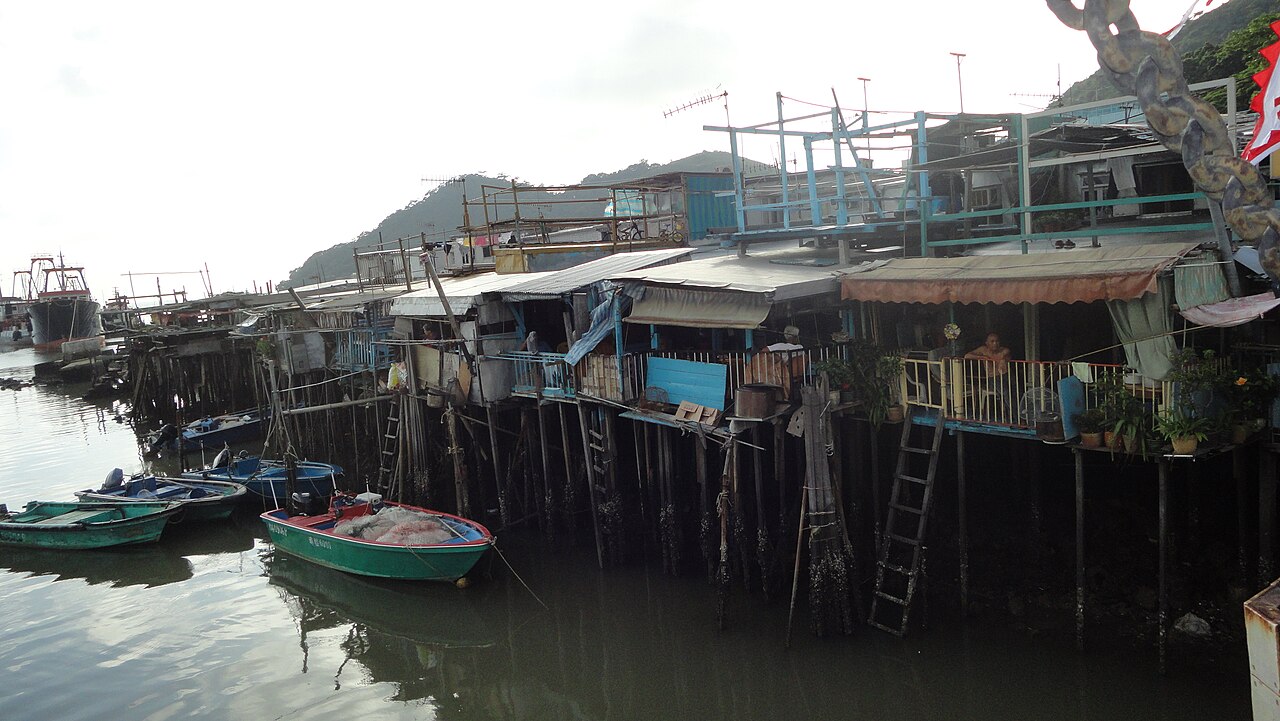
Tai O is a fishing village of more than three centuries' standing at the western tip of Lantau Island, best known for its pang uk - stilt houses raised on timber posts over the tidal creeks - which earned it the nickname 'Venice of Hong Kong'. Built on salt production and fishing, the village lost its salt pans in the late 1960s and now survives on shrimp paste, dried seafood and tourism, with roughly a thousand or so residents. As of 2026 it remains a working residential village rather than a theme park, though mural art telling the village's water-town story has appeared across the settlement and seasonal events such as the Mid-Autumn Water Town Lantern Festival draw crowds. There is no admission gate and no closing time, so treat Tai O as a half-day of slow walking through a living waterfront rather than a single ticketed sight.
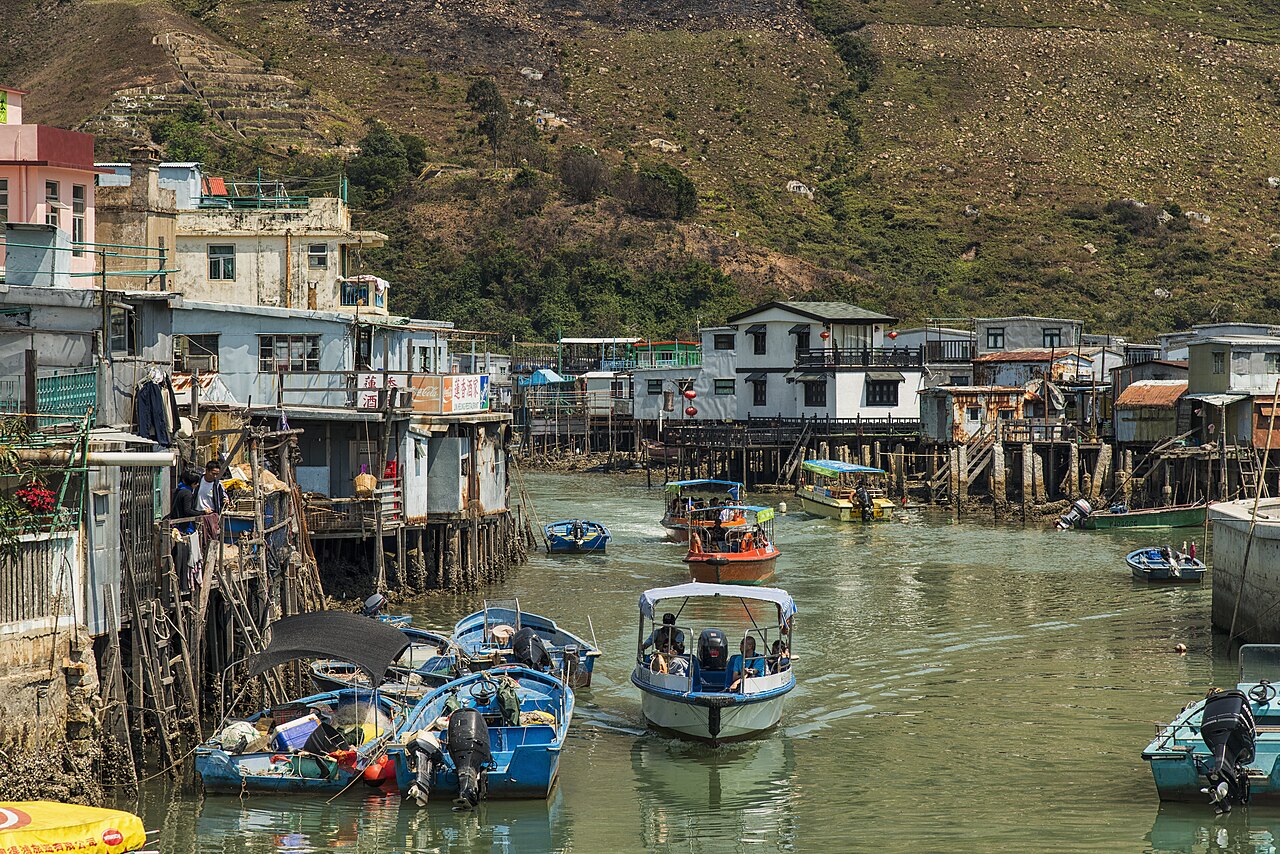
The pang uk stilt houses lining both banks of the creeks - fishermen's homes on timber piles driven into the mudflats, densest around Tai Chung Bridge and the Sun Ki area
A short sampan ride out through the channel to open water, giving a waterline view of the stilt houses and, with luck, a glimpse of Chinese white (pink) dolphins
Yeung Hau Temple, probably built in 1699 or earlier and declared a monument in 2017, still holding an iron bell cast in 1699; Kwan Tai (1741), Hung Shing (1746) and Tin Hau (1772) temples add to the village's ritual landscape
Tai O Heritage Hotel - the 1902 Old Tai O Police Station converted into a nine-room non-profit hotel, with the glass-roofed Tai O Lookout restaurant surveying the village and the sea
Fu Shan viewpoint, an easy two-hour round walk over the hill with views across the stilt houses, the creeks and the distant Hong Kong-Zhuhai-Macao Bridge, linked to the sunset-famous Sun Ki Bridge
The dried-seafood lanes - shrimp paste, salted fish and fish maw - plus street snacks such as freshly fried sa yung doughnuts
Good to know
SeasonJuly to September is both typhoon season and the hottest, most humid stretch of the year. When Typhoon Signal No. 8 or a Black Rainstorm Warning is hoisted, Lantau buses and ferries stop entirely and you can be stranded in the village - check Hong Kong Observatory warnings before setting out. Shade is scarce and many sampans have no roof, so a hat, sunscreen and water are essential.
SafetyThe walkways between stilt houses are narrow timber and concrete planks, in places without railings. They turn slippery with rain or at low tide, so wear grippy shoes and hold children's hands. There is no hospital in the village and evacuation takes time.
SafetyTransport out of Tai O stops early in the evening. Check the last bus 11 to Tung Chung and the last ferry on the stop timetable as soon as you arrive (verify current times). On weekends and public holidays bus queues can exceed an hour, so a weekday visit is far more comfortable.
RulesHong Kong operates a separate immigration, telecoms and payment regime from mainland China. Most visitors, including Korean and Japanese passport holders, enter visa-free; no passport pre-registration and no VPN are needed, and Google, YouTube and messaging apps work normally. Alipay and WeChat Pay are accepted but optional - the Octopus card is the local standard and the easiest way to pay on buses and ferries. New Lantao Bus takes cash but gives no change, fares differ between weekdays and Sundays/public holidays (bus 11 from Tung Chung is roughly HK$13 on weekdays, about HK$22 on holidays - verify current fares), and ATMs and card-accepting shops are scarce inside Tai O, so carry small notes and coins. If you plan to cross into the mainland (for example Shenzhen), that leg requires a separate Chinese visa or permit, mainland payment set-up and, in practice, a VPN.
MannersThe stilt houses are homes, not exhibits. Do not peer or photograph through open doors and windows, and ask before photographing residents or their fishing gear. Avoid blocking the narrow lanes for photos or talking loudly, and inside temples remove hats and refrain from photographing across the altar or incense burners.
CautionBoat rides have no official ticket office; operators tout for passengers around Tai Chung Bridge and prices vary by boat (broadly HK$25-30 for about 20 minutes, around HK$50 for 30 minutes - verify current prices). Agree the price, duration and payment method before boarding. Ignore any 'dolphins guaranteed' pitch: the Chinese white dolphin population in Hong Kong waters has fallen sharply - from 158 in 2003 to roughly 37 by 2020 in published surveys - so sightings are pure luck and there are no refunds.
CautionDried seafood, shrimp paste and fish maw are usually sold by weight, and the Hong Kong catty equals about 604.8g. Some stalls quote a per-tael or per-100g price that sounds far cheaper than the per-catty total, or name a price only after you have sampled. Confirm the unit price and the final total, and watch the scale. Shrimp paste is a paste/liquid for airline purposes - pack it sealed in checked baggage.
Practical info
From MTR Tung Chung station take New Lantao Bus route 11 to the Tai O terminus (about 50-55 minutes); route 1 runs from Mui Wo Ferry Pier, route 21 from the Ngong Ping 360 cable car terminus, and a ferry links Tuen Mun with Tai O via Tung Chung and Sha Lo Wan (adult fare around HK$27, about an hour). The village itself is open around the clock and free to enter, Yeung Hau Temple generally opens roughly 07:00-17:00 and sampan rides run in daylight hours only - fares, sailing times and last departures change often, so verify current details via the Transport Department's HKeMobility service and the operators.
On-site reviews📍 Verified on-site
No reviews yet. If you are here, be the first to leave one.