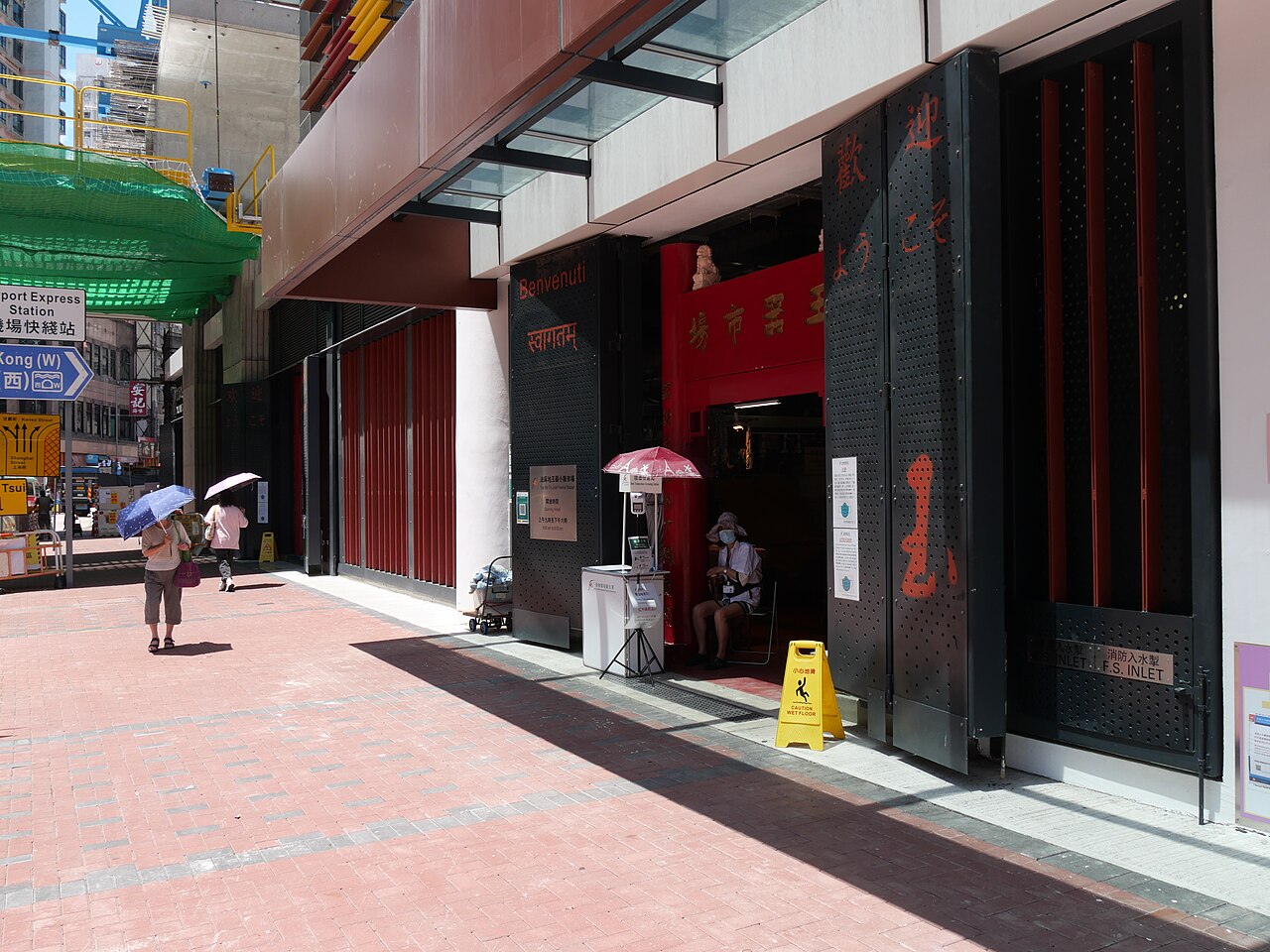
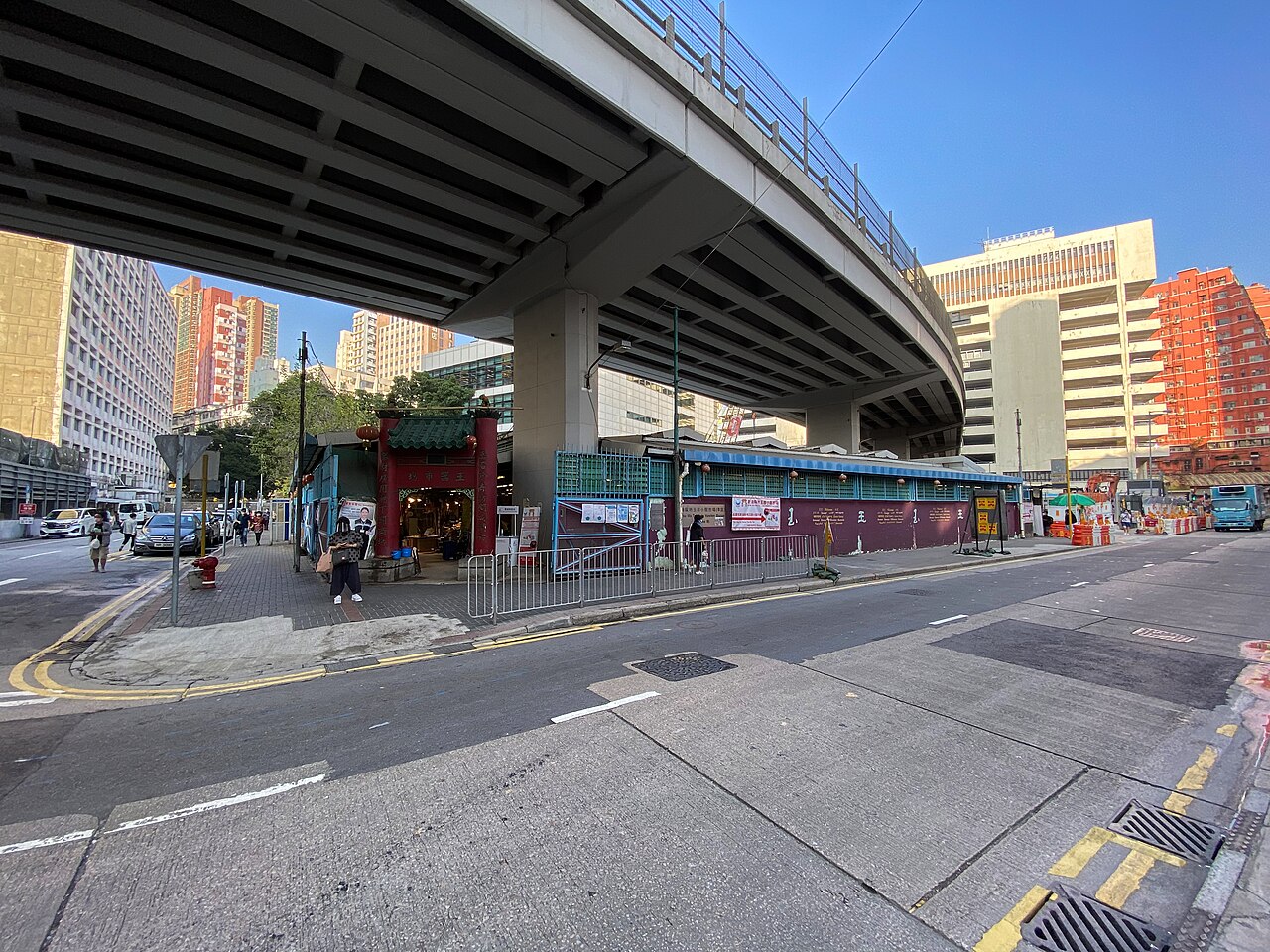
The Jade Market in Yau Ma Tei was set up on Kansu Street in 1984 by the then Urban Council, gathering roughly 440 stalls selling jade bangles, pendants, prayer beads, carvings and rough stone — long the largest concentration of jade trading in Hong Kong. Its roots go back to the 1950s, when jade dealers fleeing the Chinese Civil War moved from Guangzhou and clustered along Canton Road in Yau Ma Tei; after Nixon's 1972 visit to China sparked a wave of Western interest, the trade grew past 300 shops and became a tourist fixture. The original site was cleared along with the Yau Ma Tei multi-storey car park for the Central Kowloon Route project, so in November 2020 the market moved to a temporary bazaar at No. 251 Shanghai Street — and even after the route's Yau Ma Tei section opened on 21 December 2025, the government has not finalised whether the old site will be rebuilt and traders moved back. The replacement venue is tighter and quieter than the original, so today the visit is less about scoring a bargain than about seeing a fading corner of working-class Hong Kong commerce, letter-writers included.
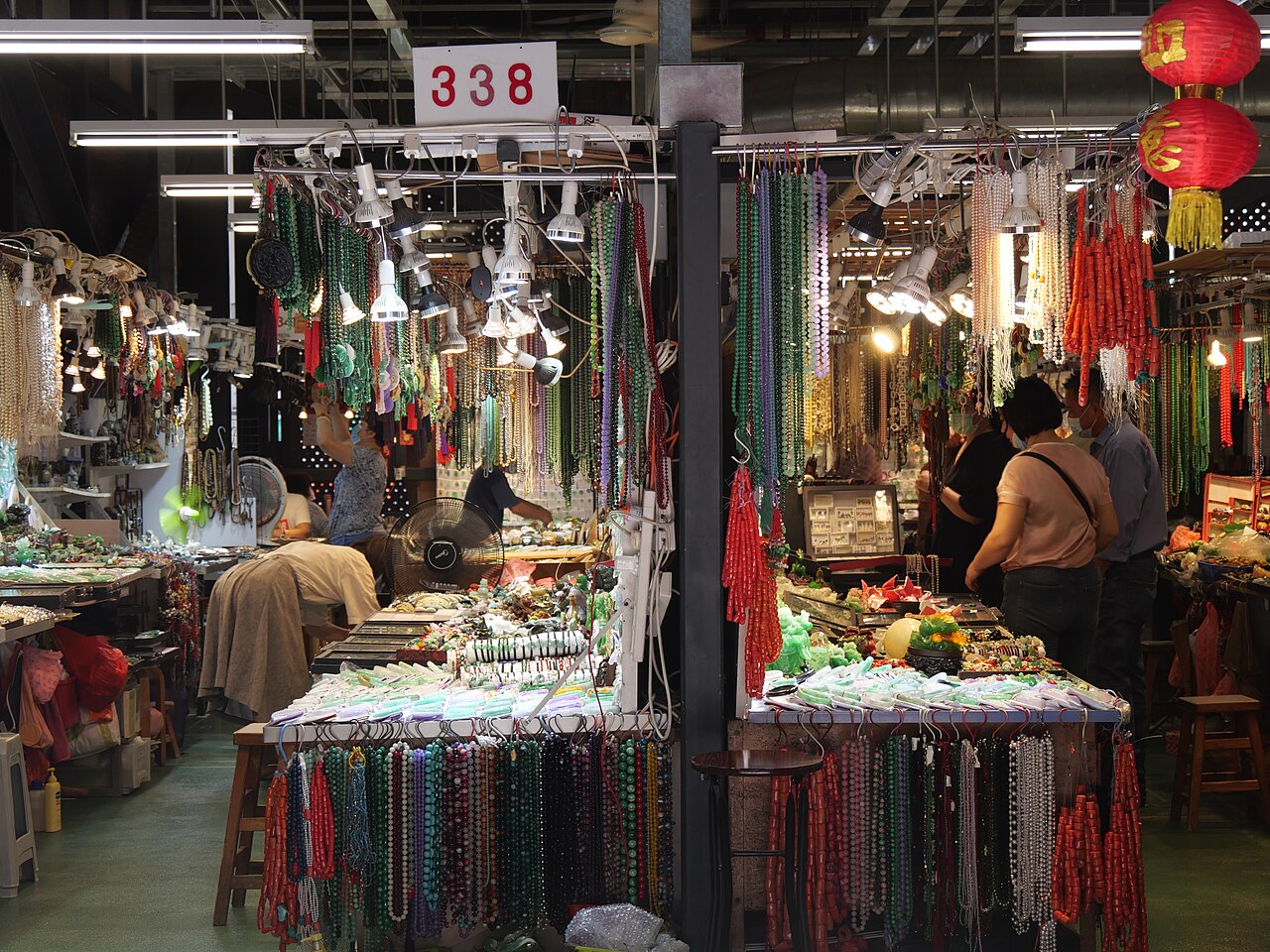
Densely packed stalls along narrow aisles — jade bangles, Guanyin and Buddha and Pixiu pendants, prayer beads, animal carvings and uncut rough stone, all comparable side by side. The real spectacle is the traders themselves, backlighting stones with torches and loupes to judge translucency and fractures.
The letter-writers' section on the west side, nicknamed 'Tax Return Street' — a dozen-odd stalls offering Chinese calligraphy, ghost-written Chinese and English letters, and help completing application forms and tax returns. It is one of the last places in Hong Kong to see the near-extinct trade of the 'se seon lou' (寫信佬).
'Jade Street', the stretch of Canton Road between Kansu Street and Jordan Road — a run of shops carrying higher-grade jade and gemstones, several offering jade and gemstone identification services. Walking both the market and this street is the fastest way to calibrate what prices actually mean.
The distinction between jadeite and nephrite, and the A/B/C grading system — bleaching plus resin impregnation (B) and dyeing (C) are widespread. Learning to see why two similar-looking green stones can differ in price by orders of magnitude is worth the trip on its own.
The walkable cluster of old Yau Ma Tei around it — Tin Hau Temple on Public Square Street, the Temple Street Night Market and the Yau Ma Tei Wholesale Fruit Market are all within a short stroll, making an easy half-day loop.
Good to know
RulesThe location has changed. Map apps and older blog posts still point to the original Kansu Street address, which will send you to the wrong place. Since November 2020 the market has operated as the Yau Ma Tei Temporary Jade Hawker Bazaar at No. 251 Shanghai Street, near the Henry G. Leong Yaumatei Community Centre and Yau Ma Tei Public Library. Navigate to '油麻地臨時玉器小販市場' or '251 Shanghai Street' to be safe.
CautionTreated and fake jade is common. Bleached and resin-filled (grade B) or dyed (grade C) pieces are routinely presented as untreated grade A, and most stall goods carry no credible certification. For anything expensive, insist on a report from a recognised lab such as the Hong Kong Jade & Stone Laboratory or China's NGTC; with no certificate, price the item as a decorative souvenir only. For serious spending, a QTS (Quality Tourism Services) accredited jeweller is a safer route than a market stall.
CautionThe asking price is the trap. A bangle that drops from HKD 4,800 to a few hundred was never worth HKD 4,800, and tourist-facing pricing is a known practice here. Haggling is expected, so open around 20–30% of the first quote, compare several stalls, and fix in advance a ceiling you would not mind losing. Always take a receipt — the Consumer Council (2929 2222) can advise if a purchase goes wrong.
RulesBring cash in Hong Kong dollars. Stalls do not reliably take cards or QR payments, so carry small notes; for transport, an Octopus card or contactless foreign card works everywhere. An important distinction: Hong Kong is not mainland China — Alipay and WeChat Pay are optional rather than essential, no VPN is needed, Google, YouTube and messaging apps work normally, and there is no mainland-style passport registration. Note also that since 1 April 2026 all Hong Kong taxis must offer at least one QR and one non-QR e-payment method (Octopus, credit card, FPS).
SeasonJuly is peak typhoon and rainstorm season. When the Hong Kong Observatory hoists Typhoon Signal No. 8 or above, or a Black Rainstorm Warning, the market and most shops close and public transport thins out sharply. Check the HKO forecast the morning of your visit and reschedule if a warning is up. Summer indoors here means weak air conditioning and high humidity — bring water and dress light.
SafetyAisles are narrow and crowds bunch up, so keep belongings secure: wear bags in front and avoid opening your wallet to count cash over a stall table. Yau Ma Tei and the Temple Street area are unremarkable by day, but after dark stick to main roads rather than quiet side lanes.
MannersHow you handle goods and people sets the tone. Jade chips easily and some pieces are genuinely valuable, so always ask before picking anything up, and do not start bargaining unless you intend to buy. Ask permission before photographing stalls, traders or merchandise — many vendors dislike it. A single Cantonese 'm̀h gòi' (唔該, excuse me / thank you) noticeably improves the reception you get.
Practical info
From MTR Yau Ma Tei Station Exit C, walk along Nathan Road towards Kansu Street; the market at 251 Shanghai Street and 'Jade Street' on Canton Road are both about 10–15 minutes on foot (Jordan Station also works). Entry is free and trading generally runs daily from about 10:00 to 17:00, but individual stalls close at their own hours and many shut on Sundays, so aim for late morning to early afternoon and confirm current opening times on the Hong Kong government or tourism board pages before you go.
On-site reviews📍 Verified on-site
No reviews yet. If you are here, be the first to leave one.