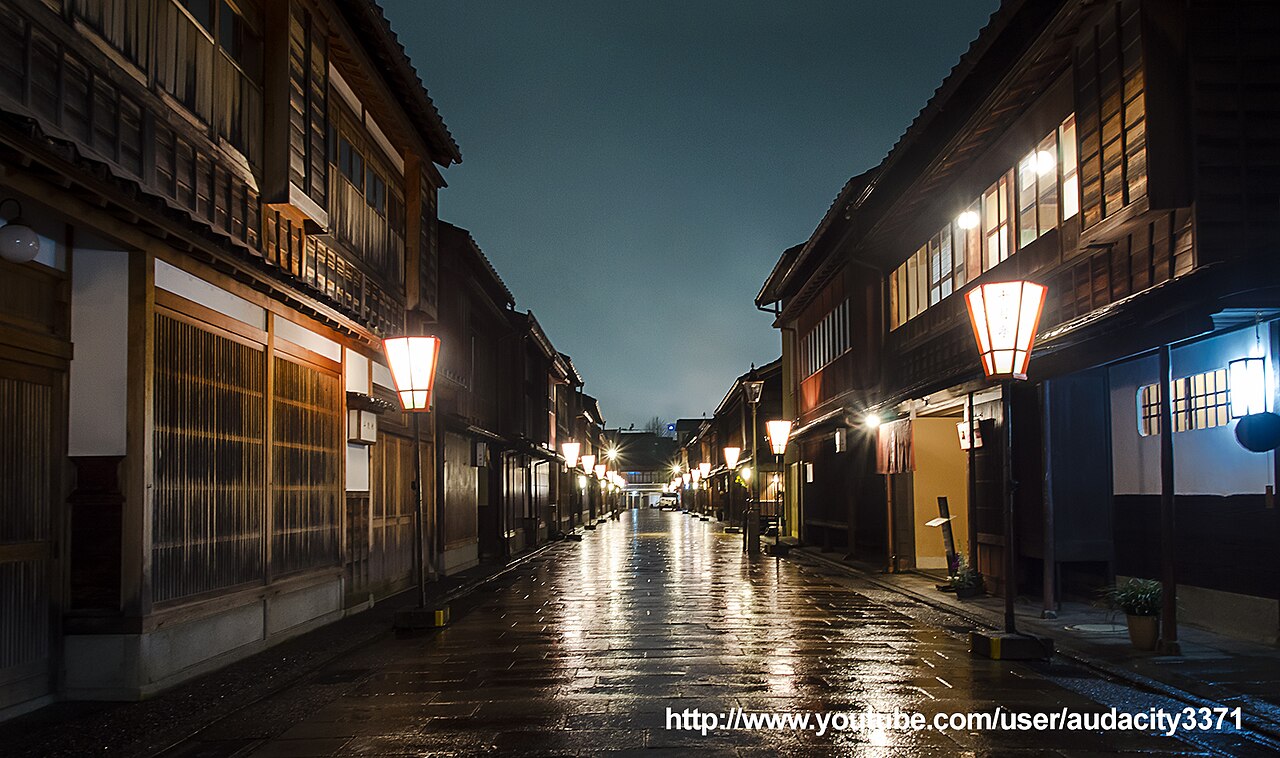
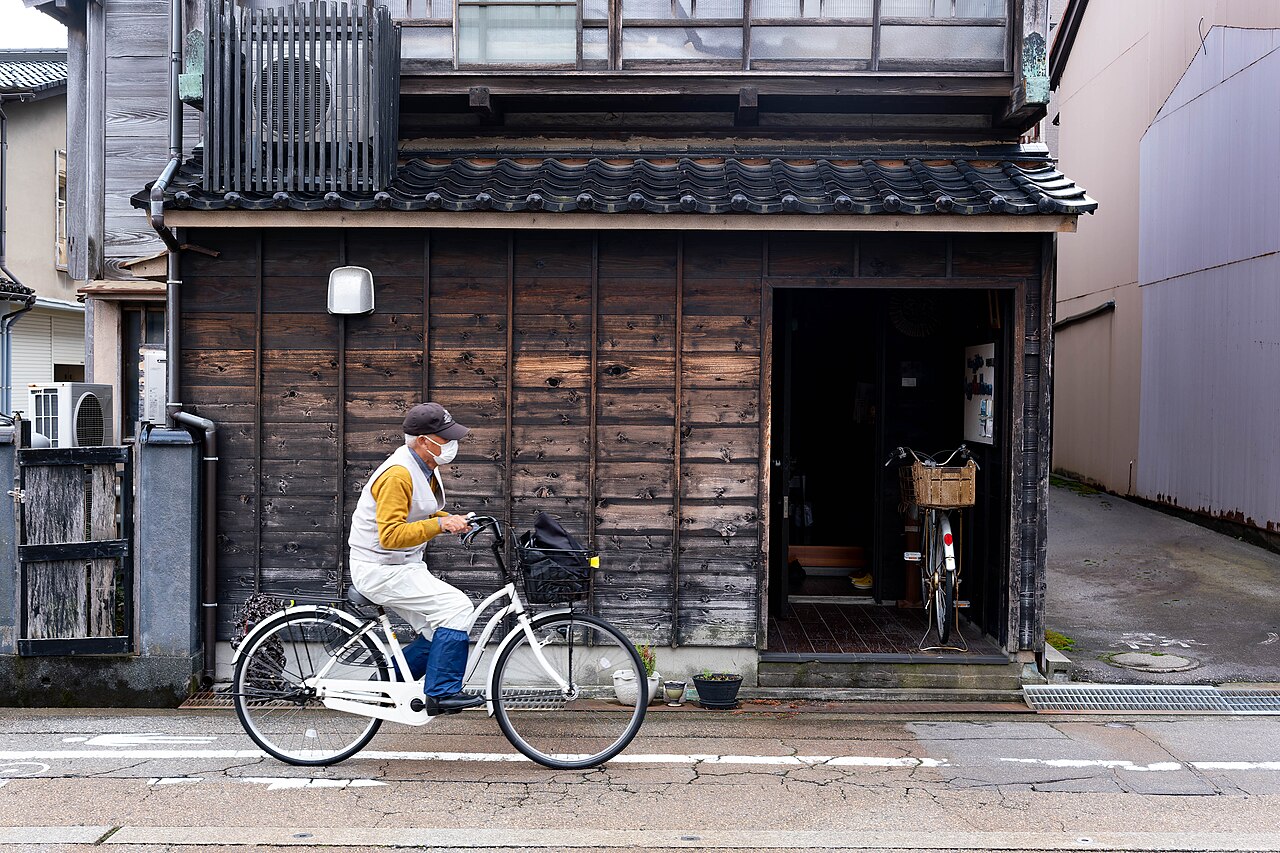
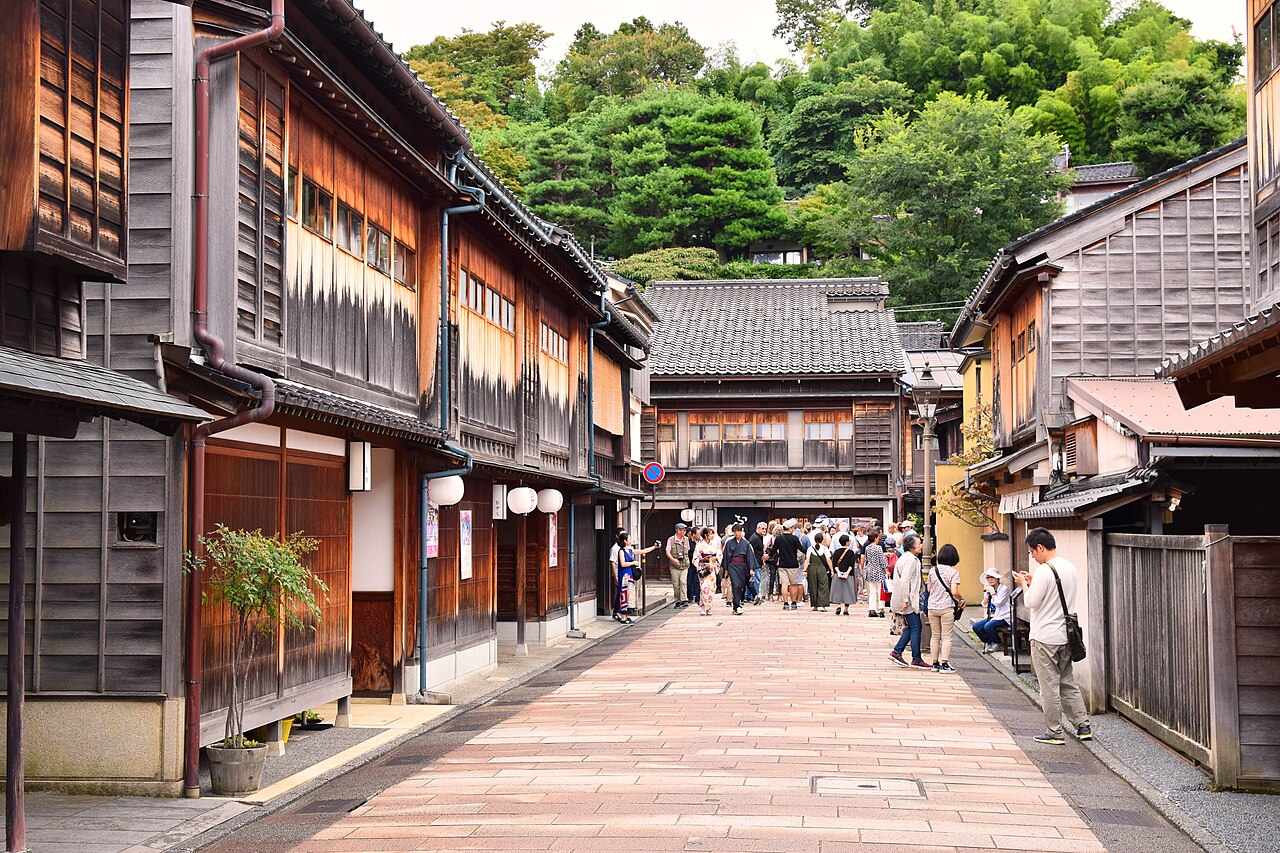
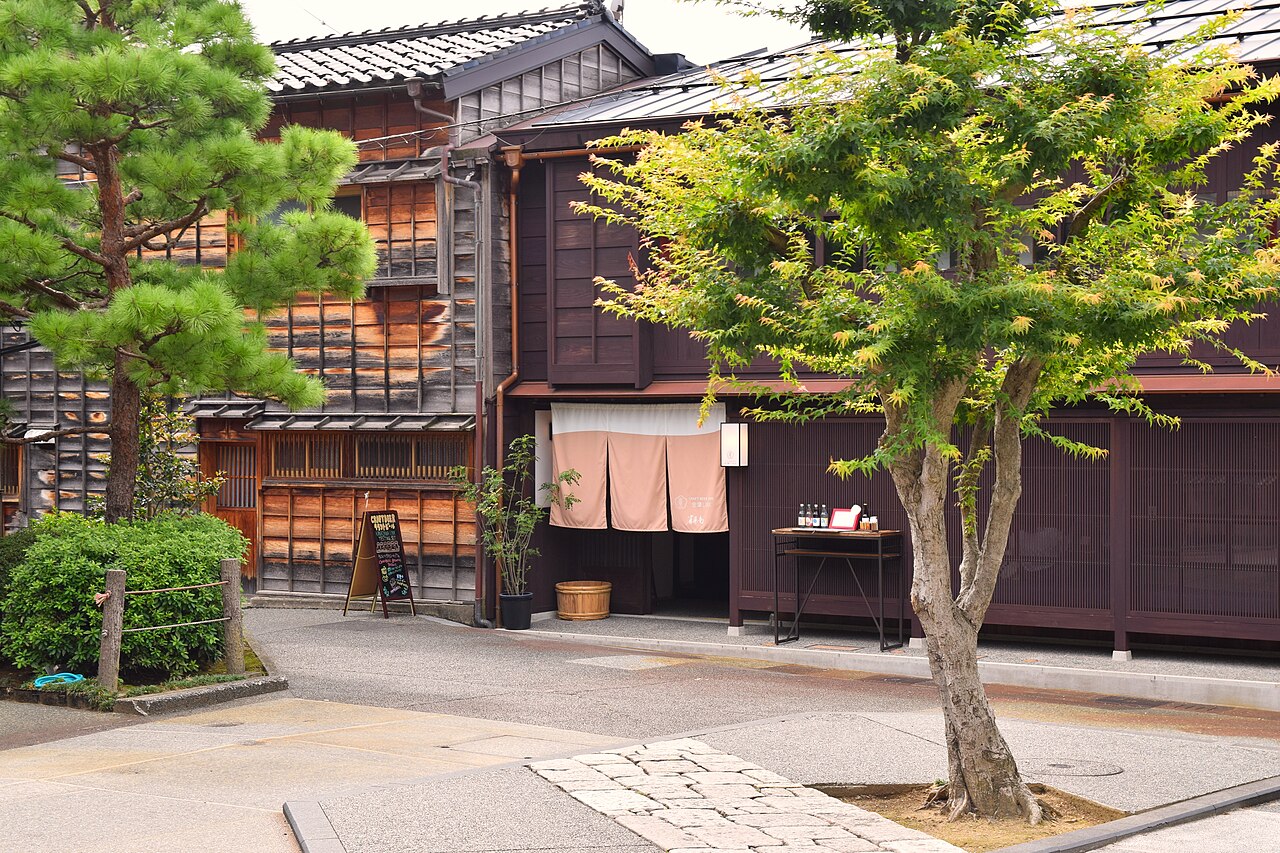
The Higashi Chaya District (Higashi Chayagai) is Kanazawa's largest and best-preserved chaya (teahouse) quarter, established in 1820 and renowned for its geisha culture and gold-leaf crafts. Streets lined with wooden teahouses and delicate latticed windows (kimusuko) preserve the atmosphere of the Edo era, making it the most impressive of the city's three teahouse districts. It remains a living cultural district where geiko (geisha) still perform, and is home to nationally designated Important Cultural Properties.
Shima (Ochaya Shima) — a teahouse built in 1820 and designated a National Important Cultural Property, preserved as a museum where you can view tatami rooms and shamisen instruments and enjoy matcha overlooking the garden (confirm hours/fees on site).
Kaikaro — the largest chaya building in the district; by day you can admire a tea room with gold-leaf-woven tatami and a Wajima-lacquer staircase (usually closed Wednesdays; confirm hours).
Kanazawa's signature gold leaf (kinpaku) culture — gold-leaf-topped soft-serve ice cream and rooms entirely covered in gold leaf (at shops such as Hakuza and Hakuichi) are iconic photo spots.
The streetscape itself — wooden teahouses with lattice facades and ochre (bengara) walls make the lanes a top photography destination, especially serene in the early morning.
The Asano River flowing along the district — cherry blossoms in spring (late March to early April) and snowy winter scenery offer distinct seasonal charm.
Good to know
MannersRespect 'No Photography' signs inside teahouses and private shops, and always ask permission before photographing people.
MannersDo not touch or lean on the delicate wooden latticework of the historic buildings; it is fragile heritage.
MannersIf you encounter a geiko (geisha), keep your distance—do not block their path, follow them, touch them, or disrupt their activities.
RulesThe lanes include actual private residences, so do not enter uninvited; sound carries in the narrow streets, so keep your voice low.
SeasonKanazawa has frequent heavy winter snow that can make streets slippery, so prepare for cold and footing; the peak summer period (late July–August) and the New Year holidays are especially crowded.
SafetyMost shops close around 5 pm and the district quiets by evening; visit early (before 10 am) for calm, and expect the biggest crowds midday when tour buses arrive.
Practical info
From Kanazawa Station, take the Kanazawa Loop Bus (Right Loop) about 15 minutes to the Hashibacho stop, then walk about 5 minutes. Early mornings are quietest for strolling and photos; most shops open around 9:30 am and close near 5 pm. Confirm admission fees, hours, and closing days via each site's official information before visiting.
On-site reviews📍 Verified on-site
No reviews yet. If you are here, be the first to leave one.