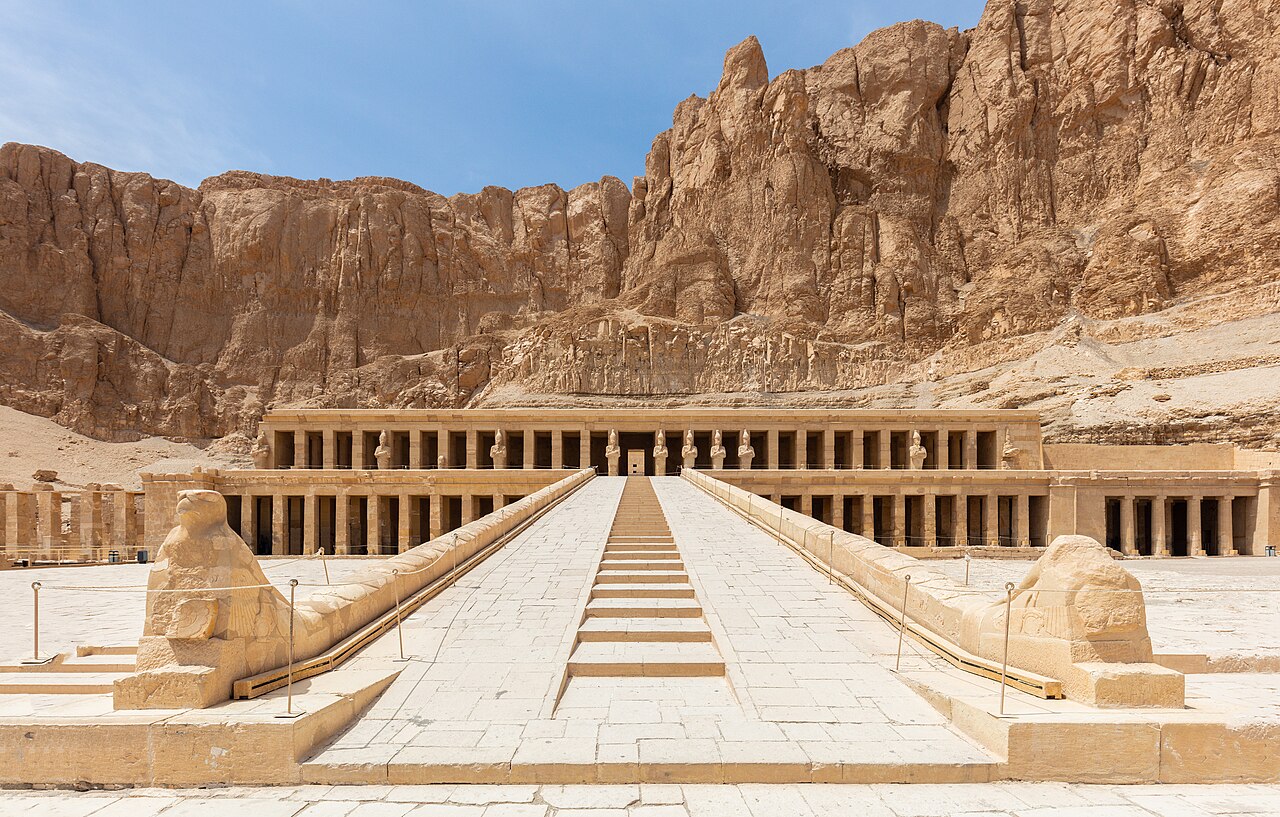
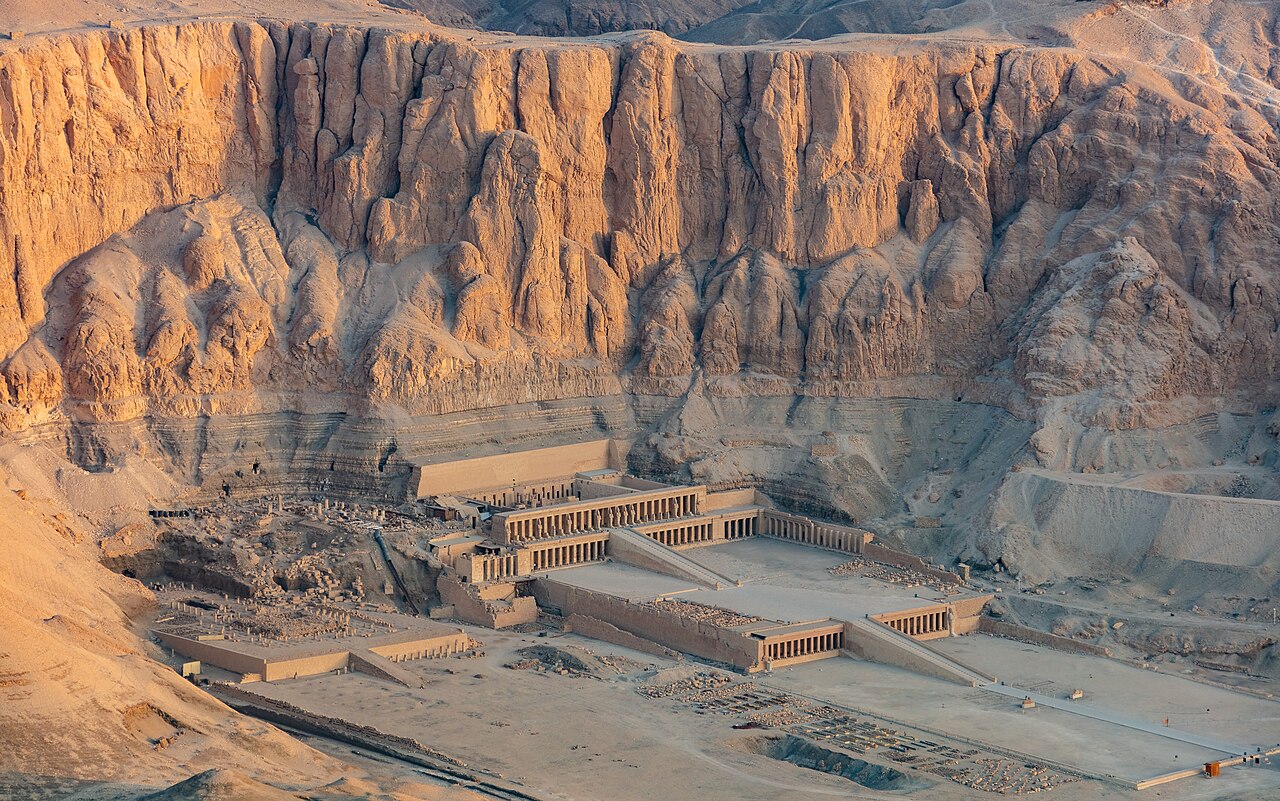
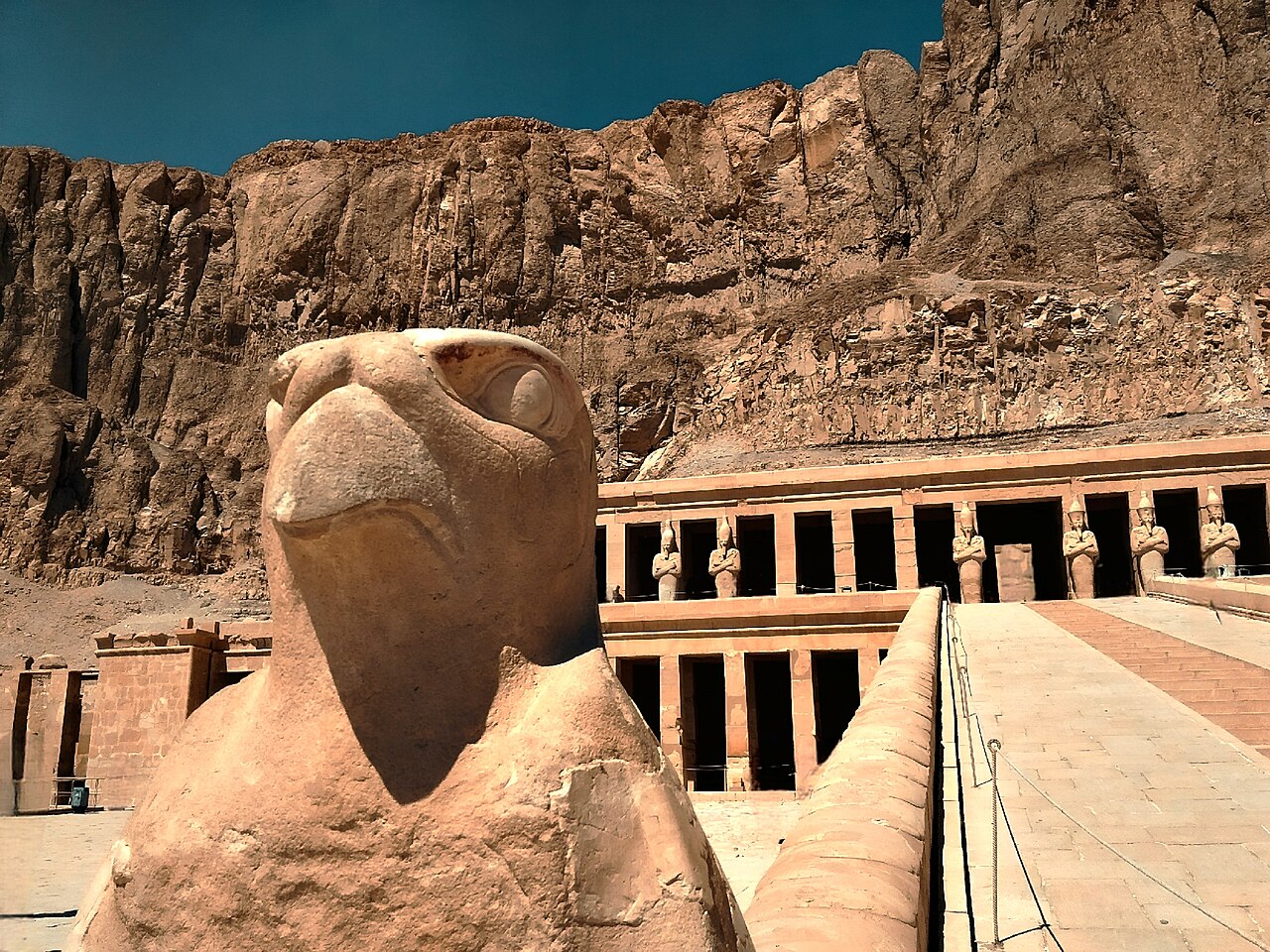
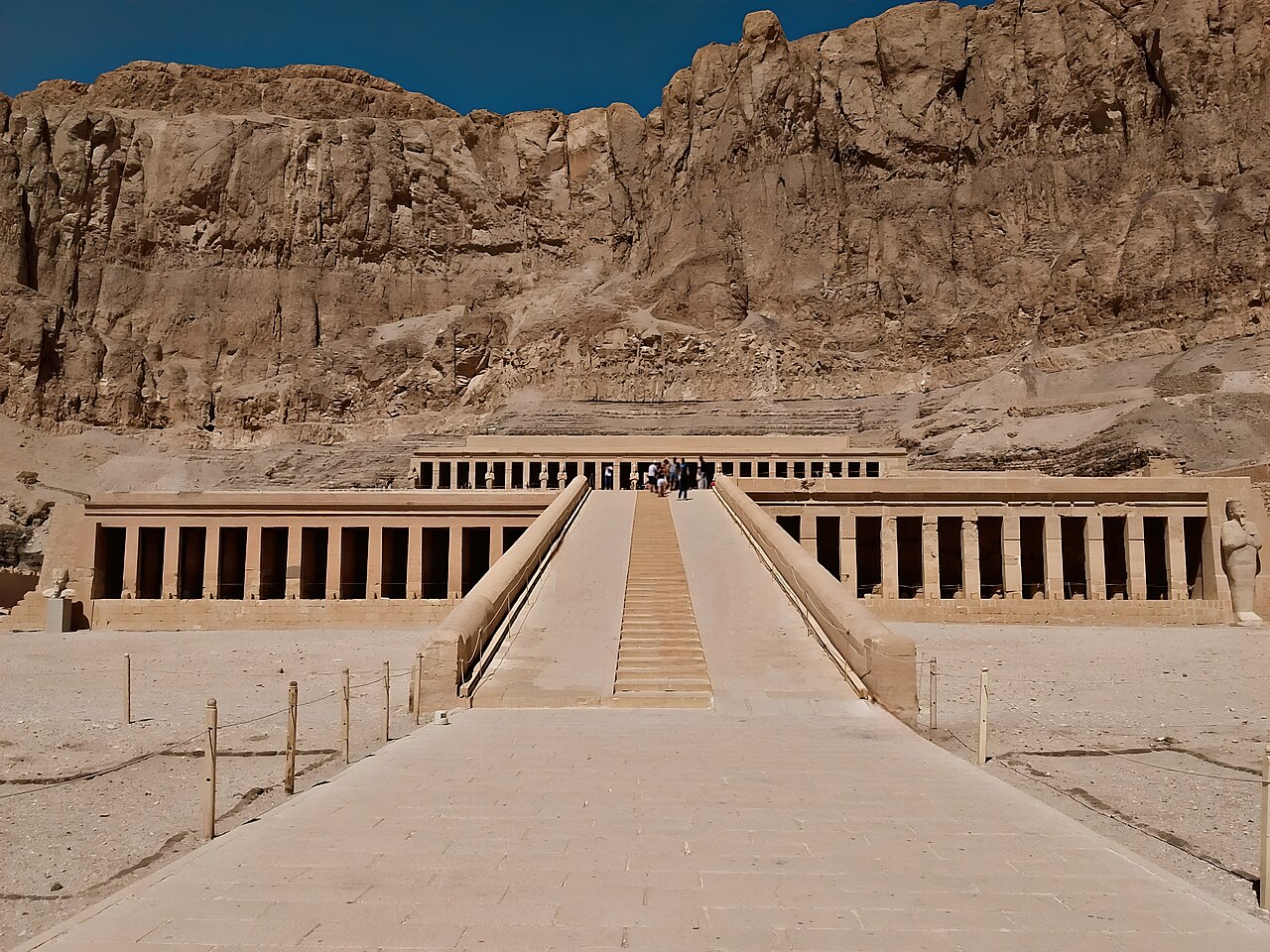
The Mortuary Temple of Hatshepsut sits beneath the limestone cliffs of Deir el-Bahari on the west bank of Luxor, built for Hatshepsut (reigned c. 1473–1458 BC), Egypt's celebrated female pharaoh of the 18th Dynasty, and traditionally credited to her architect Senenmut. Its three colonnaded terraces rise in near-perfect harmony with the rock face, a design so clean it still looks strikingly modern and is widely regarded as a masterpiece of ancient Egyptian architecture. A long-running Polish–Egyptian conservation mission continues here, so as of 2026 visitors see reconstructed Osiride statues of the queen and the fruits of recent excavations, including the valley-temple foundations and foundation deposits. Standing right beside the Valley of the Kings, it is a natural anchor for a half-day tour of the Theban west bank.
The three tiered terraces and long central ramp set against the cliff — shoot from the front and below to capture the whole facade.
The Punt expedition reliefs on the middle-terrace portico, vividly recording the queen's trading fleet, incense trees, exotic goods and the houses of Punt.
The 'divine birth' colonnade, a political narrative casting the god Amun as Hatshepsut's father to legitimise a female pharaoh.
The Hathor chapel on the left (with Hathor-headed columns) and the Anubis chapel on the right, where original color is comparatively well preserved.
The upper terrace with its Osiride statues of Hatshepsut and the Amun sanctuary cut into the living rock — look for the erased names and images later chiselled out by Thutmose III.
Good to know
SafetyThe white limestone terraces throw off intense glare and there is almost no shade. Arrive right at opening and bring water, a hat, sunglasses and sunscreen.
SeasonOctober–April is the comfortable window. In summer, including your July visit, daytime highs regularly top 40°C, so tour early in the morning and avoid the midday heat.
CautionTouts near the car park and entrance may press a 'free' scarab or trinket into your hand and then demand baksheesh, and guards may open roped-off spots or take your photo expecting a tip. Decline firmly from the start if you're not interested.
RulesEgypt is shifting quickly to cashless payment and some counters no longer take foreign cash. Carry a Visa/Mastercard, or buy a QR e-ticket in advance through the official Ministry of Tourism and Antiquities portal.
MannersSmall baksheesh (roughly 5–20 EGP) is customary for minor help such as restrooms or directions, so keep small notes handy. As this is an open-air site, modest clothing covering shoulders and knees is more in keeping with local norms.
SafetyThe west bank has little public transport, so most visitors come by taxi or organised tour, and routine tourist-police checkpoints are normal. Camel and donkey touts can be persistent — agree a price first or politely refuse.
Practical info
The temple is on Luxor's west bank, about 500 m from the ticket gate — walk it or take the small electric shuttle. It pairs well with the Valley of the Kings (about 1.5 km) and the Colossi of Memnon for a half-day morning. Gates generally open at 06:00 (closing around 17:00 in winter and 18:00 in summer), with adult admission about 440 EGP (students 220 EGP) as of late 2025; hours and prices change, so confirm the latest on the official Ministry portal before you go.
On-site reviews📍 Verified on-site
No reviews yet. If you are here, be the first to leave one.