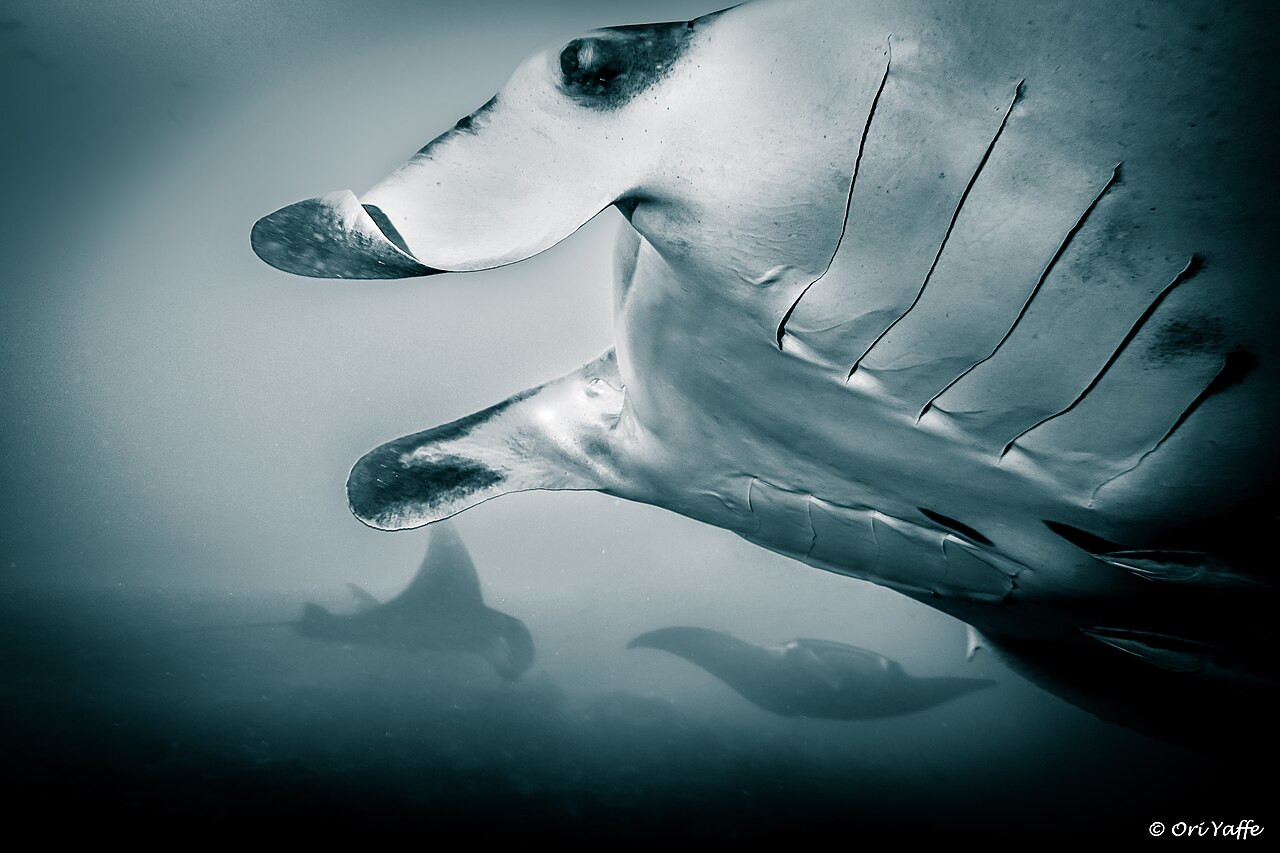
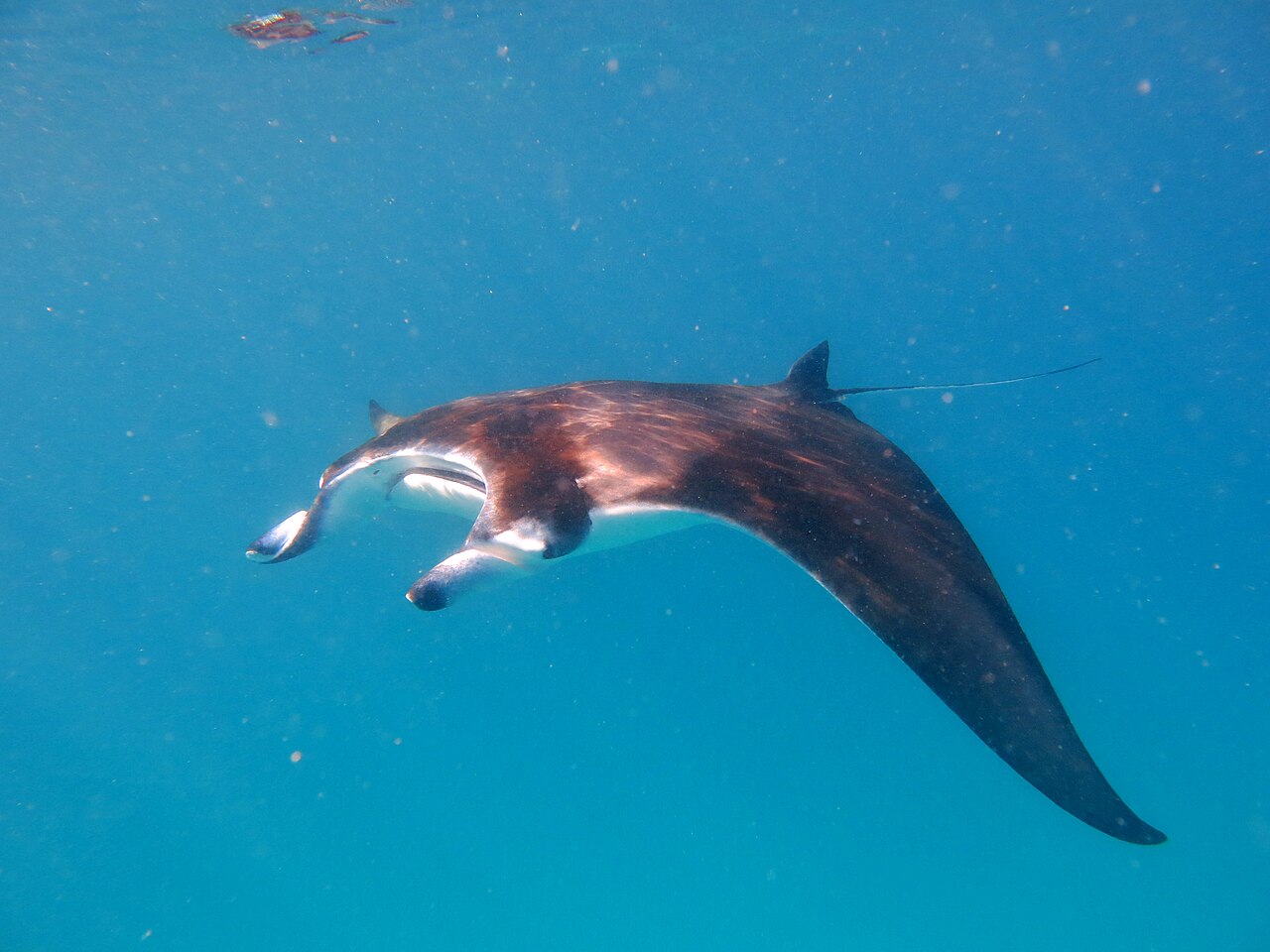
Hanifaru Bay is a small bay in the core zone of the UNESCO Baa Atoll Biosphere Reserve, widely regarded as the world's premier manta ray feeding site. On incoming tides the keyhole-shaped reef funnels plankton toward the surface at the back of the bay, triggering the famous 'cyclone feeding' in which dozens of mantas — sometimes more than 100 — spiral open-mouthed in formation, and whale sharks occasionally join in. Depths are shallow at roughly 1–8m with visibility around 10–25m, though dense plankton can cloud the water. As of 2026 the bay remains a snorkel-only, no-diving zone, making it ideal to enjoy from the surface, but manta sightings depend heavily on season and tides.
'Cyclone feeding' — chains of mantas spiraling on the incoming tide, a spectacle unique to this bay
One of the few places where whale sharks also appear on the richest plankton days
A keyhole-shaped reef that funnels plankton up close to the surface
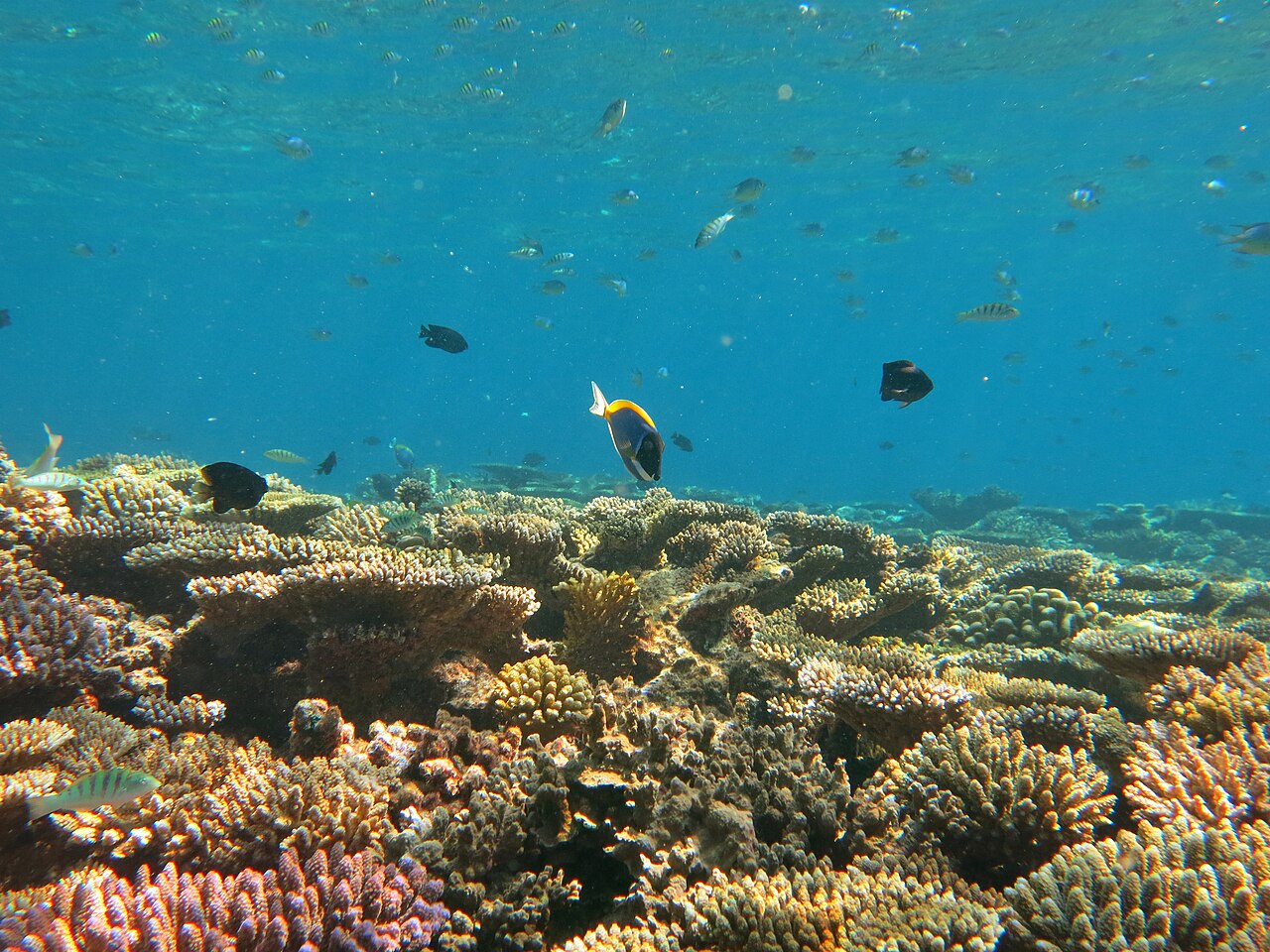
Shallow reef flat and snorkel-only rules that let you watch easily from the surface
Peak density around August–September, strongest near the full and new moon
Good to know
SafetyCurrents can turn strong on some days and push snorkelers toward open water. Always wear the life jacket provided by your resort or operator, stay near the surface, and never drift off alone — keep with your guide.
SafetyThe bay is small and crowded with snorkelers while large mantas pass through, so watch for fin-kick collisions, mask fogging and panic. Short fins are safer than long freediving fins, and beginners should stay floating at the surface rather than trying to dive down.
RulesScuba diving is completely banned; this is a snorkel-only site. Water time is capped at about 45 minutes per visit, with roughly 20 people in the bay at once and around 80 per day, and an accredited guide plus on-site rangers are mandatory.
MannersDo not touch or chase mantas or whale sharks. Keep at least 3m from the front of an animal (and an extra 1m clear of whale-shark tails), never block their path, and don't race alongside trying to keep up.
RulesDo not stand on or touch the coral and shallow reef flat, and use reef-safe sunscreen. Because you may float at the surface for a long stretch, guard against sunburn on your neck and the backs of your legs.
SeasonManta season runs May–November (southwest monsoon), peaking in August–September, with the best odds midday (about 11am–3pm) and around the full or new moon when tidal currents are strongest. Sightings are a wild phenomenon and never guaranteed.
CautionUnlicensed or unaccredited trips can be turned away at the ranger station, so book only through a Baa Atoll resort, guesthouse or dive center with an accredited guide. Boat fees and the entry fee (recently around USD 20 per person) change over time, so confirm the latest rates.
Practical info
Reach the bay by a roughly 20-minute domestic flight from Malé (Velana International) to Dharavandhoo, then a short boat transfer, with Baa Atoll resorts and Dharavandhoo guesthouses running manta excursions in season. An entry permit and accredited guide are required and daily numbers are limited, so book ahead and confirm current fees, timing and operating status before you go.
On-site reviews📍 Verified on-site
No reviews yet. If you are here, be the first to leave one.