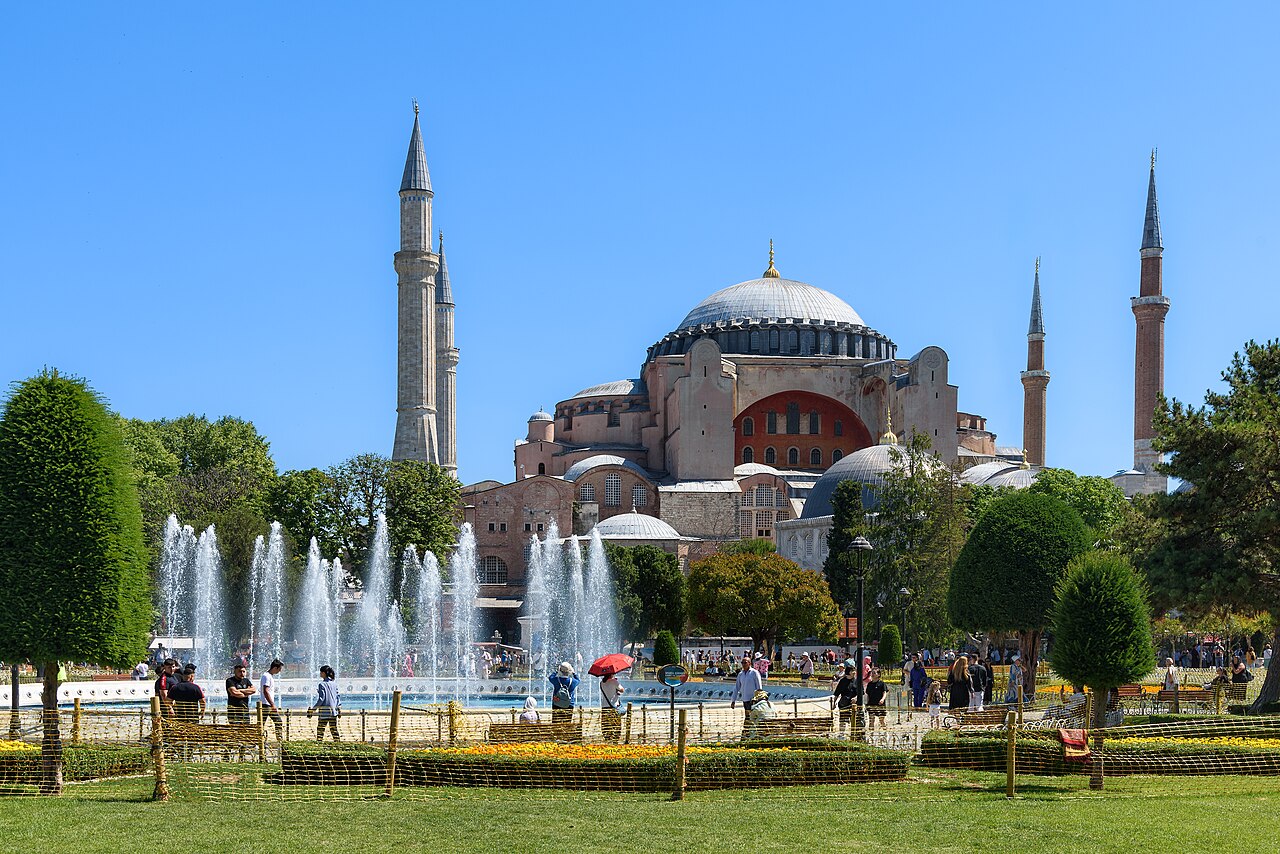
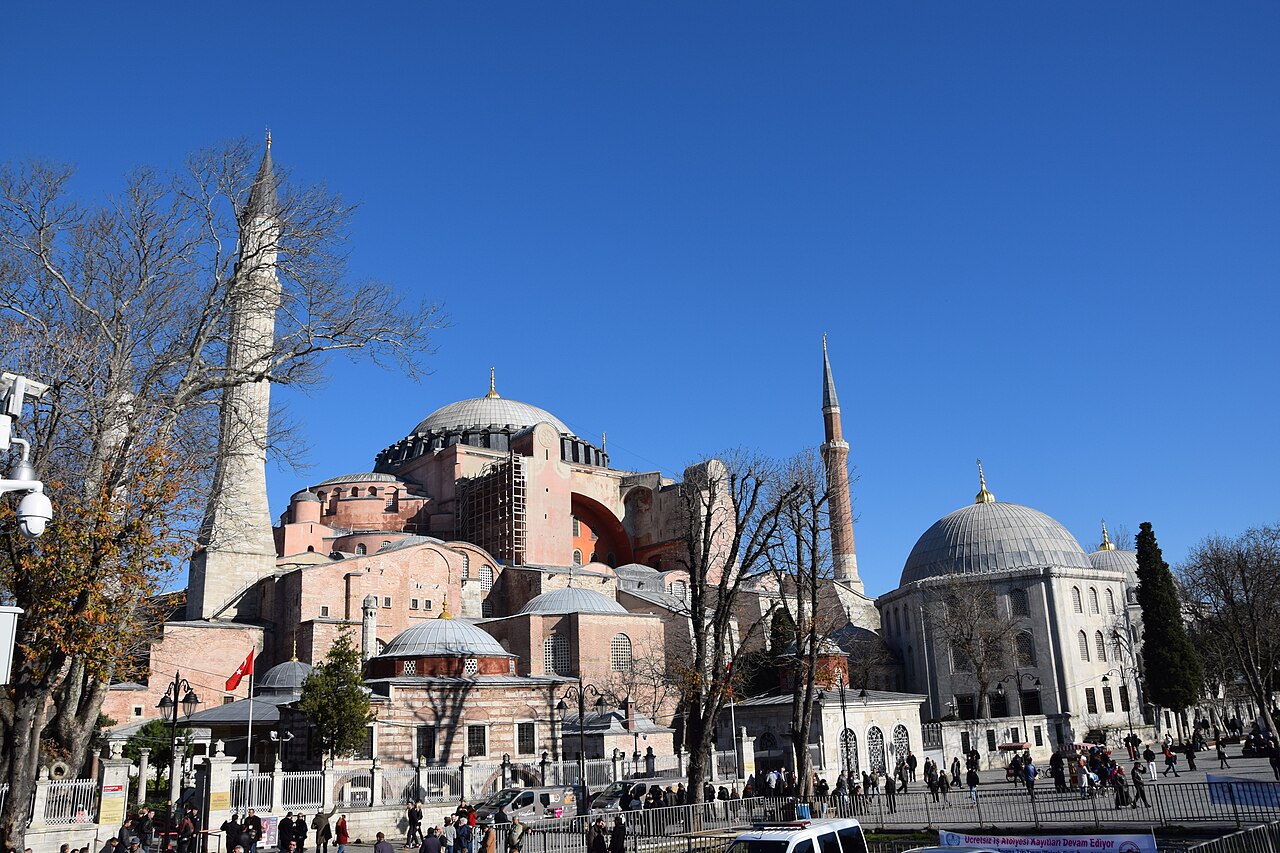
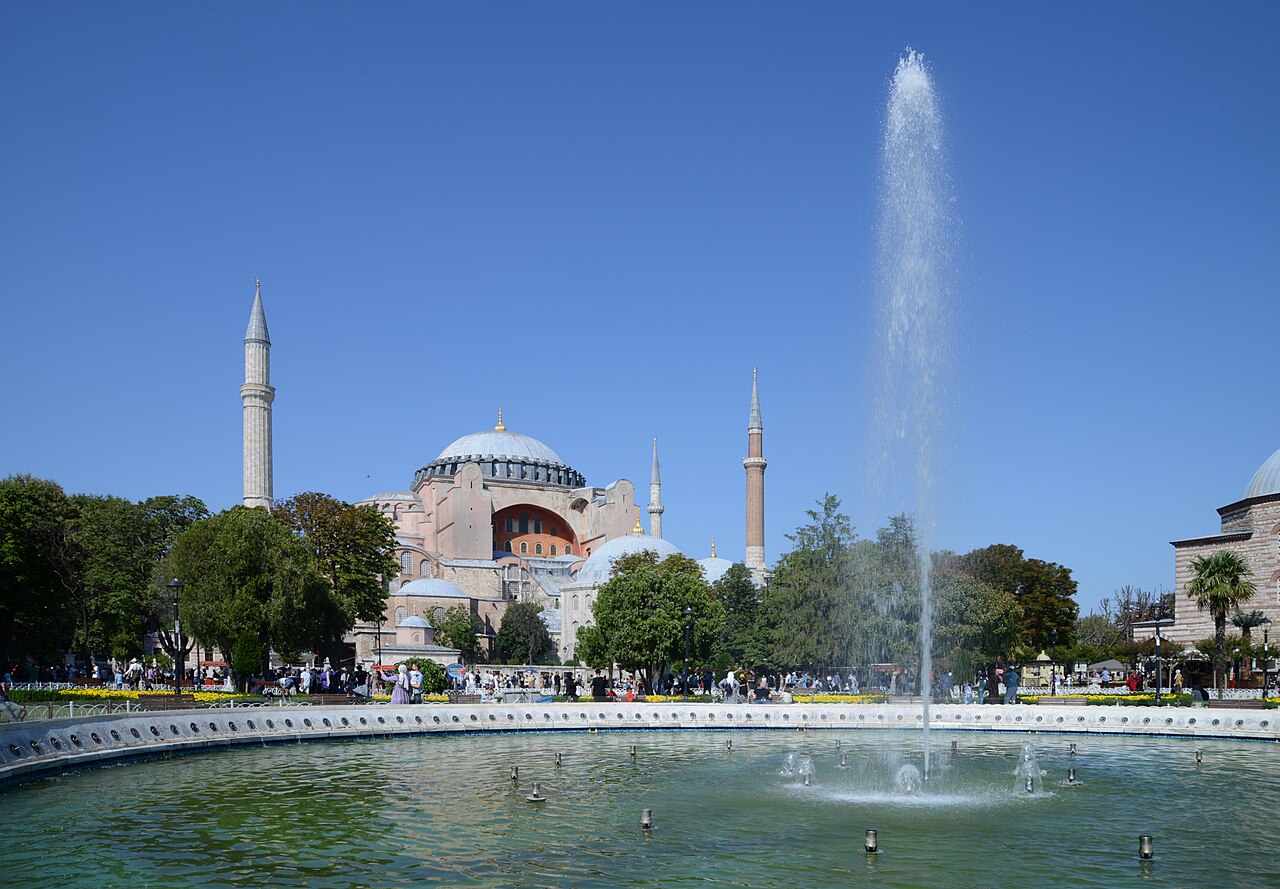
Hagia Sophia (Turkish: Ayasofya-i Kebir Camii) was completed in 537 AD under the Byzantine Emperor Justinian I. It served as an Orthodox cathedral for roughly 900 years, became an Ottoman imperial mosque after 1453, functioned as a museum from 1935 to 2020, and was reconverted into a working mosque in July 2020. Famous for its vast dome and Byzantine mosaics, it is a landmark of architectural history and part of the UNESCO World Heritage 'Historic Areas of Istanbul' (inscribed 1985). As of 2026 the most extensive restoration in the Republic's history is underway — dome strengthening and a temporary protective steel roof — so scaffolding is present inside, though the upper-gallery route and most mosaics remain viewable. Visit it understanding its dual character: an active place of Muslim worship and a major heritage site.
The central dome, about 31 m across and rising some 55 m, whose ring of windows makes it appear to float — the essence of Byzantine engineering
Golden Byzantine mosaics, including the Deësis in the upper gallery (figurative mosaics such as the Virgin and Child may be curtained during prayer)
The unique coexistence of Christian iconography and Islamic elements — giant calligraphic roundels and the mihrab — layering 1,500 years in a single space
Time-worn details such as the marble ablution urns and the 'weeping column' (wishing column)
The 'living monument' aspect: 2026 restoration work, dome reinforcement and newly studied substructures
Good to know
RulesSince 2020 it operates again as a mosque. The ground prayer floor is free, but foreign visitors need a separate ticket for the upper-gallery museum route (about €25 as of 2026; confirm the latest price and scope).
RulesTourist entry pauses around prayer times, especially the Friday midday prayer (roughly 12:30–14:30). Hours can shift during Ramadan and other religious occasions — check before you go.
MannersRemove your shoes at the entrance and carry them in the bag provided. Women should cover their hair with a scarf, and everyone should keep shoulders and knees covered (wraps can be borrowed at the entrance).
MannersDo not walk in front of or photograph worshippers head-on, and keep your voice low. Remember that it is an active religious space.
SafetyThe Sultanahmet area is crowded and a known pickpocketing spot. Wear your bag in front and mind your passport, wallet and phone in the crowds.
CautionWatch for classic tricks: the 'dropped shoe-shine brush', over-friendly strangers steering you to a tea house or carpet shop for an inflated bill, and taxis that don't run the meter. Use the BiTaksi app for taxis and an İstanbulkart for public transport.
SeasonSummer (June–August) is very hot with long queues; early morning at opening or late afternoon is better. There is little shade, so bring water, a hat and sun protection.
Practical info
It sits in Sultanahmet, Fatih district, about a 3-minute walk from the 'Sultanahmet' stop on tram line T1; an İstanbulkart makes transport easy, and the Blue Mosque, Topkapı Palace and Basilica Cistern are all within walking distance. Opening hours, the foreign-visitor ticket price and prayer-time closures change frequently, so confirm the latest details just before visiting.
On-site reviews📍 Verified on-site
No reviews yet. If you are here, be the first to leave one.