Haedong Yonggungsa is a rare seaside Buddhist temple perched on the cliffs of Gijang in Busan, facing the crashing waves of the East Sea — unlike most Korean temples, which sit deep in the mountains. It is said to have been founded in 1376 by the monk Naong Hyegeun (though the date is disputed) and took its present name, Haedong Yonggungsa ("Korean Dragon Palace Temple"), in 1974. Its dramatic oceanside setting and famous sunrise views make it one of Busan's top attractions.
The 108 stone steps leading down to the temple through a small bamboo grove and stone lanterns — an auspicious number in Buddhism symbolizing the shedding of worldly troubles
The Haesu Gwaneum Daebul, a roughly 10m Goddess of Mercy statue (one of Korea's largest single-stone statues) gazing out over the sea
A golden Jijang-bosal (Bodhisattva of the Afterlife) seated with its back to the ocean, where many worshippers bow in prayer
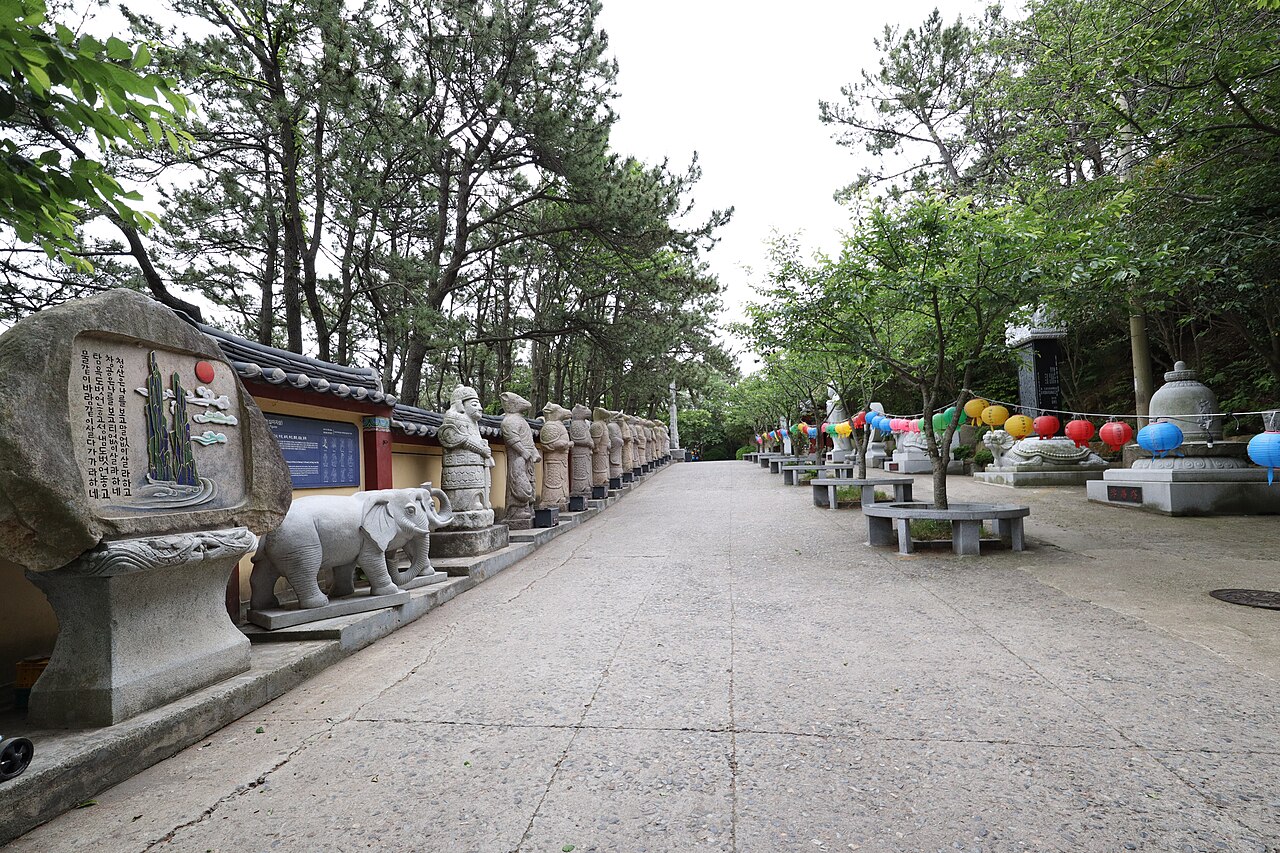
The son-granting "Deuknambul" Buddha (rub its nose and belly) and the twelve zodiac statues — fun for finding your birth-year animal
Wide-open ocean views right from the grounds, and a celebrated spot for watching the first sunrise of the New Year
Good to know
SafetyAs a cliffside seaside temple, the 108 steps and rocky paths are steep and uneven, and can be slippery when wet from sea spray or dew. Wear sturdy, non-slip footwear.
SafetyThere are many sections along railings and rocky ledges above the sea. Keep a close watch on children and elderly companions, especially when stopping for photos near the edges.
SeasonExpect heavy crowds on weekends and holidays, in April when cherry blossoms coincide with Buddha's Birthday lanterns, and on New Year's Day for sunrise. For a calmer visit, arrive right at opening, early in the morning.
MannersThis is an active place of worship. Keep quiet inside prayer halls and near people who are bowing, and be respectful when taking photos.
RulesThe parking lot is card-only (no cash accepted) and relatively pricey. Confirm current fees and hours before you visit.
Practical info
Admission is free and the temple welcomes visitors year-round. It generally opens around 4:00–4:30 AM and closes around 7:00–8:00 PM, but hours vary by season and Buddhist observances, so check the latest before going. By public transit, take the Donghae Line to Osiria Station, then transfer to bus 139 or express 1001 and walk the rest of the way.
On-site reviews📍 Verified on-site
No reviews yet. If you are here, be the first to leave one.