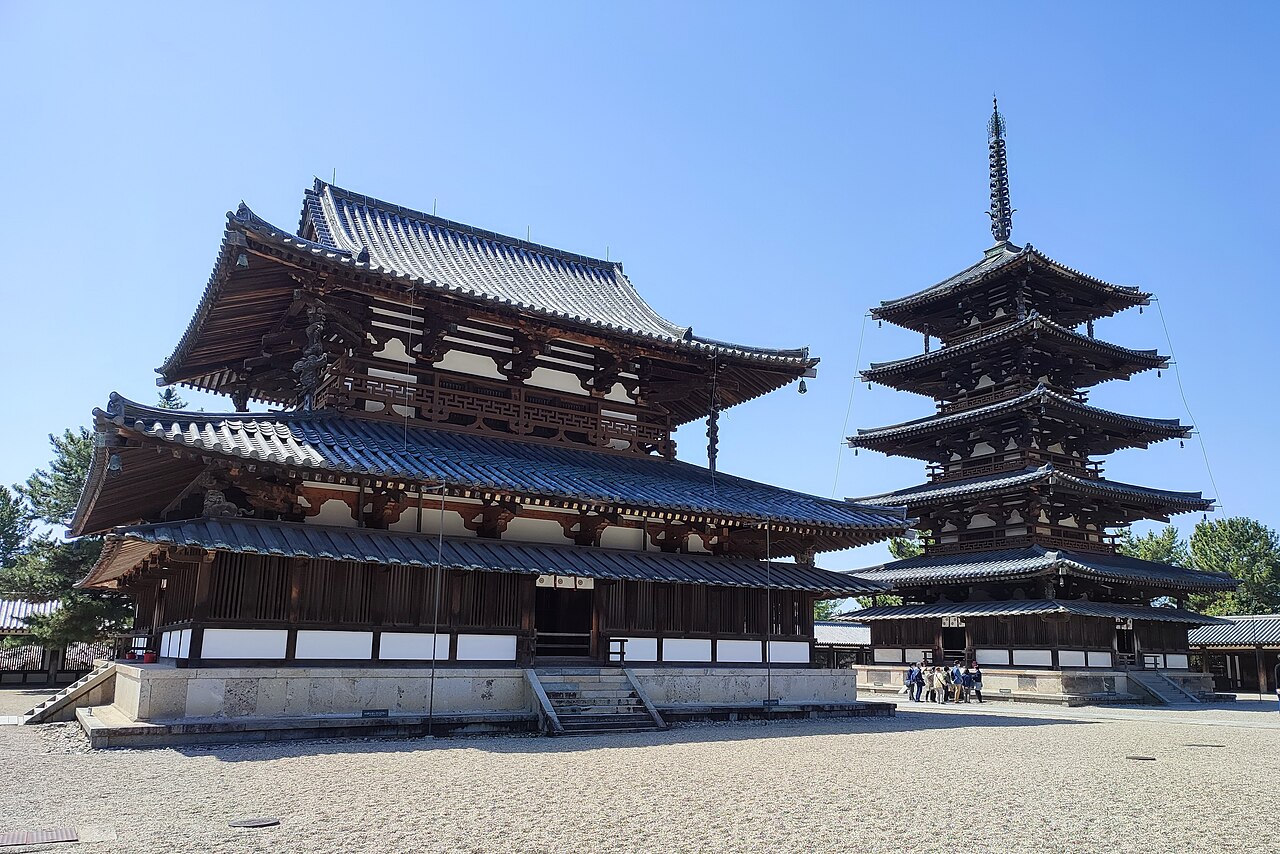
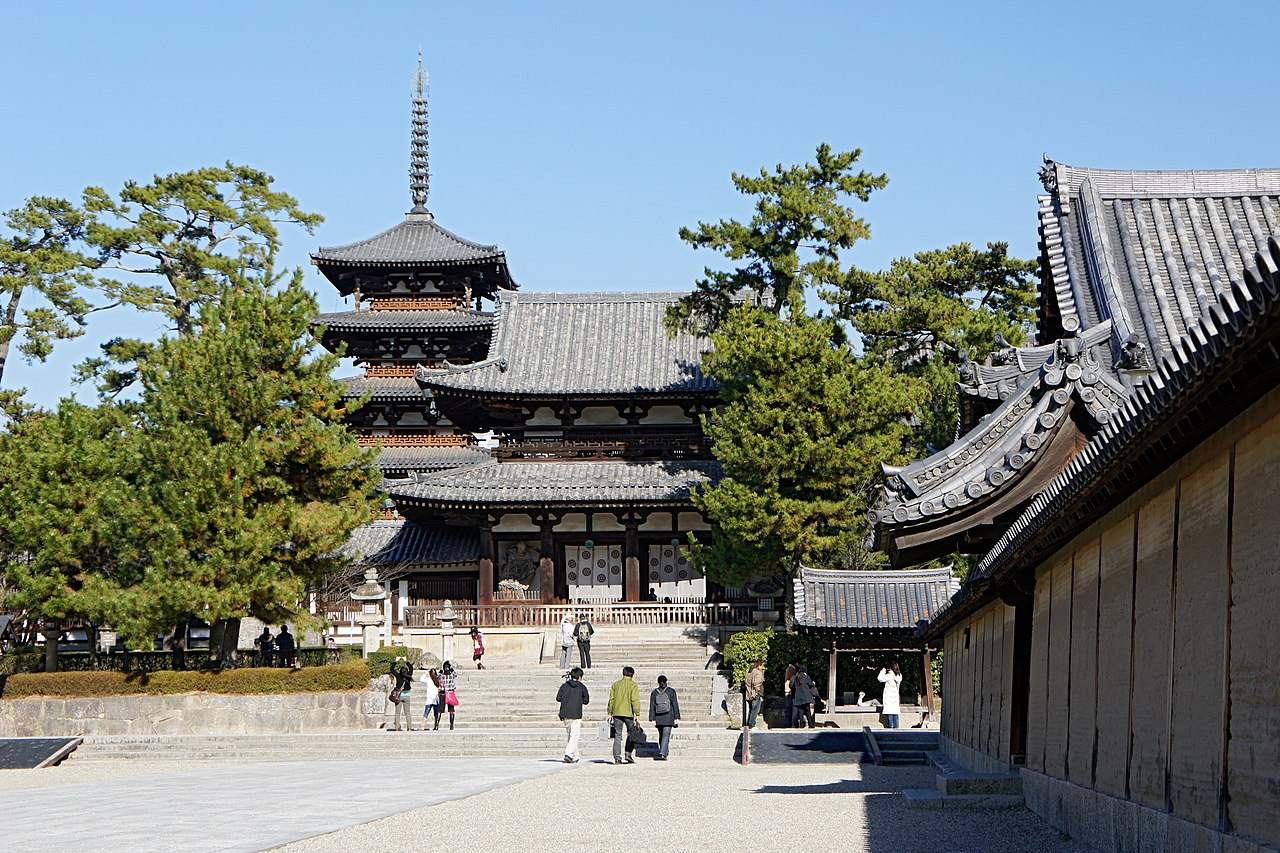
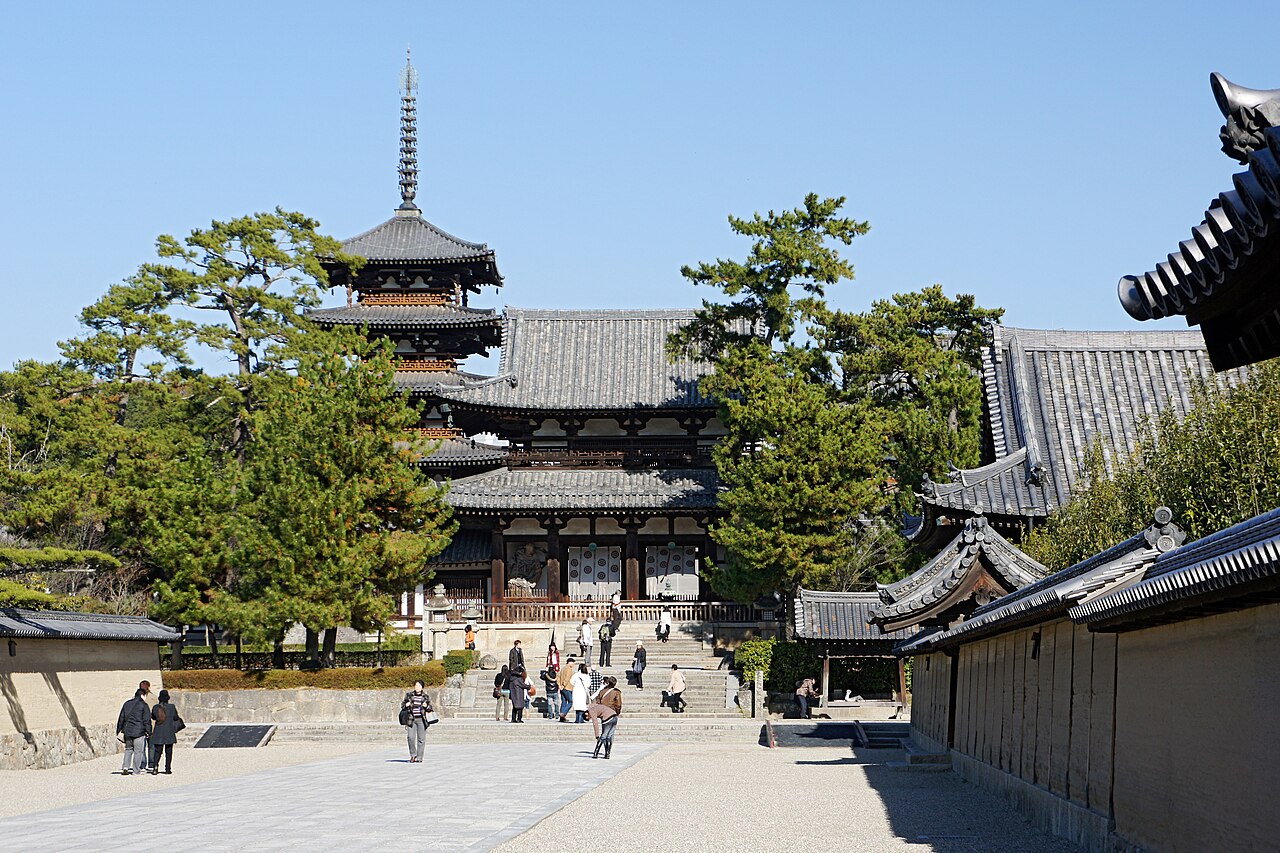
Hōryū-ji, in the town of Ikaruga, Nara Prefecture, is a Buddhist temple traditionally said to have been founded in 607 by Prince Shōtoku. Its Western Precinct—home to the Kondō (Main Hall) and Five-story Pagoda—contains what are widely regarded as the world's oldest surviving wooden buildings, and in 1993 it became Japan's first UNESCO World Heritage Site. It offers a rare, intact window into the Buddhist art and architecture of Japan's Asuka period.
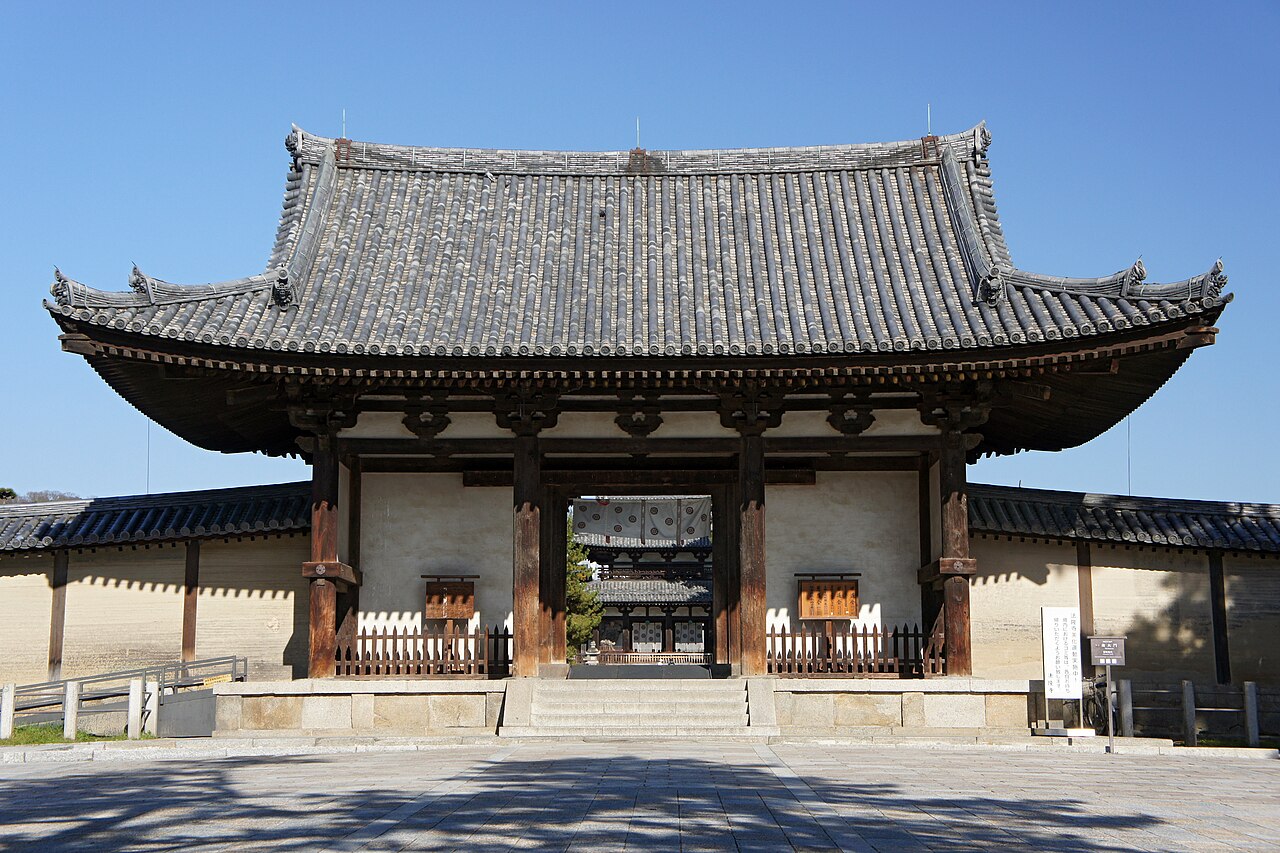
Western Precinct - The oldest group of wooden buildings in the world, showing the Asuka-era layout with the Kondō, Five-story Pagoda, and Central Gate (Chūmon) side by side.
Kondō (Main Hall) - Considered the world's oldest wooden building, it enshrines masterpieces of Asuka sculpture, including the National Treasure Shaka Triad.
Five-story Pagoda - Japan's oldest pagoda at about 32.5 m tall, with a central pillar made from a cypress tree felled in 594.
Yumedono (Hall of Dreams) - The octagonal hall in the Eastern Precinct houses the secret Guze Kannon, said to match Prince Shōtoku's own height (shown during special spring/autumn openings).
Daihōzōin (Great Treasure Gallery) - Displays National Treasure-class works such as the celebrated Kudara Kannon and the Tamamushi Shrine.
Good to know
RulesPhotography is prohibited inside the halls (such as the Kondō) to protect the Buddhist statues. Follow on-site signs for where photos are allowed.
RulesThe ticket booth is often cash-only. Check the latest info before you visit on whether cards or mobile payment are accepted.
MannersThis is an active place of worship—stay quiet, and avoid disrespectful behavior such as standing to pose for photos directly facing the statues or altars.
SeasonSpecial viewings of the Guze Kannon (Yumedono) and Kudara Kannon are held only in limited windows, typically spring (roughly mid-April to mid-May) and autumn. Confirm the current opening dates via the temple's official announcements.
SafetyThe grounds are large and the wooden interiors have many steps and thresholds; watch for slippery floorboards and low eaves. Some areas require removing your shoes.
Practical info
Reach the temple on foot (about 20 min) or by Nara Kotsu bus from Hōryū-ji Station on the JR Yamatoji Line. Hours are roughly 8:00–17:00 (8:00–16:30 in winter), with last entry 30 minutes before closing. Adult admission was raised to the ¥2,000 range from March 2025, so verify fees, hours, and special-viewing dates on the official site before your visit.
On-site reviews📍 Verified on-site
No reviews yet. If you are here, be the first to leave one.