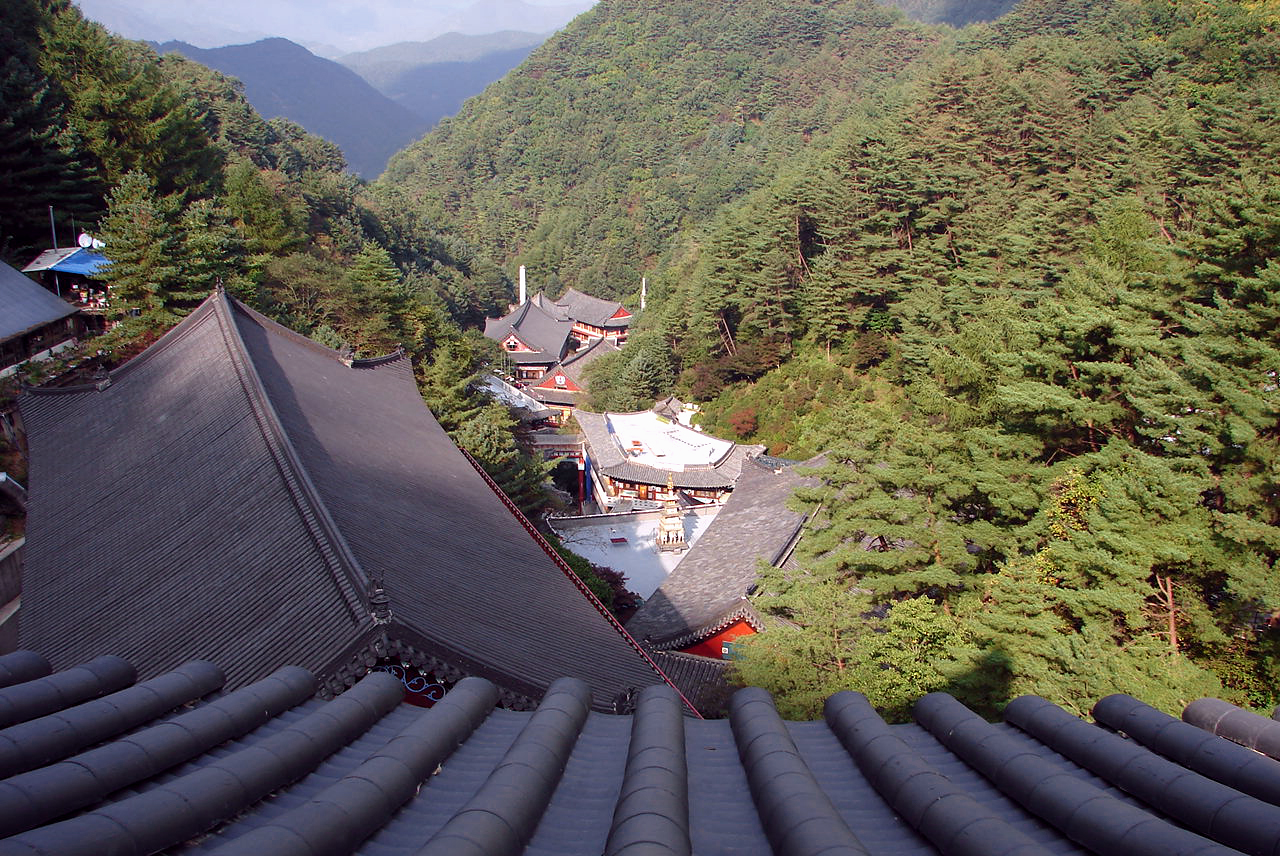
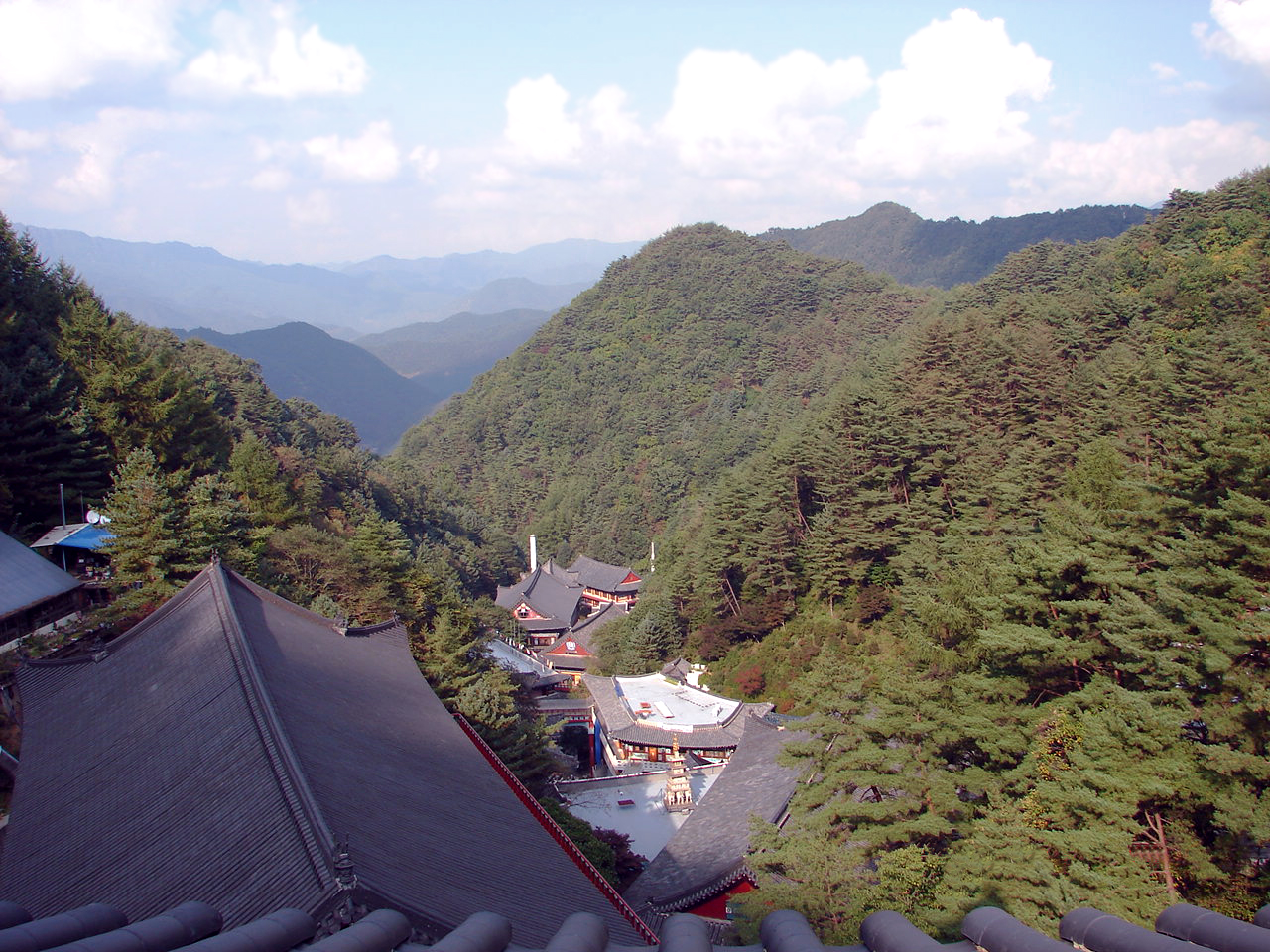
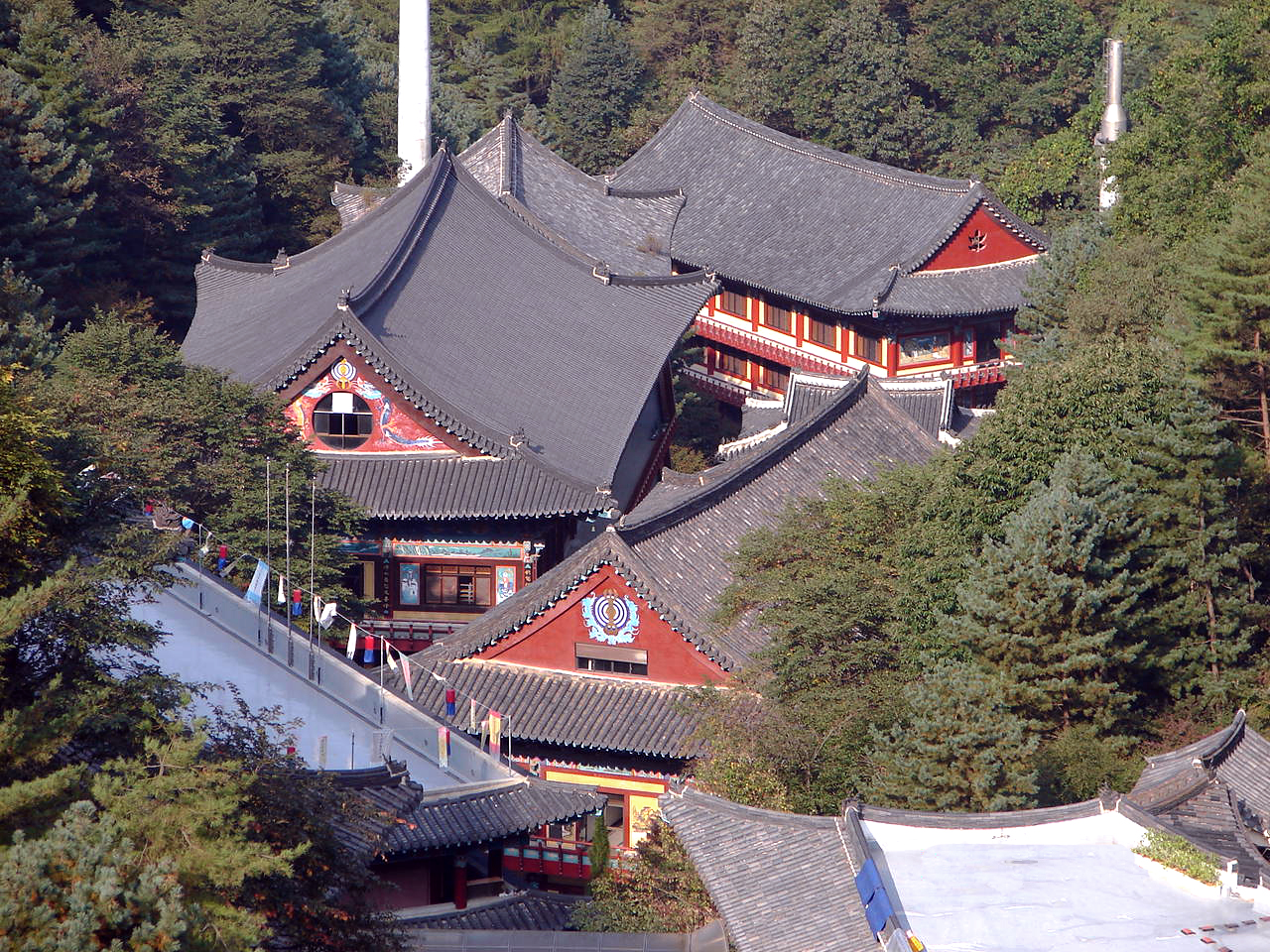
Guinsa is the head temple of the Cheontae order of Korean Buddhism, tucked into a narrow valley in the Sobaeksan mountains near Danyang, and it administers over 140 branch temples nationwide. Founded in 1945 by Grand Patriarch Sangwol Wongak, it is regarded as one of Korea's largest temple complexes: unlike typical single-story Korean temples, its 50-plus modern multi-story buildings, including a five-story main dharma hall, rise in tiers up the valley.
The five-story Daebeopdang (main dharma hall), one of the largest temple buildings in Korea, holding thousands of worshippers
A striking, unusual layout of 50-plus multi-story buildings stacked up the valley slope
Panoramic Sobaeksan views from Daejosajeon, the hall at the highest point of the complex
Gwangmyeongjeon hall equipped with an elevator, easing access to upper levels for older or less mobile visitors
Spectacular autumn foliage framing the temple, all with free admission
Good to know
SeasonDuring peak autumn foliage the temple draws crowds, and the parking area and access road become heavily congested. In winter the uphill valley path can ice over, so bring non-slip footwear.
SafetyFrom the parking lot to the topmost hall you must walk a continuous uphill valley path (roughly 15-20 minutes or more one way, closer to a hike than a stroll). If you have weak knees or limited stamina, use the shuttle bus and the Gwangmyeongjeon elevator.
MannersThis is a living, active head temple where practicing monks reside. Keep quiet inside the halls and avoid disturbing monks and devotees engaged in prayer or practice.
MannersIf you accept the free vegetarian temple meal offered to visitors, follow the long-standing custom: eat in silence, take only what you can finish, and leave not a grain of rice or drop of water behind.
RulesRemove your shoes before entering the halls, and dress modestly, avoiding revealing clothing within the temple grounds. Some areas may restrict photography, so check the on-site notices.
Practical info
Admission is free. Direct buses run from Dong Seoul Bus Terminal, and local buses to Guinsa depart from Danyang Intercity Bus Terminal. Opening hours, meal times, temple-stay schedules, and shuttle operation vary by season, so confirm the latest details before visiting.
On-site reviews📍 Verified on-site
No reviews yet. If you are here, be the first to leave one.