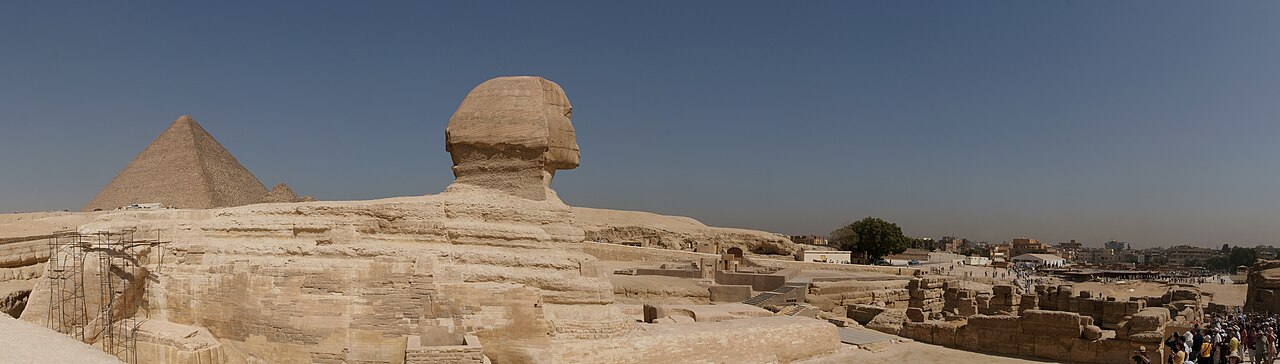
The Great Sphinx of Giza is a colossal limestone statue with a lion's body and a human head, carved from a single bedrock outcrop during the Old Kingdom reign of Khafre around 4,500 years ago. Roughly 73 m long and 20 m high, it is one of the largest monolithic statues on earth, with the granite 'Dream Stele' of Thutmose IV still standing between its paws. In 2025-2026 the Giza plateau was overhauled with a new Visitor Center and an electric shuttle-bus network, while the adjacent Grand Egyptian Museum (GEM) fully opened nearby, making a combined visit easy. The highlight is viewing the Sphinx head-on from the terrace beside the Valley Temple, right in front of the pyramids.
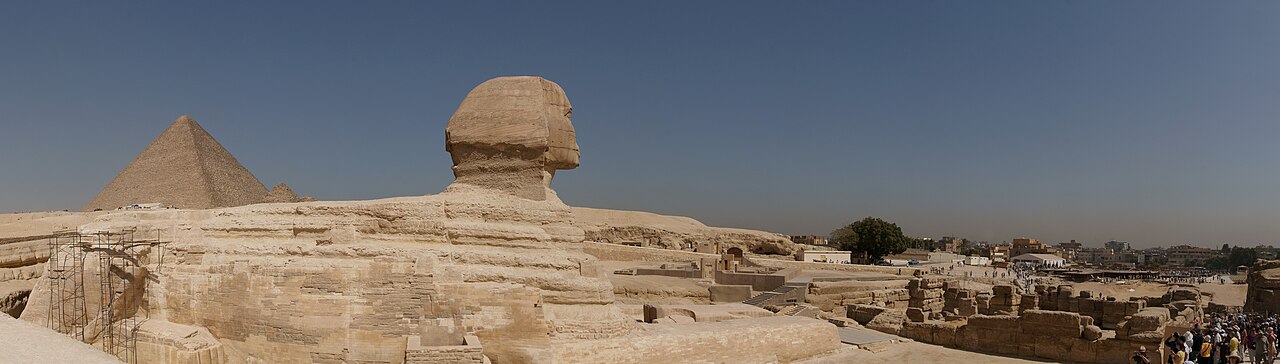
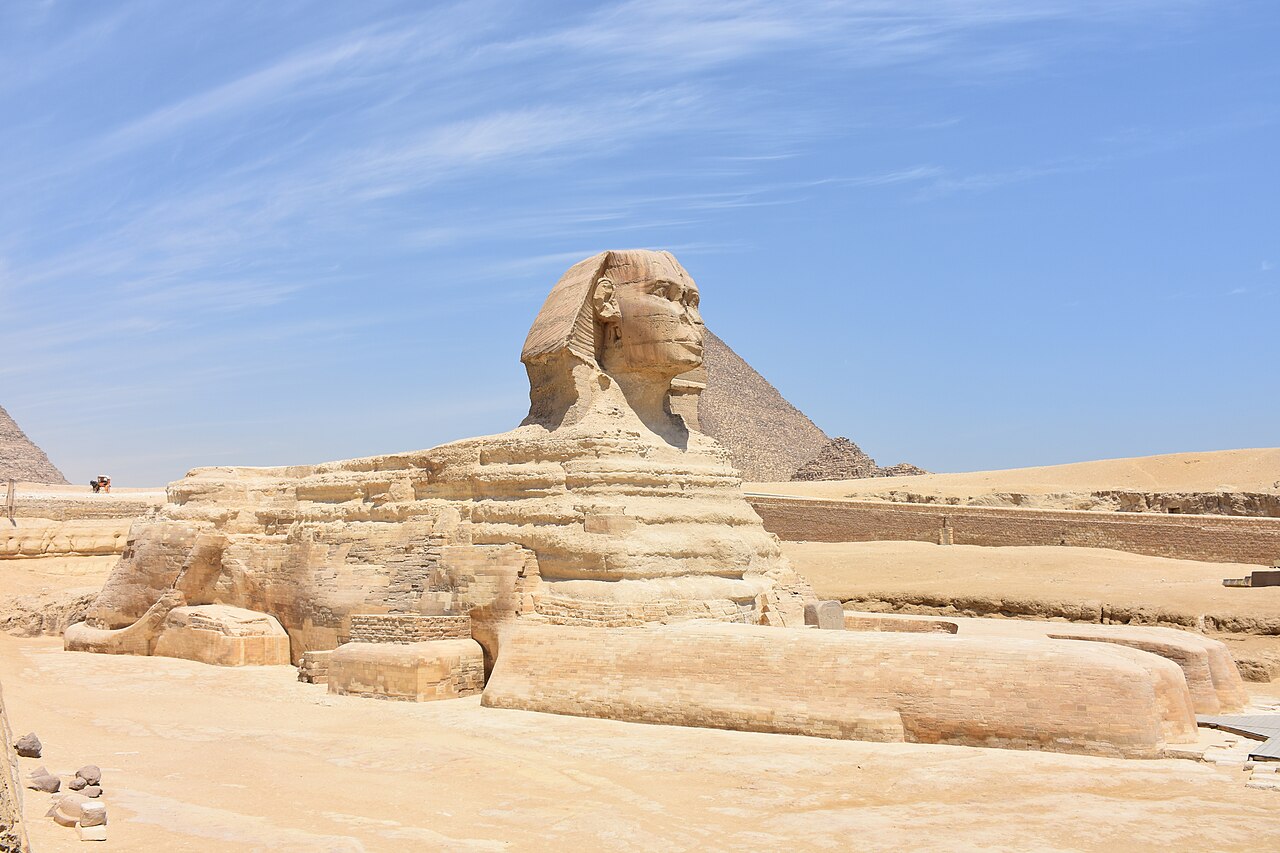
The full lion-body, human-head silhouette - the face is thought to be Khafre's; the forehead cobra (uraeus) and beard are now lost
The Dream Stele standing between the front paws - a granite slab where Thutmose IV records the dream that promised him the throne
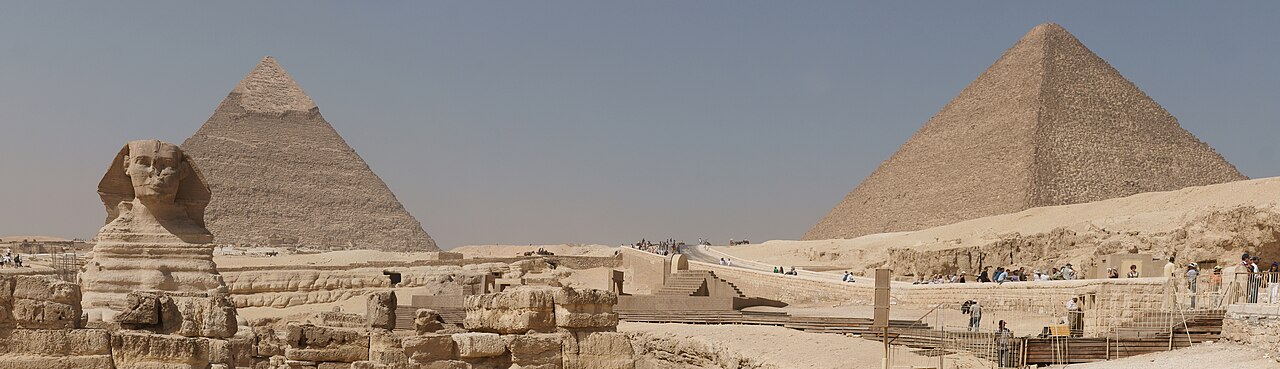
The classic head-on angle where the Sphinx and Khafre's pyramid line up in a single frame
The neighboring Valley Temple and Sphinx Temple, built of massive granite and limestone blocks
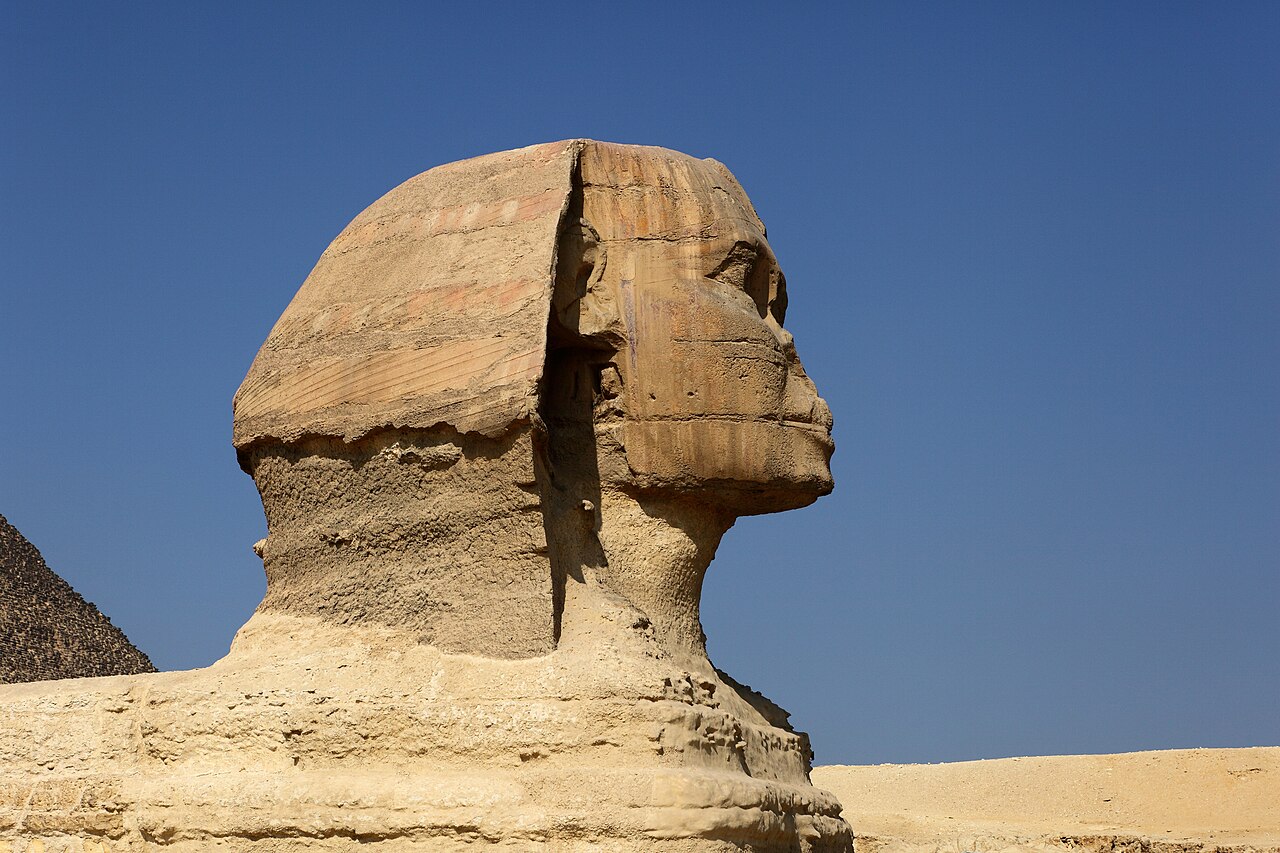
Weathering and erosion detail on the body and face, best seen in soft morning light
Good to know
CautionNever negotiate on the spot with camel or horse-cart handlers who approach you on the plateau. A common trick is to quote a tiny price (even '1 dollar'), then demand 10-20x to let you dismount. If you want a ride, book only through a reputable tour or package.
CautionBeware fake guides and fake 'officials' who claim a path is closed or that tickets are 'only sold here.' Genuine ticket checks happen only at the booths and turnstiles. Handing your camera to a stranger for a photo usually ends in a demand for baksheesh.
MannersFor persistent touts, avoid eye contact, keep walking, and say 'La shukran' (no, thank you) firmly. Small tips (baksheesh) are customary for photo help or minor services, so keep small bills handy to smooth interactions.
SeasonFrom May to September midday heat exceeds 40C with almost no shade. Arriving right at opening beats the heat, crowds, and backlight; October to April is the most comfortable. Bring a hat, sunglasses, sunscreen, and plenty of water.
RulesPrivate cars and tour buses are restricted from the plateau; you now transfer from the new Visitor Center via electric shuttle bus (a Sphinx stop is on the loop). For preservation you cannot walk between the paws or touch the Sphinx - viewing is from designated terraces.
SafetyGround is uneven with sand and stone steps, so wear grippy walking shoes. Carry bags in front and watch for pickpockets in crowds; for Cairo-Giza transfers use a metered taxi or an app such as Uber or Careem.
Practical info
From Cairo take Metro Line 2 to Giza station, then a 15-20 minute taxi or Uber; the main entrance is now the new Visitor Center off the Fayoum Highway. Opening is generally 8:00-17:00 (last entry around 16:00), and general admission is sold as a combined plateau-plus-Sphinx ticket, but the system changes often, so confirm current fees, hours, and shuttle operation on the official site right before you go.
On-site reviews📍 Verified on-site
No reviews yet. If you are here, be the first to leave one.