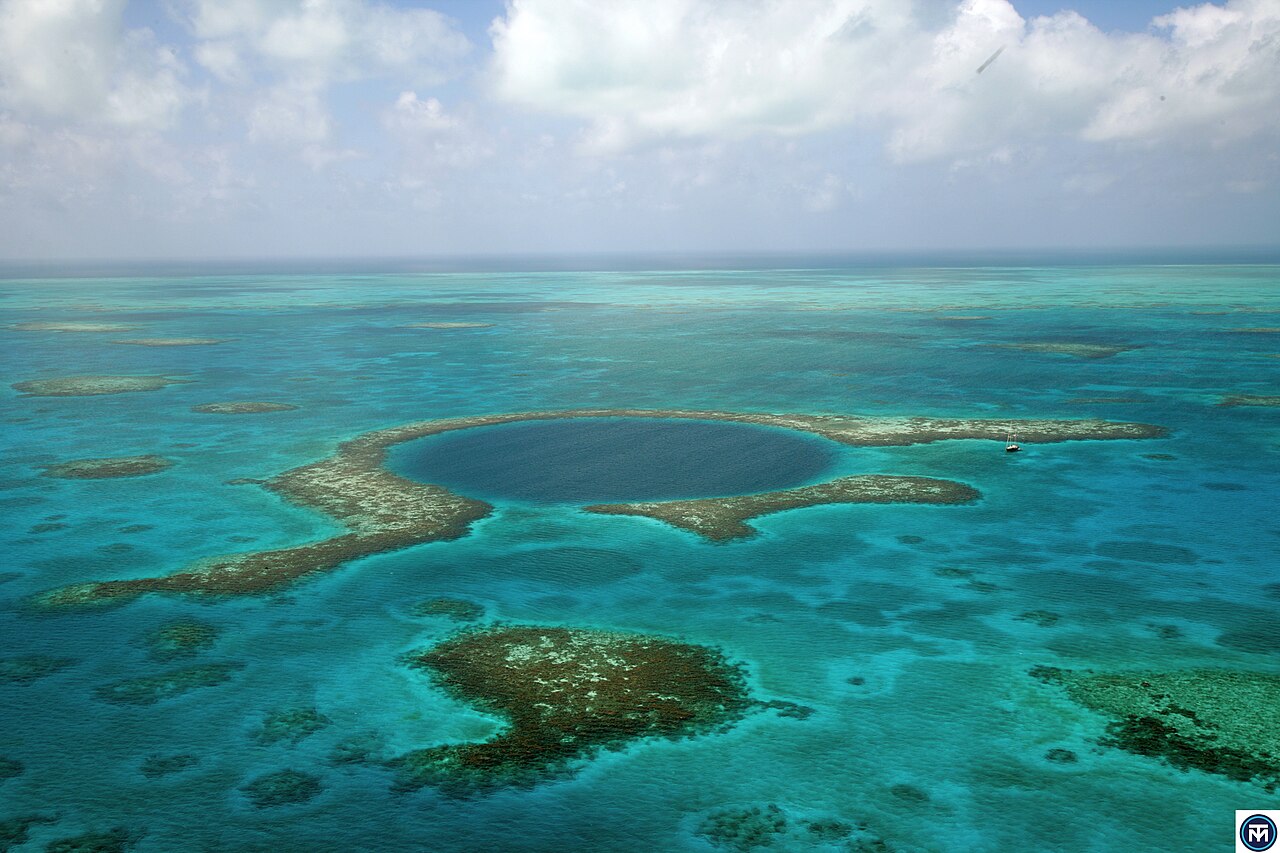
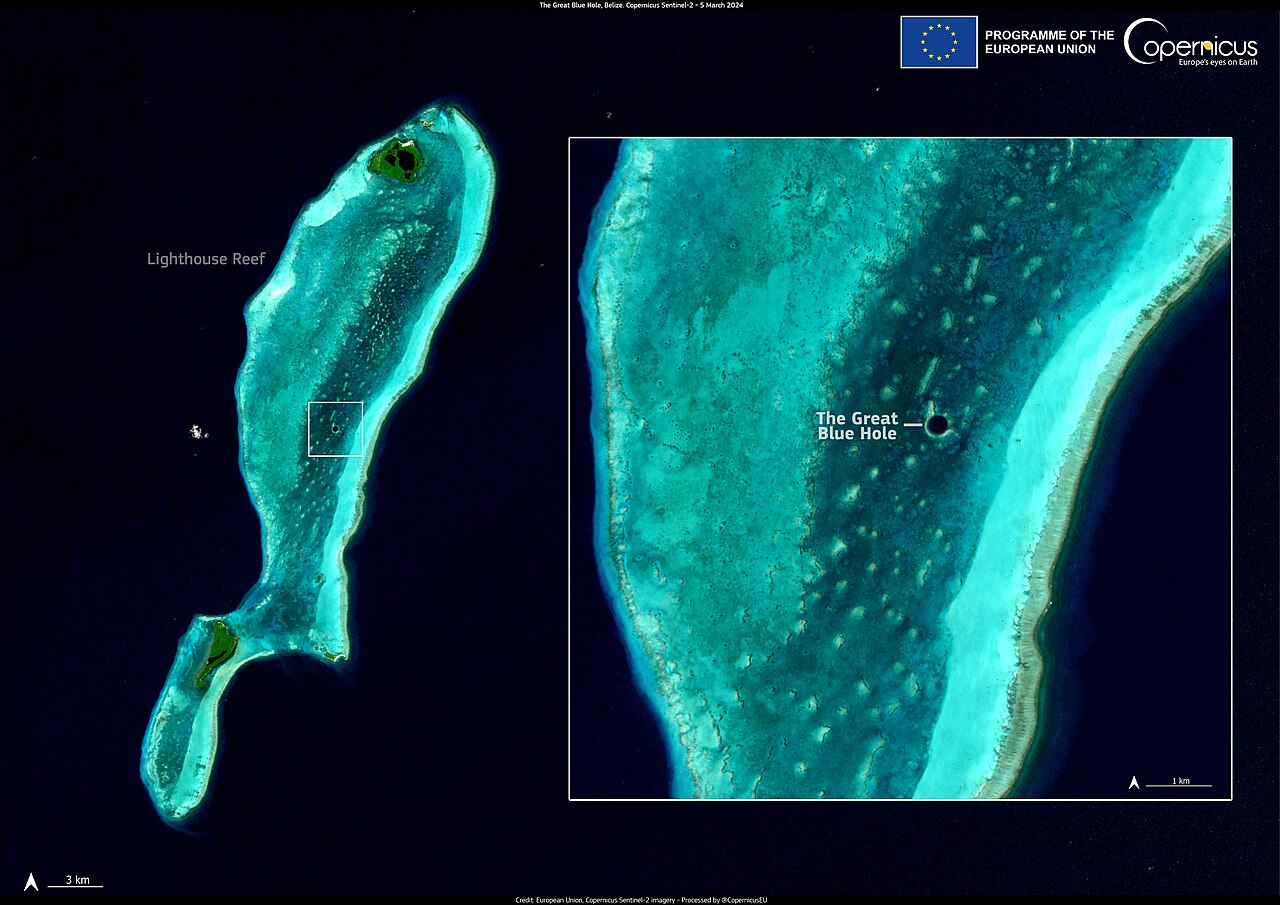
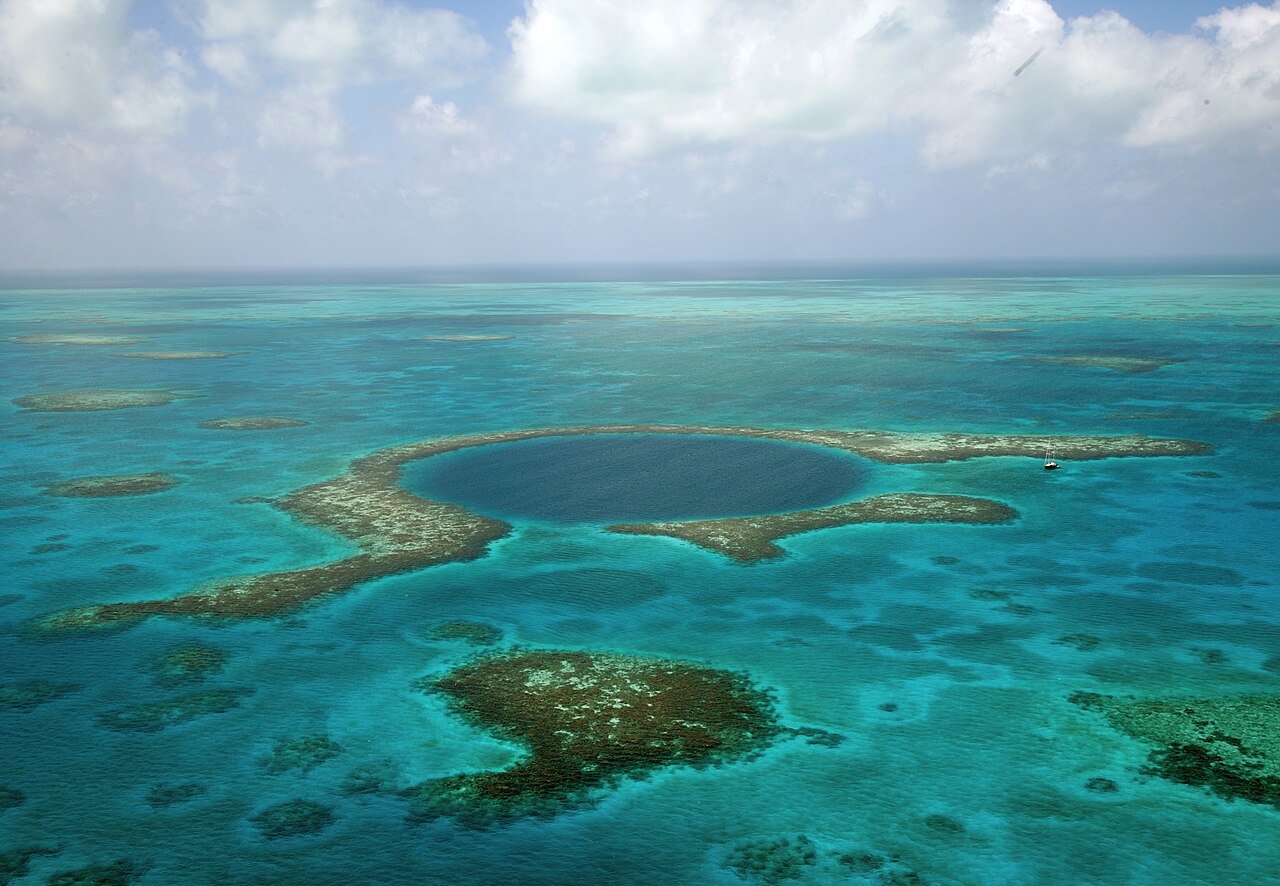
The Great Blue Hole is a circular marine sinkhole 318 m across and 124 m deep, punched into the middle of Lighthouse Reef Atoll some 70 km off Belize City. It was a limestone cave system during the last ice age and flooded as sea levels rose, which is why massive stalactites — over a metre thick and up to six metres long — hang from the overhang that begins around 30 to 40 m down. For freedivers that stalactite band, not the bottom, is the objective. Inside the atoll the surface stays relatively calm, with water at 26–29°C and 20–30 m of visibility year-round, but below roughly 91 m sits a hydrogen sulfide layer and anoxic water where nothing lives. As of 2026 there is still essentially no dedicated freediving boat here; freedivers join scuba or snorkel day trips, which means you bring your own safety system.
The stalactite overhang starting at 30–40 m — individual formations exceed a metre in diameter and reach six metres in length, and the sheer scale is the draw
The rim itself: shallow coral in 3–5 m of water that drops away into a vertical wall, legible even to snorkellers and shallow divers
The dark blue disc revealed as the boat comes alongside — the famous aerial-photo shape, seen from eye level
Outer reef sites bundled into the same day, such as Half Moon Caye Wall and Long Caye Aquarium, plus a landing at the red-footed booby colony on Half Moon Caye
Caribbean reef sharks and nurse sharks patrolling the wall — though fish density is far higher on the outer reef, so the Blue Hole is a place you visit for geology rather than marine life
Good to know
SafetyMost freediving fatalities begin with shallow water blackout or LMC, and they strike without warning in the last 10 m of the ascent. Dive one-up-one-down with a dedicated buddy, and have a safety diver meet you at around 10 m and escort you to the surface. Solo deep diving is never acceptable here.
SafetyThe stalactite overhang at 30–40 m is a genuine overhead environment. Swim in among the formations and your vertical route to the surface is blocked — on a single breath, a moment of disorientation leaves no time to fix it. The rule for freedivers is to observe from outside the wall and never penetrate under the overhang.
SafetyThe centre of the hole offers no bottom reference at all, creating a real risk of blue-out and losing your sense of up and down. Dive only on a down line with a lanyard, and only from a boat rigged with counterballast and oxygen. If the scuba boat you are riding cannot set a proper freediving line, the correct decision is to cancel the deep dive.
SafetyFrom about 91 m down there is a hydrogen sulfide layer and anoxic, pitch-black water. A 2018 submersible expedition found the bodies of two missing divers on the bottom; people have died here. Cap your target depth at the top of the stalactite zone — nothing below it is a legitimate objective for a freediver.
SafetyThis is open water 70 km from the mainland, and evacuation time is the governing constraint. Two recompression chambers operate around the clock in San Pedro, but a 2–2.5 hour boat ride plus transfer means at least three hours before treatment in a real emergency. Plan target depths and repetition counts well below your normal limits on that basis.
RulesThe Blue Hole Natural Monument entry fee is collected in cash on site at Half Moon Caye (around USD 40, subject to change) and is often separate from the tour price. Many operators require an AIDA 2 or equivalent certification plus dive insurance before letting a freediver join, and attempting a deep dive without clearing it in advance will be stopped by the captain. Touching or resting on stalactites and coral breaches marine reserve rules. Confirm current fees and requirements when you book.
SeasonJune through November is hurricane season and cancellations are frequent; even from December to February a norther can wipe out the 4–5 hour round trip entirely. The dry season from November to May is best, but same-day cancellations still happen, so build a buffer day into your itinerary.
Practical info
Most travellers reach Belize City (BZE) via a US connection, and the Blue Hole runs as a full-day trip departing Belize City, San Pedro or Placencia with a 2–2.5 hour crossing each way. Whether freedivers can join, what certification and insurance are required, and how park fees and tour prices are structured all vary by operator and change often, so check the latest directly with the operator before booking.
On-site reviews📍 Verified on-site
No reviews yet. If you are here, be the first to leave one.