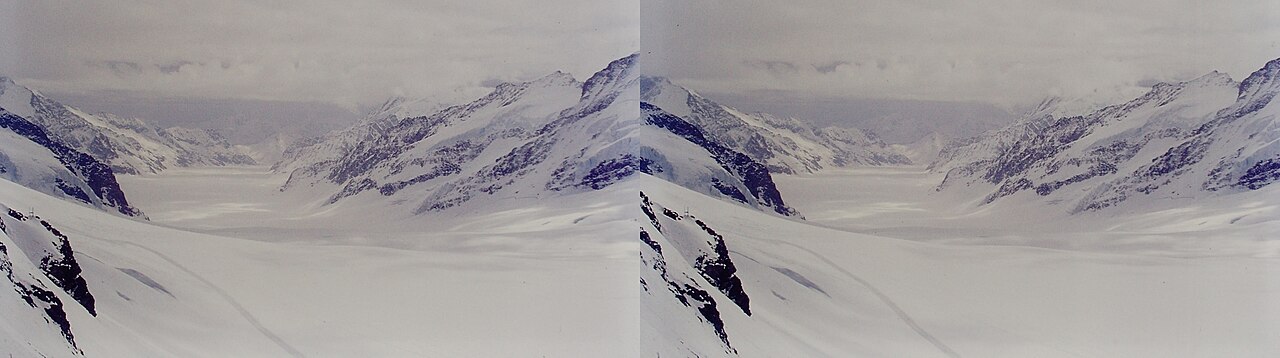
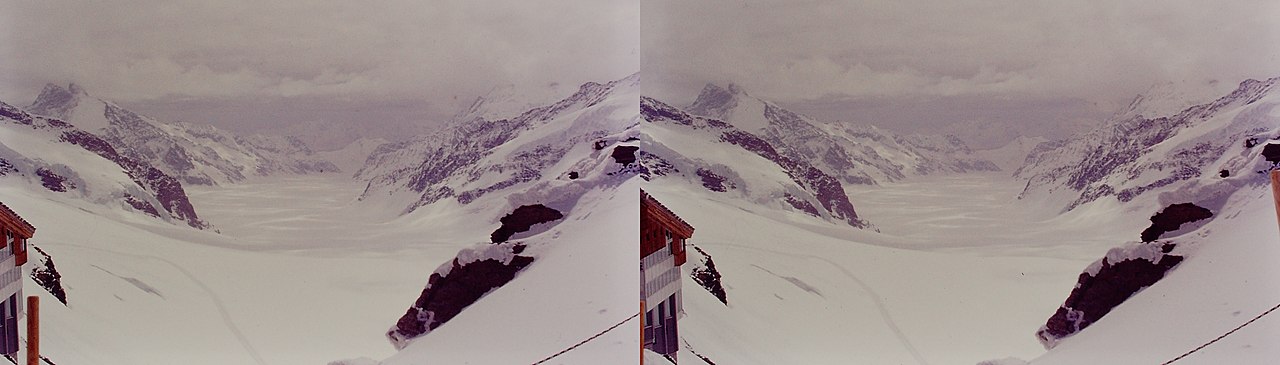
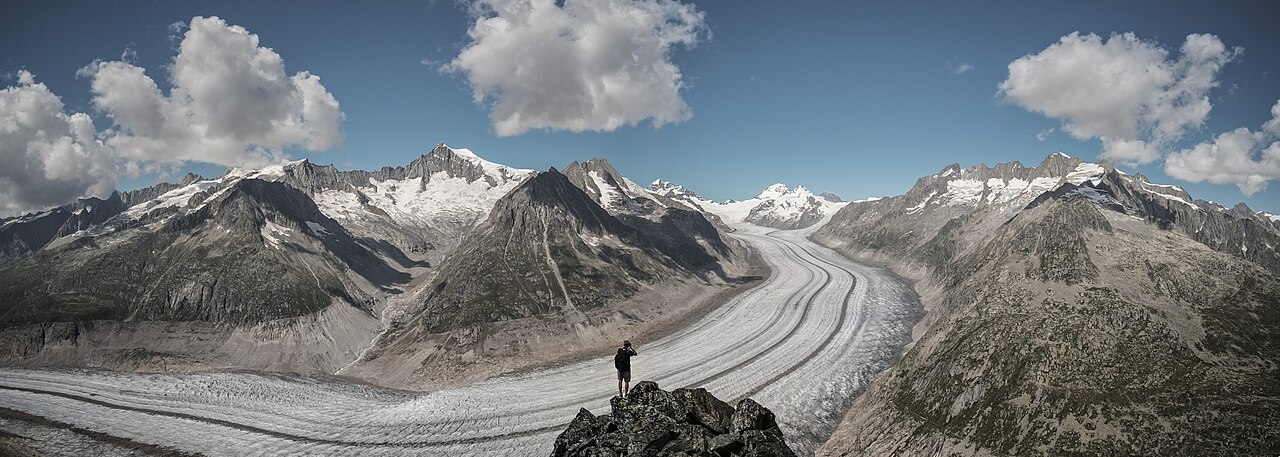
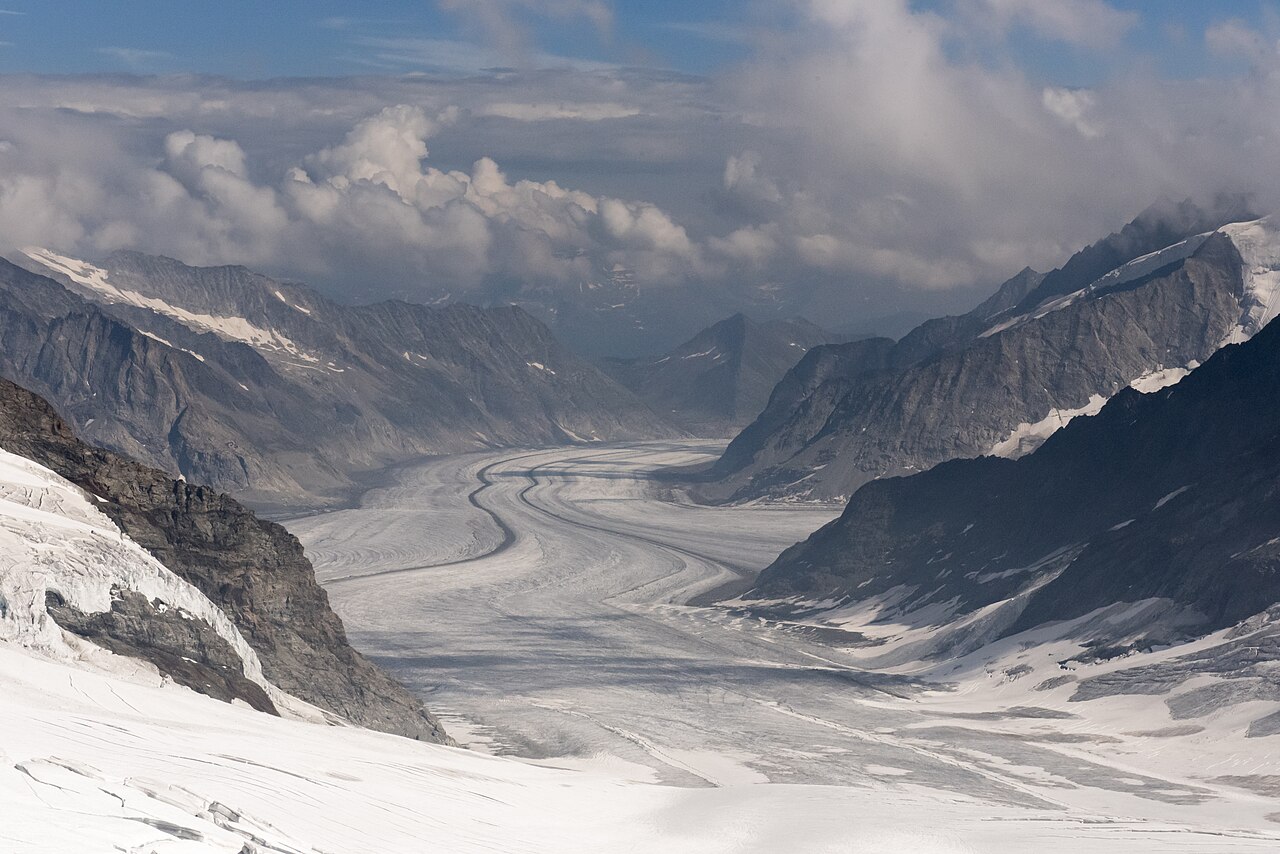
The Great Aletsch Glacier (Grosser Aletschgletscher) is the largest glacier in the Alps, lying in Switzerland's canton of Valais and forming the heart of the UNESCO World Heritage Site 'Swiss Alps Jungfrau-Aletsch' (inscribed 2001). This roughly 20 km river of ice reaches its most spectacular sight at Konkordiaplatz, where four glacier arms merge and the ice is up to about 800 m thick. Because of climate change the glacier is retreating fast — dozens of metres each year — so the window to see it at its grandest is shrinking. Using the car-free mountain region of the Aletsch Arena as a base, you can take in sweeping glacier views from the Eggishorn and Bettmerhorn viewpoints on a day trip or an overnight stay.
Eggishorn viewpoint (2,869 m) — the finest panorama over Konkordiaplatz and the sweeping arc of the glacier
Konkordiaplatz — the confluence of four glacier arms, where the ice reaches its greatest thickness in the Alps (about 800 m)
Bettmerhorn and Moosfluh viewpoints — excellent alternative and complementary vantage points over the glacier and Valais peaks
Aletsch Arena panorama trails — ridge hikes alongside the ice, plus the Aletschwald (Arolla pine) nature reserve
World Nature Forum in Naters (UNESCO visitor centre) — a good place to understand how the glacier formed, why it is retreating, and the climate story behind it
Good to know
SeasonThe mountain cable cars and high viewpoints generally run only in the summer season, roughly early June to late October. Always check the Arena's official status report, weather and webcams before you go. Note that on 17–18 July 2026 parts of the area may be restricted for the UCI Enduro World Cup event.
RulesThe Fiescheralp–Eggishorn cable car runs normally only until the 2026 summer season (around mid-August, about 17 August), then closes for a long rebuild; the new lift is planned to reopen in December 2027. During construction you can still view the glacier from Bettmerhorn and Moosfluh — verify the latest operating information first.
SafetyThe viewpoints sit at 2,600–2,900 m, so it is cold and windy even in midsummer and the weather changes quickly. Bring a wind- and cold-proof outer layer, sturdy non-slip hiking shoes, sunglasses and sunscreen. Trekking onto the glacier ice carries crevasse danger and should only be done with a certified mountain guide.
MannersRiederalp, Bettmeralp and Fiescheralp are car-free villages. You must leave your car at the valley-station car parks (Mörel, Betten or Fiesch) and go up by cable car. As this is a UNESCO protected area, stay on marked trails and pack out all your rubbish.
RulesA Swiss Travel Pass or Half Fare Card gives a discount on the mountain cable cars. Queues can be long in peak season and on clear days, so check and, where possible, book your ticket and time slot in advance (fares and operating hours require the latest confirmation).
CautionSwitzerland is very safe and pickpocketing is rare, but stay aware of your belongings at busy interchange stations such as Brig and Zürich and on crowded cable-car platforms. A service charge is included in restaurant bills, so tipping is not obligatory — rounding up the change is plenty.
Practical info
From Brig, take the train to Mörel (for Riederalp), Betten Talstation (for Bettmeralp) or Fiesch (for Eggishorn), then ride the respective cable car up. It is roughly a 3-hour rail journey from Zürich or Geneva airport, and all the Valais mountain villages are closed to cars. Summer mountain operations run roughly June–October; always confirm current fares, opening hours and any construction-related route changes on the official Aletsch Arena website.
On-site reviews📍 Verified on-site
No reviews yet. If you are here, be the first to leave one.