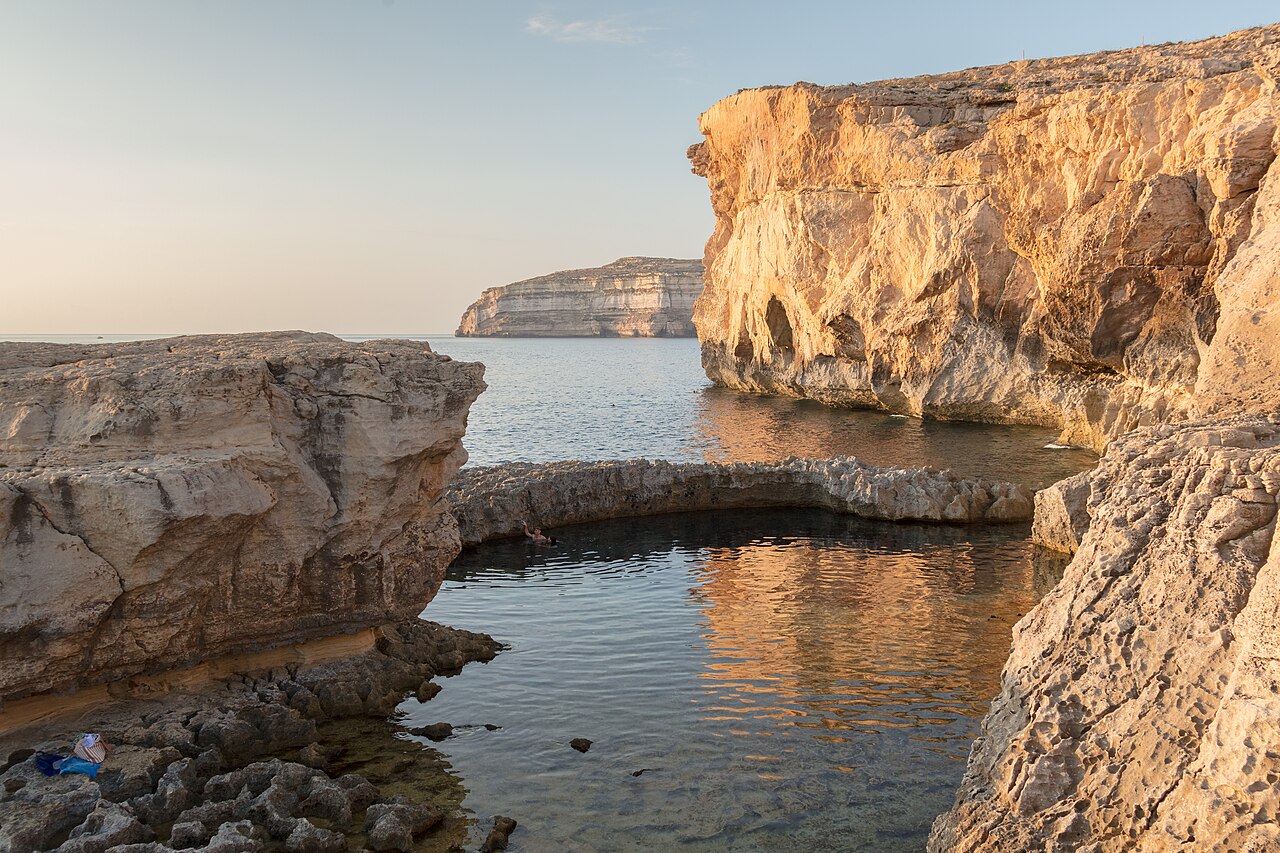
The Blue Hole is a circular limestone sinkhole roughly 10 metres across, punched into the rock shelf on Gozo's western Dwejra coast. An arch at 9 metres leads straight out of the pool into open water and the cliff face beyond, so a few kicks take you from a sheltered, waveless bowl into deep blue — which is exactly why freedivers keep coming back. Inside the hole the bottom sits around 15 metres with a maximum near 25, visibility typically runs 20–40 metres, and the water swings from about 16°C in winter to 27°C in late summer. The collapsed Azure Window has added a field of massive boulders next door since 2017, and as of March 2026 Gozo General Hospital operates a new six-person hyperbaric chamber, improving emergency cover on the island itself.
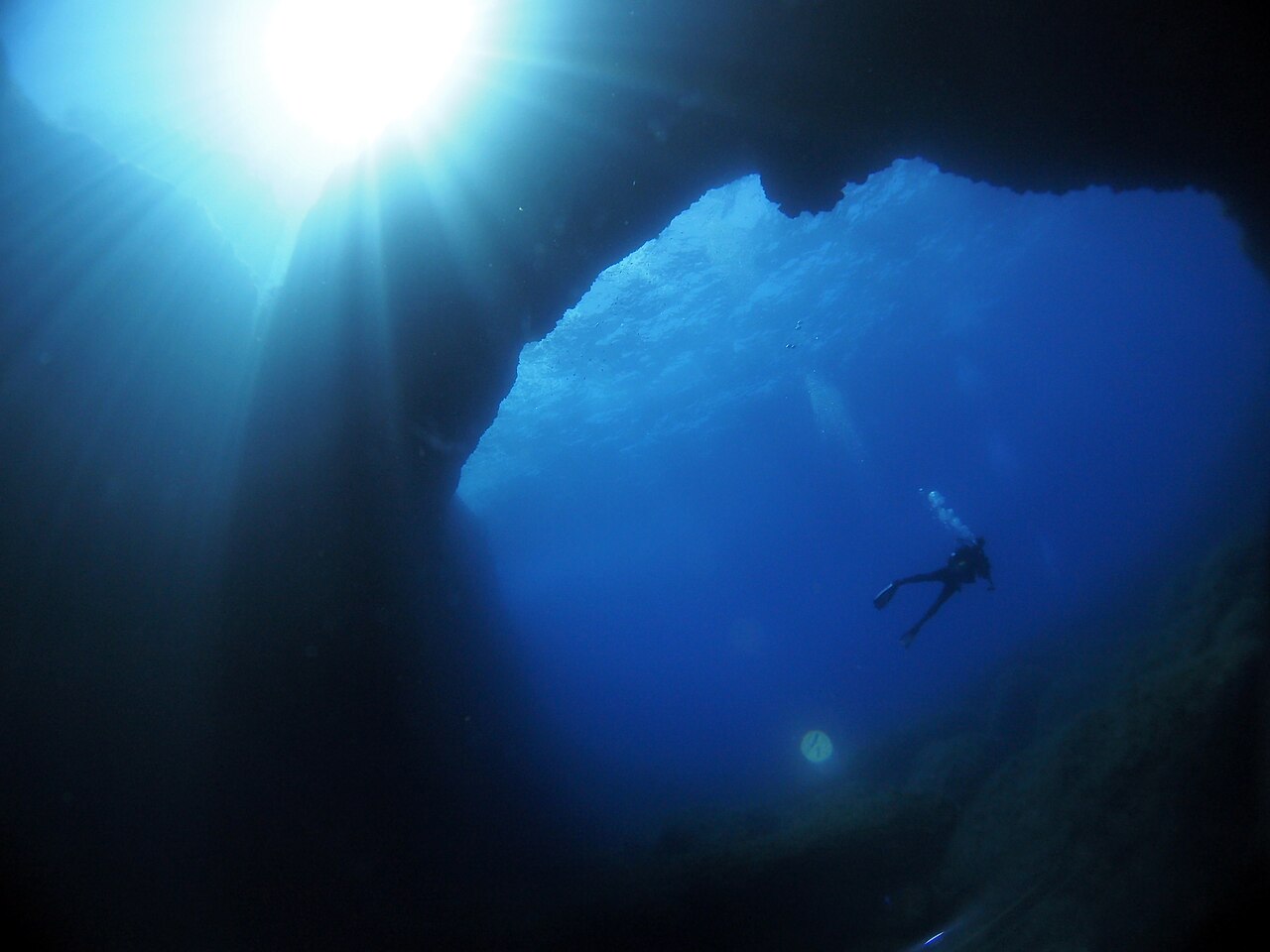
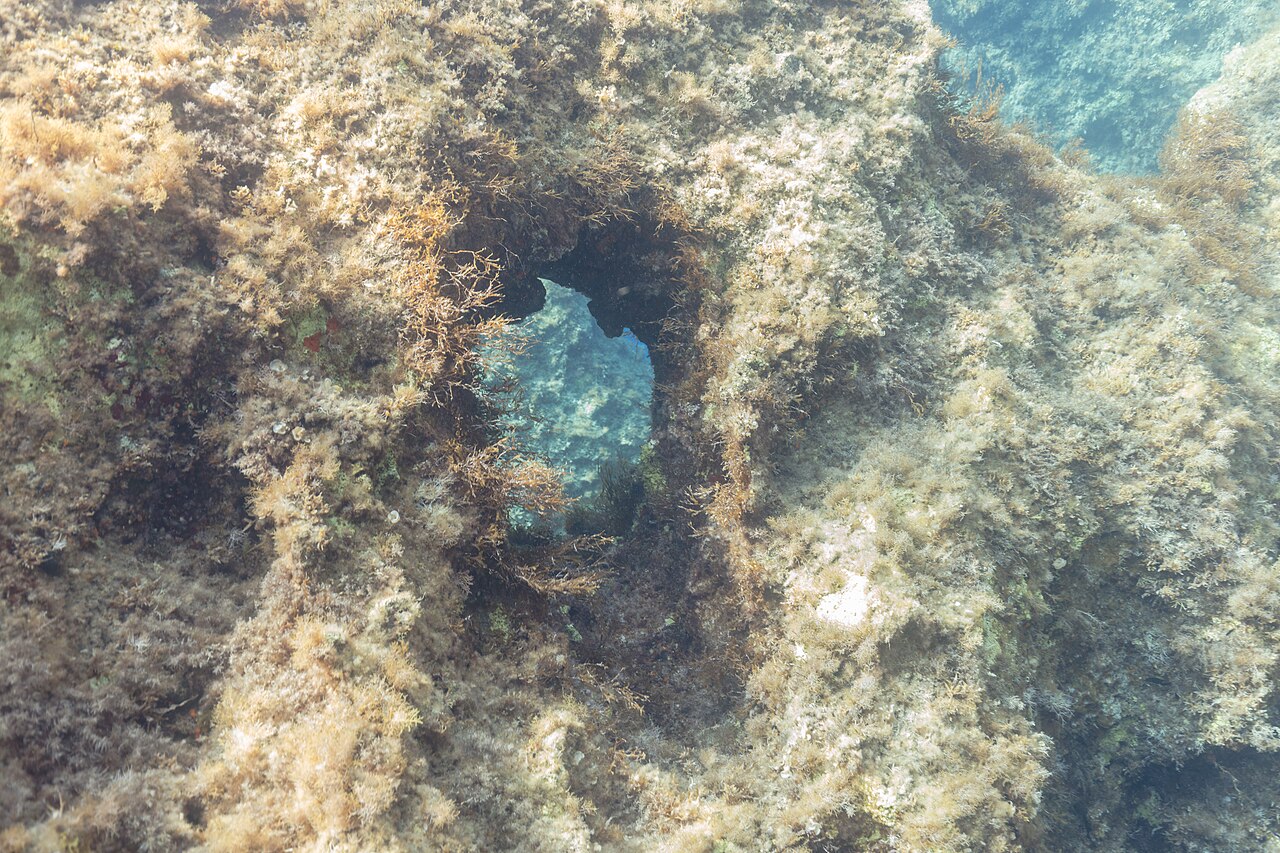
The 9-metre arch — the moment you slip from the shadowed wall of the hole into open blue is the shot everyone comes for
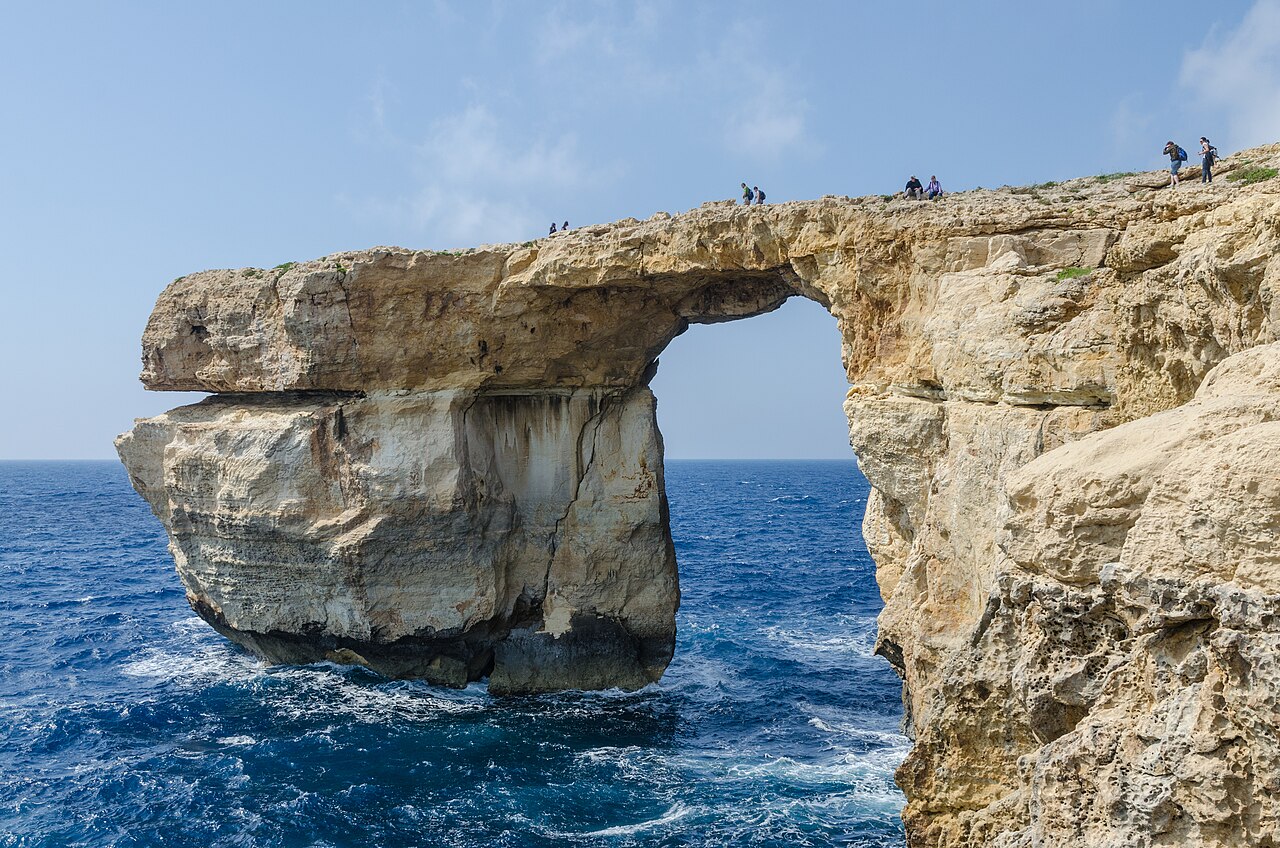
Azure Reef: the boulders left by the Azure Window's 2017 collapse, scattered from shallow water down past recreational limits, with new swim-throughs between them
The Inland Sea route — a landlocked lagoon feeding an 80-metre tunnel that exits at about 26 metres, with the outer wall dropping away to 60 metres and beyond
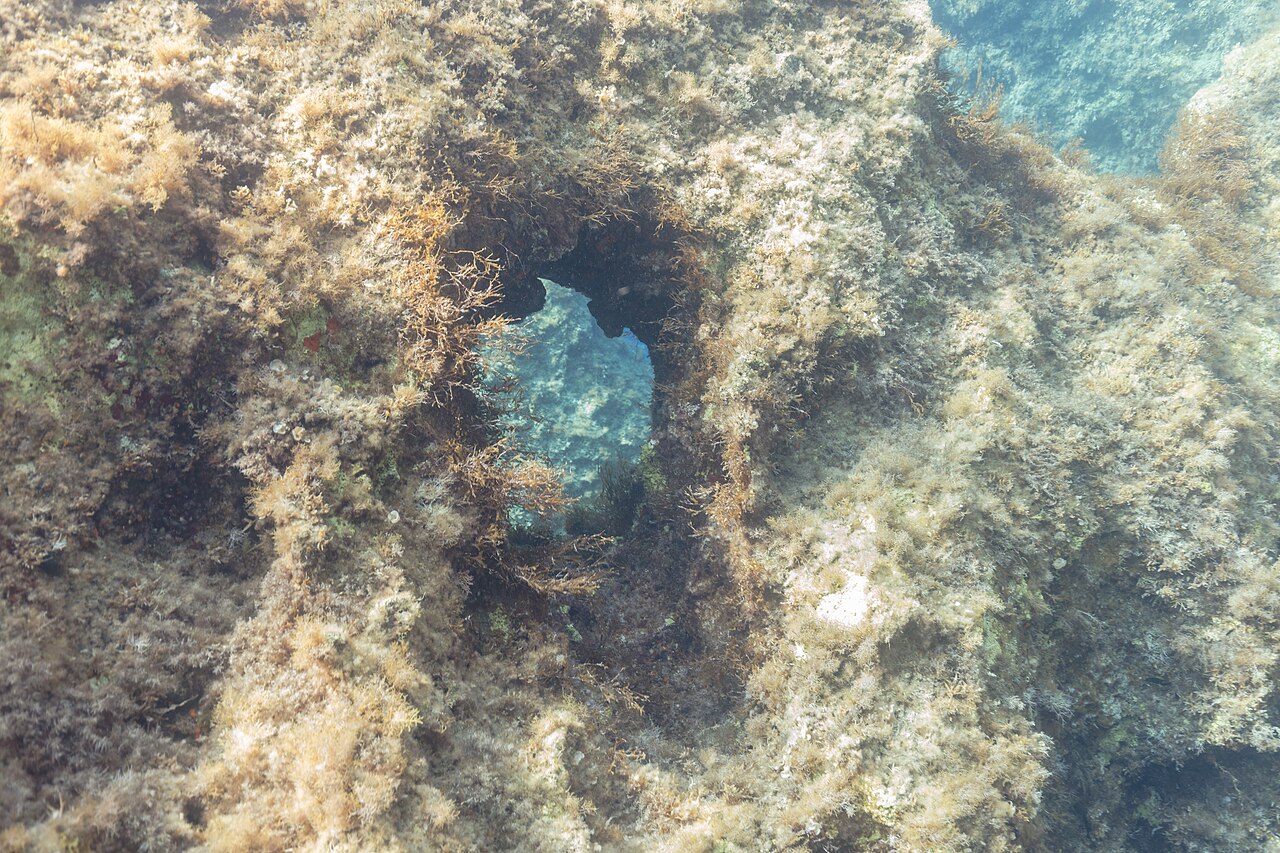
Tubeworms and sponges carpeting the hole's walls, with morays, groupers and Mediterranean parrotfish around the bottom cave
The site itself is shallow, but Gozo's freediving schools run deep lines (up to around 80 metres) a 15–20 minute boat ride away, so a terrain dive and a depth session can share a day
Good to know
SafetyMost injuries here happen out of the water, not in it. It is a 200-metre scramble over uneven rock from the parking area, and wet limestone is genuinely slick — twisted ankles and bruised shins are the routine outcome. Wear boots and gloves, and carry gear in stages rather than in one overloaded trip.
SafetyThe arch, the bottom cave and the Inland Sea tunnel are all overhead environments. Never pass through solo — always with a buddy, and only after you have identified a clear route back to the surface. Shallow water blackout and LMC usually strike late in the ascent or in the first seconds at the surface, with no warning, so keep a trained safety diver on station and hold the standard surface-watch protocol for at least 30 seconds after every dive.
SafetyDeep line sessions from the boat mean a lanyard, a rigged counterballast and a dedicated one-to-one safety diver, every time. Do not dive a line alone, and knot the line at your agreed depth so the limit is physical, not aspirational. Whatever your level, chasing a personal best on day one of a trip is how bad days start.
SeasonWhen the Majjistral (northwesterly) blows, swell pushes into the mouth of the hole and getting out becomes the problem, not getting in. Dwejra has a real fatality record — a diver died at the Inland Sea in May 2024 and another in Dwejra Bay in September 2025. Let the local school make the call on marginal conditions, and accept a cancellation when it comes.
SafetyThe Inland Sea tunnel doubles as the route for tourist boats. In peak season boats pass directly overhead, so do not surface mid-tunnel, stay close to the wall, and mark yourself with a dive buoy. Early morning is quietest for both crowds and traffic.
RulesMalta sets certification thresholds for independent scuba diving and ties equipment rental and guiding to them, with diving services delivered through licensed centres. Freediving is likewise normally done through a local school, and requirements for certification, insurance and medical declarations vary by operator — confirm yours before booking. A chamber is available at Gozo General Hospital, but serious cases may still require transfer to mainland Malta.
MannersDwejra is a protected area and its protection and management rules are being revised as of 2026, so restrictions on parking, camping, noise and the removal of rock or fossils may apply. Follow the signage and marked routes, and take nothing from the Azure Window debris.
Practical info
Fly into Malta International Airport (MLA), then take the 25-minute ferry from Ċirkewwa to Gozo; Dwejra is about 20 minutes by road from the terminal, and a rental car or taxi is effectively required. The season runs May to October with June to September the most reliable, and prices, opening hours, certification and insurance requirements differ by operator and change — verify current details directly before booking.
On-site reviews📍 Verified on-site
No reviews yet. If you are here, be the first to leave one.