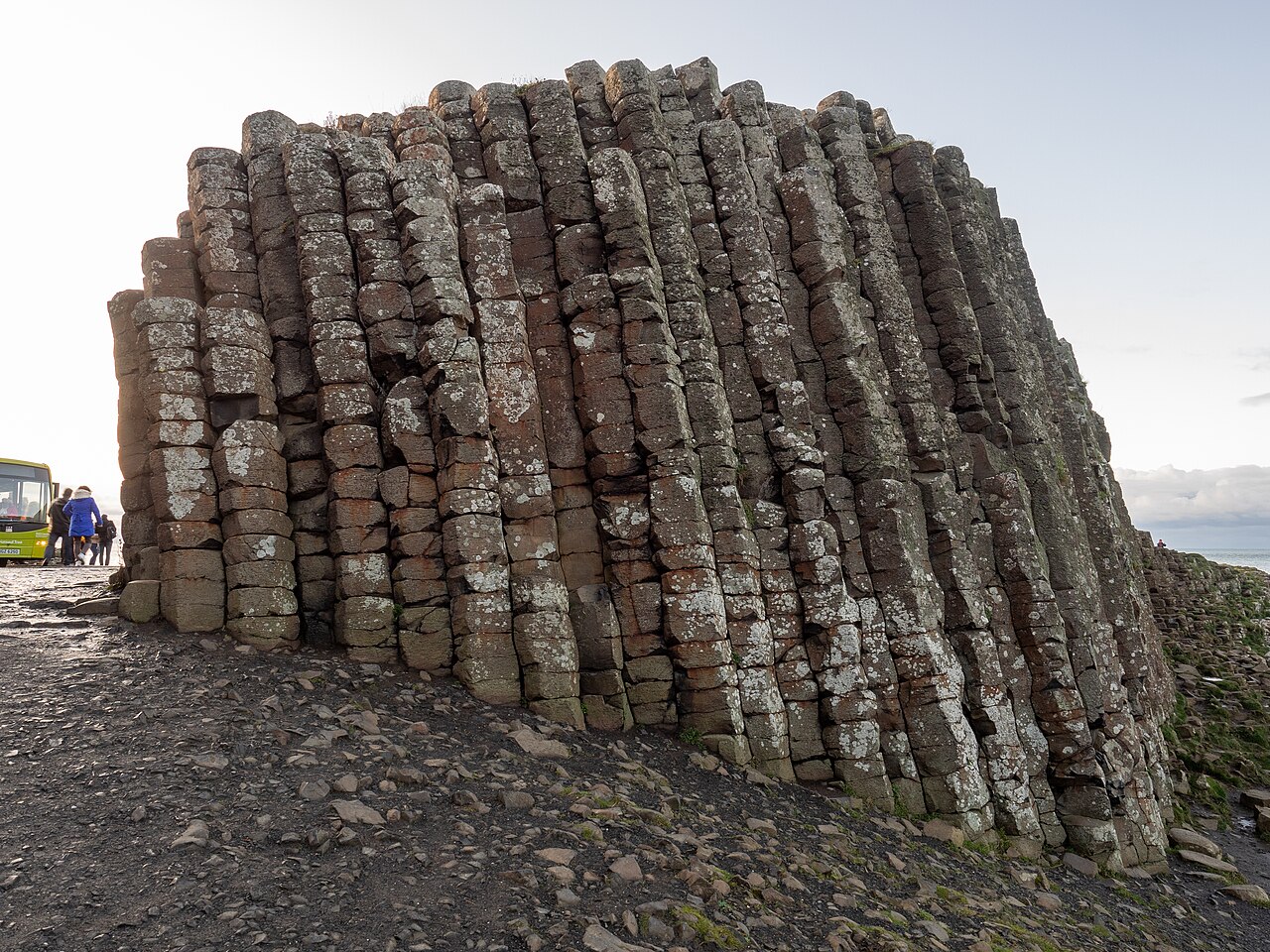
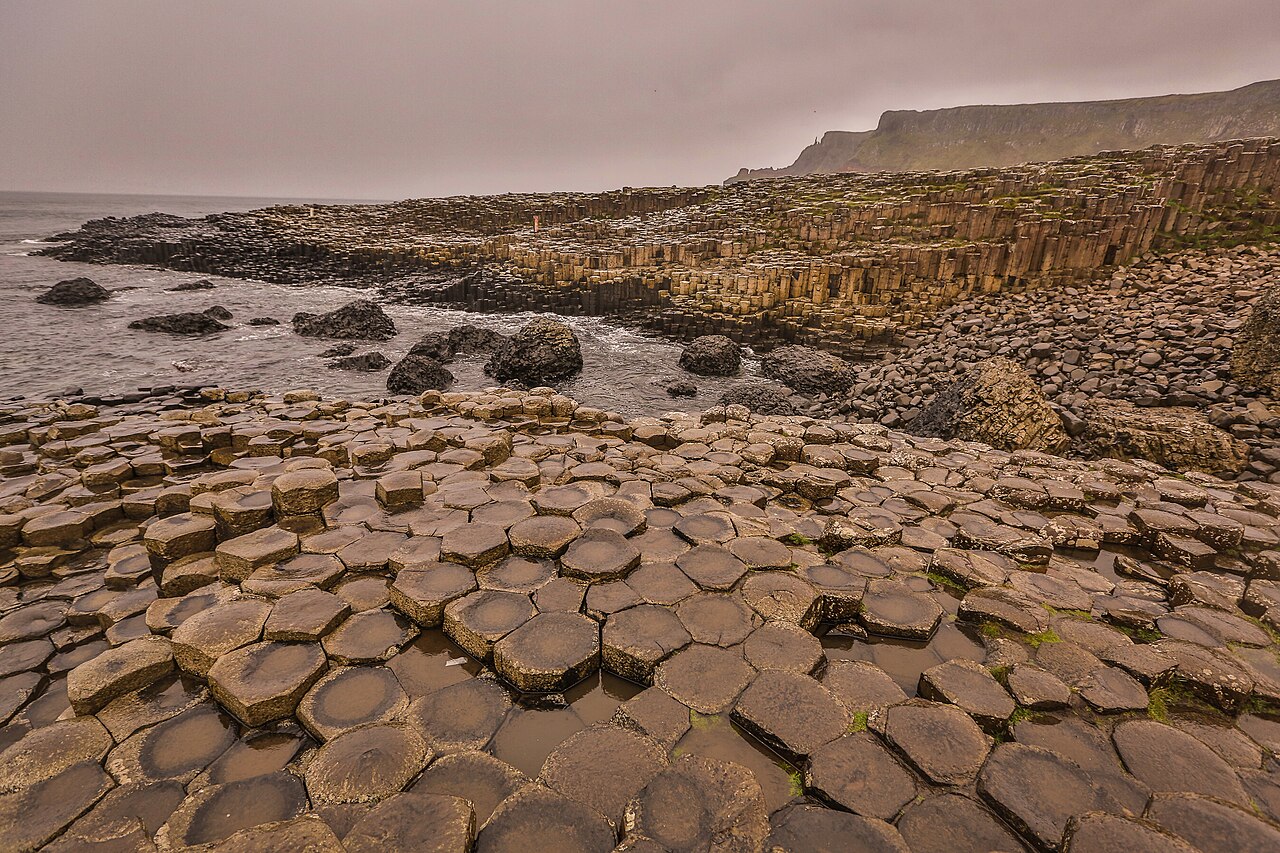
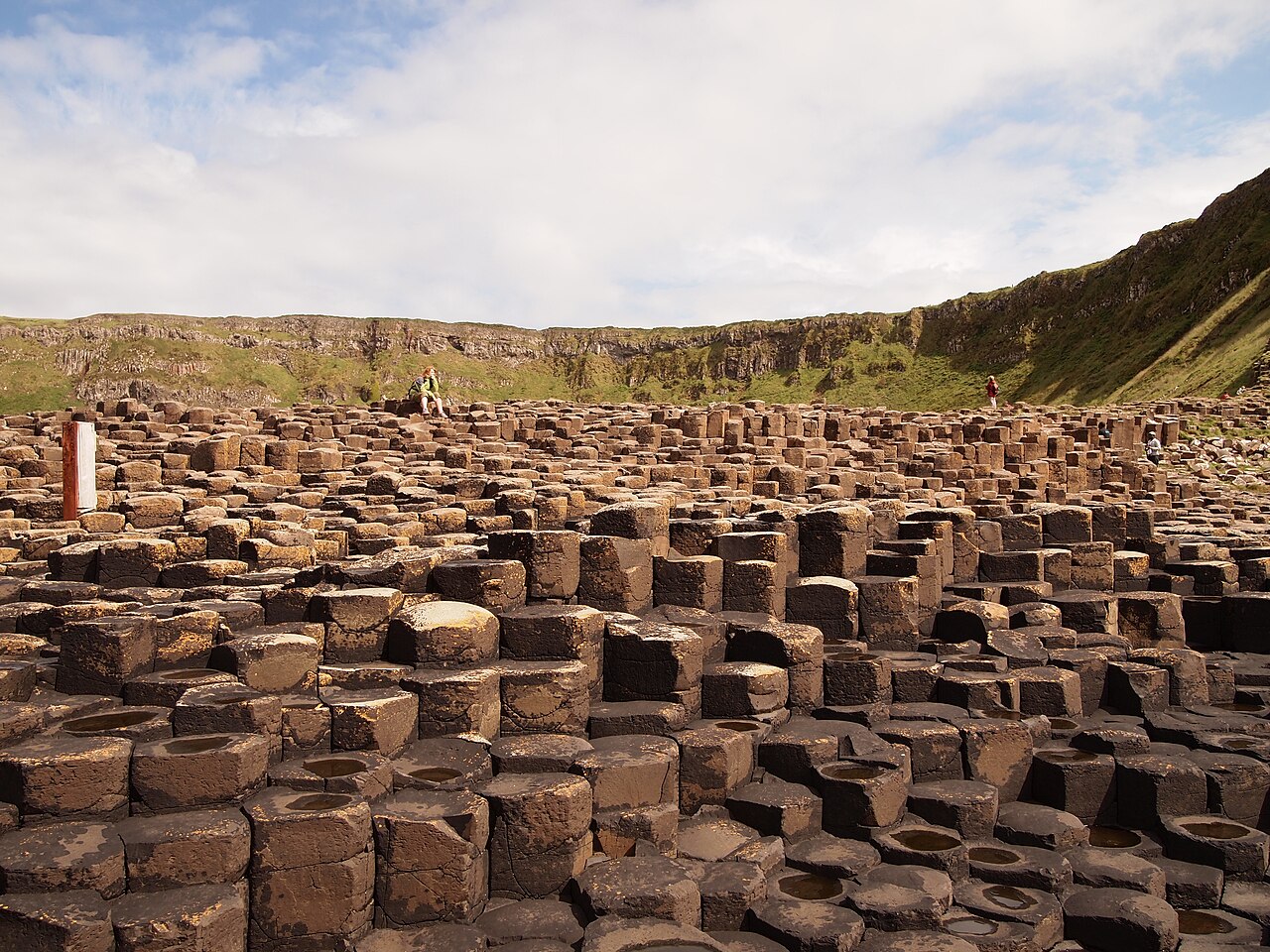
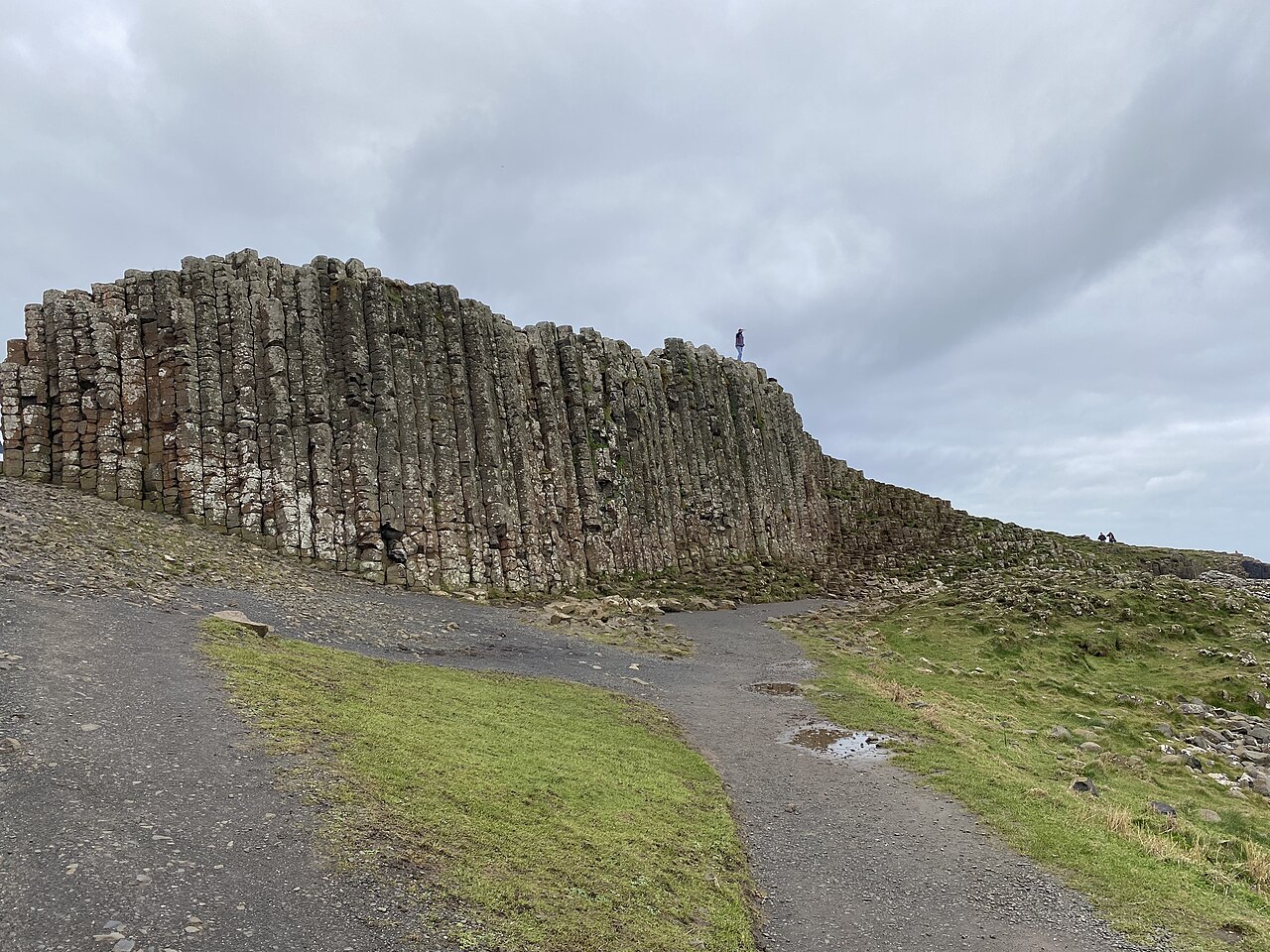
The Giant's Causeway is a UNESCO World Heritage coastline in County Antrim, Northern Ireland, made of around 40,000 mostly hexagonal basalt columns that step down into the sea. They formed roughly 50-60 million years ago when volcanic lava cooled and contracted into interlocking pillars, and the site is wrapped in the Gaelic legend of the giant Finn McCool (Fionn mac Cumhaill), who supposedly built the causeway to reach a Scottish rival. Inscribed in 1986 as Northern Ireland's only UNESCO World Heritage Site, it is open and operating normally in 2026, though as a living coastline sections can be temporarily cordoned off after events like the August 2025 rockfall at 'The Loom'. Plan a half-day to combine the stones themselves with the visitor centre exhibition and the clifftop trails.
The Grand Causeway - the largest and most iconic spread of hexagonal columns running into the sea, where you can actually walk across the stones
The Organ - tall, straight columns lined up against the cliff like the pipes of a giant church organ
The Giant's Boot, Wishing Chair and Camel's Back - quirky named formations tied to the Finn McCool legend, fun to hunt down
The Chimney Stacks - isolated columns left standing on the cliff edge, a dramatic silhouette carved by erosion
The clifftop trails (Red Trail and others) and visitor centre displays - sweeping Atlantic panoramas from above plus geology and legend interpretation
Good to know
SafetyThe basalt columns are wet, uneven and highly slippery at every state of tide, and Atlantic waves can wash far up the stones without warning. Keep off the lowest seaward rocks in rough seas and watch children closely.
SafetyAs a dynamic coastline, rockfalls occur from time to time (a section at 'The Loom' was cordoned off after an August 2025 rockfall). Always respect barriers and warning notices, and expect clifftop paths to close temporarily in high winds or heavy rain.
SeasonThis is an exposed Atlantic coast: expect strong wind, frequent rain and fast-changing weather year-round. A waterproof jacket and non-slip footwear are essential. June-August is peak season, so pre-book the Visitor Experience ticket and any guided tour online to secure parking and avoid queues.
RulesThe stones themselves are free to walk to under a public right of way; the ticketed Visitor Experience covers parking, the exhibition, guided tours, audio guides in 11 languages and the £1 shuttle bus. Use only the official car parks and ignore unofficial paid-parking touts.
MannersDo not wedge coins into the cracks between columns. The coins corrode and expand, cracking and staining the basalt, and the National Trust is spending over GBP 30,000 to remove them. Follow 'leave no trace' and don't climb on fragile named formations.
CautionNorthern Ireland uses the Pound Sterling (GBP), not the Euro, so if you arrive from the Republic of Ireland your currency changes; NI-issued banknotes also differ in design and are sometimes refused elsewhere in the UK. Day-tour coaches from Belfast or Dublin vary widely in quality, so book a well-reviewed operator.
MannersIn Northern Ireland restaurants, a tip of around 10% is usual when no service charge is added; counter service and cafes don't require it. Tipping is discretionary, so match it to the service.
Practical info
By public transport, take the train from Belfast Grand Central to Coleraine (about 1 hour 20 minutes), then bus 172 or 402 (Causeway Rambler) to the visitor centre door; an iLink day travel card is handy for unlimited train-and-bus travel. Direct/day-tour coaches run from Belfast, it is about 13 km from Portrush, and the weekend Giant's Causeway & Bushmills heritage railway is a scenic alternative. The visitor centre opens roughly 09:00-17:00 depending on season (later in summer, last admission one hour before closing) and closes 24-26 December; because prices and hours shift with season, exchange rate and VAT changes, always confirm the latest details on the official website before you go.
On-site reviews📍 Verified on-site
No reviews yet. If you are here, be the first to leave one.