The Graslei and Korenlei are the two facing quays along the River Leie (Lys) in the heart of medieval Ghent. From the 11th until the 18th–19th centuries this was the city's inland harbor and the hub of the Flemish grain trade, and the quays are still lined with a rare row of guild houses and merchant halls dating from the 12th to 17th centuries — among them the ornate Guildhall of the Free Boatmen, the House of the Grain Measurers, and the Romanesque corn store 'Spijker,' one of Ghent's oldest buildings. Restored in the early 20th century for the 1913 World's Fair, the ensemble is Ghent's classic postcard view. In 2026 it remains a free, always-open public waterfront and a lively hotspot of café terraces and canal-boat departures — best enjoyed on a slow stroll, with the facades mirrored in the water at sunset.
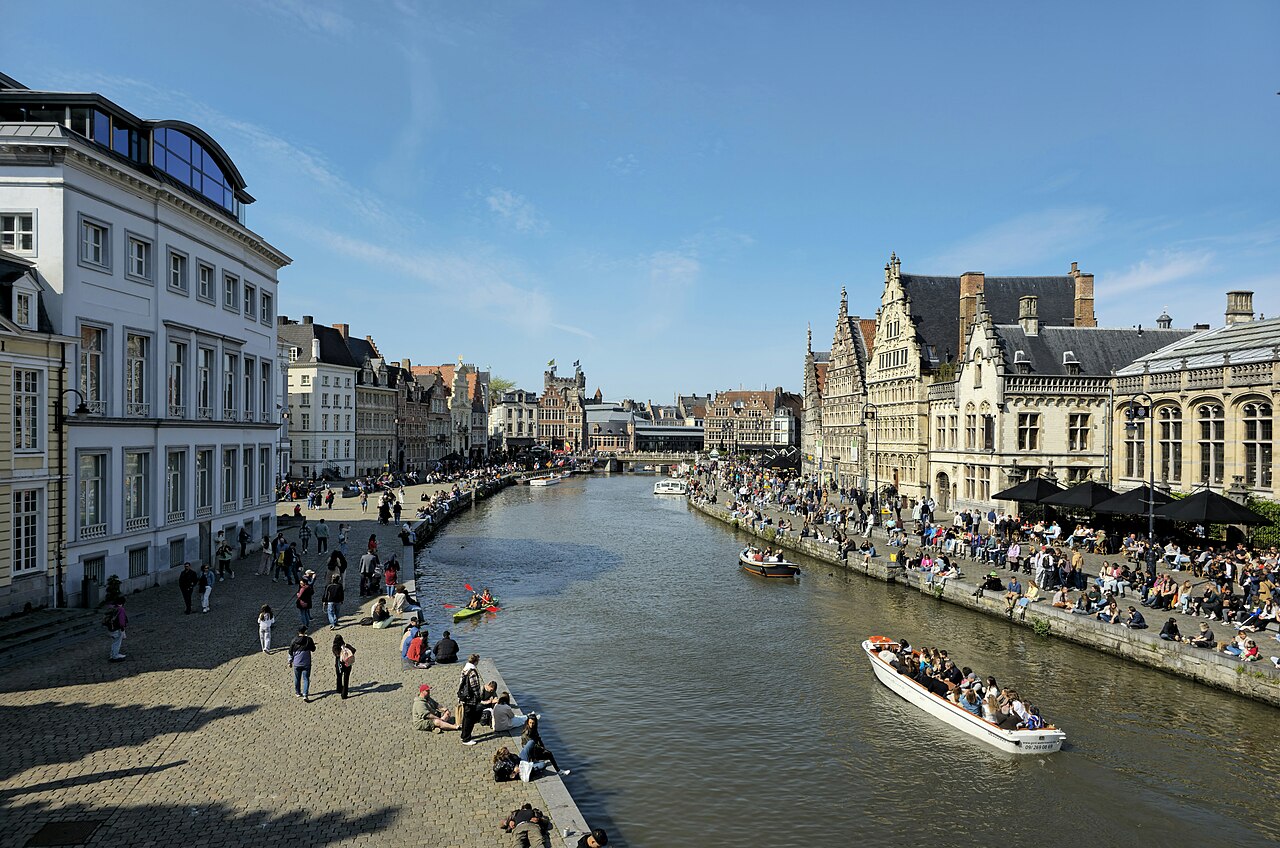
The row of medieval guild houses on the Graslei: the ornate 16th-century Guildhall of the Free Boatmen, the Grain Measurers' House (Cooremetershuys), and the 13th-century Romanesque corn store 'Spijker,' among the oldest buildings in the city
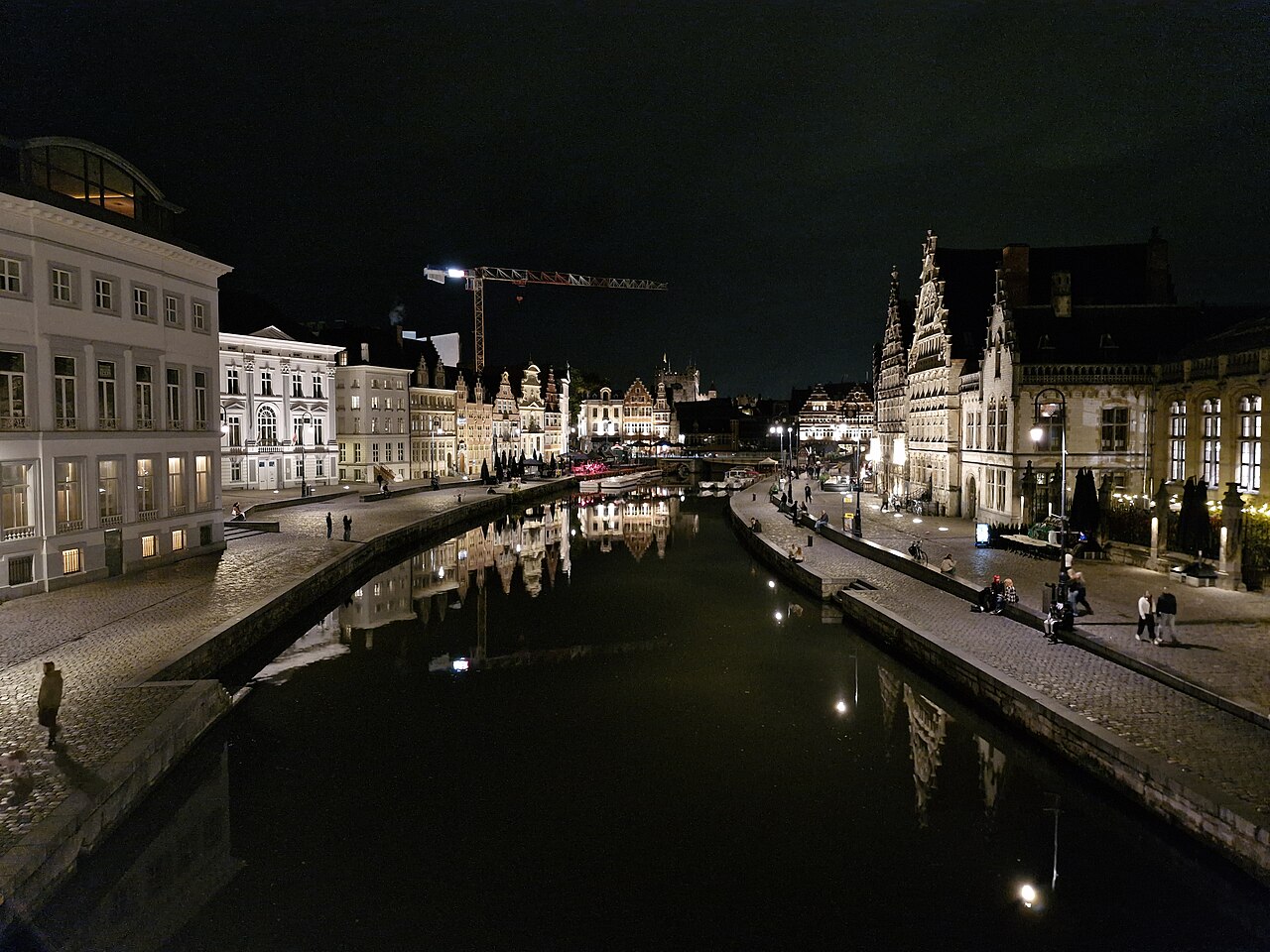
The stepped-gable facades reflected in the Leie — at their most beautiful at sunset and blue hour
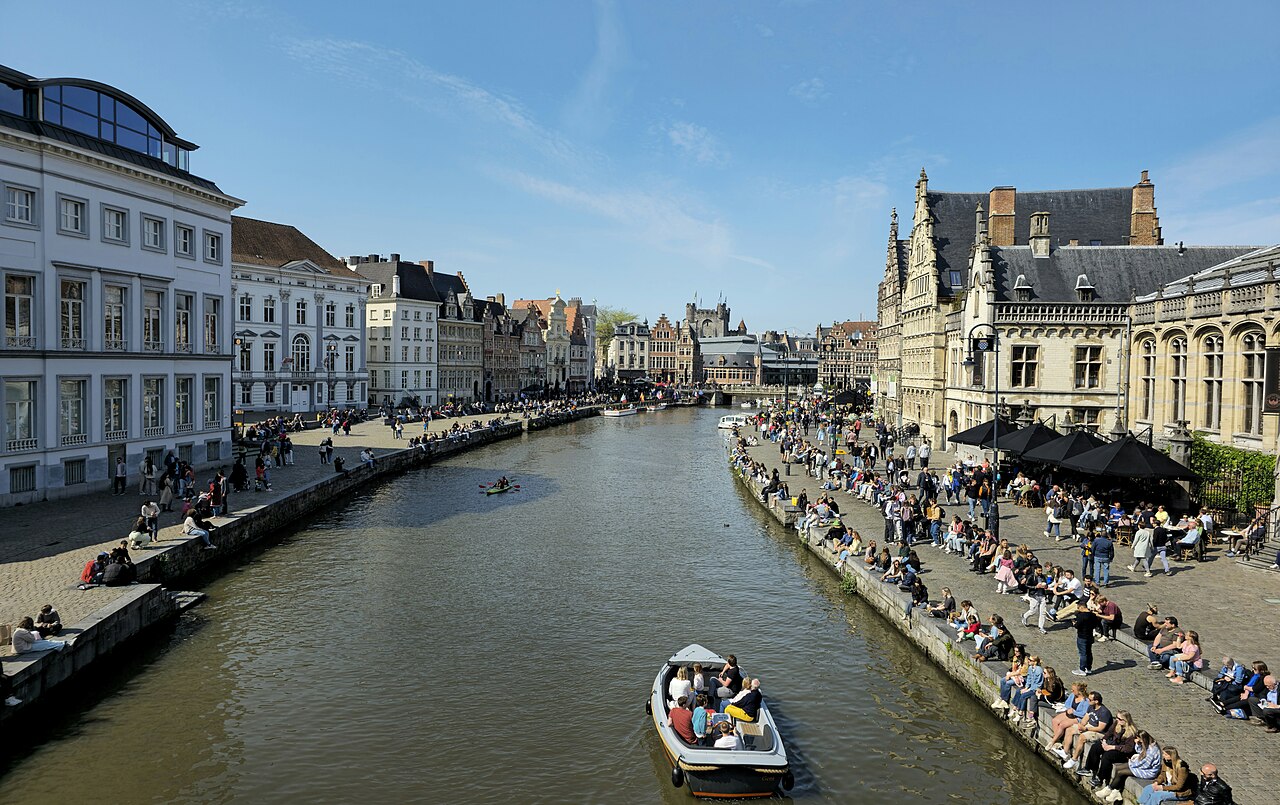
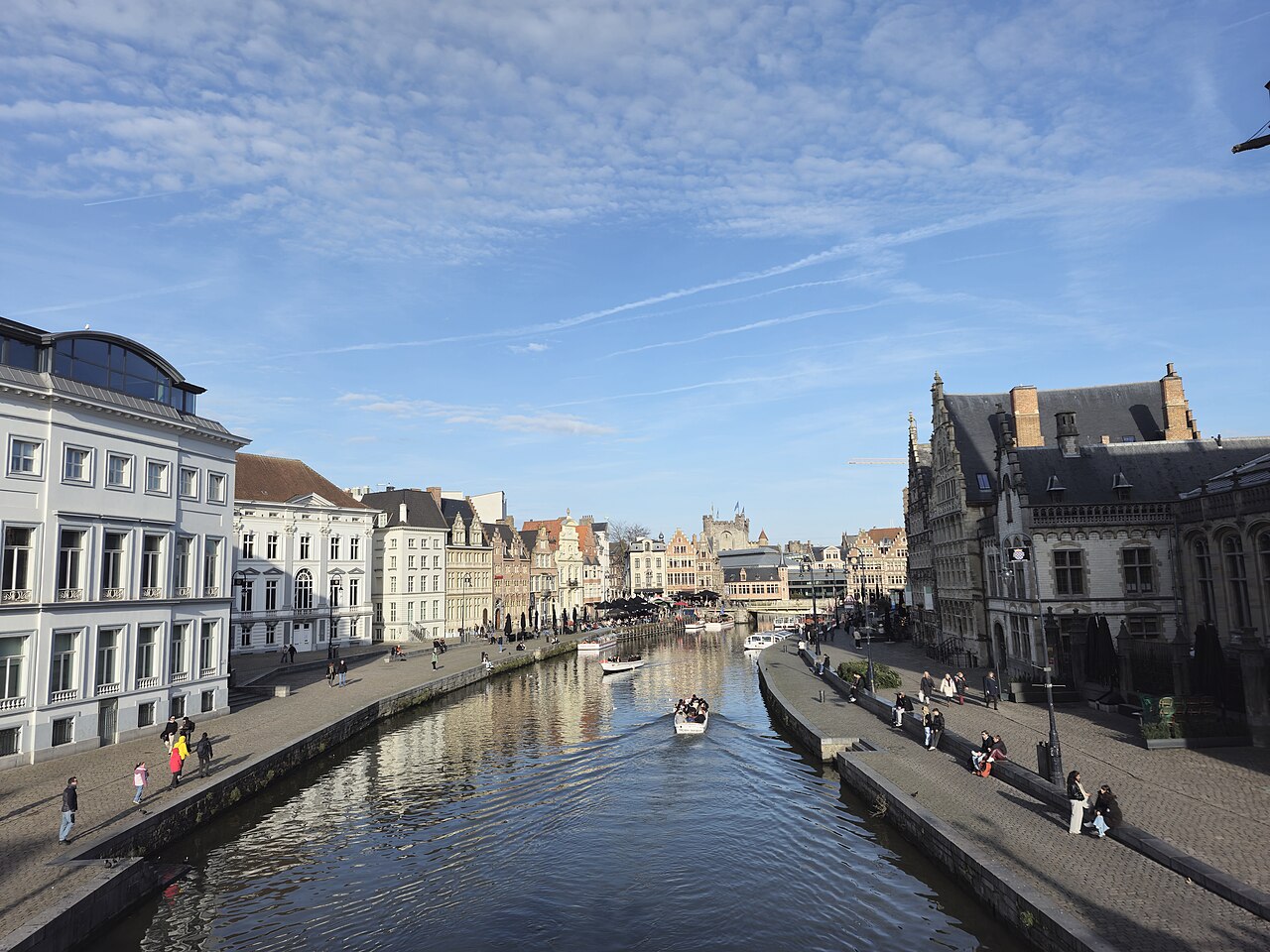
The view from the Grasbrug bridge, the classic photo spot taking in both quays at once
The opposite Korenlei bank and its two gilded swans on the former 'De Swaene' mansion (now a Marriott hotel)
Boarding a canal boat here to see Ghent's medieval skyline from the water
Good to know
SafetyWatch for pickpockets in the crowded quays, on the bridges, and on trams. Wear bags in front and keep an eye on your wallet and phone, especially during the July Ghent Festival (Gentse Feesten) crowds.
SeasonBelgian weather is often wet and changeable. Bring a waterproof layer, a compact umbrella, and clothes you can layer; if you want the mirrored night reflections, aim for the sunset-to-blue-hour window.
RulesGhent's historic center is a Low Emission Zone with heavily restricted car access. If you arrive by rental car, entering unregistered can lead to fines — reach the quays by tram, bike, or on foot instead.
MannersThe waterfront café and restaurant terraces are for paying customers, so don't just occupy a table for the view. Service is usually included in Belgium, so tipping is not required — rounding up or leaving small change is the norm.
SafetySome stretches of the quay have low or no railings and very heavy bicycle traffic. While taking photos, stay aware of the water's edge, bridge parapets, and cyclists coming from behind.
CautionFor a canal tour, use the official operators at the landing stages rather than street touts, and confirm the fare and duration in advance. The Ghent City Card (48/72h) bundles one boat trip with public transport and can be better value if you plan to see several sights.
Practical info
From Gent-Sint-Pieters railway station, take tram 1 to Korenmarkt (about 15 minutes), then walk 1–2 minutes to the quays; trams and buses are run by De Lijn and paid by contactless card or the De Lijn app. The quays themselves are free and open around the clock — about 30 minutes is enough to admire the exteriors — while boat tours and cafés keep their own hours. Check the latest boat fares, sailing times, and Ghent City Card prices before you go.
On-site reviews📍 Verified on-site
No reviews yet. If you are here, be the first to leave one.