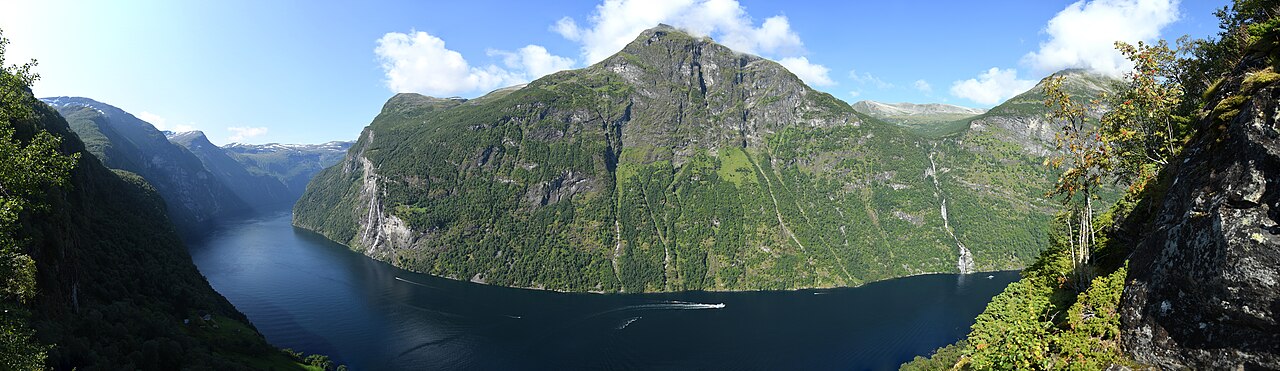
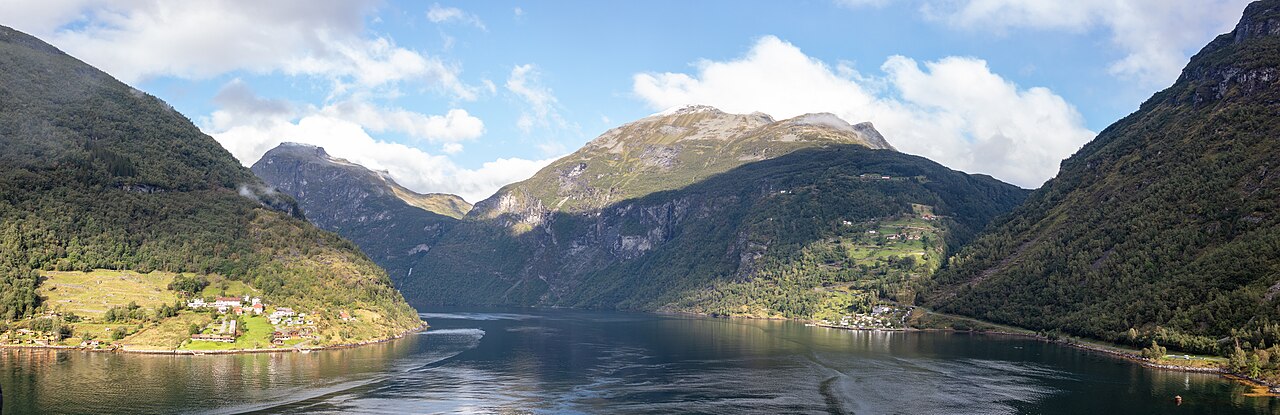
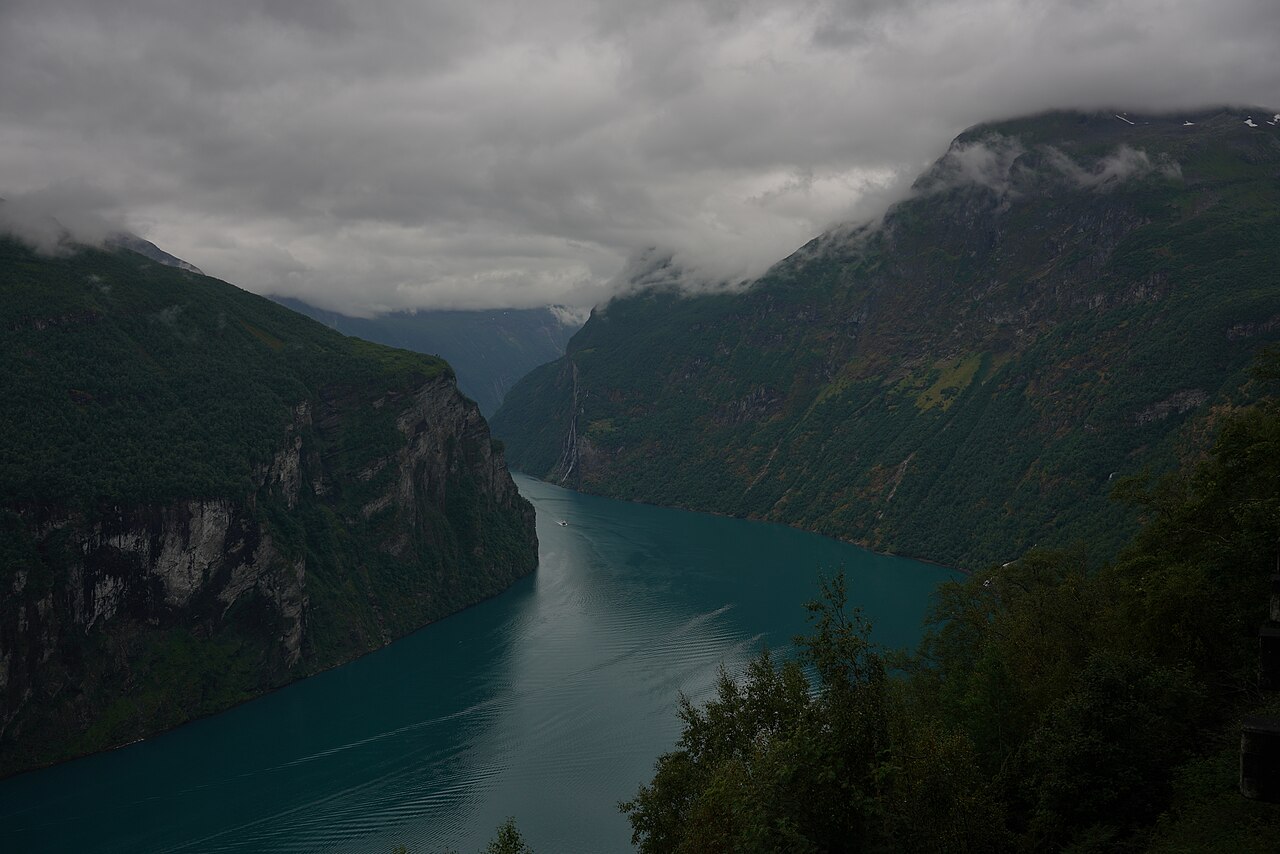
Geirangerfjord (Geirangerfjorden) is a roughly 15 km-long, narrow and deep fjord in the Sunnmøre district of Møre og Romsdal county in western Norway. Together with nearby Nærøyfjord it was inscribed on the UNESCO World Heritage List in 2005 as the "West Norwegian Fjords," and it is famous for its sheer cliffs, abandoned mountain farms and thundering waterfalls such as the Seven Sisters, the Suitor and the Bridal Veil. Since January 2026 vessels under 10,000 gross tonnes must operate emission-free inside the World Heritage fjords, so electric sightseeing boats and ferries now glide quietly through the strait, while summer brings crowds of independent travellers and cruise passengers. It is best enjoyed over one to two days by combining a fjord cruise or ferry with scenic viewpoint drives and hikes.
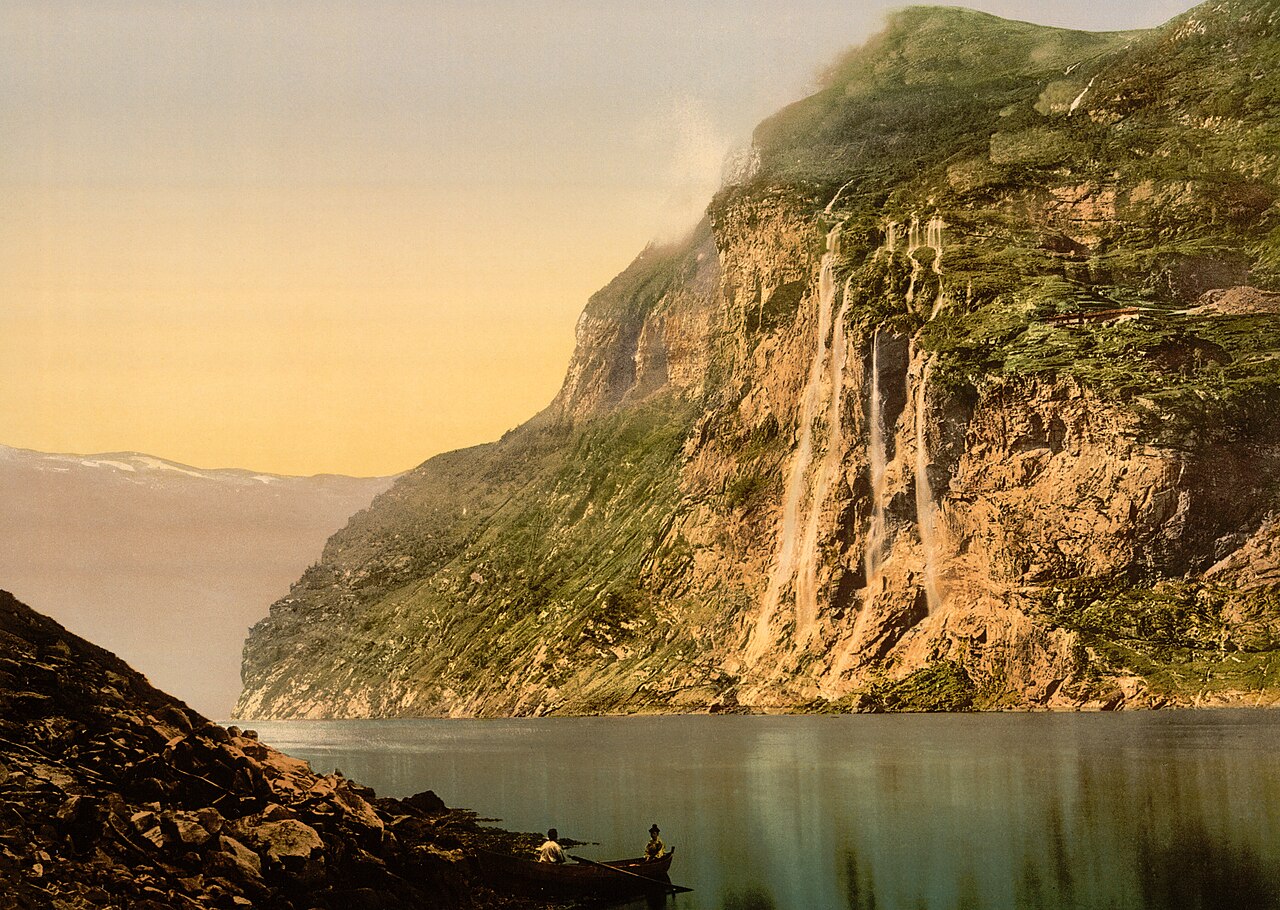
The Seven Sisters (De syv søstre) waterfall facing the Suitor (Friaren) across the fjord, seen head-on from the ferry or a cruise
The panoramic fjord view from the Geiranger Skywalk at Dalsnibba (about 1,500 m above sea level)
The eleven hairpin bends of the Eagle Road (Ørnevegen) and the Ørnesvingen viewpoint
Flydalsjuvet, the classic photo spot framing Geiranger village and the fjord below
Hiking to the Skageflå mountain farm, and seeing the fjord at water level by kayak or RIB boat
Good to know
SafetyMountain and fjord weather changes fast, with frequent wind and rain; pack a waterproof jacket, layers and grippy shoes, and on cliffside trails such as Skageflå obey all signs and closures because of steep drops and rockfall.
SeasonThe Geiranger–Hellesylt car ferry and most fjord cruises run only roughly April–October, and mountain roads like Trollstigen and Dalsnibba close in winter (Trollstigen reopened on 27 April 2026); services and the village are much reduced off-season, so check operations before you go.
SeasonAt about 62°N the fjord lies below the Arctic Circle, so there is no true midnight sun, but in June–July the sun sets late and long twilight lets you stay out into the evening; conversely, don't expect the northern lights this far south.
RulesFrom January 2026, ships under 10,000 GT must sail emission-free within the World Heritage fjords (large cruise ships have until 2032); operating vessels and cruise calls change year to year, so confirm the latest schedule when booking.
RulesMountain toll roads (e.g. the Nibbevegen road to Dalsnibba) and AutoPASS charges, plus ferry fares, are extra; peak-season car ferries fill up fast, so advance booking is recommended.
MannersTipping is not strongly expected and card or mobile payment is the norm; respect fjord farms and private land, grazing livestock and local traffic on narrow roads, and follow drone and privacy rules.
CautionSerious crime is rare, but pickpocketing is possible in viewpoint and quay crowds on cruise days, so watch your belongings and use official ticket outlets and car parks rather than overpriced last-minute tours or informal parking touts.
Practical info
The nearest airport is Ålesund, about 2–3 hours away by car or bus, and in summer you can also arrive on the scenic Hellesylt–Geiranger car ferry (about one hour). Fjord cruises and ferries run roughly April–October and the village and main viewpoints are reachable year-round, but mountain roads close seasonally, so always confirm fares, timetables and road openings through official channels just before you travel.
On-site reviews📍 Verified on-site
No reviews yet. If you are here, be the first to leave one.