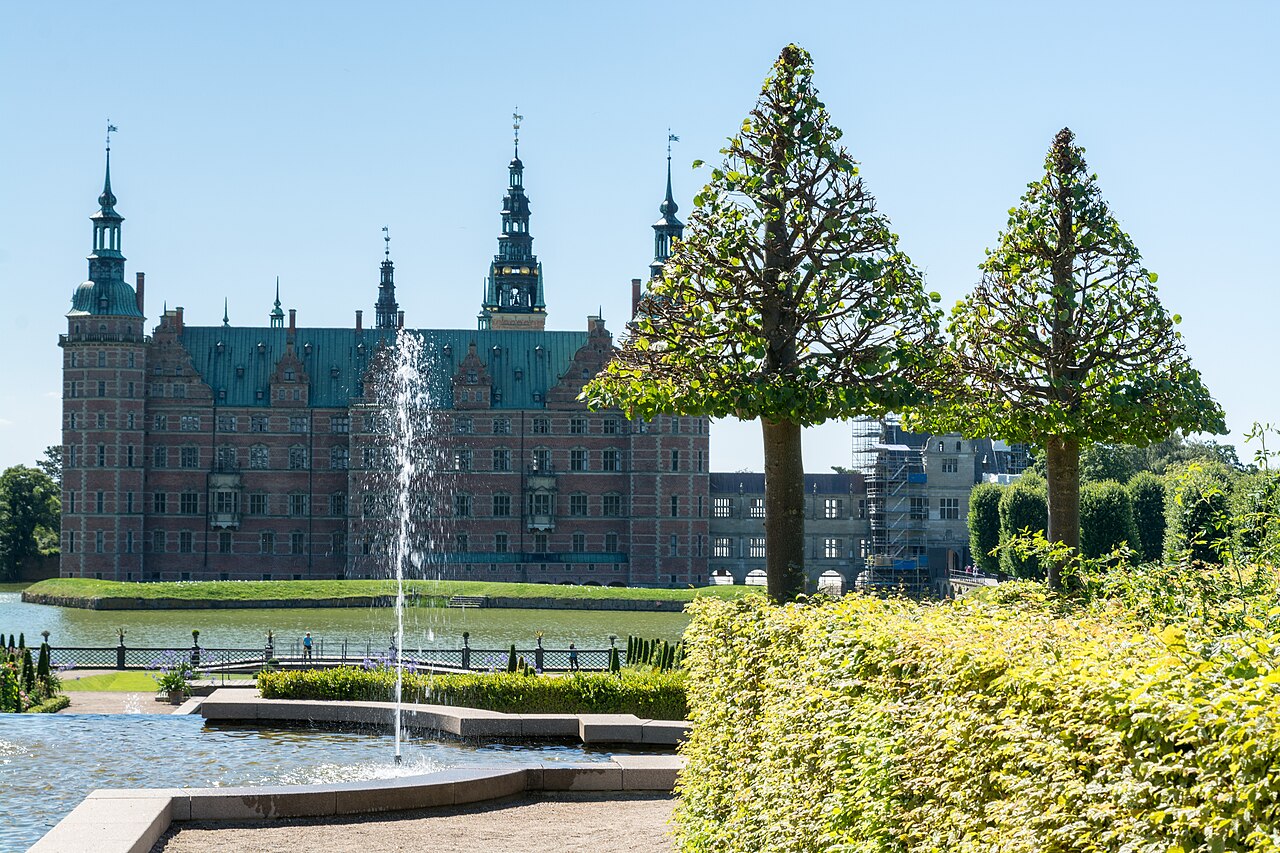
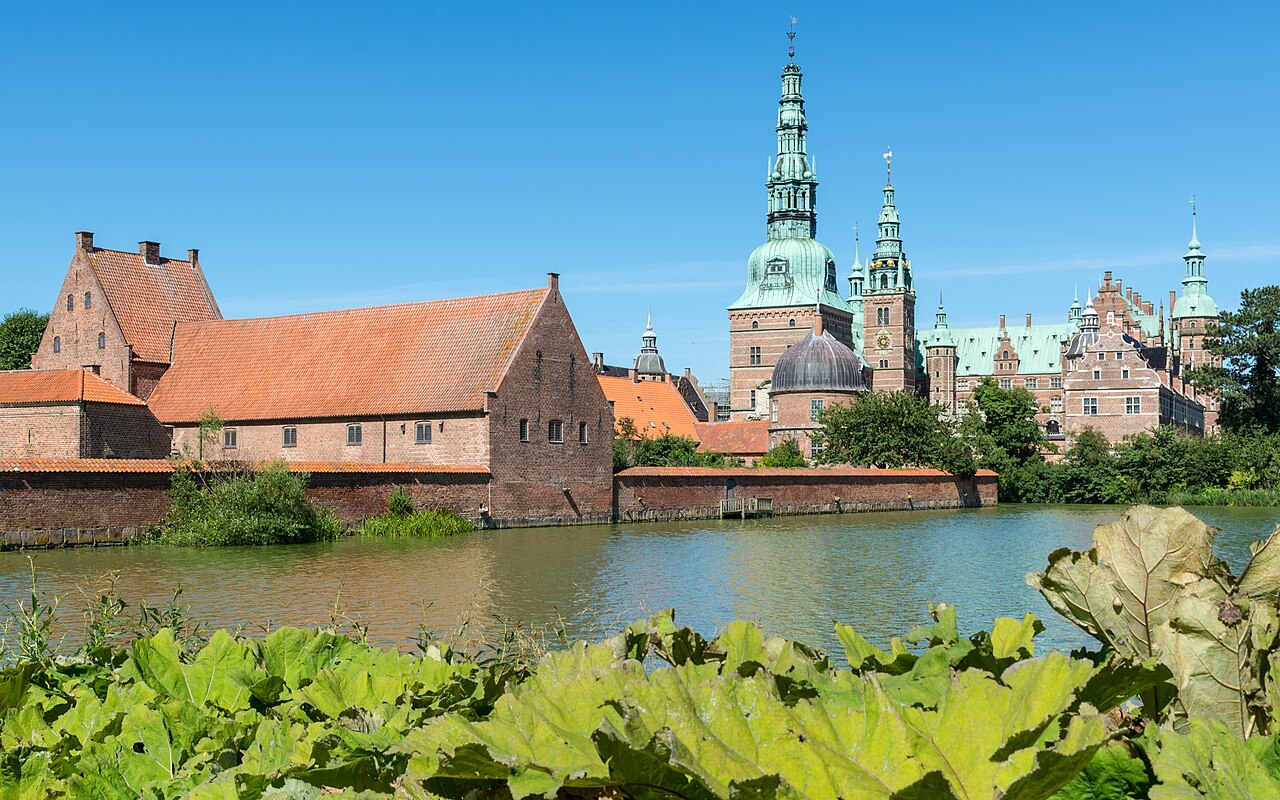
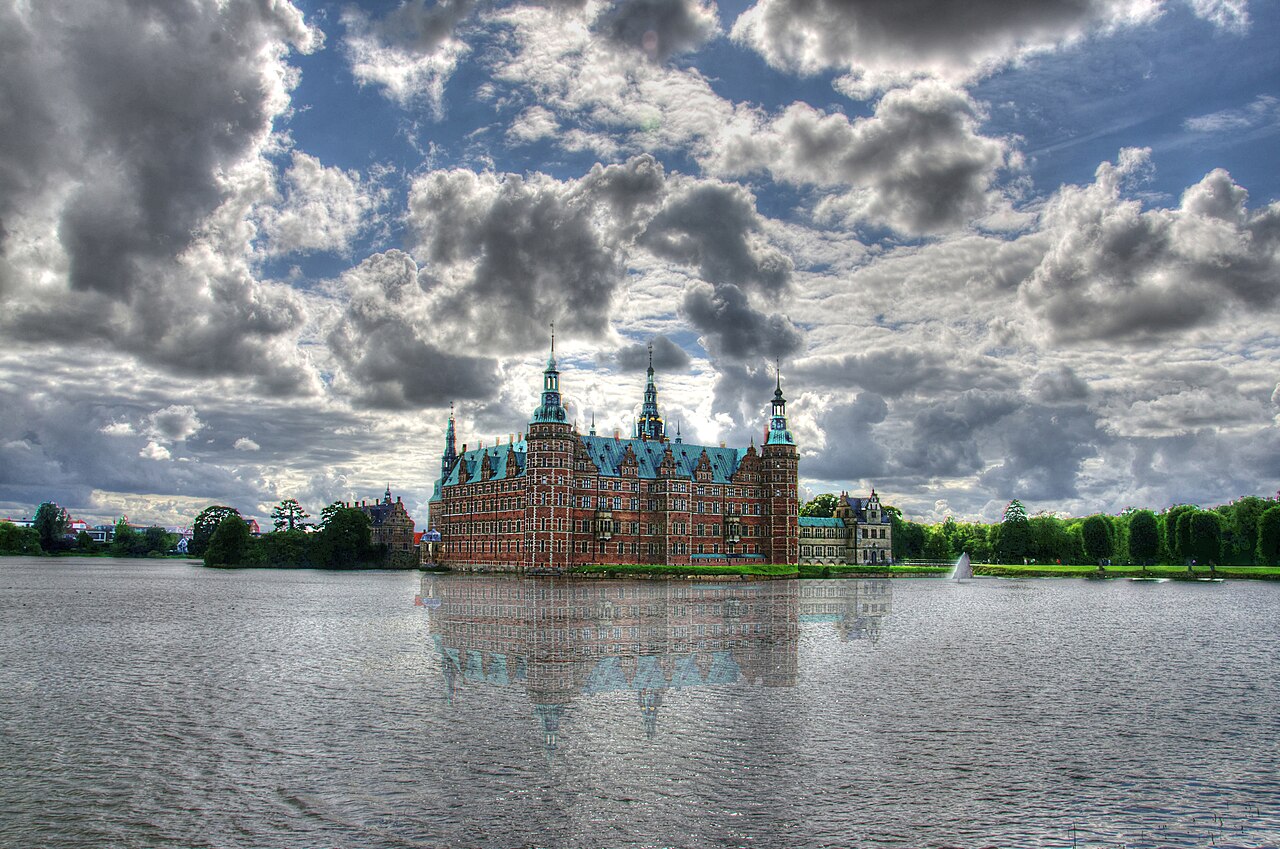
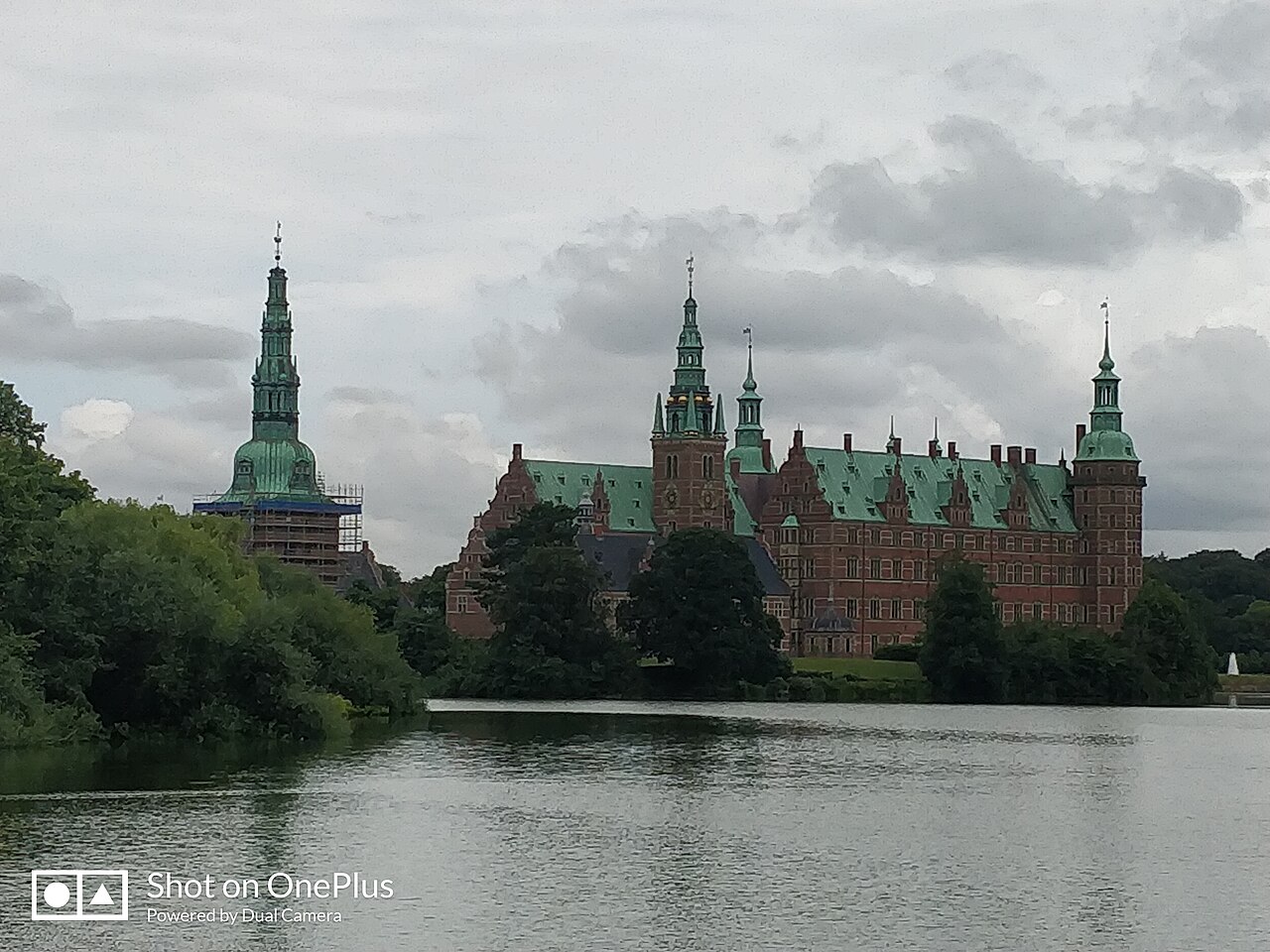
Frederiksborg Castle sits on three islets in the Castle Lake at Hillerød, north of Copenhagen, and is the largest Renaissance palace in Scandinavia. Built in its present form by King Christian IV in the early 1600s, it was gutted by a great fire in 1859 and restored with backing from Carlsberg founder J. C. Jacobsen, reopening in 1882 as the Museum of National History (Det Nationalhistoriske Museum). Today it frames 500 years of Danish history through portraits, history paintings and period rooms, paired with a formal Baroque garden of parterres and royal monograms — an ideal half-day visit.
The Castle Chapel (Slotskirken) — largely spared by the fire, a former coronation church whose walls are covered with the heraldic shields of the knights of the Order of the Elephant and the Order of the Dannebrog.
The Compenius organ of 1610 — one of the oldest playable organs in the world, still heard in short recitals in the chapel.
The Great Hall (Riddersalen) — the royal banqueting hall with an ornate ceiling and tapestries.
The portrait galleries — a vast collection of Danish kings and notable figures that walks you through 500 years of national history.
The 1720s Baroque Garden — J. C. Krieger's symmetrical parterres, cascades and royal monograms, plus the romantic landscape garden and Bath House across the lake.
Good to know
RulesIn summer high season and on weekends, book museum tickets in advance on the official site. The gardens and castle courtyards are free, but the museum interior is ticketed and prices can change, so verify the latest details before you go.
SeasonJuly in the Nordics has very long daylight (bright past 10 PM), great for garden strolls — but at this latitude you should not expect the northern lights. Conversely, in winter (Nov–Mar) opening hours may be shortened, so confirm times before visiting.
SeasonDanish weather is changeable even in summer, with frequent wind and rain. Bring a light layer, a waterproof jacket and comfortable shoes, and allow for the walk out to the garden.
SafetyThe castle itself is very safe, but watch for pickpockets at Copenhagen Central Station, on S-trains and around stations — keep bags, passport and phone secure in front of you.
CautionBuy tickets from the official website or via the Copenhagen Card. Avoid marked-up tickets from unverified resale sites and taxis that won't run the meter. Denmark is largely cashless (cards and MobilePay), so you rarely need cash.
MannersKeep quiet in the chapel and do not touch the displayed furniture, paintings or tapestries. Indoor photography is generally allowed for personal use without flash; tripods are restricted.
Practical info
From Copenhagen, take S-train line A to its terminus at Hillerød (about 40 minutes), then walk roughly 15 minutes, or take bus 301/302 to the 'Frederiksborg Slot' stop. The museum is open daily year-round (Mondays included), generally 10:00–17:00, though winter hours may be shorter — confirm opening times and ticket prices on the official website for the latest. The Copenhagen Card covers both transport and admission.
On-site reviews📍 Verified on-site
No reviews yet. If you are here, be the first to leave one.