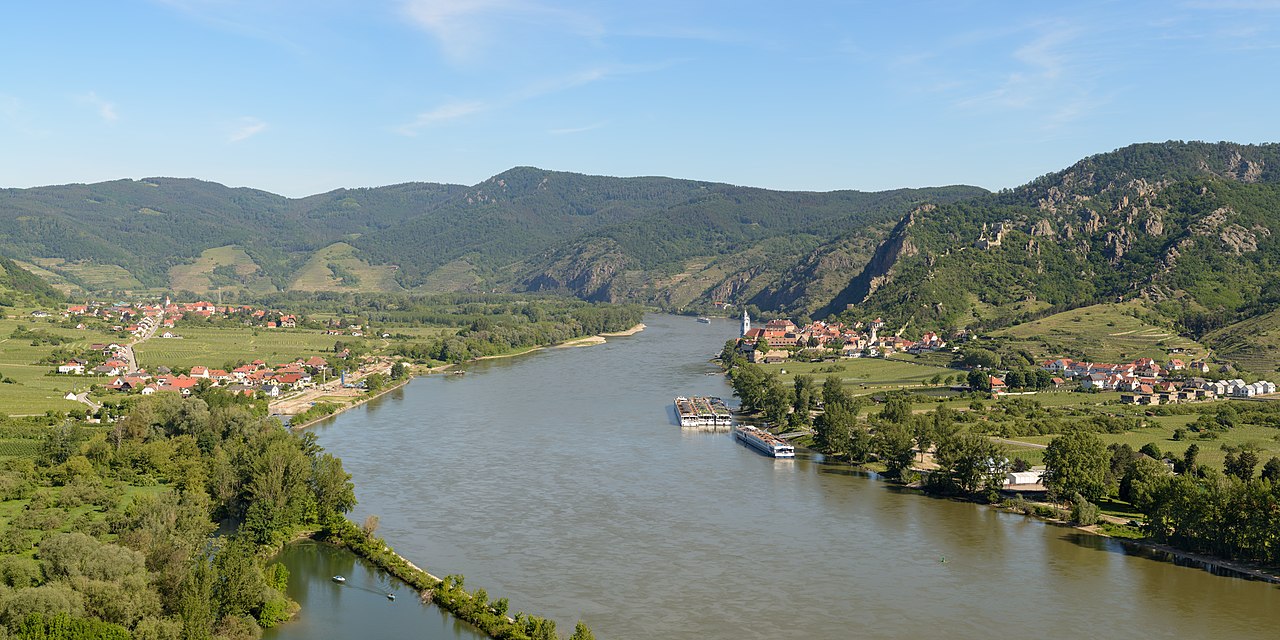
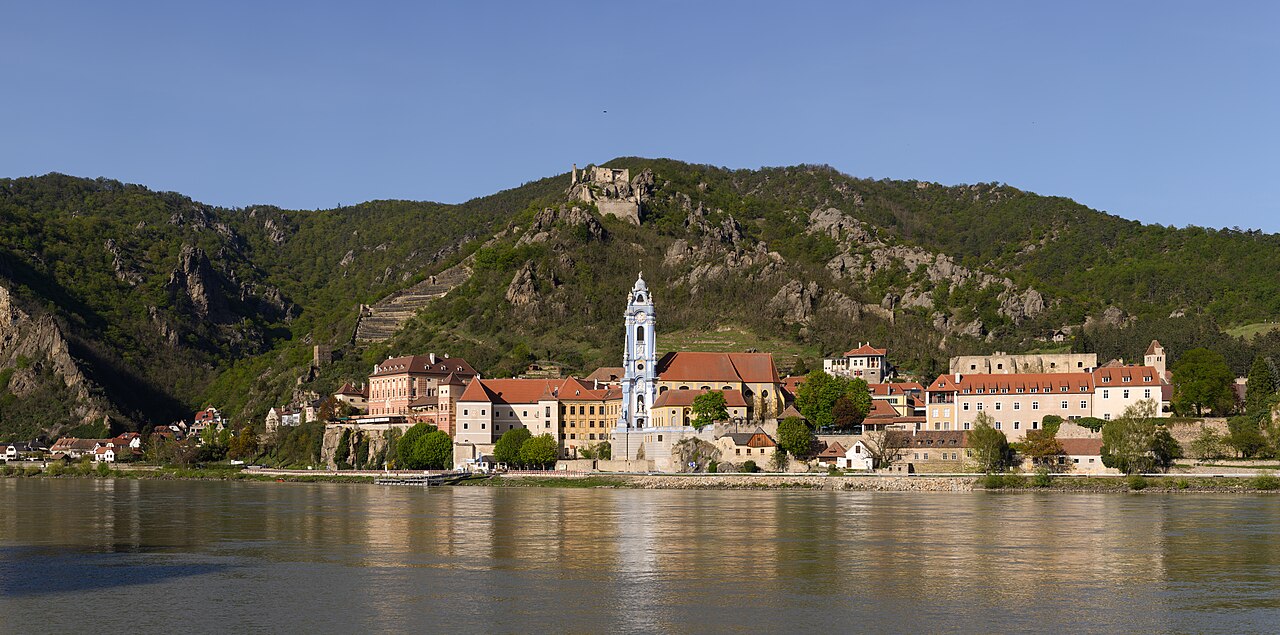
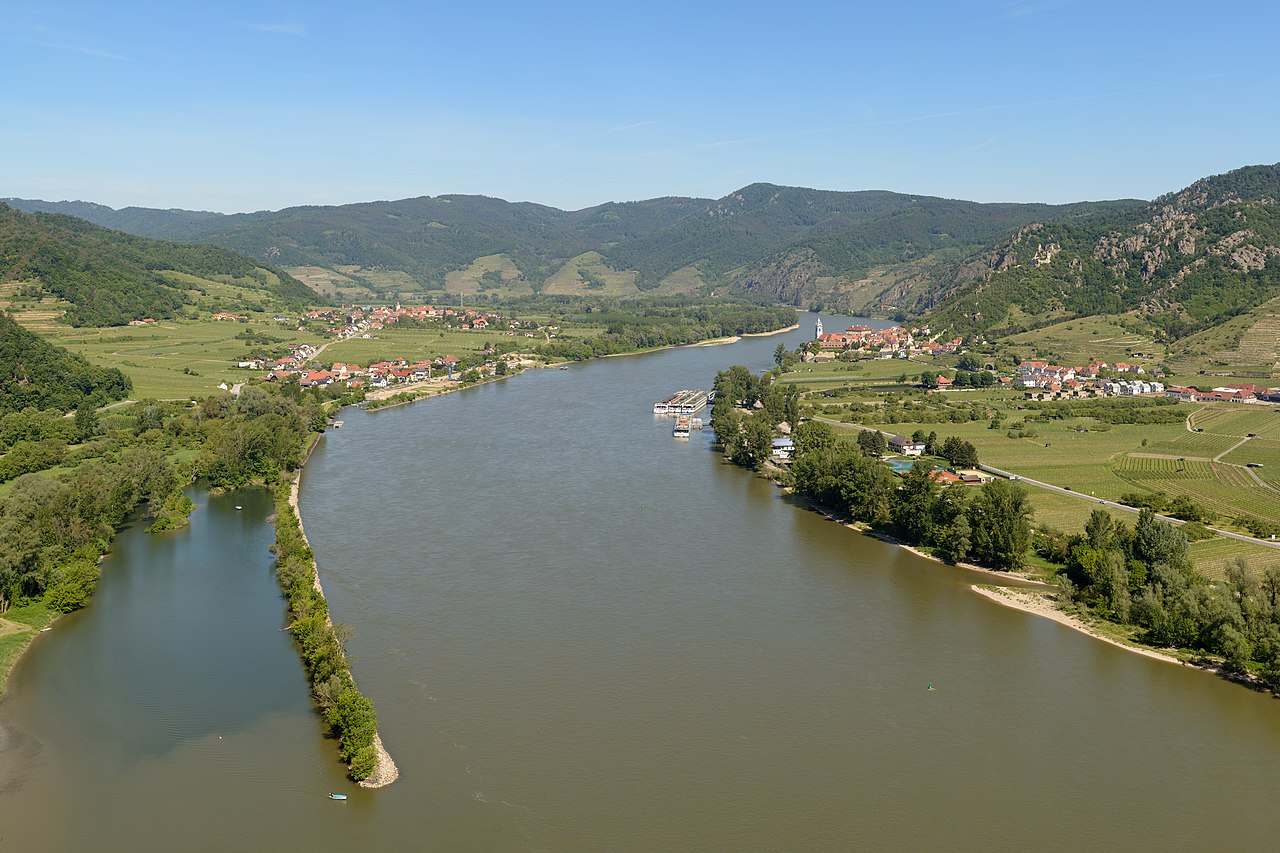
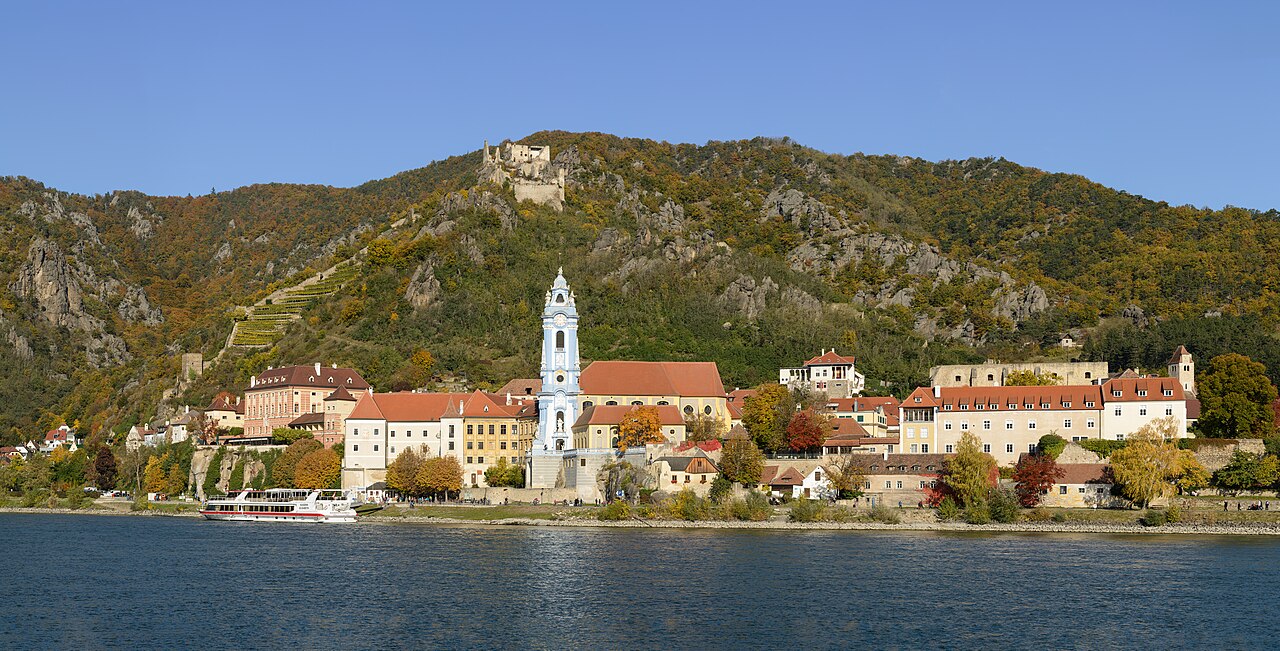
Dürnstein is a small wine village on the north bank of the Danube in Lower Austria (Niederösterreich), within the UNESCO-listed Wachau cultural landscape. Its emblem is the blue-and-white Baroque tower of Dürnstein Abbey (Stift Dürnstein), the signature image of the Wachau, while the ruined Kuenringer castle on the hill above marks where the English king Richard the Lionheart was held captive in 1192–1193. Often called 'the pearl of the Wachau,' the town is effectively car-free — traffic bypasses it through a tunnel — making it a place to explore on foot among cobbled lanes, wineries and apricot orchards. As of 2026 the abbey, river boats and wine cellars all run normally in the spring-to-autumn season.
The blue-and-white Baroque tower of Stift Dürnstein — the emblem of the Wachau and a Baroque masterpiece completed by Jakob Prandtauer
The Kuenringer castle ruin — linked to Richard the Lionheart's imprisonment, with sweeping Danube views; roughly a 40–60 minute round-trip walk uphill
The old main street and town gate — pastel houses along narrow cobbled lanes and an arched gateway give a storybook feel
Wachau white wines (Grüner Veltliner and Riesling) — tastings and sales at Domäne Wachau's vinothek and other cellars
Apricot (Marille) specialties — local jams, liqueurs and chocolates to sample and buy
Good to know
SeasonThe abbey opens only from roughly late March to late October (28 Mar–26 Oct 2026) and closes in winter. River boats and the seasonal Wachaubahn scenic railway also run spring to autumn, so check ahead for winter and early-spring visits.
RulesThe village centre is a car-free pedestrian zone; through-traffic uses a tunnel. Park in one of the paid car parks on the edge of town and walk in (guests staying overnight usually get a free parking voucher from their accommodation).
SafetyThe climb to the castle ruin is steep with uneven stone steps. Wear sturdy, grippy shoes, watch your footing, and carry water — there is little shade in summer.
MannersThis is a residential village of well under a thousand people. Keep noise down in the lanes and around private vineyards and orchards, and do not pick grapes or apricots from private land.
SeasonSummer peaks and Danube cruise-ship stops (late morning to afternoon) bring crowds; early morning or late afternoon is calmer. Apricot blossom is late March to early April, with the apricot harvest around July.
MannersIn restaurants and cafés a tip of about 5–10% is customary. Winery tastings are often paid, so confirm the price before ordering.
Practical info
From Vienna it is about an hour by train to Krems, from where the seasonal Wachaubahn scenic railway along the Danube's north bank, or a river boat (DDSG, Brandner and others, roughly April–October), reaches Dürnstein; the Danube Cycle Path is also very popular. Allow about an hour to tour the abbey, which offers German-language guided tours and multilingual audio guides in five languages, while the castle ruin is free and open year-round. Opening times, prices and boat schedules change by season, so confirm the latest details on the official websites before you go.
On-site reviews📍 Verified on-site
No reviews yet. If you are here, be the first to leave one.