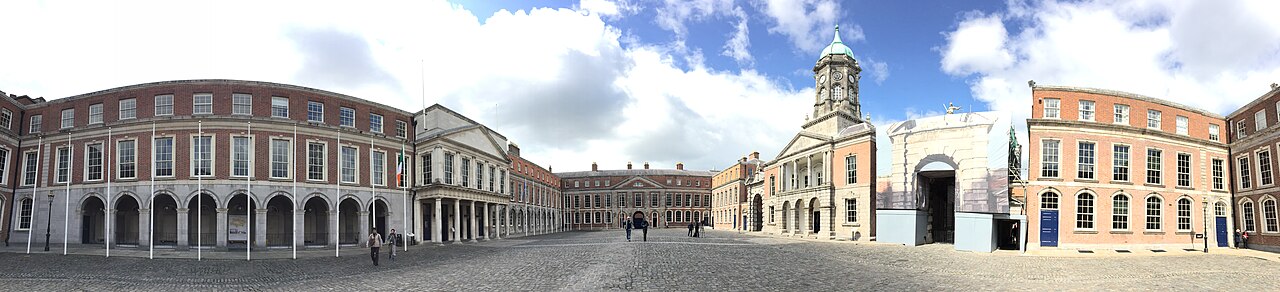
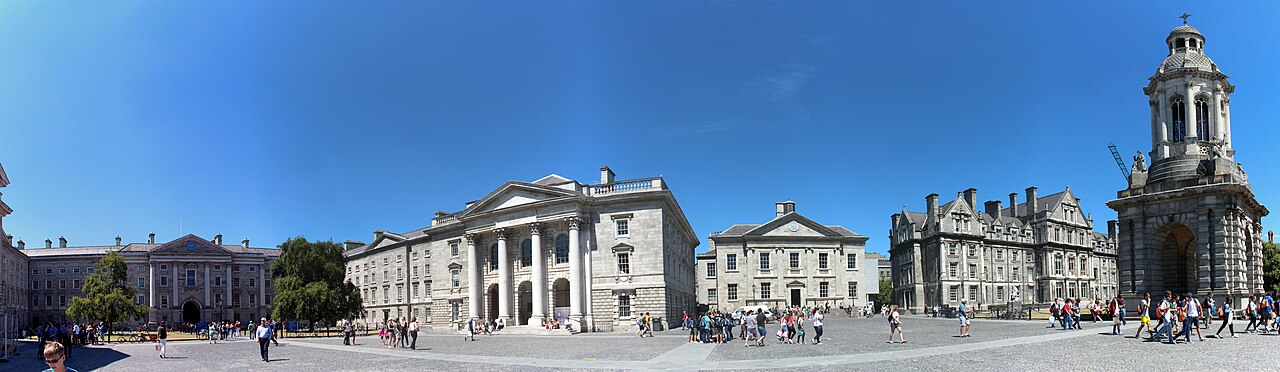
Dublin Castle began as a Norman fortress ordered by King John of England in 1204 and served for some 700 years as the seat of British rule in Ireland, before being handed over to Michael Collins in 1922. Today it hosts major state functions, including the inauguration of every Irish President in St Patrick's Hall. Its very name is tied to the 'Dubh Linn' (black pool) that gave the city of Dublin its name. Note that in 2026 Ireland holds the Presidency of the Council of the EU, so public tours of the interior (State Apartments, Chapel Royal, Undercroft) are suspended from 5 May to 31 December 2026 and reopen in January 2027 — visitors in the second half of 2026 should plan around the reduced access.
State Apartments: Ireland's grandest ceremonial rooms, crowned by St Patrick's Hall where every Irish President is inaugurated, plus the Throne Room and glittering chandeliers
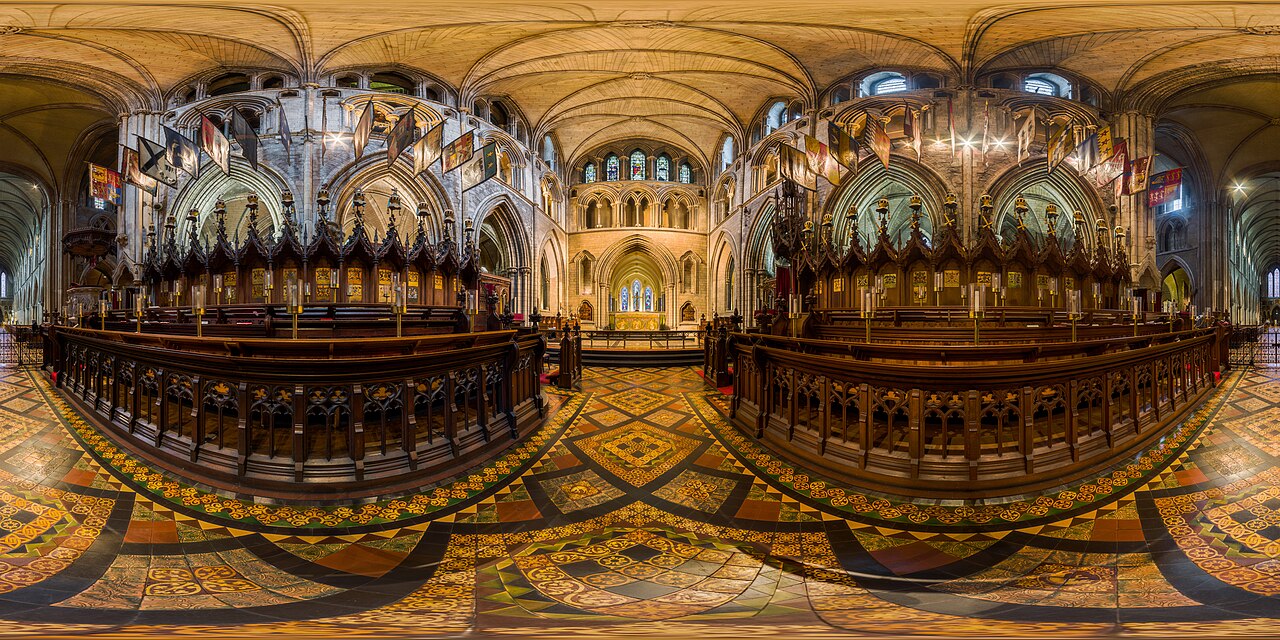
Chapel Royal: a Gothic Revival chapel completed in 1814, admired for its soaring vaulted ceiling and intricate carved stonework
Medieval Undercroft: the castle's oldest surviving space, preserving Viking and Norman walls and traces of the moat fed by the River Poddle, revealed by 1980s excavations
Record Tower: built in the 1220s, the only major medieval round tower still standing at the castle
Chester Beatty Library: a free, world-class collection within the castle grounds featuring Egyptian papyri, exquisite Qur'an manuscripts and East Asian art
Good to know
RulesFrom 5 May to 31 December 2026 the castle interior is closed to public tours for the EU Presidency, reopening in January 2027. During this period only the Chester Beatty Library, the 1926 Census Exhibition and the Dubh Linn Gardens are reachable via the Ship Street Gate, and there is no through access from Dame Street (Palace Street Gate). Always check the official site for the current status before you go.
SeasonDublin weather is changeable and rain is common even in summer. Pack a waterproof jacket, a compact umbrella and layers for July–August, especially for the outdoor gardens and courtyards.
SafetyPickpocketing can occur in busy areas near the castle such as Temple Bar and Dame Street. Wear your bag to the front and keep your passport and cards separated.
CautionBuy tickets from the official site (dublincastle.ie) or Heritage Ireland. Avoid street 'free/private guides', marked-up resale tickets and taxis that will not run the meter.
MannersThe castle is an active government venue, so keep quiet in the Chapel Royal and exhibition rooms, and follow staff guidance where photography or flash is restricted indoors.
RulesIreland uses the euro (EUR), not the British pound — don't confuse it with Northern Ireland. A Leap card or contactless card is handy for public transport, though the castle is only about a 5-minute walk from Trinity College if you prefer to arrive on foot.
Practical info
The castle is at Dame Street, Dublin 2, about a 5-minute walk from Trinity College and served by numerous city buses along Dame Street, plus the nearby Luas tram and DART (Tara Street station). When fully open it runs daily 09:45–17:45 (last admission 17:15) with separate self-guided and guided tour tickets, but prices, hours and any 2026 closure should be confirmed on the official site before visiting.
On-site reviews📍 Verified on-site
No reviews yet. If you are here, be the first to leave one.