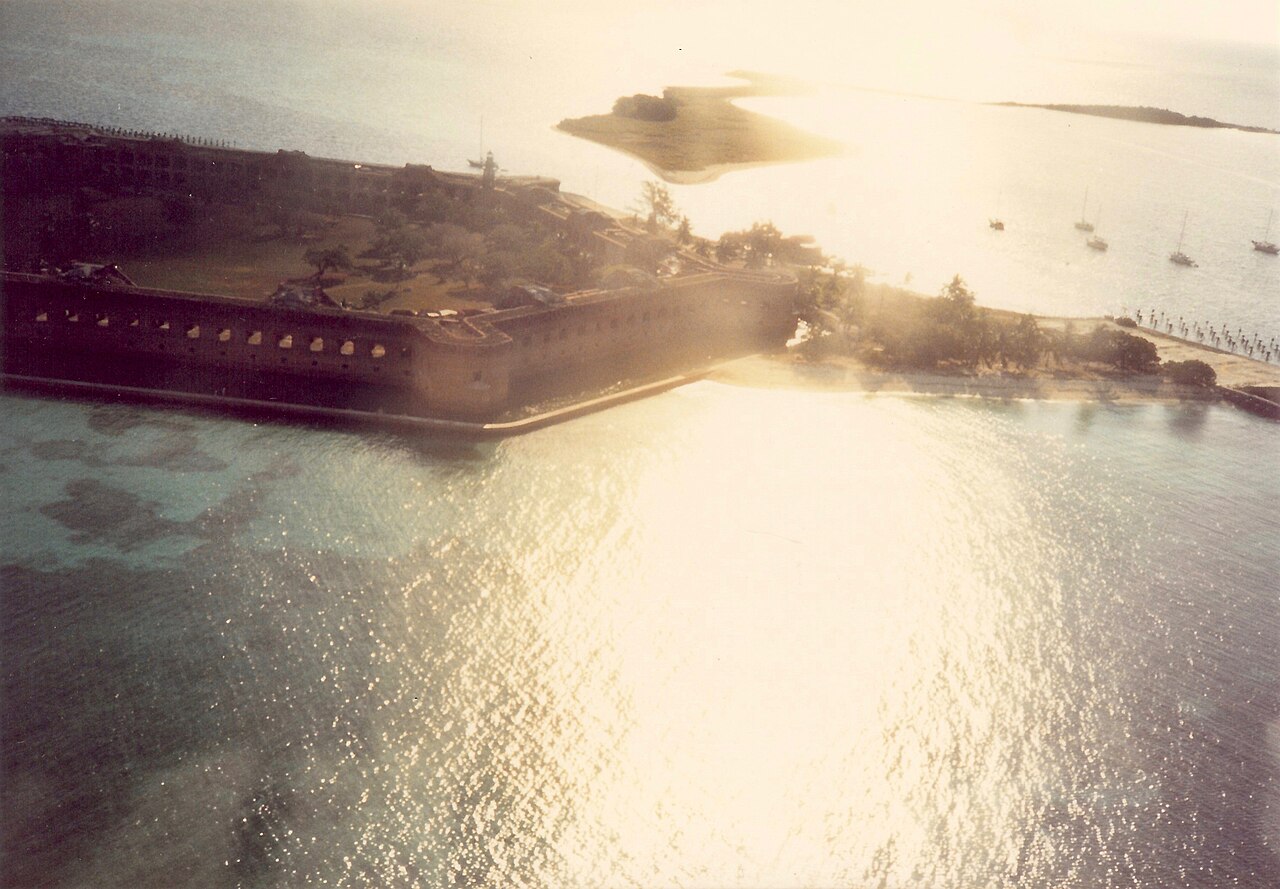
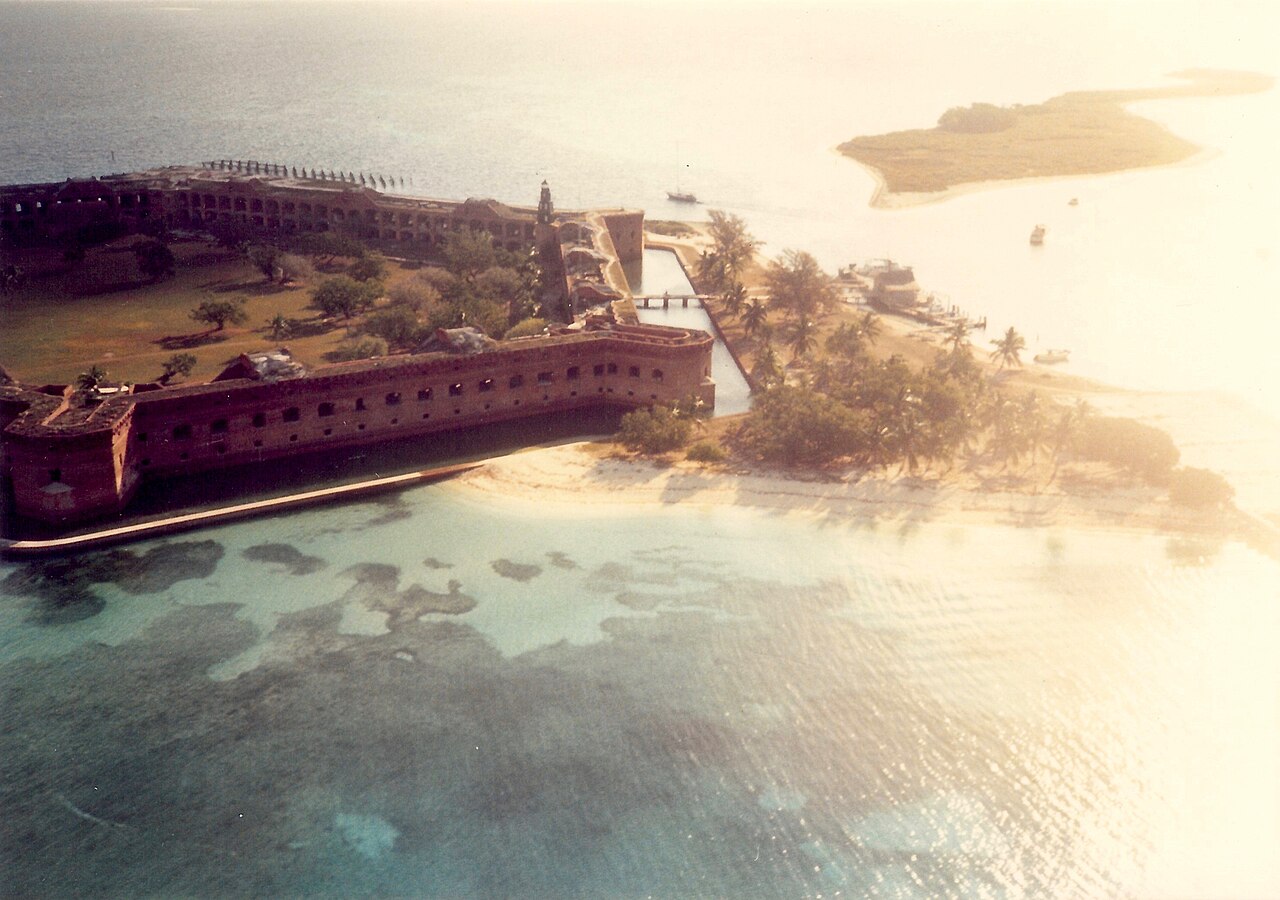
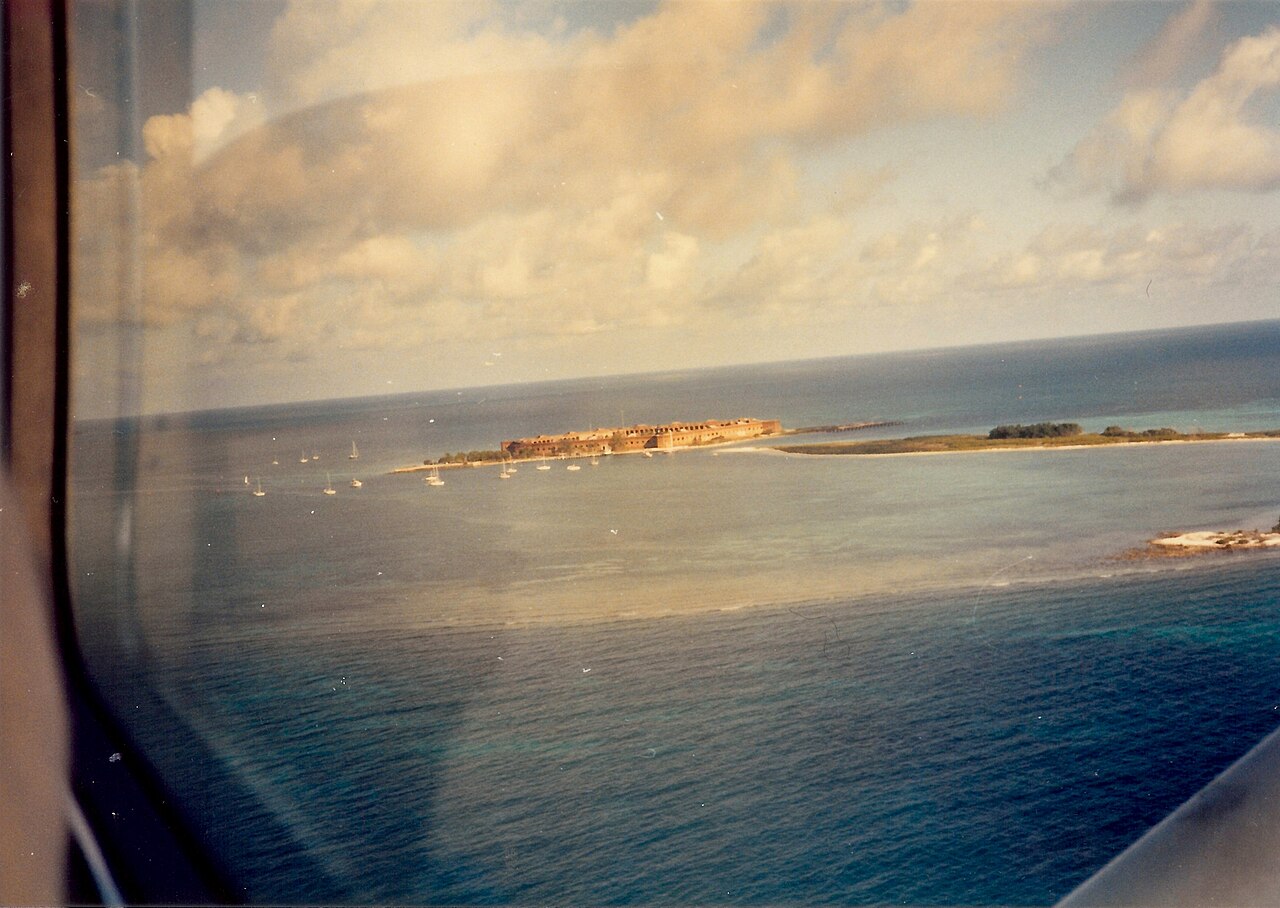
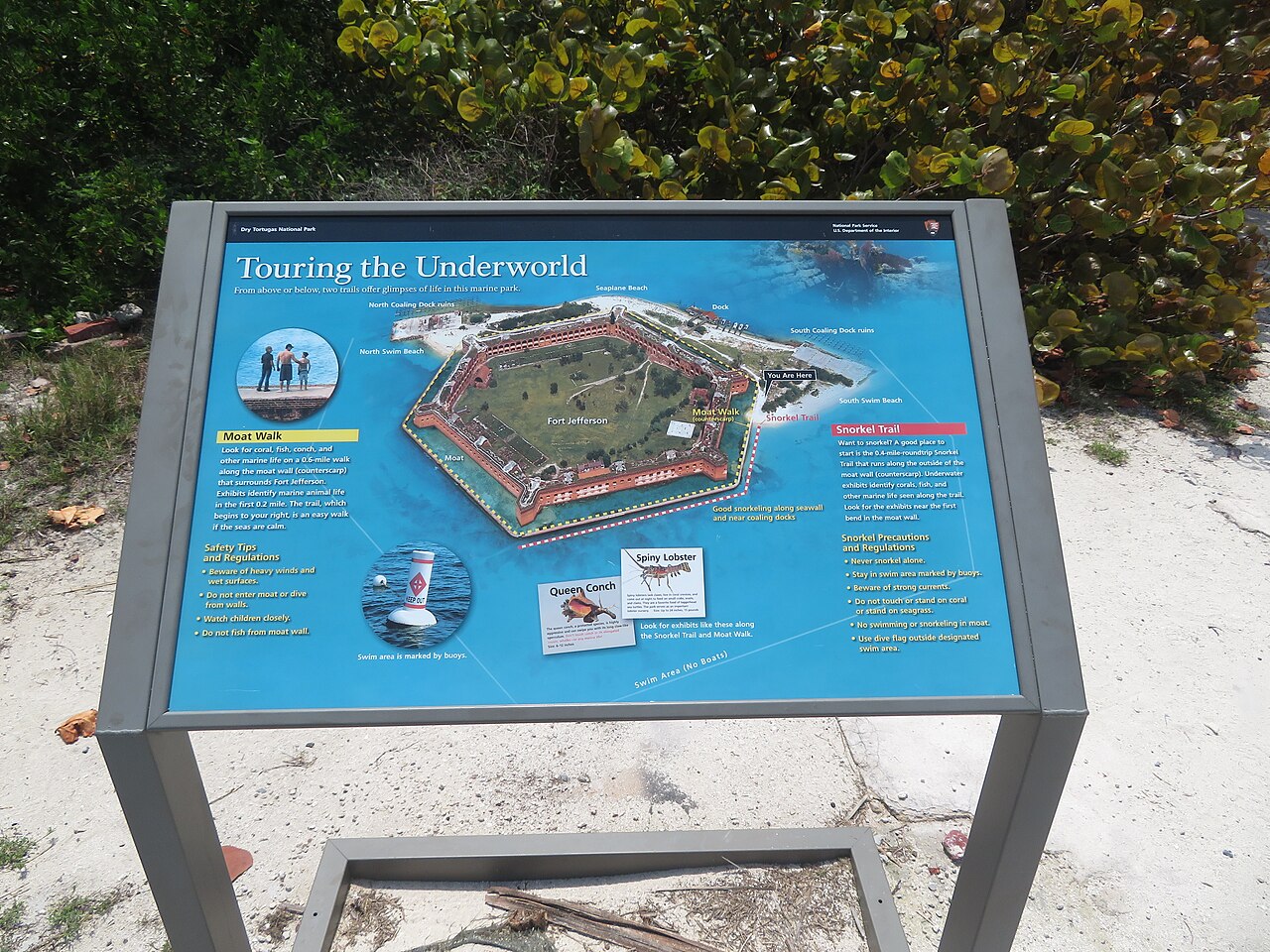
Dry Tortugas National Park sits about 70 miles (110 km) west of Key West and can only be reached by the authorized Yankee Freedom ferry or by seaplane. The star snorkel spot is the shallow coral garden along the moat wall that rings the massive brick Fort Jefferson, where beginners can float over hard and soft corals in just 5–15 ft (1.5–5 m) of calm water and easily spot parrotfish, angelfish, triggerfish, reef squid and the odd barracuda. Visibility is often a clear 60–120 ft (15–25 m), though the sheltered moat wall can look a touch murkier than the outer reefs because it gets less tidal flushing. As of 2026 the park is still day-trip focused: the ferry fare bundles the entrance fee and snorkel gear, and summer sailings sell out well ahead.
The Fort Jefferson moat wall — the park's signature snorkel trail of shallow coral, sponges and reef fish, ideal for first-timers
The old coaling-dock pilings, where barracuda, tarpon and larger fish gather around the shady structure
One of the healthiest reef systems in the Florida Keys, with 30+ coral species and 440+ fish species recorded
Easy beach entries from the North and South swim beaches on Garden Key
Warm, calm summer water (May–Aug, roughly 79–86 °F / 26–30 °C) delivering the year's best clarity
Good to know
SafetyCurrents around the fort and the tidal channels can pick up and push snorkelers toward open water. Never snorkel alone, carry a float or dive buoy, and stay inside the designated areas.
SafetyThere are no lifeguards, and the nearest hospital (Key West) is more than 70 miles away. Don't push past your comfort level; if your mask fogs or you feel panic, roll onto your back and hold your float.
SafetyThe island has no shade and no fresh water, so long summer swims stack up sunburn, dehydration and heat exhaustion — and floating face-down badly burns your back. Wear a rash guard and bring water.
SafetyWatch for contact stings from sea urchins, fire coral, jellyfish/sea lice (common in summer) and curious barracuda — don't touch coral or rocks, and leave shiny jewelry off.
RulesThis is a protected national park: standing on or touching coral and collecting shells, conch or lobster are all prohibited. Use reef-safe (oxybenzone-free) sunscreen, and note that access is only via the authorized ferry or seaplane.
SeasonMay–August gives the warmest, calmest, clearest water. But June–November is hurricane season with fast-changing weather, summer afternoons bring thunderstorms, and winter cold fronts kick up wind, chop and poor visibility.
MannersGive sea turtles and other wildlife a wide berth — never touch or feed them — and don't stand on the coral beneath the fort.
Practical info
Access is by the authorized Yankee Freedom ferry (about 2¼ hours each way) or by seaplane from Key West, almost always as a day trip. The ferry fare covers the national park entrance fee, snorkel gear and meals, but summer dates sell out weeks ahead, so book early. Prime snorkeling runs May–August in warm, calm seas; confirm current fares, sailing times and whether any moat-wall sections are closed for restoration on the official sites (nps.gov/drto, drytortugas.com) before you go.
On-site reviews📍 Verified on-site
No reviews yet. If you are here, be the first to leave one.